Visiting the Merzouga desert: Erg Chebbi, camps and oases

Dunes that change colour hour by hour, a night under the stars in a tented camp, the rhythm of Gnawa castanets in Khamlia and the earthen ksars of Tafilalet: Erg Chebbi takes a long drive to reach, but two or three nights there are enough to feel its magic.

Why visit the Merzouga desert?

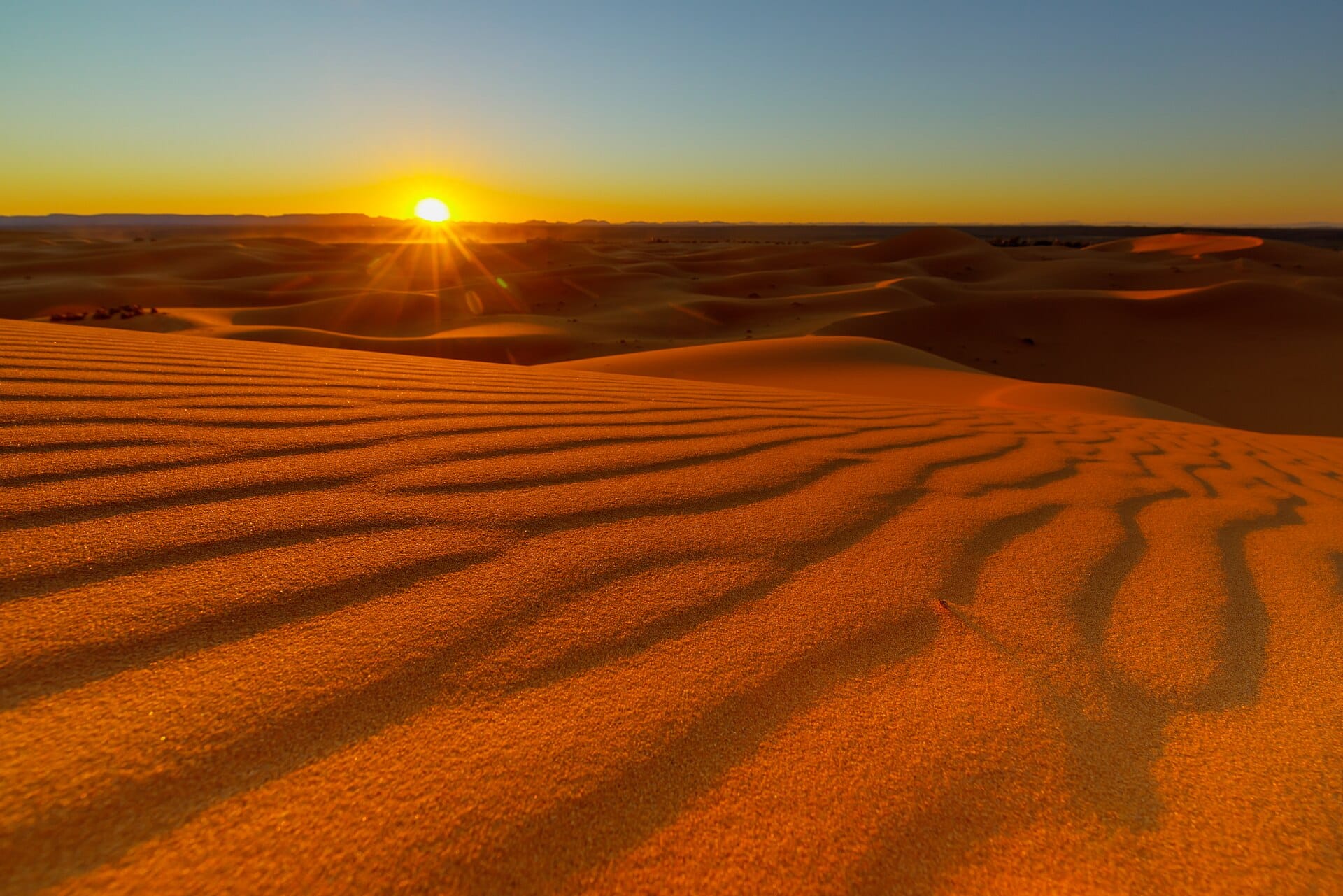
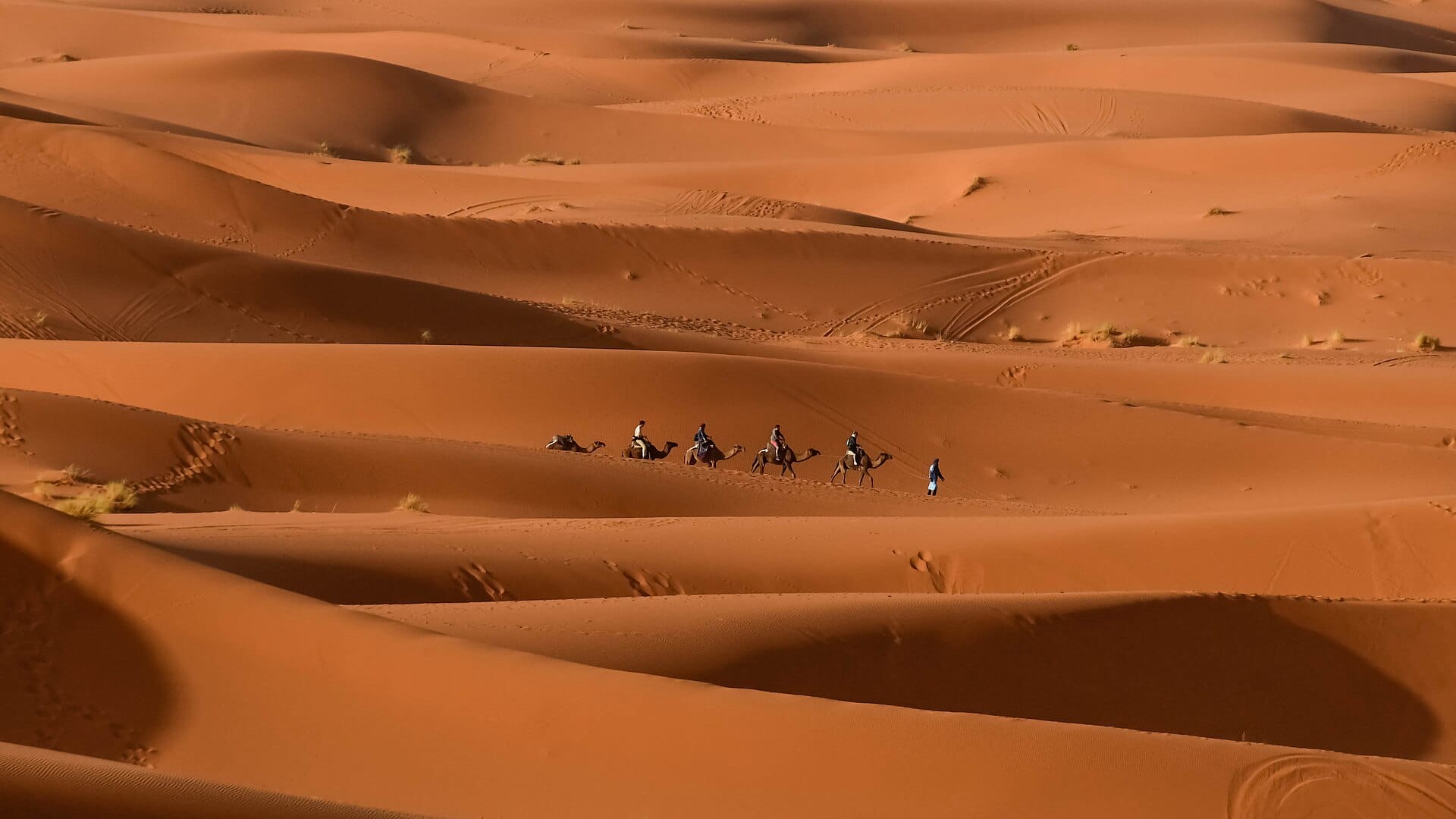
Erg Chebbi is one of Morocco's two great sand seas and the only one reachable entirely by paved road, with crests rising above 150 metres. It stretches for about twenty kilometres alongside the village of Merzouga, east of the Tafilalet oasis. Visitors come for a night in a desert camp, a camel ride and sunrises over the sand.

What to see in the Merzouga desert, area by area?

Merzouga and the western edge of the erg

The village of Merzouga backs directly onto the dunes: most guesthouses and kasbah hotels open their terraces onto the sand, a few steps from the first crest. It is the most practical base for a first stay, with grocery stores, cafés and caravan departures to the camps. Climb a nearby dune 30 minutes before sunrise: the low light only lasts about twenty minutes. The village lies about 50 km south-east of Erfoud on a paved road, a 45-minute drive.

Hassilabied and the northern erg

Five kilometres north of Merzouga, the hamlet of Hassilabied gathers another cluster of guesthouses below slightly quieter dunes. Further north-west, the seasonal lake of Dayet Srji fills after heavy rain and then attracts flamingos and waders; it can stay dry for several years in a row. In September 2024, exceptional rainfall flooded some of the area's tracks and filled these hollows, a rare event. Allow two hours by 4x4 to tour the northern erg with a guide.

The southern erg, towards Taouz

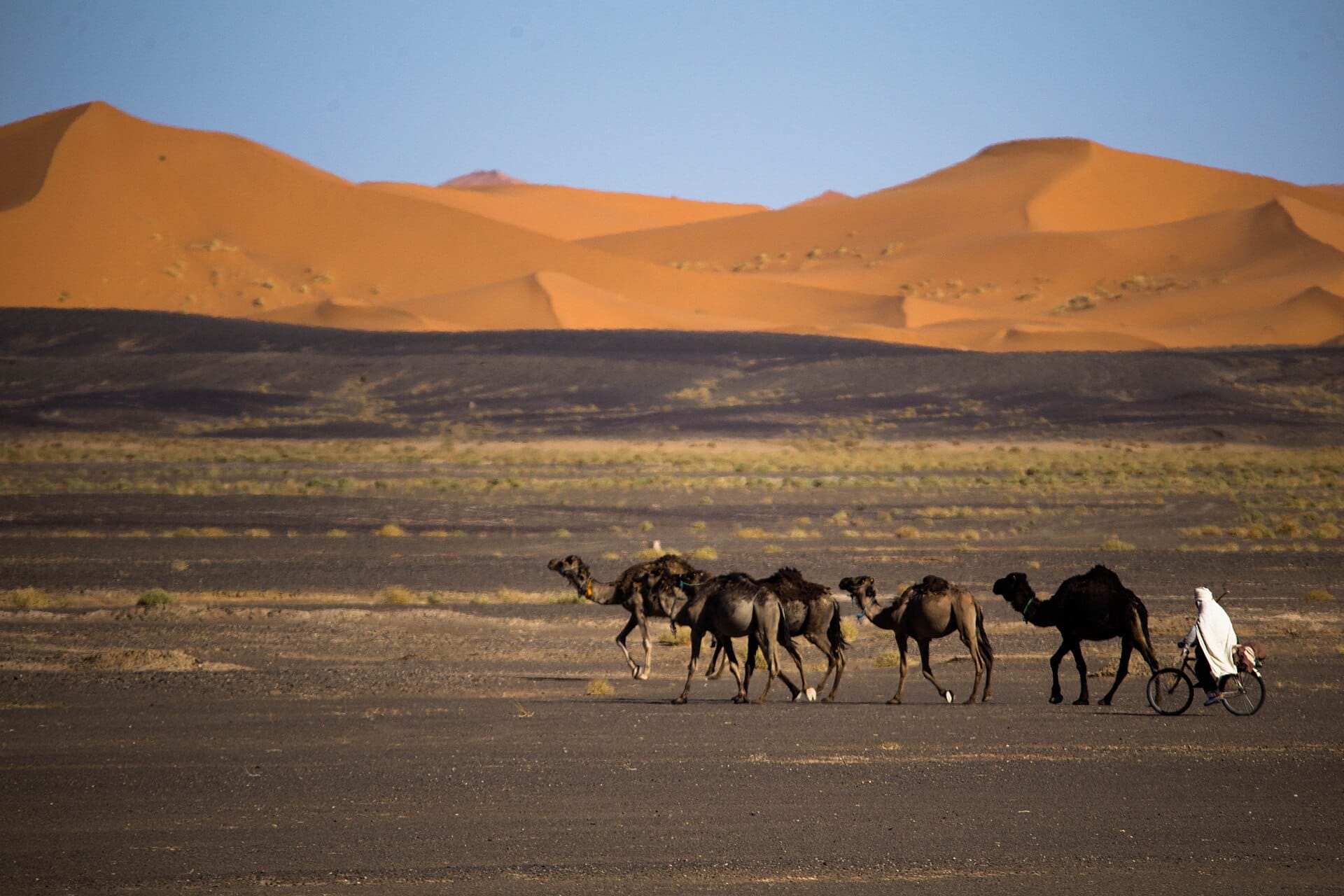
South of Merzouga, the road leads to Khamlia, a village whose people descend from communities that came from sub-Saharan Africa, where bands play Gnawa music for visitors, often for a voluntary contribution over tea. Beyond, the landscape turns into a black stony plateau, the hamada, as far as Taouz, about forty kilometres away. The closed border with Algeria runs to the east: this area is under heightened vigilance, stay on marked tracks and only venture there with a local guide. Half a day is enough for Khamlia and the abandoned Mfis mines.

Rissani and ancient Sijilmassa

Some 35 km north-west of Merzouga, Rissani is the heart of the Tafilalet oasis, cradle of the Alaouite dynasty that still rules the Kingdom of Morocco. The ruins of Sijilmassa, a great medieval caravan city through which trans-Saharan gold and salt passed, lie on the edge of town, now reduced to fragments of earthen walls. The main souk is held several times a week, with a lively donkey and livestock market in the morning. Allow half a day, following the loop of ksars through the palm grove.

Erfoud, Errachidia and the Ziz valley

Erfoud, an hour from Merzouga, lives off its quarries of fossil-rich marble: ammonites and orthoceras are cut into tables, basins and souvenirs. In October, the town hosts a date festival at harvest time. Further north, Errachidia, the provincial capital, has an airport linked to Casablanca. Between the two, the Ziz valley unfolds one of the finest palm groves in southern Morocco, overlooked by the road from several viewpoints. Allow two hours between Errachidia and Merzouga.

Camps, seasons and access

The best period runs from October to April, with mild days; in December and January, nights in the camps can approach 0 °C. From June to August, temperatures regularly top 40 °C, and sandy winds are frequent in spring. From Marrakech, it takes about 9 to 10 hours by road across the High Atlas: most tours stop in Ouarzazate and the Dades or Todra gorges, over three days. From Fez, allow 7 to 8 hours via Ifrane and Midelt. One night in a camp is the minimum, two are more restful.

Cities to visit in Merzouga Desert

Featured destinations appear first.
Coming soon.

Merzouga Desert in pictures

Merzouga desert must-sees

Dunes, oases and historic sites to combine over two or three days around the erg.

The great dune

The highest point of Erg Chebbi, above 150 metres. An hour's tiring climb through soft sand, rewarded with a view over the erg and the hamada to the horizon.

Dayet Srji lake

An ephemeral lake north-west of Merzouga, filled only after heavy rain. Flamingos and migratory birds then land there, against a backdrop of dunes.

Khamlia Gnawa music

In this village south of the erg, musicians keep Gnawa songs and rhythms alive with castanets and drums, in sessions open to visitors over tea.

Moulay Ali Cherif mausoleum

In Rissani, the shrine of the ancestor of the Alaouite dynasty. Non-Muslims can see the outer courtyards and ornate facade, without entering the burial chamber.

Ksar Ouled Abdelhalim

A large mud-brick fortress built in the early 20th century near Rissani, whose ramparts and monumental gates remain imposing despite erosion.

Erfoud fossil workshops

Stonemasons cut and polish black rock packed with ammonites and orthoceras hundreds of millions of years old. Several workshops can be visited freely.

Meski Blue Spring

A spring channelled into a pool below a ruined ksar, about twenty kilometres from Errachidia. A popular swim and picnic stop on the desert road.

Frequently asked questions about the Merzouga desert

Is the 3-day Marrakech to Merzouga tour worth it?
Yes, if you accept spending much of the time on the road: about 9 to 10 hours of driving each way. For a calmer pace, add a night in the Dades or Todra gorges, or end the tour in Fez rather than doubling back.
How long is the camel ride to the desert camp?
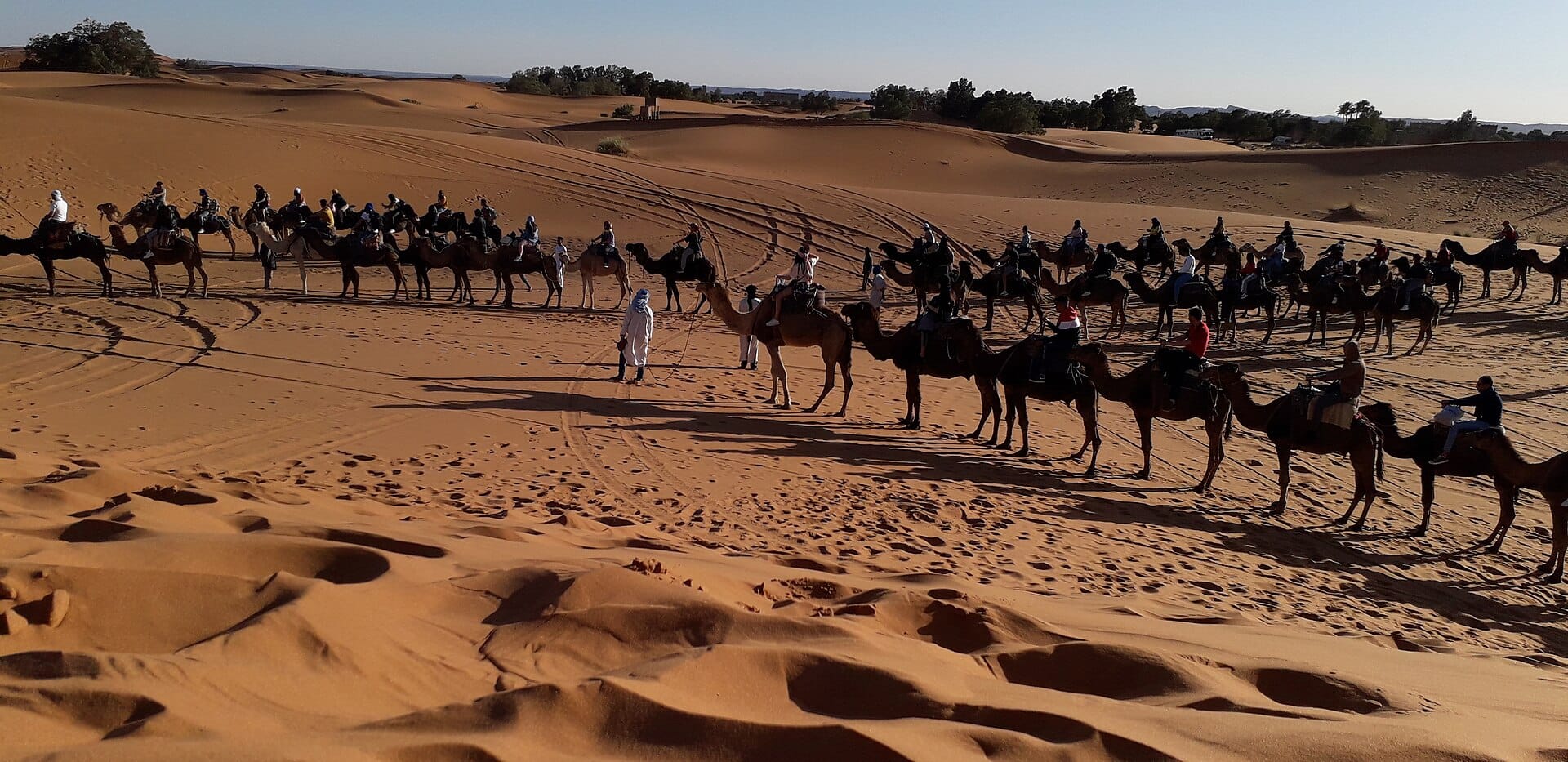
Usually an hour to an hour and a half from the village to the camps set up in the erg, at sunset, then the same ride back at sunrise the next morning. If riding worries you, most camps can also be reached by 4x4.
Erg Chebbi or Erg Chigaga: which desert to choose?
Erg Chebbi, at Merzouga, can be reached entirely by paved road and offers high dunes right behind the hotels. Erg Chigaga, beyond M'hamid, requires a 4x4 track and feels wilder, but with fewer services. For a first trip, Merzouga is simpler.
Can you sleep in the Merzouga desert without booking through an agency?
Yes. Village guesthouses sell the camp night directly, with camel ride and meals included, which cuts out the middlemen. Book a few days ahead and check recent reviews for the camp's location and the state of its facilities.
What time should you watch sunrise over Erg Chebbi?
About 30 minutes before the official sunrise time, to allow time to climb a crest. Sunrise varies from around 6.30 am in summer to 7.30 am in winter. Camps usually wake guests in time, and the best light only lasts about twenty minutes.
Do luxury desert camps in Merzouga have bathrooms?
High-end camps offer tents with beds, private showers and toilets, sometimes heated in winter. Simple camps provide mattresses under Berber tents and shared facilities. Ask exactly what is included before booking, as the labels vary widely.
How do you get to Merzouga by bus from Fez?
CTM and Supratours buses link Fez to Merzouga, with overnight departures arriving early in the morning after 8 to 10 hours. The bus drops you in the village centre; your guesthouse can pick you up if you let them know in advance.
Was the Merzouga desert affected by the 2024 floods?
Exceptional rain in September 2024 flooded tracks and filled lakes between the dunes, briefly disrupting some access. Tourist facilities then resumed normally. During a storm, never cross a wadi in flood.
Which villages around Erg Chebbi can you visit in a day?
A classic 4x4 loop links Khamlia and its Gnawa music, the old Mfis mines, a nomad encampment, then Rissani and its souk. Allow a full day with a local guide, avoiding the hottest hours in summer.

Plan your trip to Merzouga Desert

Day-by-day itinerary, budget, bookings and packing in a single app.
Aperçu de l'application PlanTripNow