Visit Galicia: itineraries, budget and the best time to go

At Spain's north-western tip, Galicia faces the Atlantic: pilgrims on the Obradoiro, the Roman lighthouse of A Coruña, the arches of As Catedrais at low tide, the Cíes Islands off Vigo and vineyards clinging to the Sil gorges, under the rain that keeps it all so green.
  • 2 cities

Why choose Galicia over the Mediterranean?

Galicia is the autonomous community in north-western Spain, divided into four provinces: A Coruña, Lugo, Ourense and Pontevedra. People come for the end of the Camino de Santiago, a coast cut into rías and its seafood, with mild summers around 24 °C in the afternoon rather than the heat of the south.

What is there to discover in Galicia?

Compostela, the city of arrival

The whole region is best read from its pilgrim capital, where most flights from Paris land. Two days are enough for the old town, the cathedral and the Mercado de Abastos, and a third can go to a day trip. It is also the best rail hub: A Coruña is about 32 minutes away by train and Vigo under an hour depending on the service. Without a car, it is the most logical base for a short first stay, and the only one with easy access to both the coast and the south.

The Rías Baixas, from Muros to Vigo

Four large sea inlets cut into the southern coast: Muros and Noia, Arousa, Pontevedra and Vigo. This is seaside Galicia, with sheltered beaches, floating mussel rafts and the albariño appellation around Cambados, in the Salnés valley. Allow three to five days, based in Vigo for the city and the islands, then two nights in the Salnés. A car becomes useful as soon as you leave Vigo. September, with the grape harvest, beats August, which is dearer and busier.

The Costa da Morte

North-west of Santiago, about 90 km away, the Coast of Death owes its name to shipwrecks: wind-battered capes, isolated lighthouses and small ports. Fisterra, long held to be the end of the world, makes a day trip from the capital, 2 h 15 to 2 h 45 each way by Monbus coach, as long as you check the return time. To go further along the cliffs you need a car. The show is at its best in winter, with heavy seas, but summer remains the most practical season for walking.

A Coruña and the Rías Altas

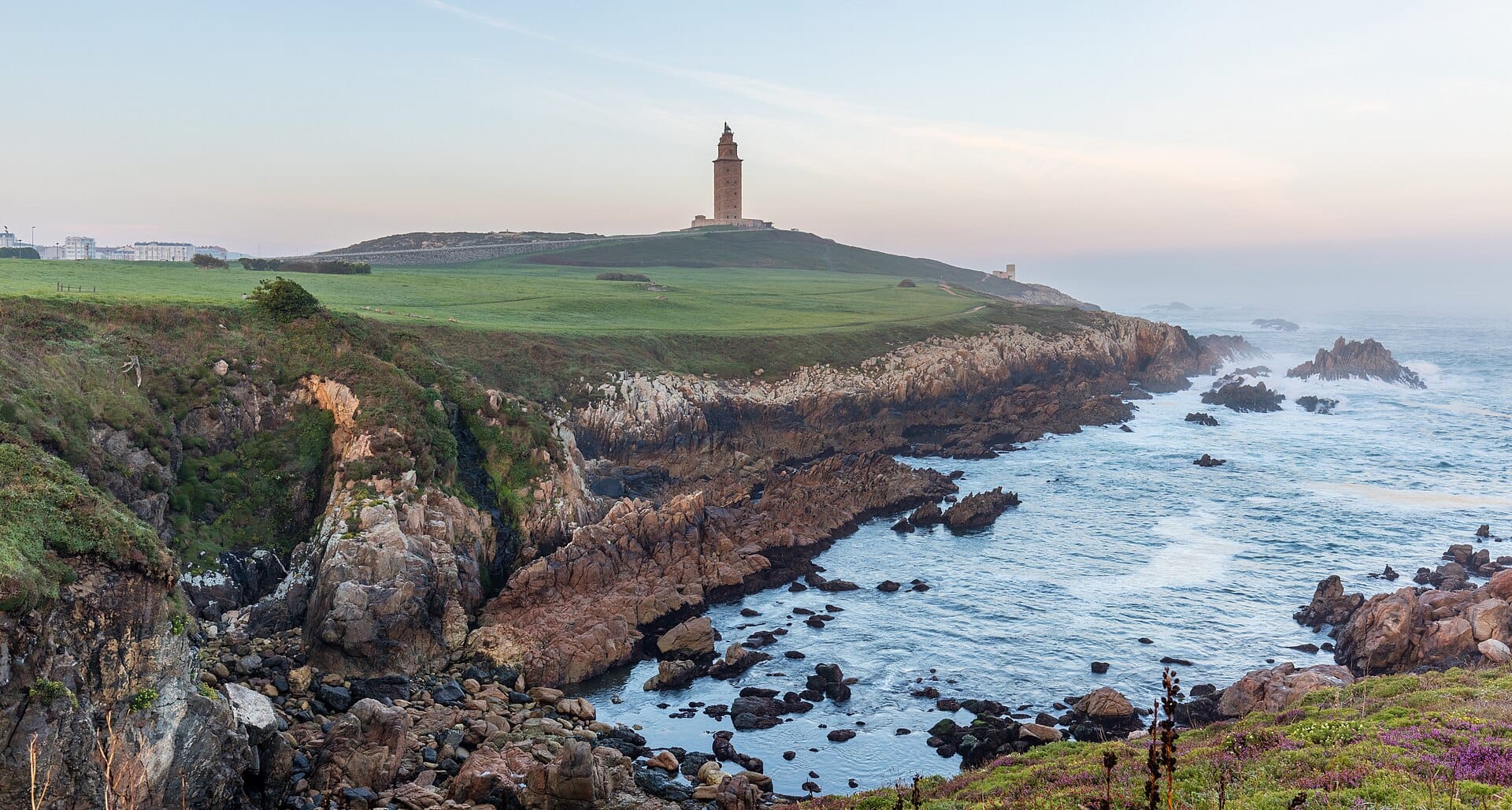
In the north, the rías become narrower and wilder, and the beaches empty as you leave A Coruña behind. The city deserves two nights: seafront, glazed galleries on La Marina and the headland of the Roman lighthouse. It is easily reached by train from Santiago. The rest is by car, towards Ferrol and the cliffs of Cedeira. Pack a jacket, even in July: this is the windiest sector, with the sea around 18 °C.

A Mariña, as far as Ribadeo

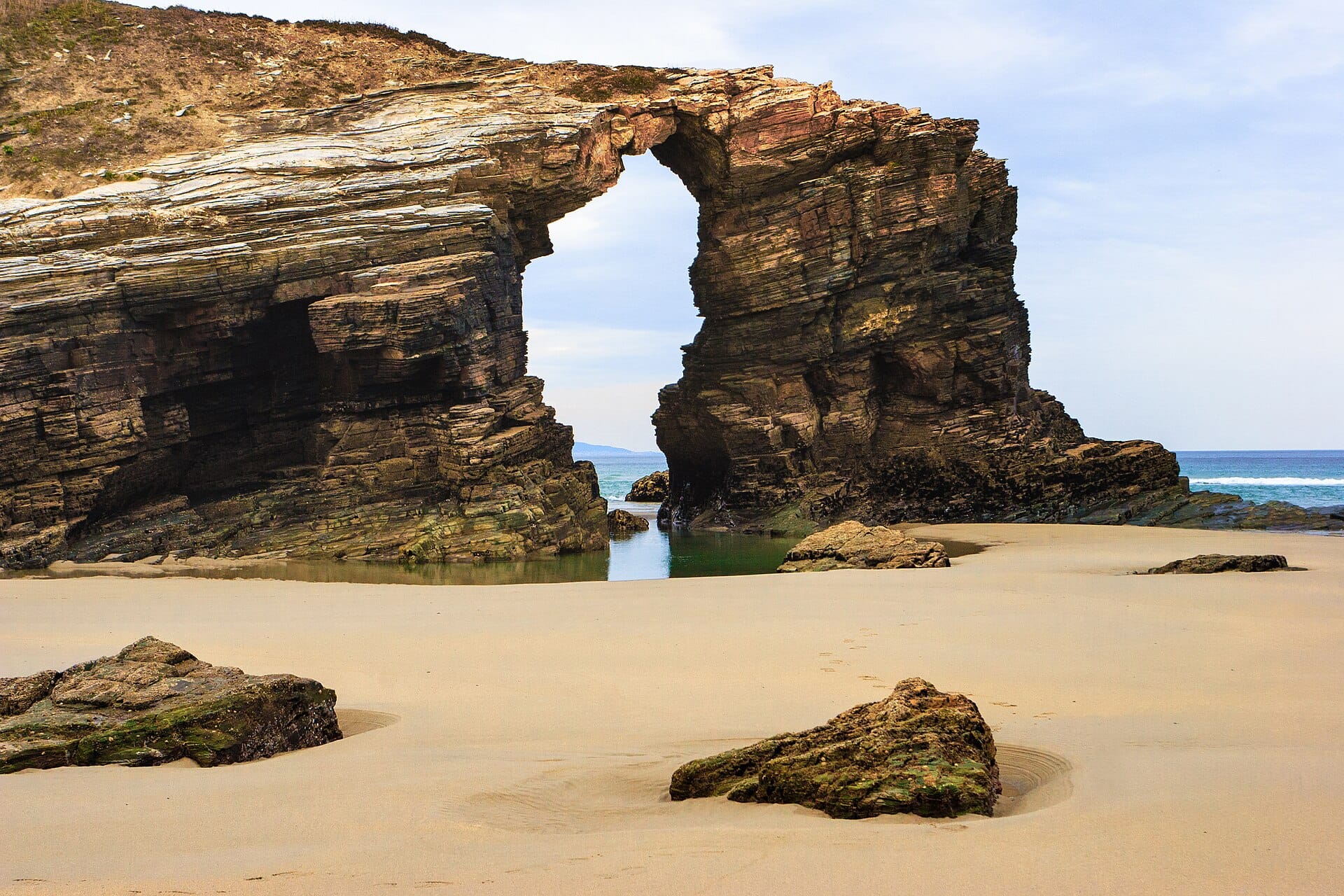
The coast of Lugo province closes Galicia to the east, facing the Cantabrian Sea on the Asturian border. Ribadeo is the base for As Catedrais beach, to be planned around low tide: at high tide the arches are out of reach and the sand has gone. At Holy Week and from 1 July to 30 September, access must be booked, free of charge, no more than 30 days ahead. One night is enough on the way inland, as long as your arrival matches the tide table.

The Ribeira Sacra and Ourense

Far from the sea, the Sil and the Miño carve gorges lined with terraced vineyards and Romanesque monasteries. The Diputación de Lugo catamaran leaves Ponte do Sil for Santa Cristina, about two hours and 9 € according to a 2026 article: check on the booking site. Two nights are a minimum, and a car is essential. Further south, Ourense has hot springs right in the city centre. Avoid this area in high August: Ourense passes 30 °C in the afternoon, far from the coastal cool. The city is also a stop on the high-speed line to Madrid.

Cities to visit in Galicia

Featured destinations appear first.

Galicia in pictures

Unmissable sights in Galicia

Seven places that justify the trip on their own, from the coast to the gorges inland.

Praza do Obradoiro

The monumental square before Santiago cathedral, where pilgrims finally stop, packs on the ground, at the end of weeks of walking.

Tower of Hercules

A Roman lighthouse still in service in A Coruña, a UNESCO site, where the climb costs about 3 € for an Atlantic view.

As Catedrais beach

Arches and caves carved by the ocean near Ribadeo, reachable on foot at low tide only, with a free permit in summer.

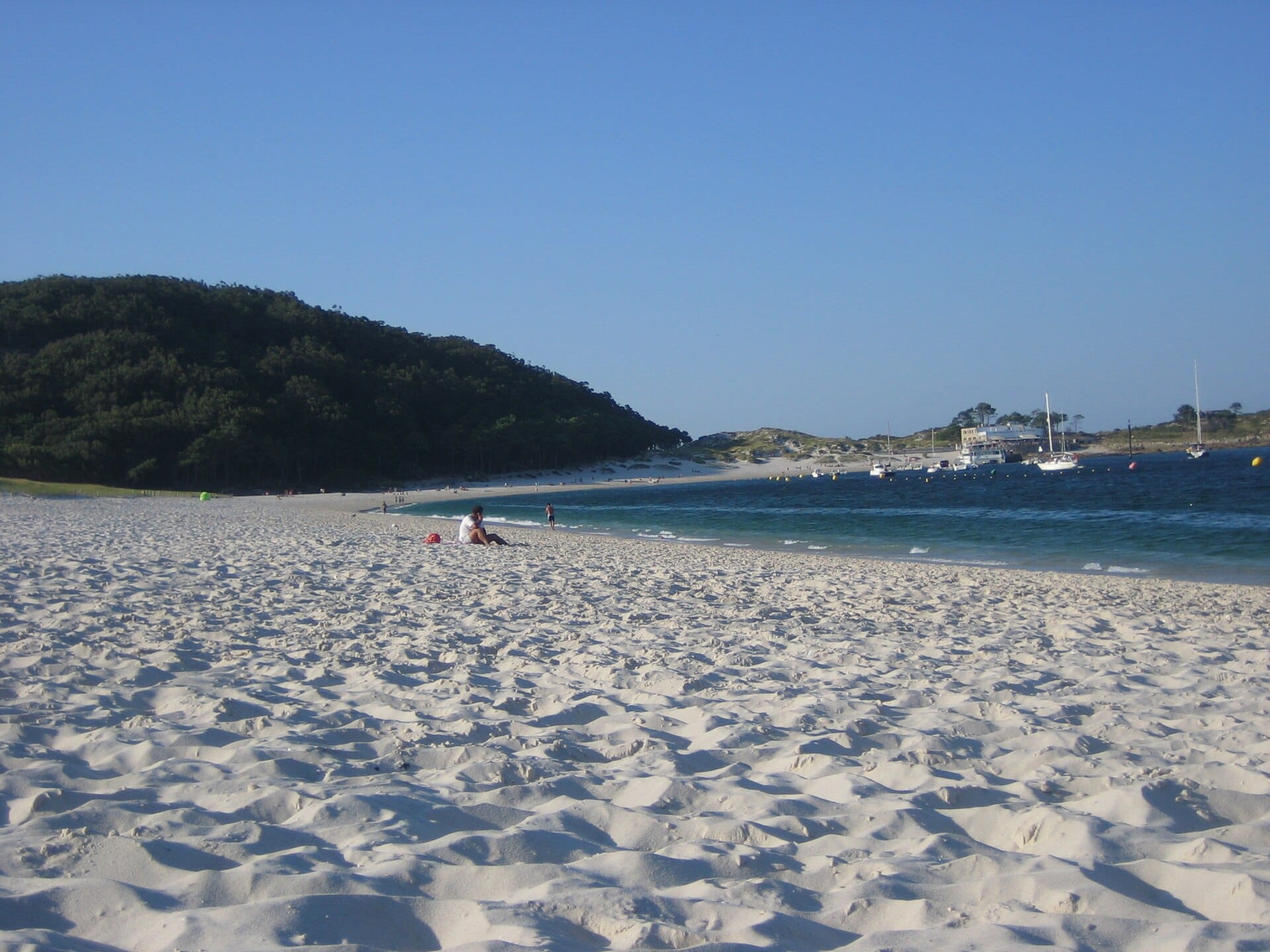
Cíes Islands

An archipelago of the Atlantic Islands national park off Vigo, with white sand beaches, trails and a daily limit on visitors.

Walls of Lugo

A UNESCO-listed Roman enclosure just over two kilometres long, which you can walk along the top, free, all around the centre.

Cape Fisterra

A lighthouse and kilometre-zero marker at the tip of the peninsula, an extension of the Camino for walkers, best seen at sunset.

Santa Cristina monastery

A Romanesque monastery hidden among chestnut trees above the Sil, the end of the catamaran route from Ponte do Sil in the Ribeira Sacra.

Frequently asked questions about Galicia

Santiago de Compostela, A Coruña or Vigo: where should you stay in Galicia?
Santiago suits a short stay without a car, thanks to the airport and the trains to A Coruña and Vigo. Vigo is the choice if you are after the Cíes Islands and the Rías Baixas, A Coruña if you prefer a seaside city.
How long does it take to tour Galicia?
Seven days by car let you link Santiago, A Coruña, As Catedrais and the Ribeira Sacra, but not the Rías Baixas. To combine them, allow around ten days, or pick three to five days focused on a single area.
Can you visit As Catedrais without a reservation?
Yes, outside Holy Week and the period from 1 July to 30 September. On those dates, you need a free permit from the Xunta portal, open 30 days ahead. In every case, come at low tide.
What can you do in Galicia when it rains?
Go for Santiago cathedral and the Mercado de Abastos, an albariño winery in Cambados, or the hot springs of Ourense. Keep coastal trips for the sunny spells, often brief on the Atlantic shore, especially between October and April.
Is the water warm enough to swim in Galicia?
It stays cool: about 13 °C in winter and 18 °C in August, with slight differences between measurements. The sheltered beaches of the Rías Baixas are the most pleasant, and a wetsuit helps you stay in for longer.
Can you combine Galicia and Porto on one trip?
Yes, especially from the south: Vigo is close to the Portuguese border and Porto offers another air gateway. A Porto, Vigo, Santiago loop works well in a week, as long as you check the cross-border train times.
Which seafood should you try in Galicia?
Galician-style octopus and mussels from the bateas are musts, as are the oysters opened to order on Rúa da Pescadería in Vigo. Pair them with an albariño, the white of the Rías Baixas appellation, or a Ribeira Sacra red.
Can you visit Galicia without a car?
Partly: trains link Santiago, A Coruña, Vigo and Ourense, and coaches serve Fisterra. However, the Ribeira Sacra, the north coast and As Catedrais become very awkward without a vehicle, especially off season.

Plan your trip to Galicia

Day-by-day itinerary, budget, bookings and packing in a single app.
Aperçu de l'application PlanTripNow