Skip to content

Visiting Mallorca: which base to choose and when to go

Across 3,640 km², Mallorca sets the cliffs of the Serra de Tramuntana, some 70 km long, against the turquoise coves of the south-east. A good trip comes down to one simple choice: your base, your season and whether or not to hire a car.
  • 1 city

At a glance

Currency
Euro (€)
Time difference
UTC+1 (UTC+2 en été)
Visa
None
7-day budget
€1,120
Per person, comfort profile, excluding international flights.

Why choose Mallorca over another Balearic island?

Mallorca is the largest of the Balearic Islands and combines a mountain range listed by UNESCO in 2011, long beaches and a real capital. Paris Orly is 1 h 55 away by direct flight, and May remains the most balanced month for a trip that is not about swimming.

When to visit Mallorca

Temperatures, rainfall and crowds month by month, to pick your window.
When to visit Mallorca
MonthTemperaturesRainCrowdsVerdict
January4 to 16 °C5 dVery quietJanuary suits walkers: 15C afternoons across the island, sea at 14C.
February4 to 16 °C5 dQuietFor the almond blossom on the Pla, mid-February remains the safest date.
March6 to 18 °C5 dQuietFew visitors and 18C: Tramuntana villages can be explored without traffic jams.
April8 to 20 °C5 dModerateApril is perfect for Palma and the trails, except for a pricier, busier Easter week.
May12 to 24 °C4 dBusyOur favourite month on land: 24C, four rainy days, sea still cool at 17C.
June16 to 29 °C2 dBusySwimming finally feels comfortable at 21C, ahead of July's price peaks.
July19 to 31 °C1 dPackedHigh summer at 31C: book early, as the shuttle replaces cars to Formentor.
August20 to 32 °C2 dPackedSea at 26C but packed coves and peak rates: a month to avoid if you can.
September17 to 28 °C4 dBusyThe first fortnight keeps summer and a 25C sea, the second heralds storms.
October13 to 24 °C6 dModerateSea still at 22C and crowds easing, but expect six rainy days.
November9 to 19 °C6 dVery quietNovember empties the beaches, with Formentor open to cars, 19C and six rainy days.
December6 to 17 °C6 dVery quietDecember favours Palma over the coves: 16C, short days, sea at 16C.
Source: Moyennes 1991-2020 pour Majorque (Climates to Travel), recoupées avec les normales AEMET de Palma-Aéroport B278 (1981-2010) et les moyennes AEMET 1991-2020 publiées par mallorca.com (écart inférieur à 1,2 °C). Température de la mer : série Puertos del Estado 2003-2022 via mallorca.com. La côte de Palma est un peu plus douce, la Tramuntana plus fraîche. Relevé octobre 2026.

Where should you stay in Mallorca?

Sóller as a base: the mountains on foot and by train

The Sóller valley suits those who come to walk. Valldemossa, Deià and Fornalutx work as day trips, and the Sa Calobra road, opened in 1933, drops to the sea through a long run of hairpin bends. From Palma, the historic train takes about an hour, for 23 euros one way according to the official site, and the tram then runs on to the port. By car, allow 26 minutes. Plan three nights and aim for spring: in April, daytime highs sit around 20C.

Pollença or Alcúdia as a base: the north and its two bays

The north is the best compromise for families: Alcúdia's walled old town, the sheltered bays, Pollença and Cap de Formentor. Alcúdia is 38 minutes from Palma by car, or an hour on the 302 bus. In 2026 the road to the Formentor lighthouse was reserved for the 334 shuttle, cyclists and authorised vehicles from mid-May to 18 October, from 10am to 10pm: the dates change every year, so check them before you go. Two nights are enough for the cape and the old town.

Santanyí as a base: the south-east coves

The south-east draws visitors with its clear water. Caló des Moro fills quickly, so arrive early. Further west, Es Trenc, in the municipality of Campos, unrolls about 6 km of sand with no concrete promenade, inside a natural park created in 2017, beside the salt pans that produce fleur de sel. Santanyí is 38 minutes from Palma by car, but 1 h 04 from Alcúdia: avoid a same-day return. The sea reaches at least 21C from June to October, which is the period to target here.

Palma as a base: the island without a car

If you cannot or would rather not drive, stay in the capital. Palma is linked to the airport by the Aerotib bus, charged at 9 to 12 euros, and acts as the hub of the whole TIB network: bus 204 to Sóller, 302 to Alcúdia, 501 to Santanyí. Pay by bank card, the best visitor fare according to the operator. In exchange, the isolated coves and Sa Calobra become hard to reach. This formula is right for a three-day stay, but it suits a full week poorly.

Winter and the Pla: the other Mallorca

Between November and March the island changes character. The sea falls to 14C, the beaches empty and prices drop, yet daytime highs stay between 15C and 19C, which is enough for walking. The almond trees of the Pla, the central plain, blossom from late January through February, with mid-February as the safest date. For a winter swim, look instead towards Tenerife or elsewhere in Spain. In Mallorca, keep these months for walking and for the villages.

Cities to visit in Mallorca

Featured destinations appear first.

How much it costs

Per person per day, excluding international travel.
Budget
72 €/ day
1 248 € for 2 people, 7 days, return flights included
Accommodation
30 €
Food
26 €
Local transport
10 €
Sights and activities
6 €
Comfort
160 €/ day
2 480 € for 2 people, 7 days, return flights included
Accommodation
65 €
Food
50 €
Local transport
25 €
Sights and activities
20 €
Premium
325 €/ day
4 790 € for 2 people, 7 days, return flights included
Accommodation
120 €
Food
90 €
Local transport
50 €
Sights and activities
65 €
Prices checked: Relevé 30 octobre 2026, hors juillet-août (compter nettement plus en haute saison). Sources non officielles sauf mention : repas Numbeo Palma (25 contributeurs, 358 relevés, mis à jour le 29/10/2026) et Hotels VIVA (18/02/2026) ; dortoir 25 à 47 € d'après BudgetYourTrip et Hostelz, non datés, convertis au taux BCE du 30/10/2026 (1,1172 USD) ; hôtels : ADR Baléares 190 € au 1er semestre 2026 (STR/Cushman & Wakefield via TripProf, 18/09/2026), pas de relevé 2026 par catégorie, les montants confort et premium sont donc des estimations ; location de voiture 25 à 40 € par jour hors saison (guides 2026), partagée à deux ; Tren de Sóller, grille tarifaire du site officiel. Écotaxe de saison haute (1,10 à 4,40 € TTC par nuit, Click Mallorca, 18/06/2026) incluse dans activités. Dortoir pour le profil backpacker, chambre double partagée pour confort et premium. Vol Paris Orly-Palma A/R 120 €/pers, prix moyen constaté sur partir.com, page non datée consultée le 30/10/2026, cohérent avec Condor dès 122,99 € pour le 20-31/10/2026.

Entry, health and safety

For FR travellers

Entry requirements

No visa for a tourist stay

Pour un séjour touristique, un ressortissant français doit se munir d'un passeport ou d'une carte nationale d'identité en cours de validité ; le passeport est recommandé pour une CNI à validité prolongée.

Health

Advised: Calendrier vaccinal français à jour, notamment diphtérie, tétanos, poliomyélite, coqueluche et rougeole.

Carte européenne d'assurance maladie à demander au moins 20 jours avant le départ, contrat d'assistance impératif. Noyades et hydrocutions fréquentes aux Baléares. Hausse notable des vols aux Baléares, parfois avec violence. Espagne en vigilance normale, menace terroriste au niveau 4 sur 5 selon le ministère espagnol de l'Intérieur.

Safety

Normal precautions

Emergency

112

Checked in octobre 2026 against the official source. Entry rules change: check the official source before you travel, it alone is authoritative.

Mallorca in pictures

Photo credits : Thomas Wolf, www.foto-tw.de, CC BY-SA 3.0 de, Wikimedia Commons ; dronepicr, CC BY 2.0, Wikimedia Commons ; Tommie Hansen from Stockholm, Sweden, CC BY 2.0, Wikimedia Commons ; Tobias Lindman from Stockholm, Sweden, CC BY 2.0, Wikimedia Commons ; Isiwal, CC BY-SA 4.0, Wikimedia Commons ; Joan Gené, CC0, Wikimedia Commons ; Popo le Chien, CC0, Wikimedia Commons ; Adam Jones from Kelowna, BC, Canada, CC BY-SA 2.0, Wikimedia Commons ; Javier Pérez Montes, CC BY-SA 4.0, Wikimedia Commons

The six stops that justify the trip

A tight selection, to spread according to your base.

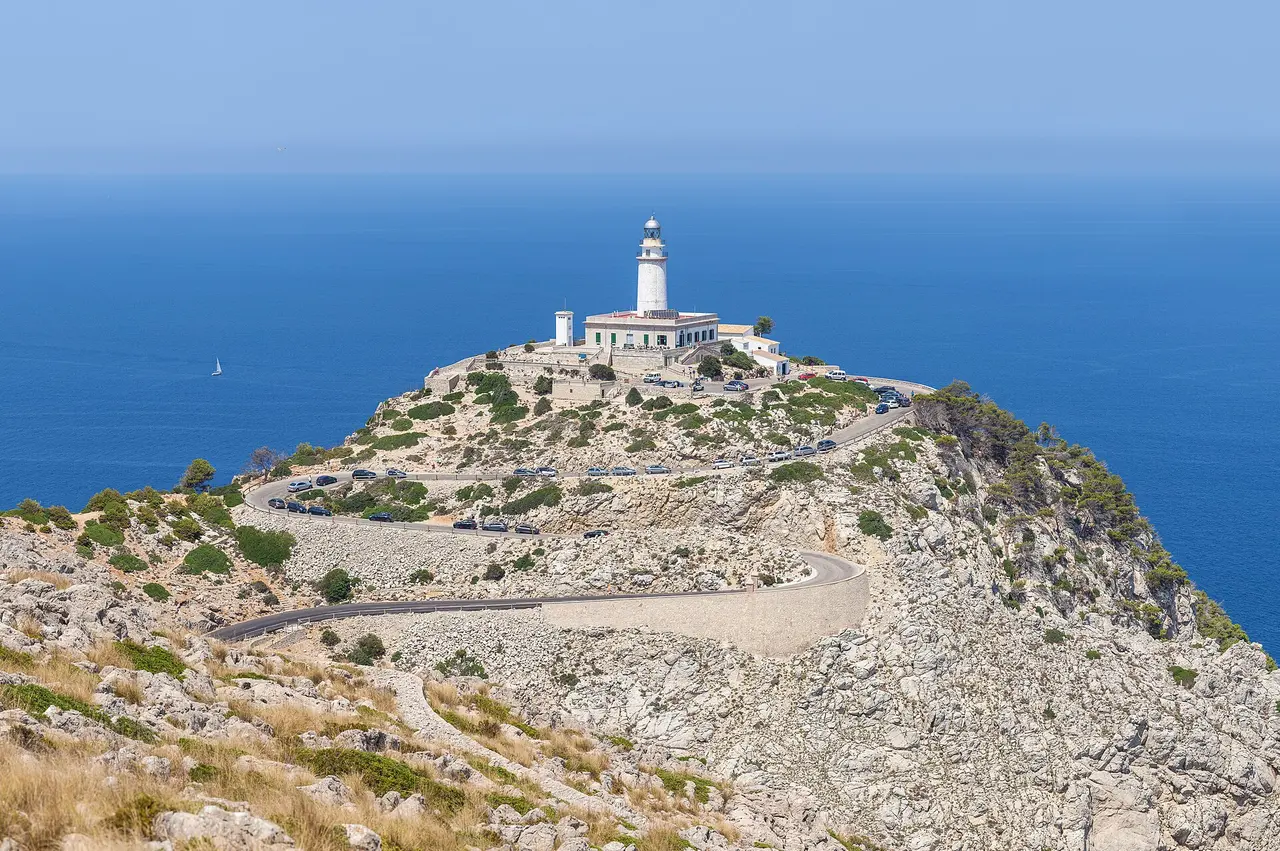
Cap de Formentor

Its lighthouse stands over the island's northern tip at the end of a winding road, which is subject to daytime traffic restrictions during high season.

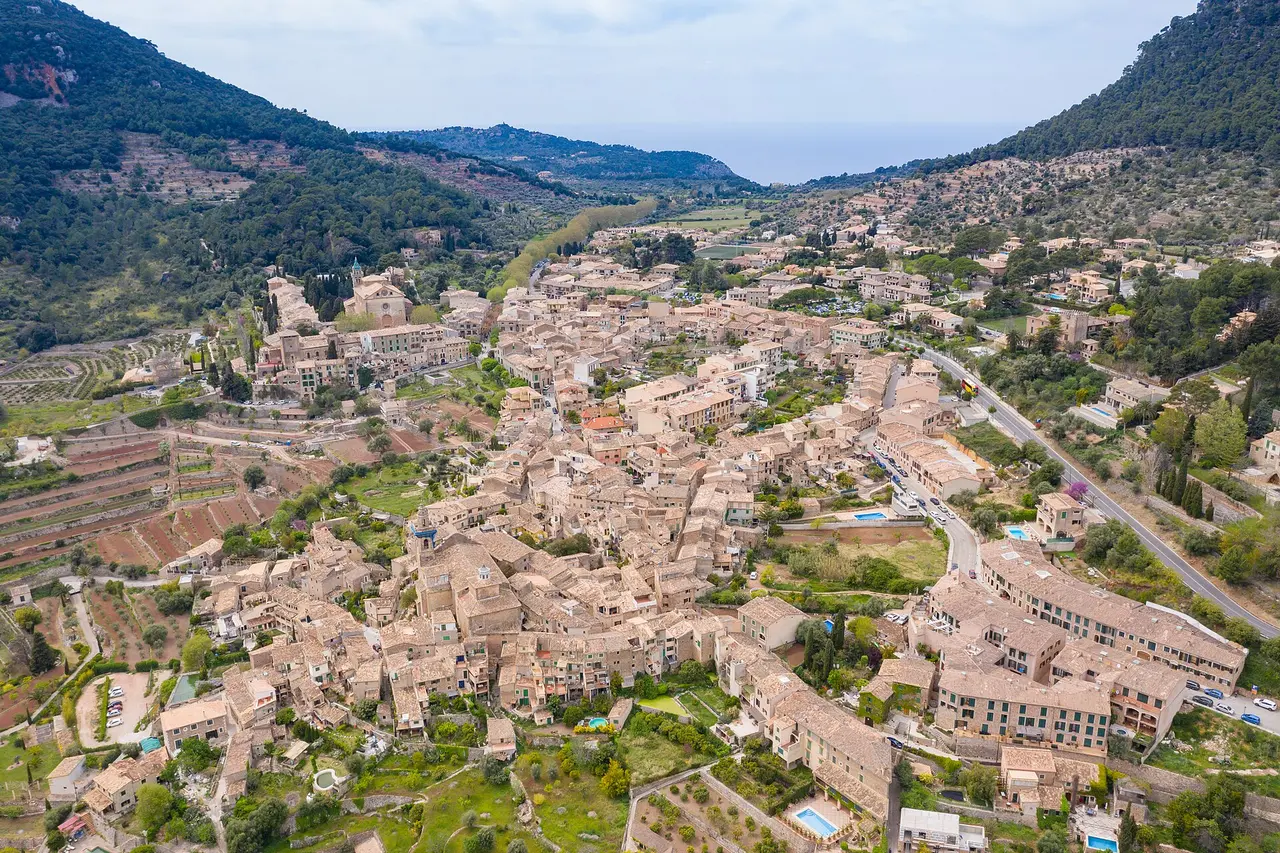
Valldemossa Charterhouse

Chopin and George Sand spent the winter of 1838-1839 here; visitors see the cloister, the old pharmacy and the Chopin cell museum today.

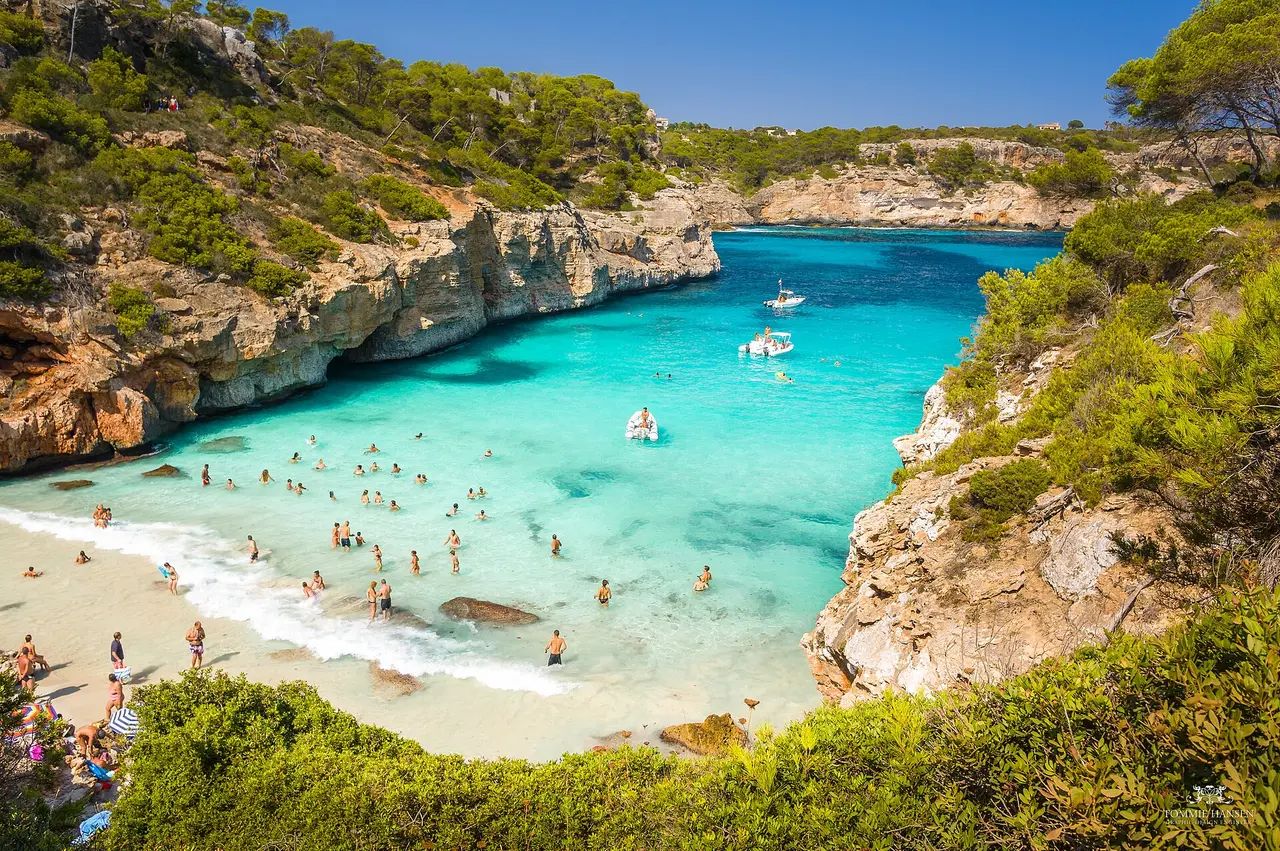
Caló des Moro

A small south-east cove with turquoise water between two rock walls, very busy in season, and best reached early in the morning if you can.

Sa Calobra road

Opened in 1933, it crosses the Coll dels Reis at 682 metres, then drops to the sea through hairpins and a spiral bridge.

Drach Caves

Near Porto Cristo, in Manacor, these caves shelter Lake Martel, 115 metres long, where concerts accompany the tourist visits to the cave system.

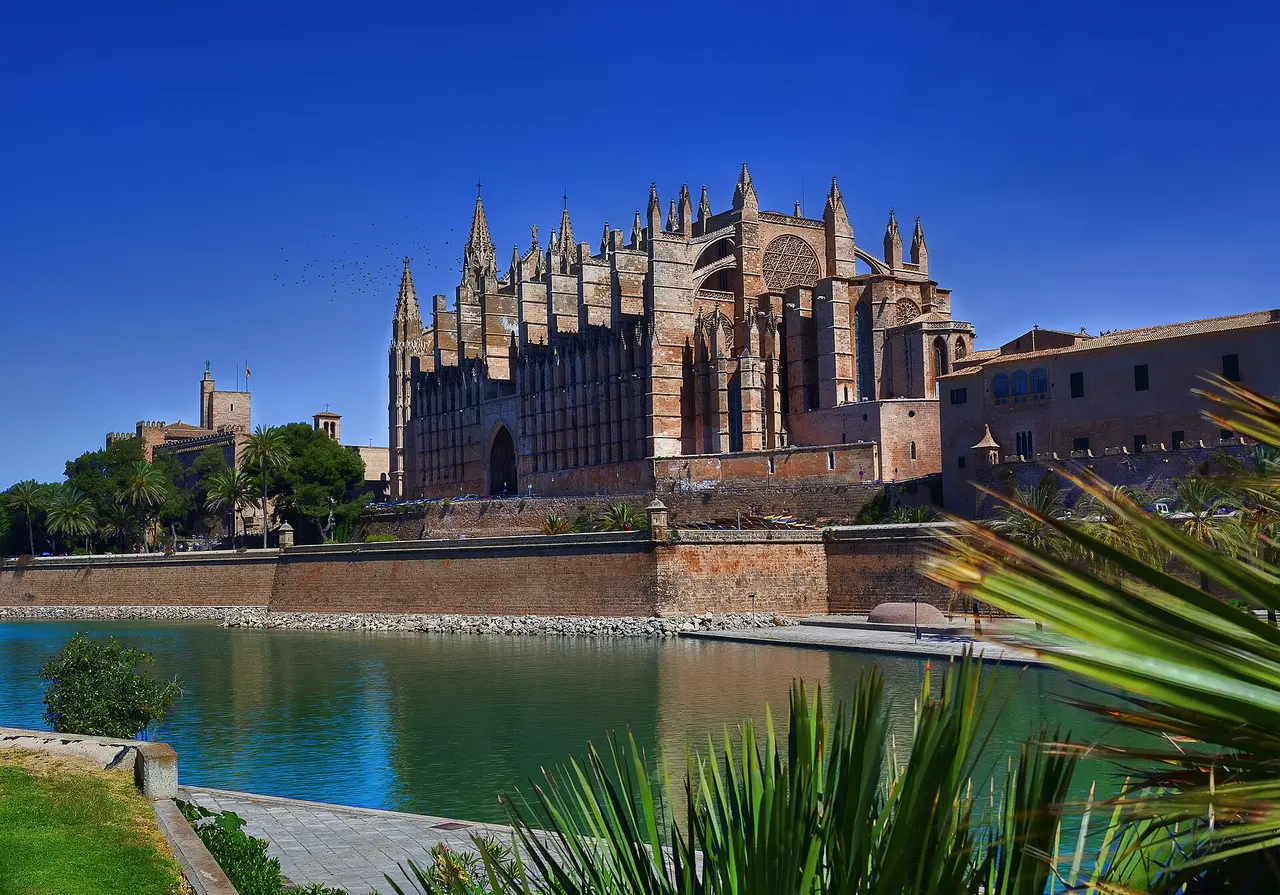
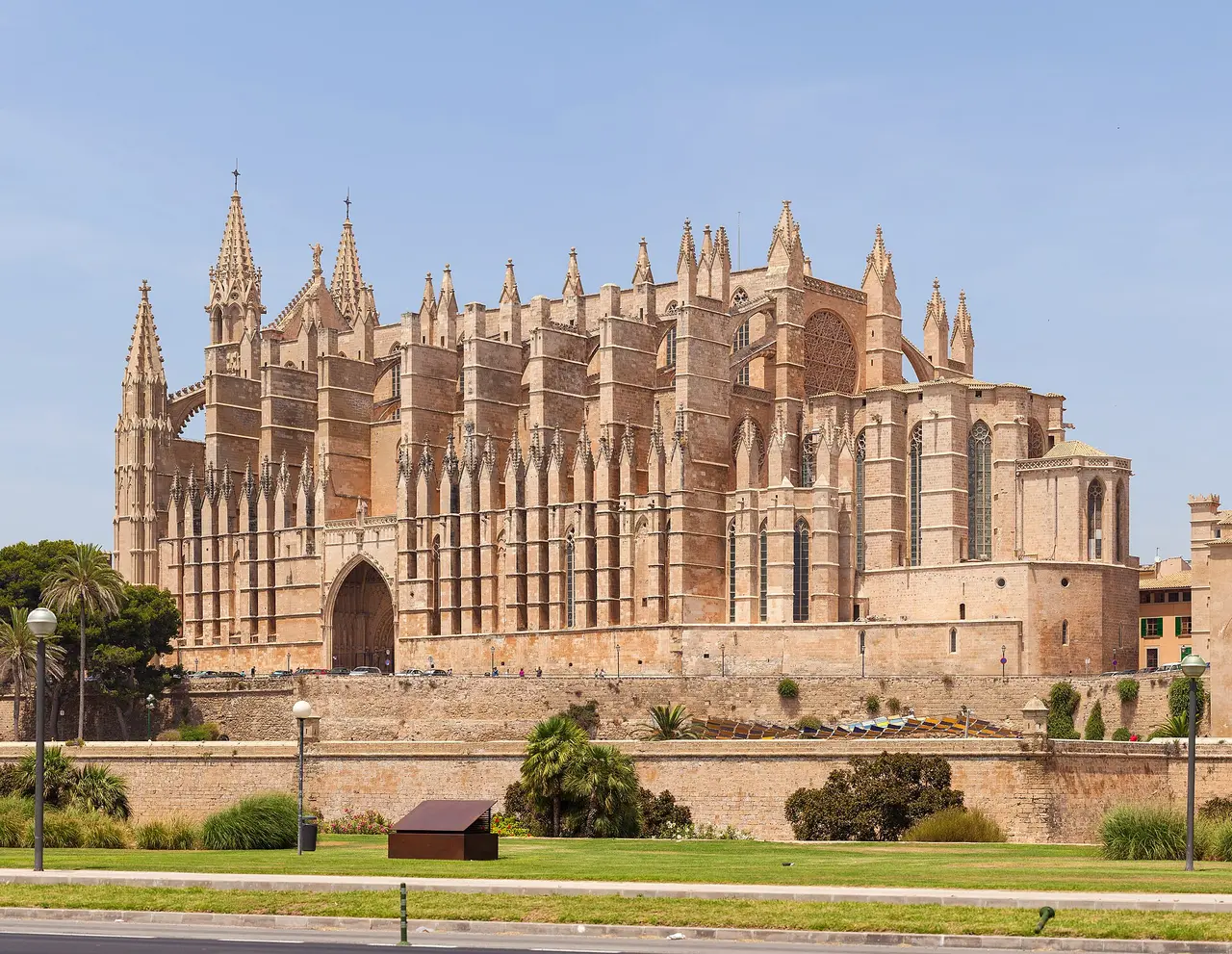
La Seu Cathedral

Palma's great Gothic nave rises facing the sea above the Parc de la Mar and towers over the old town walls.

Practical information for Mallorca

Direct flight from Paris
1 h 55 from Orly; observed average fare 120 euros return (partir.com, October 2026)
Ecotax
1 to 4 euros per night per person plus VAT from 1 May to 31 October, 0.25 to 1 euro otherwise; free under 16, half price from the 9th night
Formentor shuttle
Line 334 from Alcúdia and Port de Pollença, mid-May to mid-October in 2026
Sóller train
23 euros one way from Palma, 40 euros with the tram (official site, October 2026)
Paying on TIB buses
A bank card gets the best visitor fare according to the operator
Meals
About 16.50 euros in a simple Palma restaurant (Numbeo, October 2026)
Airport taxi to the north
90 to 110 euros per ride (Hotels VIVA, February 2026)
Public beach sunbeds
15 to 20 euros a day for two sunbeds and a parasol (Hotels VIVA, February 2026)
Papers for French nationals
Valid passport or national ID card (France Diplomatie, October 2026)
Emergencies and health
112 for emergency services; request the European Health Insurance Card 20 days before departure

Your questions about Mallorca

Can you drive to the Formentor lighthouse?
Not all year. In 2026 the road was closed to private cars from mid-May to 18 October, from 10am to 10pm, with a 334 shuttle from Alcúdia and Port de Pollença. Restrictions are expected to return in May 2027.
How much is the Mallorca ecotax for a couple?
It depends on your accommodation and the season. At a three-star hotel, allow 2 euros per night per person plus VAT from May to October, so about 4.40 euros a night for two. The rate falls to 0.50 euros before VAT in low season.
Should you take the train or the bus from Palma to Sóller?
The train is an excursion, the bus simply transport. The historic train takes about an hour for 23 euros one way. Line 204 is faster and far cheaper, with up to 38 services a day each way in summer 2026.
Can you swim in Mallorca in October?
Yes, the sea averages 22C, still warmer than in June. The air reaches 24C in the afternoon, but October has six rainy days on average, so leave some margin if swimming is the main goal of your trip.
How much does a week in Mallorca cost for two, flights included?
Allow about 1,250 euros on a tight budget and 2,480 euros in comfort outside July and August, with a flight at 120 euros per person. These figures are estimates gathered in October 2026 and rise sharply in high summer.

Plan your trip to Mallorca

Day-by-day itinerary, budget, bookings and packing in a single app.
Aperçu de l'application PlanTripNow