Skip to content

Visit Marie-Galante: rum, beaches and itineraries on the island of windmills

One hour at sea from Pointe-à-Pitre is enough to slow right down. Across 158 km² of gentle relief, the road runs between cane fields and windmill towers, linking three small towns, three distilleries and pale-sand beaches, from Anse Canot to La Feuillère.

At a glance

Currency
Euro (€)
Time difference
UTC-4
Visa
None
7-day budget
€1,064
Per person, comfort profile, excluding international flights.

Is Marie-Galante worth more than a day trip?

Yes: the third-largest island in the French Antilles, this part of the Guadeloupe archipelago covers 158 km² shared between three communes, Grand-Bourg, Capesterre and Saint-Louis. The ferry takes 1 hour from Pointe-à-Pitre, but a single day only lets you see one town and one beach. Allow three nights, with a car, ideally from February to April.

When to visit Marie-Galante

Temperatures, rainfall and crowds month by month, to pick your window.
When to visit Marie-Galante
MonthTemperaturesRainCrowdsVerdict
January21 to 28 °C17 dModerateStart of the dry season, 28°C in the afternoon and brief showers: a good month for driving round the island and the west-coast beaches.
February21 to 29 °C13 dBusyThe driest month (84 mm), ideal for the trails; the winter school holidays fill the gîtes quickly, so book early.
March21 to 29 °C14 dBusyStill dry and sunny with 8 hours of sunshine a day; at 26°C the sea is at its coolest of the year.
April22 to 30 °C13 dModerateEnd of the dry season, 30°C and little rain: the last safe month before sargassum starts reaching the Capesterre coast.
May23 to 30 °C16 dModerateRain returns and sargassum can hit the east; when Whitsun falls in May, the Terre de Blues festival fills the island.
June23 to 30 °C16 dQuietThe hurricane season opens: a quiet island and lower prices, but check the Météo-France warnings before crossing.
July24 to 31 °C19 dBusySummer holidays: book your crossing and car early; it is 31°C and it rains on more than half the days.
August24 to 31 °C19 dBusyHigh summer and the heart of the hurricane season: keep your return flexible, a crossing can be cancelled.
September23 to 31 °C20 dVery quietThe warmest sea (29°C) but 20 rainy days and a high hurricane risk: a month to avoid if your dates are fixed.
October23 to 30 °C19 dVery quietVery wet (273 mm) and still hurricane season; few visitors, but a stay that depends heavily on the weather.
November22 to 30 °C18 dQuietThe wettest month (278 mm) and the hurricane season ends on the 30th: aim for the second half.
December22 to 29 °C18 dModerateThe weather settles and the sea is at 27°C; the year-end holidays push accommodation prices up.
Source: Moyennes mensuelles de Grand-Bourg (Marie-Galante) publiées par weather2travel.com, relevé du 2 novembre 2026 (valeurs arrondies au degré, période de référence non précisée par la source). Saison cyclonique de juin à novembre selon les services de l'État en Guadeloupe (page Saison cyclonique, guadeloupe.gouv.fr). Échouements de sargasses et pré-alertes au sulfure d'hydrogène à Capesterre-de-Marie-Galante relevés par la préfecture en mai, juin, juillet et août (bulletins 2024 et 2025).

What to see in Marie-Galante?

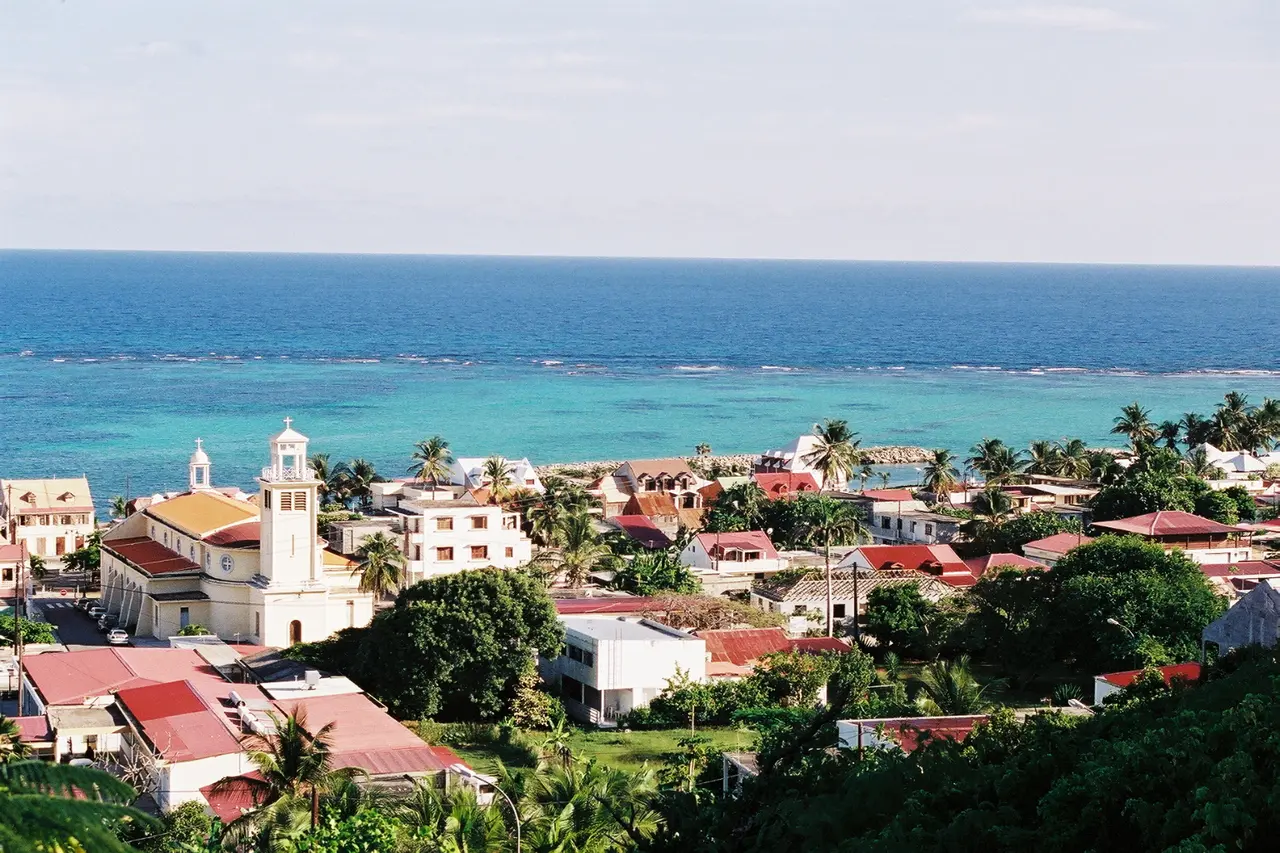
Grand-Bourg and the sugar-growing south

This is where the ferry from Pointe-à-Pitre docks after an hour at sea, with two to three sailings a day all year round. The town is mainly a gateway: the market, a rental car, then on to Habitation Murat, a former 19th-century sugar estate turned eco-museum. The Murat trail starts there, 7.5 km and about 3 hours on red waymarks, past the Mare au Punch and the Coulée Ouliée ravine. Set off before 3:30 pm with 1.5 L of water per person. The Bielle distillery, founded in 1868, runs guided tours with tastings.

Capesterre, the Atlantic side

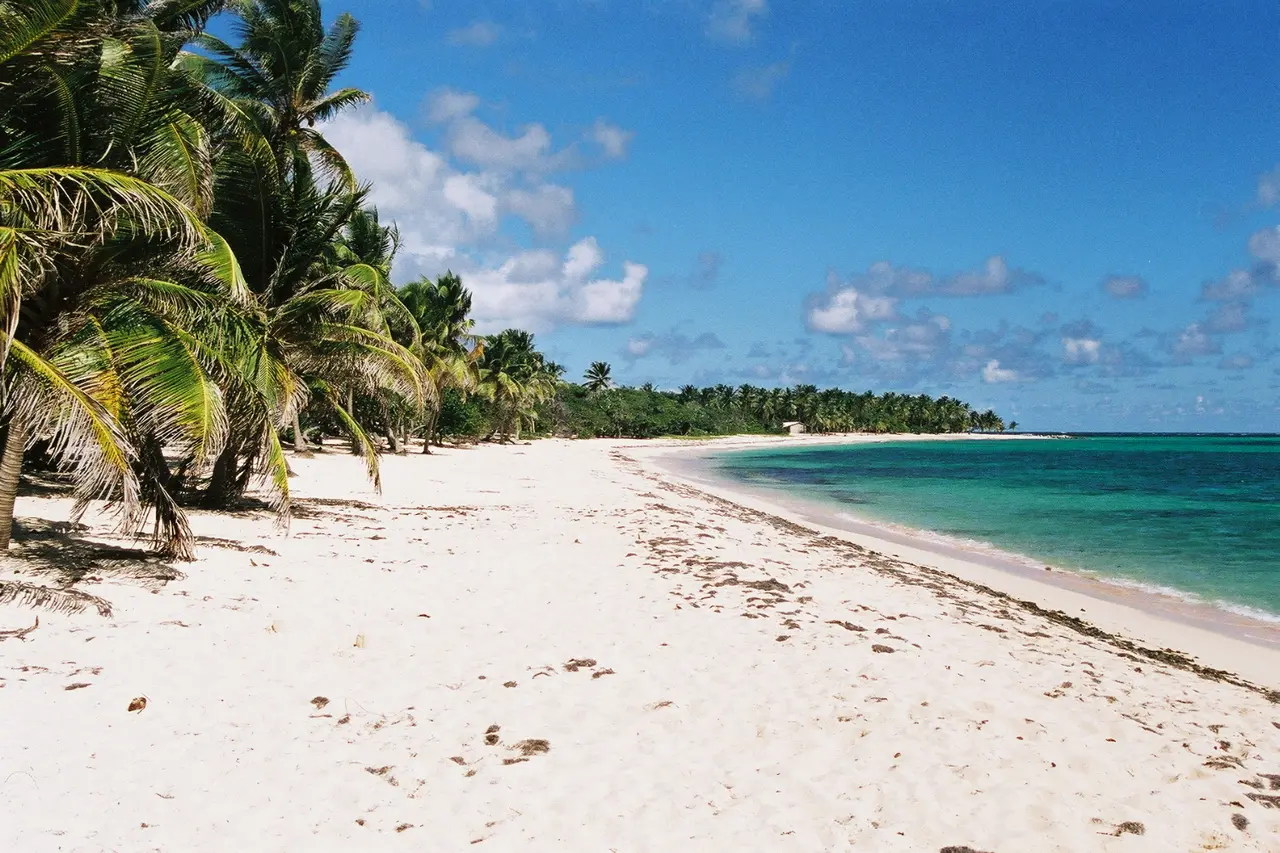
The east coast lines up the big beaches, La Feuillère first among them, a long strip of sand under coconut palms. The commune also holds Morne Constant, the island's highest point at only 204 m, and the Galeries cliffs, which take the full Atlantic swell. The restored Bézard windmill and the Bellevue distillery fit into the same half-day. The downside of this exposure is sargassum. The prefecture has installed a continuous hydrogen sulphide monitoring station in Capesterre, and a pre-alert is issued from 1 ppm over 24 hours. Check its bulletin before booking on the Capesterre side.

Saint-Louis and the leeward coast

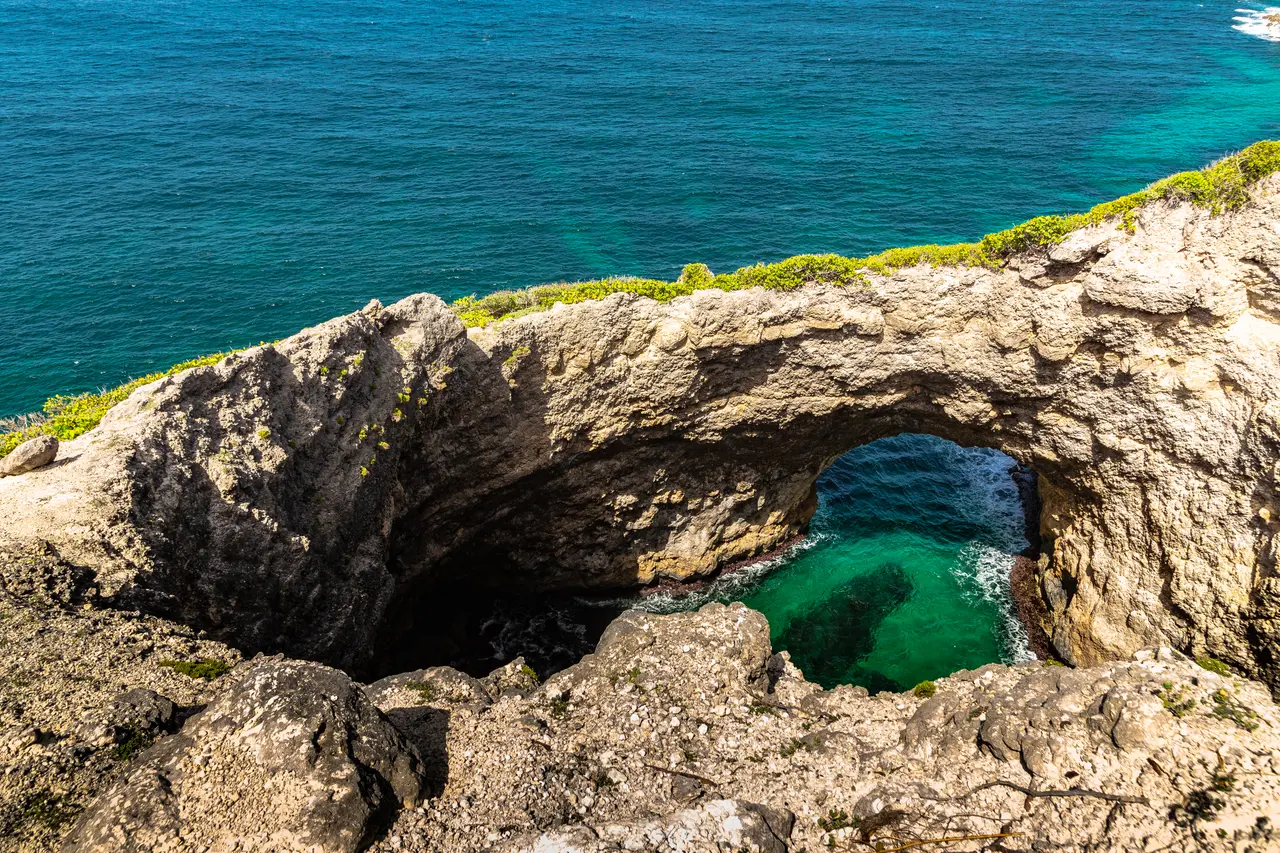
Calm sea, pale sand and the first European settlement site at Vieux-Fort: the west is the swimming coast. Anse Canot suits snorkelling, and the wild beach of Folle Anse stretches south of the harbour. The Vieux-Fort trail, 9 km and about 3 hours on green waymarks, follows these beaches then crosses a mangrove with a bird hide. Manchineel trees, marked with a red stripe, are toxic: never shelter beneath them. To the north, beyond the fault line known as la Barre, the Gueule Grand Gouffre arch opens about 5 km from the town, with no railing.

Dry season, hurricanes and Terre de Blues

February is the driest month with 84 mm, November the wettest with 278 mm, and the sea goes from 26°C in March to 29°C in September. The hurricane season runs from June to November: during that period, keep some slack on your return date. February to April remains the best window, before the sargassum arrives. The Terre de Blues festival fills the island every Whitsun weekend; if your dates coincide, book lodgings and car several months ahead. To place the island among France's overseas territories, note that no formalities apply when arriving from mainland France.

Cities to visit in Marie-Galante

Featured destinations appear first.
Coming soon.

How much it costs

Per person per day, excluding international travel.
Budget
84 €/ day
2 316 € for 2 people, 7 days, return flights included
Accommodation
35 €
Food
22 €
Local transport
22 €
Sights and activities
5 €
Comfort
152 €/ day
3 428 € for 2 people, 7 days, return flights included
Accommodation
65 €
Food
40 €
Local transport
32 €
Sights and activities
15 €
Premium
260 €/ day
5 180 € for 2 people, 7 days, return flights included
Accommodation
120 €
Food
65 €
Local transport
40 €
Sights and activities
35 €
Prices checked: Relevé du 2 novembre 2026, montants par personne et par jour, chambre ou gîte partagé à deux. Hébergement : gites.fr (365 annonces sur Marie-Galante, 40 % sous 100 EUR la nuit) et combien-coute.net Guadeloupe (hôtel 2 étoiles 128 EUR, 3 étoiles 175 EUR la nuit, mis à jour le 02/11/2026). Repas : combien-coute.net Guadeloupe (déjeuner 18 EUR, dîner 3 plats 30 EUR, mis à jour le 02/11/2026), moyennes de l'archipel et non de l'île seule. Transport : location de voiture 36 à 37 EUR/jour en catégorie économique sur Marie-Galante (liligo.fr) et 57 EUR/jour en moyenne en Guadeloupe (combien-coute.net, 06/10/2026), coût partagé à deux, essence 1,81 EUR/L. La traversée en ferry depuis Pointe-à-Pitre n'est PAS incluse : le tarif adulte n'est pas publié sur la page horaires de L'Express des Îles (tarif enfant 34 EUR A/R, grille en vigueur depuis le 31/03/2026). Vol A/R Paris-Pointe-à-Pitre : PartirOu.com, statistiques calculées le 01/11/2026 sur quatre semaines (prix moyen observé 770 EUR, plus bas 522 EUR) ; retenu 570 EUR (backpacker), 650 EUR (confort), 770 EUR (premium) par personne.

Entry, health and safety

For FR travellers

Entry requirements

No visa for a tourist stay

Marie-Galante fait partie de la Guadeloupe, département et région d'outre-mer : aucune formalité d'entrée pour un ressortissant français. Une carte nationale d'identité ou un passeport en cours de validité suffit ; un passeport est exigé en cas de transit par un pays hors Union européenne et hors Schengen, même sans sortir de l'aéroport. Certaines compagnies aériennes peuvent demander un passeport.

Health

Advised: Aucun vaccin obligatoire depuis la France hexagonale. Institut Pasteur : calendrier vaccinal à jour et hépatite A recommandés systématiquement ; dengue et chikungunya à envisager selon l'épidémiologie et la durée du séjour.

Pas de transmission du paludisme, aucune chimioprophylaxie (Institut Pasteur). Certificat de vaccination contre la fièvre jaune exigé des voyageurs de plus d'un an venant d'un pays à risque. Risques naturels : saison cyclonique de juin à novembre, archipel en zone de sismicité 5 (forte), et pré-alertes au sulfure d'hydrogène liées aux sargasses à Capesterre-de-Marie-Galante : suivez les consignes de la préfecture.

Safety

Normal precautions

Emergency

112

Checked in novembre 2026 against the official source. Entry rules change: check the official source before you travel, it alone is authoritative.

Marie-Galante in pictures

Photo credits : Greeg Pakary, CC BY-SA 4.0, Wikimedia Commons ; Tjeerd Wiersma, CC BY 2.0, Wikimedia Commons ; No machine-readable author provided. Smiley assumed (based on copyright claims)., CC BY-SA 3.0, Wikimedia Commons ; Enrevseluj, CC BY-SA 4.0, Wikimedia Commons ; Saint-Louis de Marie-Galante, CC BY-SA 3.0, Wikimedia Commons ; auteur inconnu, CC BY-SA 3.0, Wikimedia Commons ; F FREDERIC, CC BY-SA 4.0, Wikimedia Commons

Sights not to miss in Marie-Galante

Five places that sum up the island: a sea arch, two relics of the sugar era and two beaches with opposite characters.

Gueule Grand Gouffre

A natural arch carved by the sea into the northern cliff, about 5 km from Saint-Louis. Free access, but the edges are unfenced: keep well back from the drop.

Habitation Murat

A former 19th-century sugar estate in Grand-Bourg with a neoclassical manor, windmills and a medicinal garden, now an eco-museum of local arts and folk traditions.

Bézard windmill

A restored windmill in Capesterre, listed as a historic monument, one of only two restored mills out of the hundred or so sugar mills the island once had.

Feuillère beach

A long Capesterre beach lined with coconut palms, the island's spot for swimming, water sports and lazing about, outside sargassum episodes.

Anse Canot

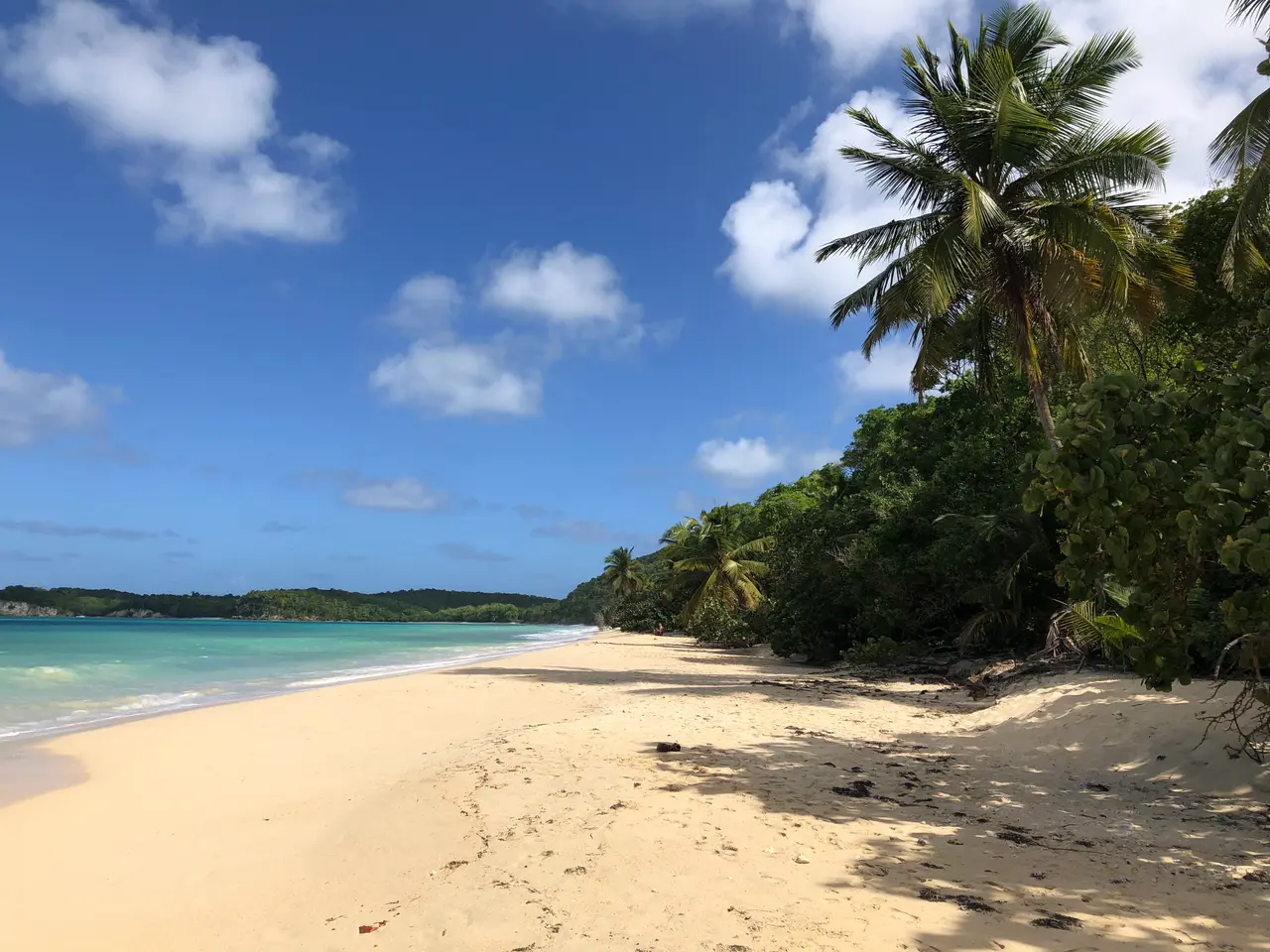
A sheltered cove in Saint-Louis with calm, clear water, the starting point of the coastal Vieux-Fort trail and a good place to snorkel.

Practical information for Marie-Galante

Crossing
L'Express des Îles ferry from Pointe-à-Pitre to Grand-Bourg, 1 hour non-stop, 2 to 3 sailings a day all year; departures from Saint-François depending on the season.
Flights
Air Inter Îles links Pointe-à-Pitre to Les Bases airfield in about 15 minutes, on a small aircraft.
Car
Close to essential: around €36 to €37 a day in the economy category, with the highest prices in August. Buses serve the towns, but less often and poorly reach outlying sites.
Sargassum
Frequent strandings in Capesterre. Check the hydrogen sulphide pre-alerts issued by the prefecture before heading to the east coast.
Manchineel trees
Toxic trees marked with a red stripe on the beaches and the Vieux-Fort trail: never shelter beneath them or taste the fruit.
Rum
The Bellevue, Bielle and Poisson distilleries make agricultural rum often bottled at 59%: taste in moderation if you are driving.
Accommodation
Supply relies largely on gîtes and guesthouses; around 40 percent of gîtes list under €100 a night.
Hurricane season
June to November. Check the Météo-France Guadeloupe warnings before every crossing.
Emergencies
112, or 15 (ambulance), 17 (gendarmerie), 18 (fire brigade), free and available 24 hours a day.

Frequently asked questions about Marie-Galante

Can you visit Marie-Galante as a day trip from Pointe-à-Pitre?
It can be done with the morning and evening ferries, about 1 hour each way. You will see Grand-Bourg, Habitation Murat and one beach, little more. For Capesterre, Saint-Louis and the Gueule Grand Gouffre, plan at least two nights on the island.
Where does the boat to Marie-Galante leave from?
L'Express des Îles runs the Pointe-à-Pitre to Grand-Bourg route all year, 1 hour non-stop, with two to three daily sailings and extra rotations during holidays. Departures from Saint-François exist depending on the season. Timetables can change without notice.
Does sargassum stop you swimming at Capesterre-de-Marie-Galante?
Sometimes. The commune sees massive strandings, so much so that the prefecture monitors hydrogen sulphide there continuously. During a pre-alert, from 1 ppm over 24 hours, keep away from the seaweed and do not stand downwind of the fumes.
Which rum should you taste on Marie-Galante?
Three distilleries are still working: Bielle in Grand-Bourg, founded in 1868, Bellevue in Capesterre and Poisson, which makes Père Labat rum. Their agricultural rum is often bottled at 59%. If you are driving, enjoy the tours but go easy on the tasting.
When is the Terre de Blues festival on Marie-Galante?
Every year over the Whitsun weekend, in Grand-Bourg. The festival draws thousands of visitors to an island with little accommodation: gîtes, cars and crossings need booking several months ahead if you want to attend.
Is the Gueule Grand Gouffre dangerous?
The site is free to visit, on the northern cliff about 5 km from Saint-Louis, but the edges are unfenced. Keep well back from the drop, especially with children or after rain, and do not climb down towards the arch.
Why is Marie-Galante called the island of a hundred windmills?
In the early 19th century the island had just over a hundred windmills for crushing sugar cane. Around seventy towers remain, including two restored mills, such as the one at Bézard in Capesterre.

Plan your trip to Marie-Galante

Day-by-day itinerary, budget, bookings and packing in a single app.
Aperçu de l'application PlanTripNow