Skip to content

Travel to Bora Bora : when to go and what to do around the lagoon

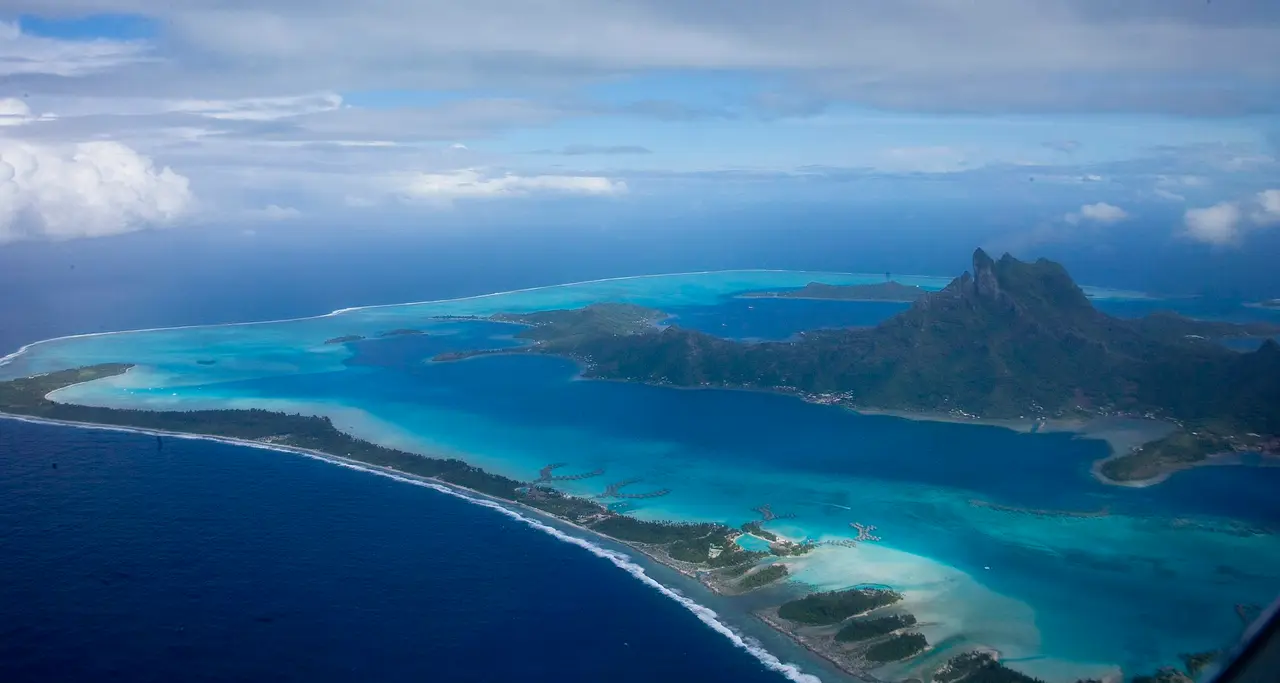
A basalt peak rising from a lagoon of countless shades of blue, white-sand motus resting on the coral reef, rays gliding past swimmers and a single village by the water: Bora Bora is best enjoyed slowly, over three or four nights as part of a trip through French Polynesia.

Why go to Bora Bora?

Bora Bora is a volcanic island in French Polynesia, surrounded by a vast lagoon enclosed by a coral reef and a ring of motus. Travellers come for the beauty of the lagoon, ideal for snorkelling, and the silhouette of Mount Otemanu. It is reached by domestic flight from Papeete, on the island of Tahiti.

Bora Bora must-sees

Six reasons to cross the Pacific, between lagoon and mountain.

Mount Otemanu

This unmistakable 727-metre basalt peak towers over the main island. It is best photographed from the lagoon or the eastern motus in the late afternoon.

Coral gardens

These shallow areas near the reef gather butterflyfish, parrotfish and corals. They are reached by boat, with mask and snorkel, ideally when the sea is calm.

Rays and blacktip sharks

Lagoon trips let you swim near stingrays and blacktip reef sharks. Follow the guides' instructions and never touch the animals.

Faanui guns

Installed on the heights during the Second World War, these American guns recall the island's supply base and offer wide views over the lagoon.

Marae Fare Opu

This Polynesian ceremonial site on Faanui Bay bears turtle petroglyphs carved into stone, a testament to Leeward Islands culture before the arrival of Europeans.

Povai Bay

Close to Vaitape, this bay offers one of the best land viewpoints on Mount Otemanu, with a lagoon often glassy in the early morning.

What to discover in Bora Bora, from the lagoon to the peaks?

Vaitape and the west coast

Vaitape, the island's main village, is where shuttle boats from the airport and cruise ship tenders arrive. You will find the quay, the church, the town hall, grocery stores, a few snack bars and Tahitian pearl shops, as well as bike and scooter rentals. To the north, Faanui Bay still bears traces of the American presence during the Second World War, from 1942 to 1946. The coastal road, about 32 kilometres long, loops around the main island: allow half a day by e-bike with stops at viewpoints, in this part of Polynesia that belongs to France.

Matira and the southern point

About seven kilometres south of Vaitape, Matira Point has the finest public beach on the main island, where shallow water and white sand let you wade far out into the lagoon. Families find easy swimming here, and sunsets behind the motus draw a crowd in the evening. The area also gathers several hotels, guesthouses and snack bars, making it the best base for staying on the island without relying on a boat. The beach surroundings are easy to explore on foot, and the local bus or a bike gets you to Vaitape in about twenty minutes.

The lagoon and its motus

The lagoon, several times larger than the island itself, is enclosed by a coral reef lined with motus, islets of sand and coconut palms where most of the large overwater hotels stand. It can only be explored by boat: outrigger canoe trips, glass-bottom boats or jet skis, by the half day or full day. The main stops let you swim with stingrays and small blacktip reef sharks, harmless to humans, or snorkel over coral gardens. The best visibility comes from May to October, during the dry season.

The mountainous interior

The heart of the island is formed by the remains of an ancient volcano, whose main summits are Mount Otemanu, 727 metres, and Mount Pahia, 661 metres. Otemanu, made of crumbling rock, cannot be climbed. Pahia can be reached on a demanding hike, slippery after rain, best done with a local guide and an early start to avoid the heat. More simply, 4x4 excursions climb the hillsides to viewpoints over the lagoon and to guns installed during the war. Allow half a day for these outings, ideally booked in the dry season, from May to October.

Getting there

Airports serving Bora Bora, from main hubs to secondary ones.
  • AGFAgen La Garenne airportAgenSecondary
  • AJAAjaccio Napoléon Bonaparte airportAjaccioSecondary
  • ANEAngers Marcé airportAngersSecondary
  • ANGAngoulême Brie-Champniers airportAngoulêmeSecondary
  • AUFAuxerre Branches airportAuxerreSecondary
  • AURAurillac airportAurillacSecondary

Practical information for Bora Bora

Flight from Papeete

Air Tahiti links Tahiti to Bora Bora in about fifty minutes, direct or via Raiatea or Huahine; island passes let you combine several archipelagos.

Airport transfer

The airport lies on Motu Mute: a shuttle boat runs to Vaitape, and motu hotels collect their guests by boat.

Currency

The CFP franc (XPF), pegged to the euro; cards are accepted in hotels, less so in small guesthouses and snack bars.

Entry requirements

A French overseas collectivity outside the Schengen area: French citizens need a valid passport or ID card; other travellers should check French Polynesia's own entry rules.

Seasons

Dry, cooler season from May to October; from November to April, humid heat, heavy showers and a risk of tropical depressions.

Tipping

Tipping is not a Polynesian tradition; it is still appreciated for outstanding service or an excursion.

Dengue

Dengue outbreaks regularly affect French Polynesia: use repellent, wear long sleeves in the evening and a mosquito net if your room has no air conditioning.

Sun protection

UV levels are very high all year; favour a UV lycra top and reef-safe sunscreen for long snorkelling sessions.

Time difference

UTC-10: 11 hours behind Paris in winter and 12 hours in summer.

Bora Bora in pictures

Photo credits : The TerraMar Project, CC BY 2.0, Wikimedia Commons ; The original uploader was Sba2 at English Wikipedia ., CC BY 2.5, Wikimedia Commons ; Kyprianos Biris, CC BY-SA 4.0, Wikimedia Commons

Frequently asked questions about Bora Bora

Can you enjoy Bora Bora without staying in an overwater bungalow?
Yes. Family guesthouses, small hotels and rentals on the main island, around Matira and Vaitape, allow a simpler stay. The lagoon remains accessible through boat excursions, and Matira beach is public.
How many nights should you spend in Bora Bora on a Polynesia trip?
Three to four nights are enough for a lagoon tour, a loop around the island and some rest. Many travellers combine it with Moorea and Tahiti, or with neighbouring Raiatea and Taha'a, linked by short flights from Bora Bora.
Is Matira beach open to everyone?
Yes, Matira beach is public and free, about seven kilometres from Vaitape. Its shallow, calm water is ideal for children. There is little shade in the hottest hours, so come early in the morning or late in the afternoon.
Can you climb Mount Otemanu?
No, the rock of Mount Otemanu is too crumbly for an ascent. Hikers turn to Mount Pahia, with a guide, or to 4x4 excursions that climb to viewpoints and to the Second World War guns.
How do you get around the main island without a car?
The coastal road of about 32 kilometres can be ridden by e-bike in half a day, or by scooter. Rental shops are in Vaitape and near Matira. Set off early, carry water and plan stops at Povai Bay and Faanui.
Bora Bora from December to March: should you worry about the weather?
This is the hot, humid season, with intense but often short showers and a risk of tropical depressions. Prices are sometimes lower. Take out insurance covering flight cancellations and keep some flexibility for lagoon outings.
Which island to pair with Bora Bora: Moorea, Raiatea or Taha'a?
Moorea, close to Tahiti, suits hiking and snorkelling. Raiatea, the sacred island, is home to the UNESCO-listed Taputapuatea marae. Taha'a, which shares its lagoon with Raiatea, is known for vanilla and pearl farms. All three are reachable by plane from Bora Bora.

Plan your trip to Bora Bora

Build your day-by-day itinerary and manage budget, bookings and packing in PlanTripNow.
Aperçu de l'application PlanTripNow