Skip to content

Visiting Chiang Mai : what to see, when to go and how many days

Between the square old city with its three hundred temples, the Nimman cafe district and the forested mountains, Chiang Mai is taken slowly. Plan 3 days on the spot, 2 or 3 more for Doi Inthanon, an elephant sanctuary or a loop to Chiang Rai.

At a glance

Visa
None
Tourist stay of up to 30 days
7-day budget
€581
Per person, comfort profile, excluding international flights.

Why visit Chiang Mai?

Chiang Mai holds the country's largest cluster of Lanna temples inside a 1.5-kilometre square of moat, at the foot of mountains rising to 2,565 metres. The city is cheaper and calmer than Bangkok, with a strong ecosystem of cooking classes, elephant sanctuaries and trekking. The good season runs November to February; from February to April, crop fires pollute the air.

When to visit Chiang Mai

Temperatures, rainfall and crowds month by month, to pick your window.
When to visit Chiang Mai
MonthTemperaturesRainCrowdsVerdict
January16 to 30 °C1 dPackedThe best month: cool 16 C nights, dry skies and still-clean air, but also the priciest and busiest.
February17 to 33 °C1 dBusyStill pleasant early on, then the first crop fires haze the horizon toward late February.
March20 to 35 °C2 dQuietForest-fire season: fine-particle pollution often runs at twice the standard, best avoided by anyone sensitive.
April23 to 37 °C5 dModerateThe hottest month, up to 37 C, and Songkran, the water festival on the 13th to 15th, which turns the moat into a giant water fight.
May24 to 35 °C12 dQuietThe first monsoon rains wash the sky and green up the paddies; short showers, often in the late afternoon.
June25 to 33 °C12 dQuietMuggy but bearable heat, spectacular landscapes toward Doi Inthanon; low season, guesthouses at half price.
July24 to 32 °C14 dModerateA tentative return of European travellers on holiday; rain more frequent but rarely all day.
August24 to 32 °C17 dModerateThe wettest month, seventeen rainy days: perfect for a cooking class or a temple, less so for trekking.
September24 to 32 °C15 dQuietStill very wet but nature is at its peak; full waterfalls and vivid green paddies around the city.
October23 to 32 °C9 dModerateThe monsoon fades and the air cools: a good window before November's influx, with rates still soft.
November20 to 31 °C3 dPackedClear skies, cool nights and Yi Peng, the lantern release, which sends hotel prices up threefold.
December17 to 29 °C1 dPackedDry, sunny and cool at night: ideal conditions, but book early, the year-end holidays fill the old city.
Source: Normales 1991-2020 (station de Chiang Mai, Thai Meteorological Department), recoupees avec la fiche climat de Wikipedia. Ville a 300 m d'altitude, sans facade maritime. Indices de qualite de l'air d'apres IQAir pour la saison des brulis. Releve septembre 2026.

Chiang Mai's must-sees

Eleven places that give the measure of the city and its surroundings, from the mountain temple to the covered market.

Wat Phra That Doi Suthep

A gilded temple at the top of 306 steps on the mountain, with a view over the whole plain; the most sacred site in the region.

Wat Chedi Luang

A huge brick stupa half-collapsed in 1545, in the middle of the old city, striking in the late afternoon.

Wat Phra Singh

A Lanna temple housing a much-revered Buddha image, drawing the largest gathering of the faithful at Songkran.

Sunday Walking Street

The big Sunday-evening craft market on Ratchadamnoen road, from the Tha Phae gate into the heart of the old city.

Old-city moat and gates

A square 1.5 kilometres on each side edged with water, with the restored Tha Phae gate as a landmark.

Wat Umong

A 14th-century forest temple with tunnels cut under a hill and a turtle pond, quiet to the south-west.

Wat Suan Dok

A row of white chedis holding the ashes of the Lanna royal family, with a monk chat on some afternoons.

Elephant sanctuaries

No-riding sanctuaries around the city, a day of feeding and watching, to book well in advance.

Doi Inthanon

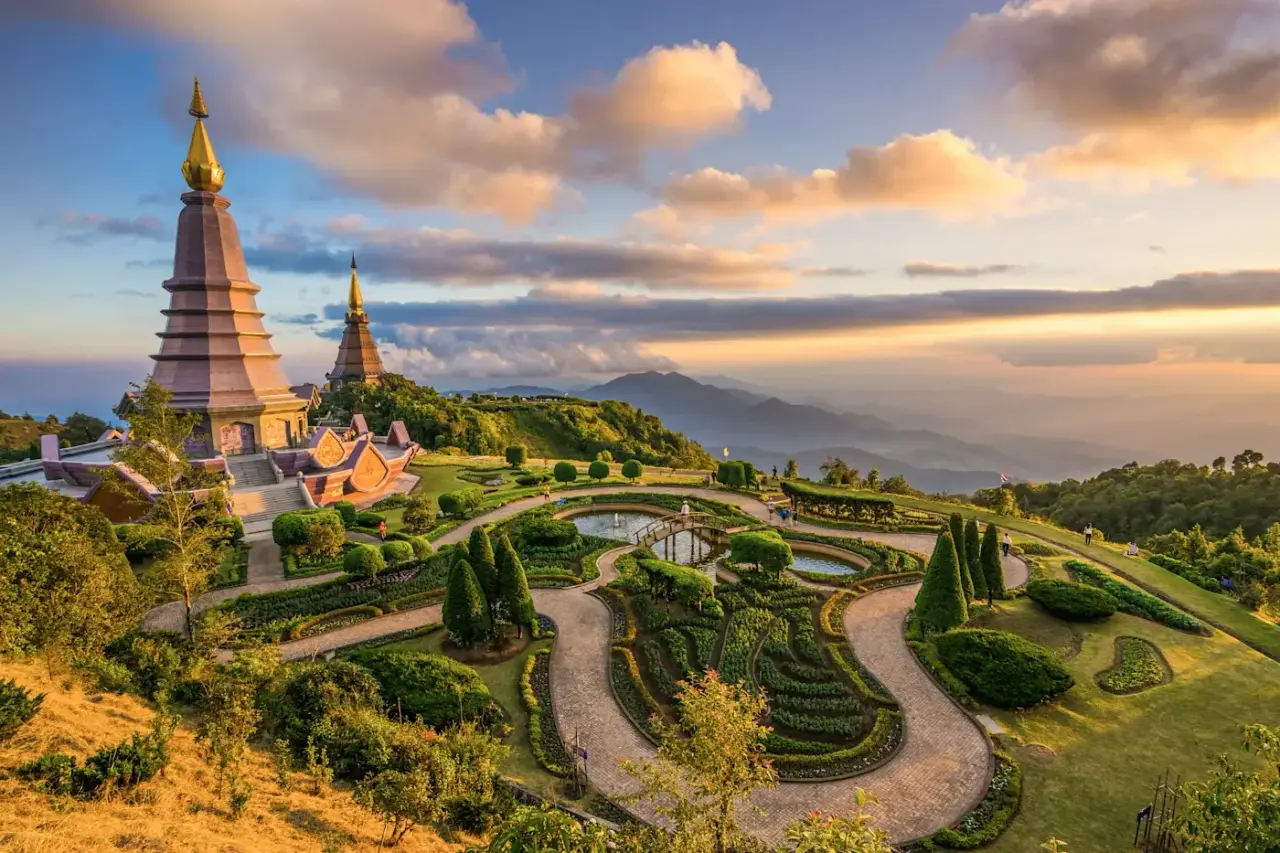
The roof of Thailand at 2,565 metres, two royal chedis, a mossy forest and Karen terraced paddies.

Warorot market (Kad Luang)

The city's largest covered market, fresh produce, northern snacks and fabrics, on the Ping riverbank.

San Kamphaeng craft road

Paper-umbrella workshops at Bo Sang and wood carvers at Baan Tawai, free to visit east of the city.

What to see in Chiang Mai?

The old city inside the moat

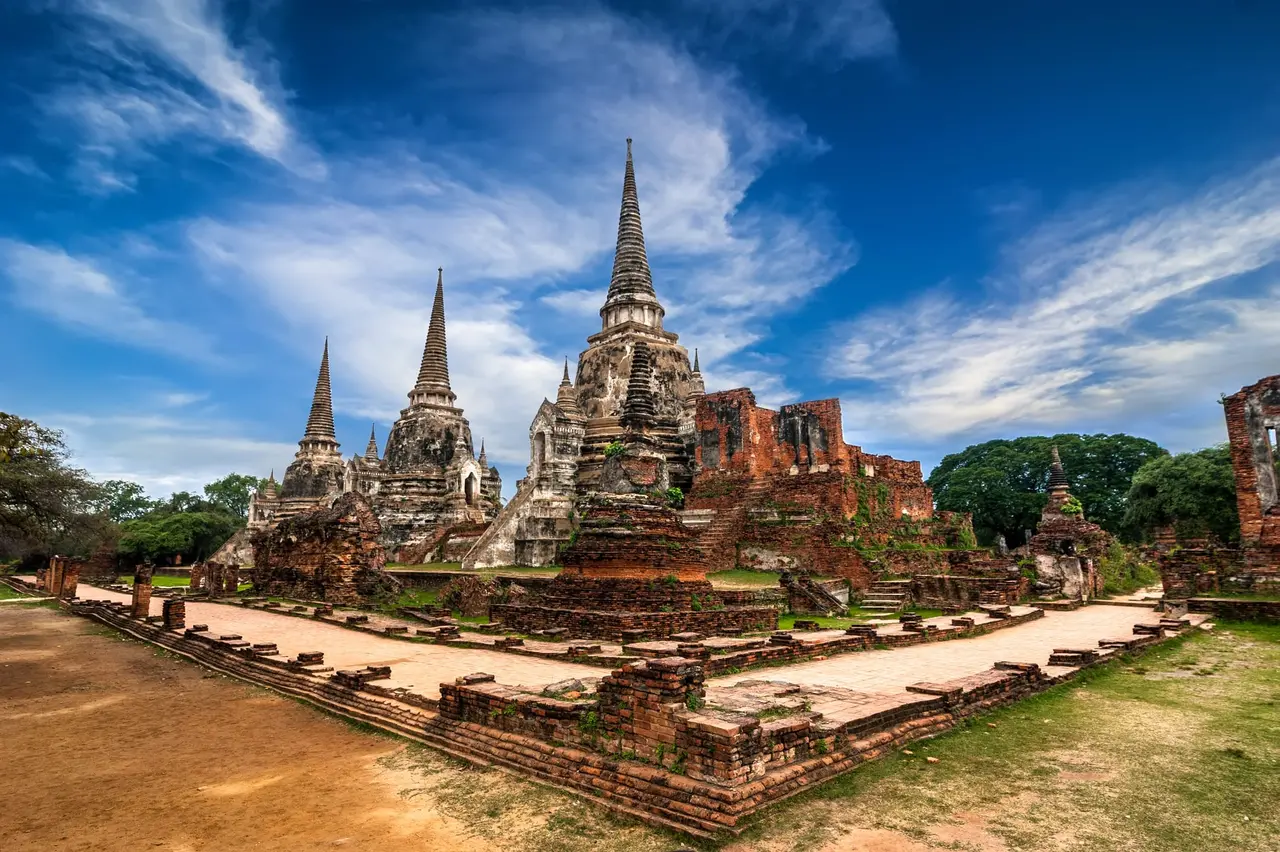
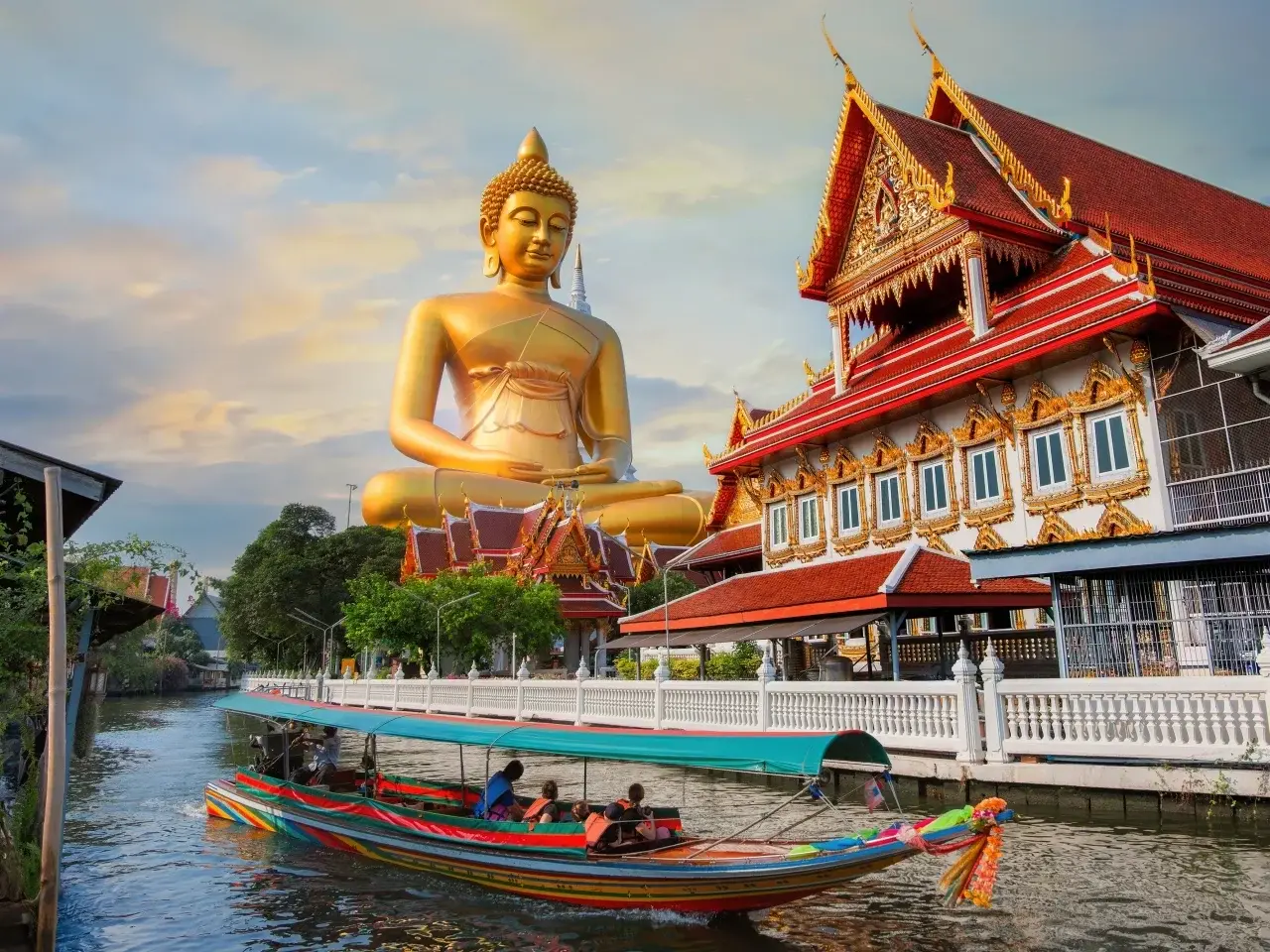
The historic core fits inside a square 1.5 kilometres on each side, edged by a moat and remnants of walls pierced by five gates. On foot you visit Wat Chedi Luang and its stupa half-collapsed in a 1545 earthquake, Wat Phra Singh and its Lanna chapel, and Wat Chiang Man, the oldest, founded in 1296 with the city. On Sunday evening, Ratchadamnoen road closes to traffic for the Sunday Walking Street, the largest craft market in town.
Nimman and the west

West of the moat, around Nimmanhaemin road, a district of specialty cafes, coworking spaces and design shops has grown up, popular with remote workers. The One Nimman mall, in a neo-Lanna style, serves as a meeting point. Further out, the MAIIAM contemporary art museum, in San Kamphaeng, shows Thai artists in a mirror-clad building, about twenty minutes away by Grab.

Doi Suthep and the mountain

The mountain overlooking the city to the west carries Wat Phra That Doi Suthep, a gilded temple reached after 306 naga-lined steps, with a view over the whole plain. A red songthaew climbs there in 40 minutes from the old city. Beyond lie the royal Bhubing palace, open when the royal family is away, and the more touristy Hmong village of Doi Pui. An early start avoids the heat and the coaches.

Temples beyond the must-sees

Chiang Mai has over 300 temples, and the most interesting are not always the most central. Wat Umong, to the south-west, is a forest temple with 14th-century tunnels and a turtle pond. Wat Suan Dok lines up dozens of white chedis holding the ashes of the Lanna royal family, and offers a monk chat in English several afternoons a week. Wat Ket, on the other bank of the Ping, keeps a small local museum.

The Ping riverside and Warorot market

The Ping river runs along the east of the old city. On its bank, Warorot market, also called Kad Luang, is the city's largest covered market: fresh produce, northern snacks such as sai ua sausage, and a floor of fabrics. The adjoining Chinatown comes alive in the evening. It is also here, on Chang Klan road, that the Night Bazaar runs every evening, more touristy but handy for hill-tribe crafts.

Elephants, cooking and crafts

Around the city, several sanctuaries take in elephants with no riding and no shows: a day involves feeding, bathing and watching, to book weeks ahead. Northern cooking classes, half-day or full-day, include a market visit. On the San Kamphaeng road, the paper-umbrella workshops of Bo Sang and the wood carvers of Baan Tawai can be visited for free. These hands-on days are part of why travellers stay longer in Chiang Mai than almost anywhere else in Thailand.

Day trips in the North: Doi Inthanon, Pai and Chiang Rai

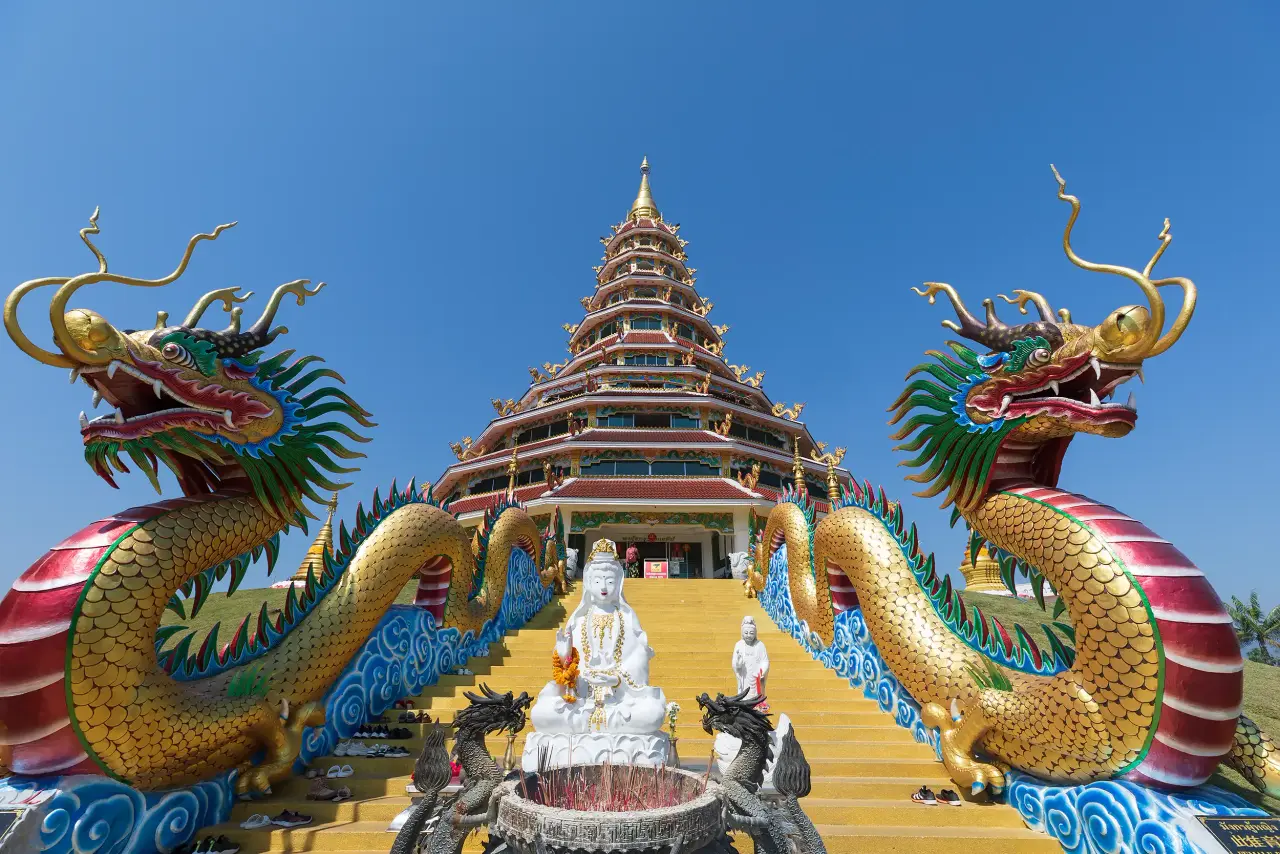
Doi Inthanon, the country's highest point at 2,565 metres, works as a day trip: two royal chedis, a boardwalk through the mossy forest and Karen terraced paddies. Pai, a mountain village 3 hours away on a road with 762 bends, needs at least one night. Chiang Rai and its contemporary temples, the White Temple and the Blue Temple, are 3 hours by road and pair with the Golden Triangle. From Bangkok, Chiang Mai is 1 hr 15 by plane or an overnight train.

How much it costs

Per person per day, excluding international travel.
Budget
28 €/ day
1 732 € for 2 people, 7 days, return flights included
Accommodation
8 €
Food
8 €
Local transport
4 €
Sights and activities
8 €
Comfort
83 €/ day
2 502 € for 2 people, 7 days, return flights included
Accommodation
23 €
Food
22 €
Local transport
8 €
Sights and activities
30 €
Premium
218 €/ day
4 392 € for 2 people, 7 days, return flights included
Accommodation
83 €
Food
45 €
Local transport
30 €
Sights and activities
60 €
Prices checked: Prix relevés en septembre 2026 : hostelz, backpackthailand et guides budget Chiang Mai 2026 pour l'hébergement, retours de voyageurs et marchés de nuit pour les repas, tarifs songthaew et location de scooter pour les transports, skyscanner/farecompare pour le vol. Vol aller-retour Paris-Chiang Mai (une escale) estimé à 670 EUR par personne hors haute saison, octobre étant le mois le moins cher. Montants convertis 1 USD = 0,92 EUR, 1 THB = 0,026 EUR. Hébergement : lit en dortoir à la vieille ville pour backpacker, chambre double en guesthouse ou hotel pour comfort et premium. Prix HORS haute saison ; en décembre-janvier et pendant Yi Peng, l'hébergement double ou triple.

Getting there

Airports serving Chiang Mai, from main hubs to secondary ones.
  • BKKSuvarnabhumi AirportBangkokMain
  • CEIMae Fah Luang - Chiang Rai International AirportChiang RaiMain
  • CNXChiang Mai International AirportChiang MaiMain
  • DMKDon Mueang International AirportBangkokMain
  • HDYHat Yai International AirportHat YaiMain
  • HKTPhuket International AirportPhuketMain

Entry, health and safety

For FR travellers

Entry requirements

No visa for a tourist stay

Exemption de visa pour un séjour touristique ; à partir du 15 septembre 2026, la durée sans visa passe de 60 à 30 jours pour les passeports ordinaires. Passeport valide au moins six mois à la date d'entrée et carte d'arrivée numérique (TDAC) a remplir en ligne avant le vol.

Stay allowed for up to 30 days.

Passport valid for 6 months beyond your return date.

Health

Fumée agricole et pics de particules fines de février a avril, particulièrement en mars, dans tout le nord de la Thailande.

Safety

Normal precautions

Emergency

191

Checked in septembre 2026 against the official source. Entry rules change: check the official source before you travel, it alone is authoritative.

Practical information for Chiang Mai

Transport

Shared red songthaew at about thirty baht a ride, Grab for the rest, a scooter around 200 baht a day; the old city is walkable.

Burning season

February to April, peaking in March: check the air quality index, bring an FFP2 mask and skip trekking.

Temple dress

Shoulders and knees covered, shoes off at the entrance to buildings; a sarong is lent at Doi Suthep.

Elephant sanctuaries

Choose a sanctuary with no riding and no circus acts; the best are booked out weeks ahead.

Money

Cash in baht for markets and songthaews; ATMs charge about 220 baht in fees per withdrawal.

Arrival card

The Thailand Digital Arrival Card (TDAC) is required and completed online within three days before arrival.

Songkran

13 to 15 April, the city turns into a giant water fight around the moat; protect your phone and documents.

Night markets

Sunday Walking Street on Sunday, Saturday Walking Street in Wualai on Saturday, the Chang Klan Night Bazaar every evening.

Best time to go

November to February for clean air and cool nights; June to October for green landscapes and low prices.

Chiang Mai in pictures

Photo credits : Diliff, CC BY-SA 3.0, Wikimedia Commons ; Stefan Fussan, CC BY-SA 3.0, Wikimedia Commons ; Jakub Hałun, CC BY-SA 4.0, Wikimedia Commons ; Nik Cyclist from Bangkok, Thailand, CC BY 2.0, Wikimedia Commons

Similar destinations

Other cities you might like as much as Chiang Mai.

Frequently asked questions about Chiang Mai

Do you need to rent a scooter to visit Chiang Mai?
Not for the old city, which is walkable, nor for Nimman and the Night Bazaar, reachable by songthaew or Grab. A scooter becomes useful for stringing together outlying temples like Wat Umong or for climbing Doi Suthep at your own pace, with an international licence.
Does the smoke really spoil a trip to Chiang Mai in March?
Often, yes: in March fine particles regularly run at twice the standard and the mountain views disappear. The temples are still visitable, but trekking and viewpoints lose all their point. Better to shift to November-February or the green season.
How do you get up to Wat Phra That Doi Suthep?
Red songthaews leave from the Chang Phueak gate or the zoo entrance and climb in about 40 minutes, at a shared fare. On site, 306 naga-lined steps lead to the temple, or a funicular for those who would rather skip the stairs.
Which elephant sanctuary should you choose near Chiang Mai?
Favour one that bans riding and shows, keeps the animals semi-free and limits visitor numbers. Elephant Nature Park is the best known, but several small sanctuaries follow the same principles; all book weeks ahead.
Is Chiang Rai worth a visit if you have already seen Chiang Mai?
Yes, but for its own sites: the White Temple, the Blue Temple and the Black House are contemporary creations seen nowhere else. At 3 hours by road, it works as a long day trip or, better, with a night on the spot paired with the Golden Triangle.
Can you see the Yi Peng lantern release in Chiang Mai?
Yes, around the November full moon: lanterns are released from the city's bridges and temples for free. The large organised mass releases outside the city are ticketed and expensive, and sell out by the summer.
Where can you eat real khao soi in Chiang Mai?
The area around Wat Ket and the mosque, on the east bank of the Ping, is where the historic khao soi canteens cluster, serving this coconut-milk noodle curry of Sino-Burmese origin. A bowl costs 50 to 70 baht and is more of a lunch dish.

Plan your trip to Chiang Mai

Build your day-by-day itinerary and manage budget, bookings and packing in PlanTripNow.
Aperçu de l'application PlanTripNow