Thailand travel guide: when to go, budget and itineraries

From the golden temples of Bangkok to the rice terraces of the North, from floating markets to the turquoise water of the South, Thailand packs a thousand trips into one. Legendary street food, Buddhism everywhere and a warm welcome: the Land of Smiles is still one of the easiest gateways into Southeast Asia.
  • 6 cities · 5 regions

Why visit Thailand?

Thailand offers rare variety on a compact territory: buzzing cities, UNESCO-listed Buddhist sites, northern jungle and close to 1,400 islands. Domestic flights link Bangkok to Chiang Mai or Phuket in under two hours, so you can combine mountains and beaches in a single trip. Value for money remains among the best on the continent.

What to discover in Thailand?

Bangkok and the central plain

Plan three full nights in Bangkok: a morning for the Grand Palace and Wat Pho, one for the Thonburi canals by longtail boat, an evening for the street food of Yaowarat. The Grand Palace ticket office closes at 3:30pm, so arrive before 9am. North of the capital, the ruins of Ayutthaya, the former Siamese capital and a UNESCO site, can be seen by bike in a day or as a one-night stop on the way north. Sukhothai, further on, needs a flight or a night bus.

The North: Chiang Mai and Chiang Rai

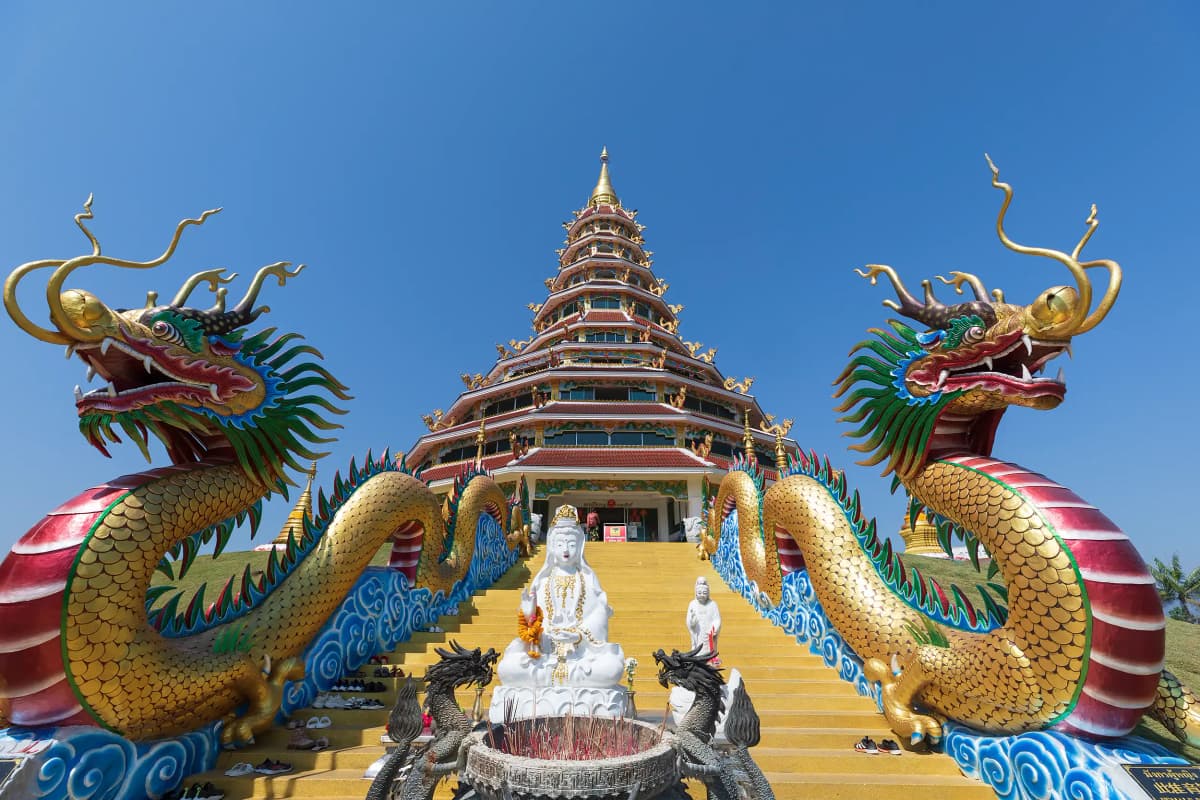
Chiang Mai packs more than thirty temples into a moated old town; allow two to three nights to add Doi Suthep, a half-day cooking class and a no-riding elephant sanctuary. Chiang Rai, three hours away by bus, lines up the White Temple, the Black House and the Blue Temple in one day. From February to April, smoke from agricultural burning cuts visibility and worsens air quality across the whole North.

Isan, the overlooked northeast

The Isan plateau, bordering Laos and Cambodia, receives a tiny share of visitors yet holds the finest Khmer temples in the country outside Angkor: Phanom Rung, set on an extinct volcano, and Phimai. People come for rural life, the night markets of Udon Thani or Khon Kaen and food spicier than elsewhere. Expect at least one domestic flight from Bangkok, as the train is slow. A 50 km strip along the Cambodian border is advised against.

The Andaman coast

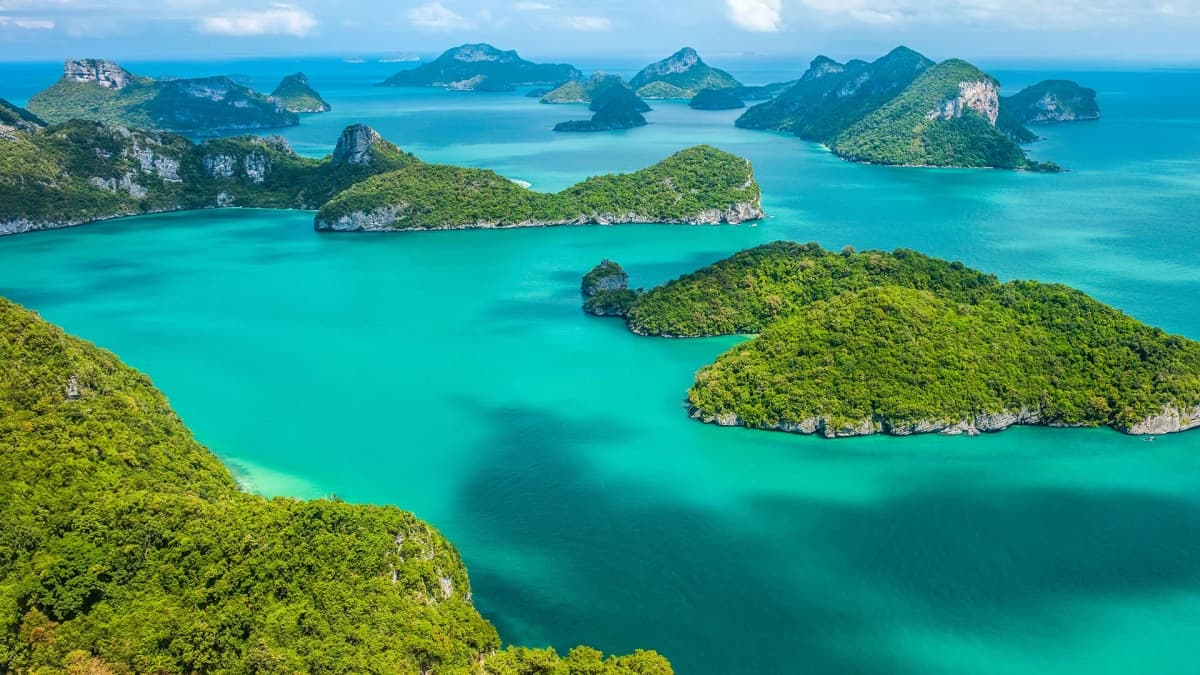
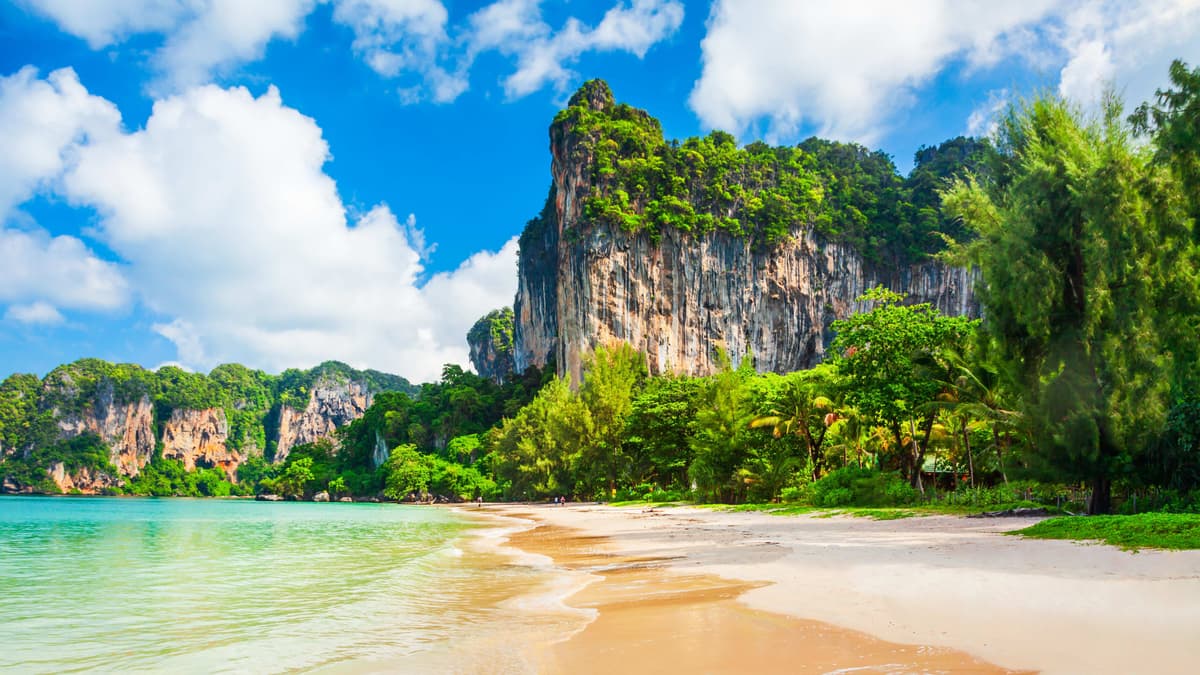
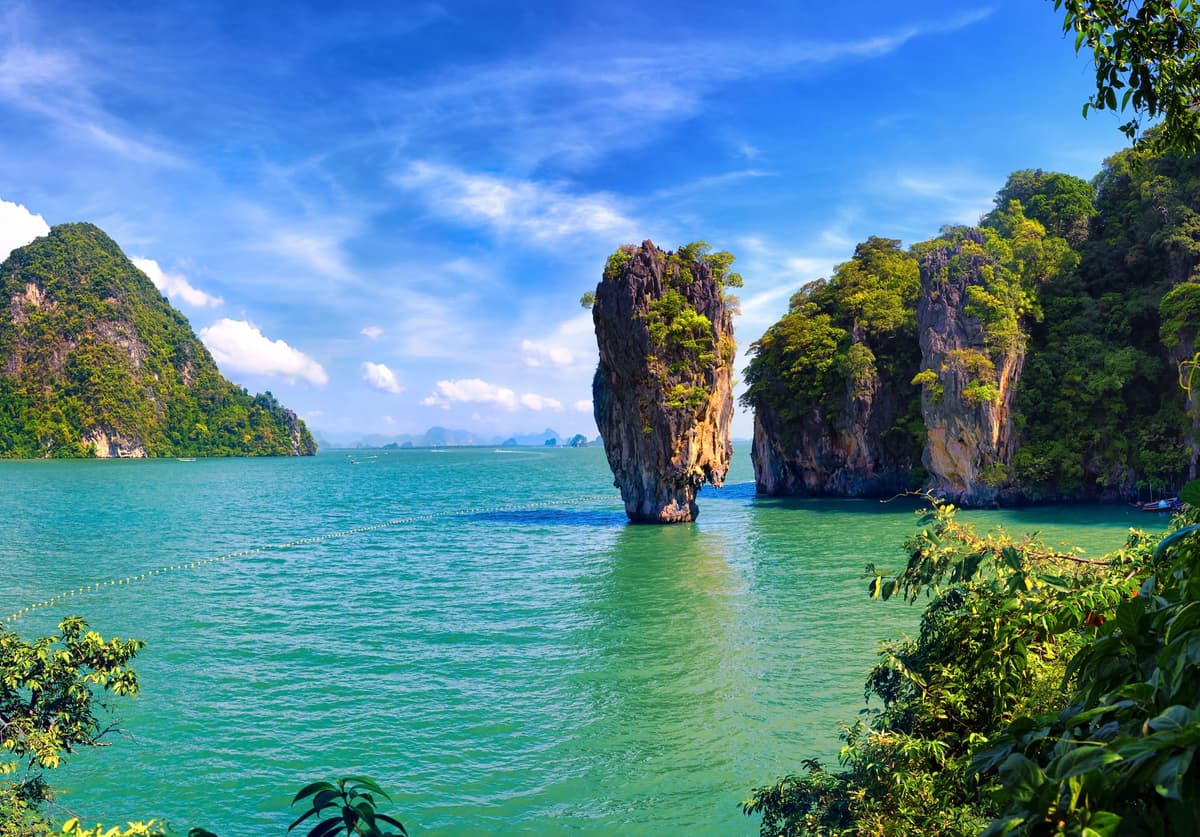
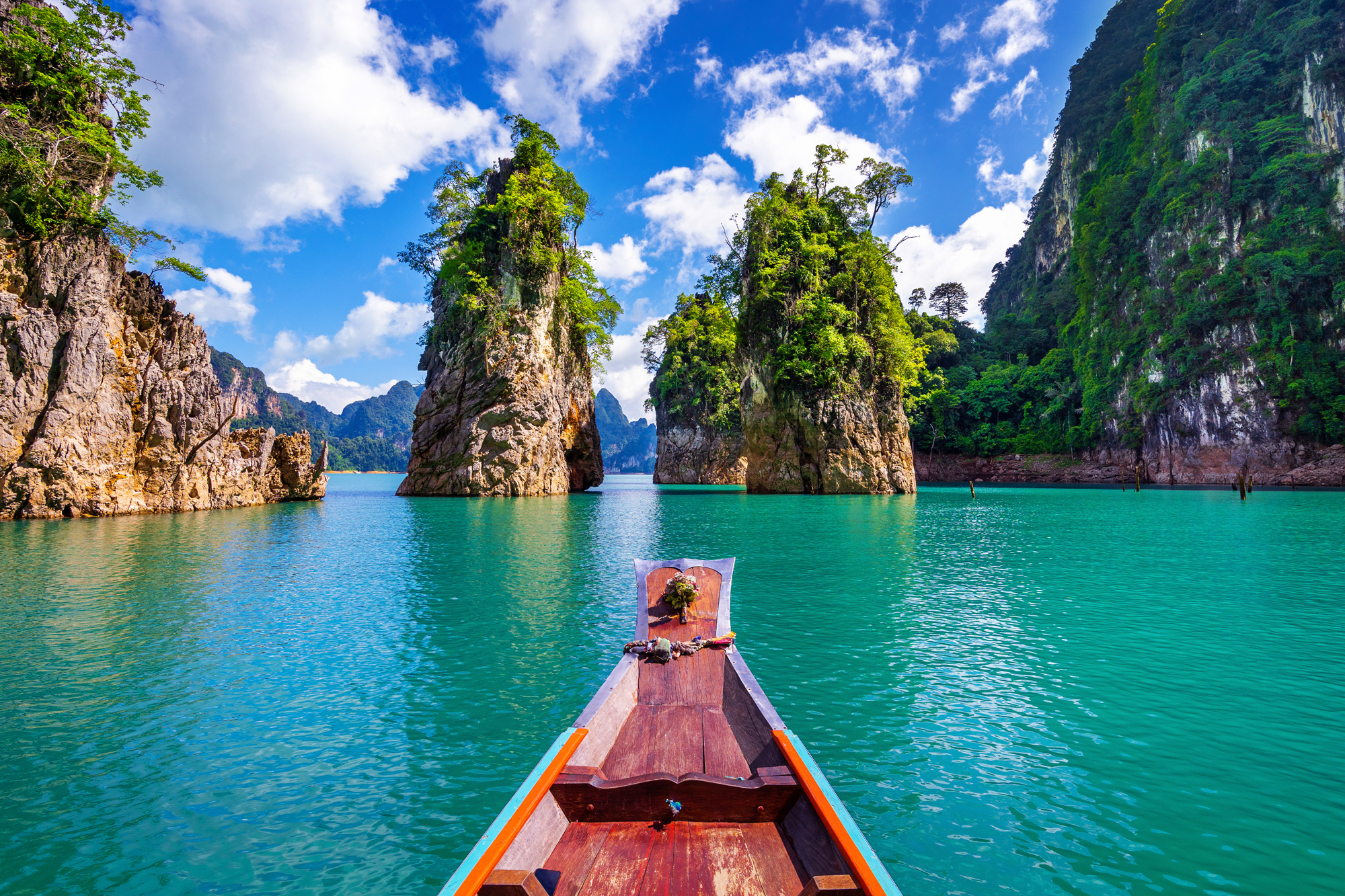
On the west side, Krabi, Phuket, Koh Phi Phi and Phang Nga Bay offer limestone cliffs, clear water and diving spots. The dry season runs from November to April; from June to October the southwest monsoon makes the sea rough and some boat services irregular. From Bangkok, count an 80-minute flight to Krabi or Phuket, then thirty to forty-five minutes of transfer. Three nights per island is enough to alternate tours and downtime.

The Gulf of Thailand and its islands

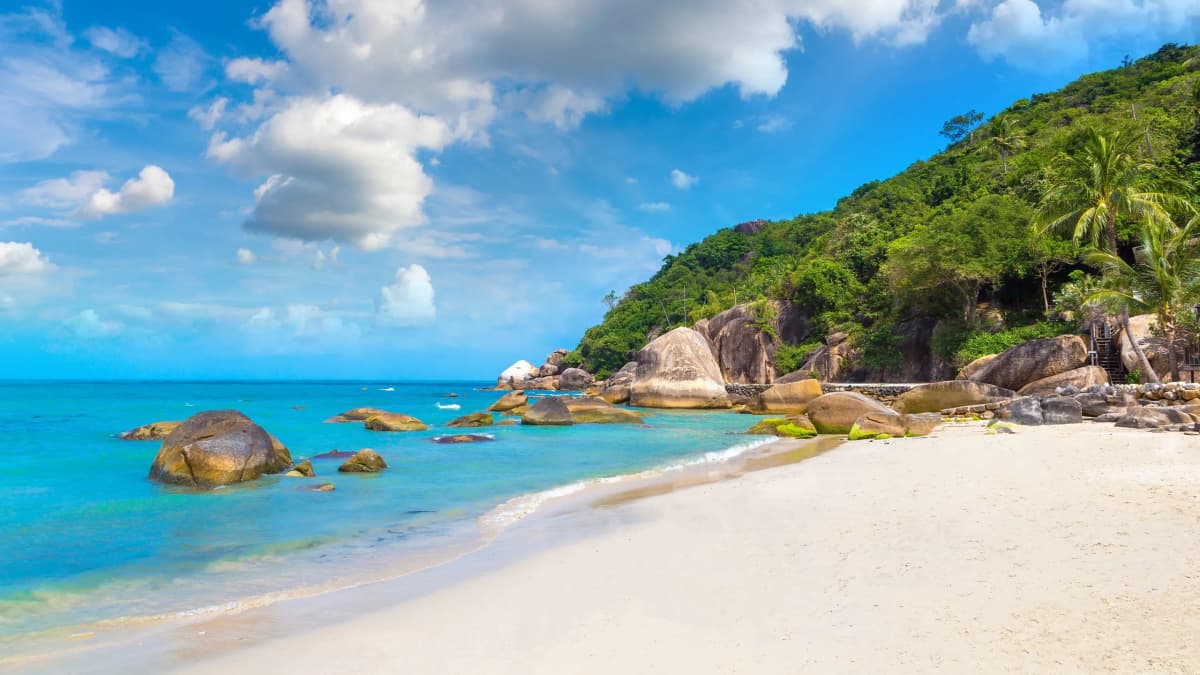
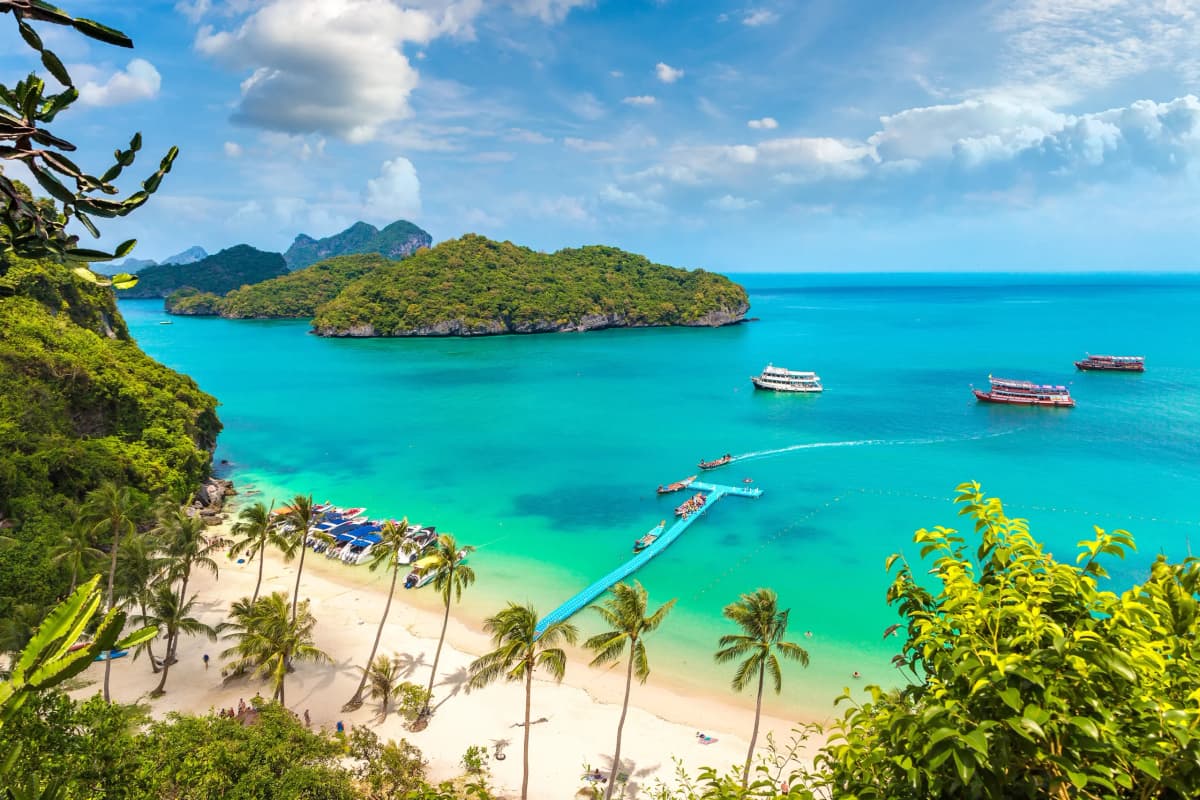
Koh Samui, Koh Pha Ngan and Koh Tao, east of the peninsula, follow a reversed calendar: fine weather runs from January to September, with the rainy season falling in October and November. Samui has an airport; the other two are reached by ferry in thirty to ninety minutes. Koh Tao is one of the cheapest places in the world to earn your first diving certification, in three to four days. Koh Pha Ngan is still known for its monthly Full Moon Party.

Street food and Buddhist culture

A street meal costs 1 to 3 euros and is eaten standing at any hour: pad thai, green curry, som tam, noodle soups. Bangkok has several street stalls recognised by the Michelin guide. Culturally, around 90% of Thais are Theravada Buddhists: in temples, shoulders and knees must be covered and shoes come off before entering. Songkran in mid-April and Loi Krathong in November are worth the trip but push prices up.

Cities to visit in Thailand

Featured destinations appear first.

Regions to explore in Thailand

Featured destinations appear first.

Thailand in pictures

Landmark sites

Nine places worth a detour on their own, from the central plain to the far South.

Grand Palace

Bangkok's former royal residence and its Emerald Buddha; covering clothing required, ticket office closes at 3:30pm.

Wat Pho

The temple of the 46-metre reclining Buddha, birthplace of traditional Thai massage, steps from the Grand Palace.

Wat Arun

The temple of Dawn and its 70-metre porcelain-studded prang, striking at sunset seen from the east bank.

Ayutthaya Historical Park

The ruins of the former Siamese capital, including the Buddha head held in tree roots at Wat Mahathat, UNESCO-listed.

Wat Rong Khun

Chiang Rai's White Temple, a contemporary work by artist Chalermchai Kositpipat, entirely white and mirror-clad.

Doi Inthanon

The country's highest point at 2,565 metres, its two royal pagodas and cloud-forest trails, near Chiang Mai.

Phang Nga Bay

About a hundred limestone towers rising from calm sea, best explored by kayak from Phuket or Krabi.

Railay

A peninsula reachable only by boat, famous for cliff climbing and Phra Nang beach.

Sukhothai Historical Park

The first Thai capital, its monumental Buddhas and lotus ponds, best seen by bike, UNESCO-listed.

Similar destinations

Other countries you might like as much as Thailand.

Similar regions

Other regions you might like as much as Thailand.

Frequently asked questions

How many days to combine Bangkok, the North and the islands?
Two weeks is the realistic minimum: three nights in Bangkok, three in Chiang Mai, the rest on one or two islands. To add Chiang Rai and a second island without rushing, allow three weeks. In one week, drop the South.
Should I choose the Andaman coast or the Gulf of Thailand?
It depends on the season. From November to April, favour the Andaman (Krabi, Phuket, Phi Phi). From January to September, the gulf (Koh Samui, Pha Ngan, Tao) is the safer weather bet. Avoid the gulf in October and November, its rainy season.
Does the new 30-day visa-free rule change my stay?
Since 15 September 2026, the tourist visa exemption has dropped from 60 to 30 days for French and Canadian passport holders alike. It can still be extended once by 30 days at an immigration office for 1,900 baht. Beyond that, a visa is required.
Is Songkran worth it, or should I avoid mid-April?
Songkran, the Thai New Year from 13 to 15 April, turns cities into giant water fights, a unique experience in Chiang Mai. The downside: it is the hottest month, transport is packed and prices rise. Keep your phone and documents in a waterproof pouch.
Are the elephant sanctuaries near Chiang Mai ethical?
Not all of them. Avoid places offering riding, shows or painting acts. Choose those where you watch and feed the animals without mounting them, often advertised as no-riding, and check recent reviews before booking.
What is the TDAC arrival card and when do I fill it in?
The Thailand Digital Arrival Card has replaced the paper form. Fill it in for free on the official immigration site within the three days before arrival. A confirmation or QR code is checked at immigration; beware of paid third-party sites.
Does the deep south (Yala, Pattani, Narathiwat) affect a normal trip?
No. These three provinces bordering Malaysia, formally advised against because of a separatist conflict, are on no tourist route. The gulf islands, Phuket, Krabi and Hat Yai are not part of that area and have no connection to it.
Can I pay by card everywhere or do I need cash?
Hotels, malls and tourist restaurants take cards, often with a 3% fee. Markets, street food, tuk-tuks, ferries and guesthouses are cash only. Withdraw baht from ATMs, which charge a fixed fee of about 220 baht per transaction.

Plan your trip to Thailand

Day-by-day itinerary, budget, bookings and packing in a single app.
Aperçu de l'application PlanTripNow