Skip to content

Visit Kyoto : temples, gardens and old districts

Kyoto has around 1,600 temples and 400 shrines, but its real lesson is about timing: reach Fushimi Inari before 8am, stroll through Gion as the shops close, keep a day for the hills of Ohara. A city of cherry blossom in spring and maples in November, it is best enjoyed outside those two peaks.

At a glance

Visa
None
Tourist stay of up to 90 days
7-day budget
€861
Per person, comfort profile, excluding international flights.
Recommended length
3 days
For a first trip, without rushing.

Why visit Kyoto?

Japan's imperial capital from 794 to 1868, Kyoto was largely spared the 1945 bombings and keeps 17 UNESCO World Heritage sites. It is 75 minutes from Kansai airport and pairs naturally with Osaka, 15 minutes away by bullet train.

When to visit Kyoto

Temperatures, rainfall and crowds month by month, to pick your window.
When to visit Kyoto
MonthTemperaturesRainCrowdsVerdict
January2 to 9 °C8 dQuietDry basin cold and morning frosts, but nearly empty temples: Kinkaku-ji under snow remains possible a few days a year.
February2 to 10 °C9 dQuietThe quietest month: plum blossom at Kitano Tenmangu shrine on 25 February and ryokan at gentle prices.
March4 to 14 °C11 dBusyHanatouro illuminations in Higashiyama in mid-March, then the first cherry blossoms late in the month send prices soaring.
April9 to 20 °C11 dPackedFull bloom on the Philosopher's Path and in Maruyama Park in the first half: the absolute peak, book months ahead.
May15 to 25 °C11 dBusyPacked Golden Week at the start, then fresh green maples and the Aoi Matsuri parade on 15 May: a lovely second half.
June19 to 28 °C13 dQuietThe rainy season sets in around mid-June: vivid moss gardens and hydrangeas at Mimuroto-ji, few visitors.
July24 to 32 °C13 dBusyThe Gion Matsuri fills the whole month, with giant floats on 17 and 24 July, in sticky basin heat.
August25 to 34 °C9 dModerateThe hottest month, often above 35°C; the Gozan Okuribi bonfires on 16 August close the Obon festival.
September21 to 29 °C11 dModerateStill muggy and typhoon-prone early in the month, the air turns pleasant after the equinox and crowds stay moderate.
October14 to 23 °C9 dBusyClear skies and 23°C days, the Jidai Matsuri parade on 22 October: ideal for walking before the maple rush.
November8 to 17 °C7 dPackedMaples turn red from mid-November to early December at Tofuku-ji and Eikan-do: the year's second peak, hotels full.
December4 to 12 °C8 dModerateLast red leaves in the first week, then winter calm until the New Year shrine visits.
Source: Normales JMA (Japan Meteorological Agency) 1991-2020, station de Kyoto (47759) ; jours de pluie d'après la table de normales reprise par Wikipédia ; relevé octobre 2026

Kyoto's must-sees

Seven places that sum up the city, best visited at opening time.

Fushimi Inari-taisha

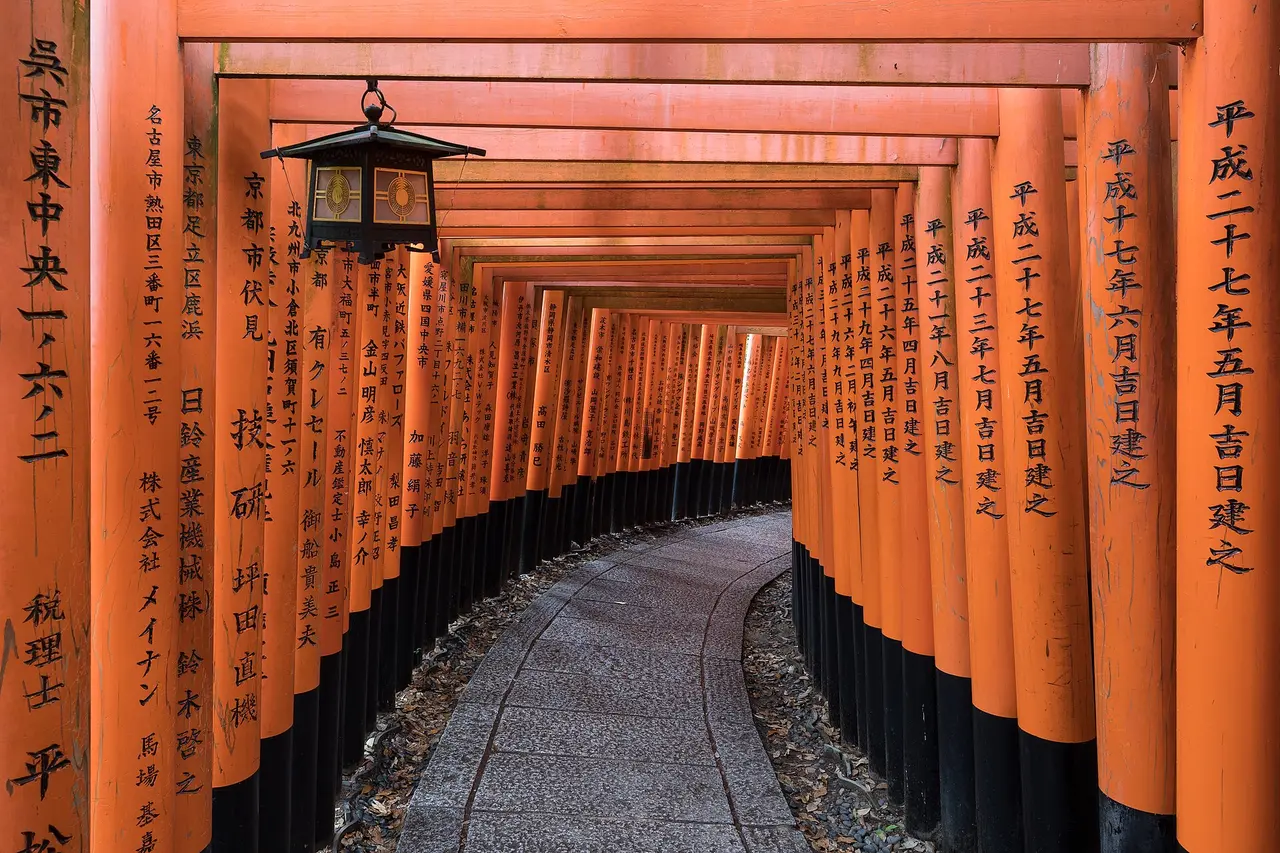
Thousands of vermilion torii on the slopes of Mount Inari, free and open around the clock, magical at dawn.

Kiyomizu-dera

A temple on stilts above a maple forest, open from 6am, with a view over the whole Kyoto basin.

Kinkaku-ji

The Golden Pavilion and its reflection in the pond, Japan's most famous image; a short but essential visit.

Arashiyama bamboo grove

A path beneath giant bamboo creaking in the wind, best walked before the tour groups arrive.

Ryoan-ji

The world's most discussed zen garden: fifteen stones, raked gravel and a weathered earthen wall.

Gion

Wooden teahouses, lanterns and fleeting glimpses of maiko in the evening, with respect for the private lanes.

Philosopher's Path

Two kilometres along a cherry-lined canal, from Ginkaku-ji to Nanzen-ji and its brick aqueduct.

What to discover in Kyoto, area by area?

Higashiyama and Gion, postcard Kyoto

East of the Kamo river, Higashiyama lines up the most photographed sights: the wooden stage of Kiyomizu-dera, set on 139 pillars without a single nail, the cobbled lanes of Sannenzaka and Ninenzaka, the Yasaka pagoda. Further north, Gion is still the district of geiko and maiko; since 2024 the private lanes around Hanamikoji have been closed to visitors, with a fine for offenders. Come early in the morning or at dusk, when the tour coaches leave.

Fushimi Inari and the south of the city

Fushimi Inari shrine, dedicated to the kami of rice and business, is famous for thousands of vermilion torii donated by companies, climbing for 4 kilometres to the top of Mount Inari. It is free and open day and night: the first few hundred metres are packed from 9am, and the crowd thins after the Yotsutsuji crossroads. One stop away, Tofuku-ji and its Tsutenkyo bridge make the finest maple viewpoint in November.

The north-west: the Golden Pavilion and zen gardens

Kinkaku-ji, a pavilion covered in gold leaf, was rebuilt in 1955 after a monk deliberately burned it down. Twenty minutes' walk away, the Ryoan-ji dry garden sets fifteen stones on raked gravel, never all visible from a single point. Ninna-ji temple completes the loop with its late-blooming cherry trees. Buses in this area are slow and crowded: combine the subway to Kitaoji with a shared taxi, or rent a bike.

Arashiyama and Sagano

To the west, Arashiyama combines the Sagano bamboo grove, the UNESCO-listed garden of Tenryu-ji and the Togetsukyo bridge over the Katsura river. The bamboo grove is only a few hundred metres long and is best before 8am, otherwise it becomes a procession. Beyond it, Okochi Sanso villa, Otagi Nenbutsu-ji temple with its 1,200 laughing statues, or the Sagano romantic train offer a far quieter Kyoto.

The centre: Nishiki, Nijo and Pontocho

Nishiki market, a 400-metre covered street, is nicknamed Kyoto's kitchen: pickles, tofu, grilled fish. Eating while walking is discouraged there, so you eat in front of the stall. Nijo Castle, residence of the Tokugawa shoguns, is known for floors that sing underfoot to warn of intruders. In the evening, narrow Pontocho alley, lit by lanterns, lines up restaurants and wooden summer terraces above the Kamo river.

Beyond the city: Ohara, Kurama and Uji

Kyoto has its countryside less than an hour away. Ohara, a mountain village to the north, is home to Sanzen-in and its moss-covered statues. Kurama and Kibune are linked by a two-hour forest trail. To the south, Uji grows the country's most prized green tea and keeps the Phoenix Hall of Byodo-in, the one on the 10-yen coin. Nara and its deer are 45 minutes away by train, a classic day trip into ancient Japan.

Sample itineraries

Three routes built around the time you actually have.
3daysRecommended

Kyoto in 3 days: east, west and north

  1. Arashiyama and Sagano
  2. Kinkaku-ji, Ryoan-ji and Nijo Castle
  3. Fushimi Inari, the Philosopher's Path and Gion

Best for: The shape of a first visit, by large sectors: Arashiyama and its bamboo grove, the Golden Pavilion and the dry garden of Ryoan-ji, then the Philosopher's Path down to Gion. Fushimi Inari fits in at the very start of a day.

How much it costs

Per person per day, excluding international travel.
Budget
55 €/ day
2 570 € for 2 people, 7 days, return flights included
Accommodation
23 €
Food
19 €
Local transport
5 €
Sights and activities
8 €
Comfort
123 €/ day
3 522 € for 2 people, 7 days, return flights included
Accommodation
52 €
Food
44 €
Local transport
8 €
Sights and activities
19 €
Premium
347 €/ day
6 658 € for 2 people, 7 days, return flights included
Accommodation
172 €
Food
100 €
Local transport
25 €
Sights and activities
50 €
Prices checked: Prix relevés en octobre 2026 hors sakura et érables : fourchettes japantripcost.com (mars 2026 : dortoir 3000-5000 JPY, hôtel 8000-15000 JPY, bus 230 JPY, temples 400-800 JPY), taxe de séjour de Kyoto en vigueur depuis le 1er mars 2026 (200 à 10000 JPY par personne et par nuit selon le prix de la chambre, kyoto.travel), conversion au taux d'environ 180 JPY pour 1 EUR. Occupation : dortoir pour backpacker, double partagée à deux pour comfort (hôtel ou machiya) et premium (ryokan avec dîner kaiseki à part). Vol A/R Paris-Osaka Kansai inclus dans le total semaine, environ 900 EUR par personne (prix moyen observé 913 EUR sur liligo.fr, 861 à 1007 EUR selon le mois sur ou-et-quand.net).

Getting there

Airports serving Kyoto, from main hubs to secondary ones.
  • AKJAsahikawa AirportHigashikaguraSecondary
  • ASJAmami AirportAmamiSecondary
  • AXJAmakusa AirportAmakusaSecondary
  • AXTAkita AirportAkitaSecondary
  • FKJFukui AirportFukuiSecondary
  • FKSFukushima AirportSukagawaSecondary

Entry, health and safety

For FR travellers

Entry requirements

No visa for a tourist stay

L'entrée au Japon pour un court séjour ne dépassant pas 90 jours ne nécessite pas de visa. Le passeport doit être valable pendant tout le séjour ; les titres périmés ou signalés perdus ou volés sont refusés et les mineurs ont besoin de leur propre passeport. Remplir Visit Japan Web avant l'arrivée accélère l'immigration et la douane. Une autorisation électronique de voyage (JESTA) est annoncée pour les ressortissants exemptés de visa d'ici fin 2028, elle n'est pas encore exigée.

Stay allowed for up to 90 days.

Health

Advised: Vaccinations françaises à jour, en particulier la rougeole (hausse des cas signalée par France Diplomatie en mars 2026), ainsi que diphtérie, tétanos et poliomyélite. Selon la durée et les conditions du séjour : hépatites A et B, encéphalite japonaise (risque très faible).

Soins de qualité mais très coûteux : une assurance couvrant frais médicaux et rapatriement est indispensable. Importer un médicament contenant des stupéfiants exige une autorisation préalable. La saison des typhons court de juin à novembre et le pays est exposé aux séismes : suivez les consignes des autorités locales. À Kyoto, la chaleur estivale dépasse souvent 35 °C, hydratez-vous lors des montées comme Fushimi Inari.

Safety

Normal precautions

Emergency

110 (police) / 119 (pompiers et ambulances)

Checked in octobre 2026 against the official source. Entry rules change: check the official source before you travel, it alone is authoritative.

Kyoto travel basics

From the airport

The JR Haruka train links Kansai airport to Kyoto station in about 75 minutes; from Tokyo, the bullet train takes 2h15.

Getting around

City buses at a flat 230 yen, a two-line subway; pay with an IC card (ICOCA, Suica). Cycling is the most efficient option on the flat.

Accommodation tax

Since March 2026 it ranges from 200 to 10,000 yen per person per night depending on the room rate, paid at the hotel.

Opening hours

Most temples close between 4:30pm and 5pm; only Fushimi Inari and a few shrines stay open at night.

Etiquette

No photos in Gion's private lanes, no eating while walking in Nishiki, shoes off in temple halls.

Luggage

Buses are narrow: use the luggage forwarding services from Kyoto station to your hotel.

Cash

Still useful for some temples and small restaurants; convenience-store ATMs accept foreign cards.

Time difference

UTC+9 all year, 7 hours ahead of France in summer and 8 in winter.

Kyoto in pictures

Photo credits : Basile Morin, CC BY-SA 4.0, Wikimedia Commons

Kyoto: frequently asked questions

How many days do you need to visit Kyoto?
Two days cover Higashiyama, Gion and Fushimi Inari. Three days let you add Arashiyama and the Golden Pavilion without rushing. With four days or more, you leave the city for Ohara, Kurama, Uji or Nara, and discover a much quieter side of Kyoto.
When is the best time to visit Kyoto?
Late May and October bring mild weather and moderate crowds. The cherry blossom in early April and the maples in mid-November are spectacular, but hotels are full and prices double. Summer is stifling, often above 35°C, and winter is cold but very quiet.
Is it better to stay in Kyoto or Osaka?
Staying in Kyoto puts you at the temples at opening time, ahead of day-trippers, and lets you enjoy Gion in the evening. Osaka is often cheaper and livelier at night, 15 minutes away by bullet train. For a temple-focused trip, Kyoto remains the better choice.
How can you avoid the crowds in Kyoto?
Visit the big sights at opening time: Kiyomizu-dera from 6am, Fushimi Inari and the bamboo grove before 8am. During the day, favour secondary temples such as Daitoku-ji, or Tofuku-ji outside maple season, and save the best-known districts for the late afternoon.
Can you visit Kyoto as a day trip from Tokyo?
It is possible by bullet train, with 2h15 each way, but you will only see two or three sights. It is better to stay at least two nights, or to fit it into a route from Tokyo to the Kansai, continuing on to Osaka afterwards.
Can you photograph geishas in Gion?
Maiko and geiko are not attractions: stopping, touching or following them is forbidden. Since 2024, Gion's private lanes have been closed to tourists and a fine can be imposed. Photograph the street from a distance, without flash and without insisting.

Plan your trip to Kyoto

Build your day-by-day itinerary and manage budget, bookings and packing in PlanTripNow.
Aperçu de l'application PlanTripNow