Skip to content

Visit London : what to do, where to stay and how many days to plan

World-class museums you enter for free, palaces where you watch the Changing of the Guard, Sunday street markets, some forty theatres and vast royal parks: London is best discovered neighbourhood by neighbourhood, by Tube and on foot. Four to five days are a sensible minimum.

Why visit London?

London, capital of the United Kingdom, brings together some of the world's greatest museums, most with free permanent collections, as well as four UNESCO World Heritage Sites. It is just over two hours from Paris by Eurostar, and its Underground network lets you move between neighbourhoods without a car.

London must-sees

Eleven sights for a first visit, several of them free.

British Museum

The Rosetta Stone, the Parthenon sculptures and Egyptian mummies: its permanent collections are free. Book a time slot online and focus on two or three galleries.

Tower of London

A fortress founded by William the Conqueror, it guards the Crown Jewels. A paid visit of about three hours, brought to life by the Yeomen Warders' tales.

Westminster Abbey

The coronation church of English monarchs since 1066, it holds royal tombs and Poets' Corner. Paid entry, closed to sightseers on Sundays for services.

Big Ben and Parliament

The Elizabeth Tower and its great bell dominate the Palace of Westminster, a neo-Gothic masterpiece. The best view is from Westminster Bridge or the south bank.

National Gallery

On Trafalgar Square, it shows European painting from the Middle Ages to the 19th century for free, from Van Eyck to Van Gogh by way of Turner.

Tate Modern

Housed in a former Bankside power station, it displays modern and contemporary art. Free access to the collections and a panoramic view from its top floor.

Natural History Museum

Its Romanesque great hall, with a blue whale skeleton suspended overhead, and its dinosaur galleries make it a family favourite. Free entry.

Buckingham Palace

The monarch's London residence opens its State Rooms in summer for a paid visit. The Changing of the Guard takes place in front of its gates on certain mornings.

Tower Bridge

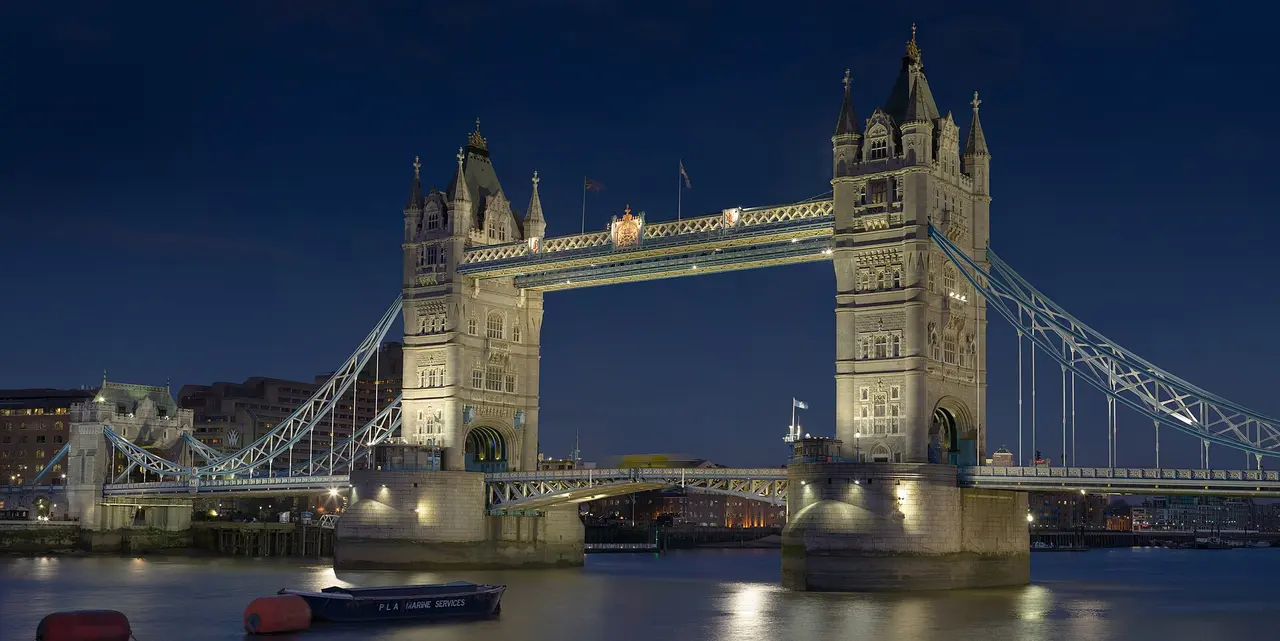
A bascule bridge completed in 1894, it can be crossed on foot for free; the paid exhibition gives access to the high walkways and their glass floor.

St Paul's Cathedral

Christopher Wren's masterpiece, rebuilt after the Great Fire of 1666, can be climbed to its outer gallery at the top of the dome, over 500 steps up.

Kew Gardens

A UNESCO-listed botanical garden in south-west London, with great Victorian glasshouses and a treetop walkway. Allow half a day.

What to discover in London, neighbourhood by neighbourhood?

Westminster, Whitehall and St James's

Political and royal London can be covered on foot in a day. From the Palace of Westminster and its abbey, walk up Whitehall, lined with government departments, to Horse Guards and Trafalgar Square. St James's Park then leads to Buckingham Palace, where the Changing of the Guard takes place around 11 am on certain days only, so check the schedule the day before. Arrive an hour early to stand in the front row. Guided tours of Parliament run mainly on Saturdays and during parliamentary recesses: book them online several weeks ahead.

The City and its towers

The Square Mile, the Roman birthplace of London turned financial district, mixes Christopher Wren churches with nicknamed skyscrapers such as the Gherkin and the Walkie-Talkie, whose Sky Garden opens a free panoramic garden at the top with advance booking. Leadenhall Market, under its Victorian glass roof, is best visited on weekdays. The district empties in the evening and at weekends: perfect for exploring quietly on a Sunday morning before reaching the Tower of London on its eastern edge. Allow half a day, not counting a visit to the fortress.

The South Bank and Southwark

On the south bank, the Queen's Walk follows the Thames for about four kilometres, from Westminster Bridge to Tower Bridge, without crossing a single road. It passes the London Eye, the Southbank Centre and its book market under Waterloo Bridge, Tate Modern in a former power station, then Shakespeare's Globe, faithfully rebuilt. Further on, Borough Market gathers producers and street food stalls in the shadow of the Shard. Plan a full day alternating museums and food stops, preferably on a weekday to avoid the crowds.

Covent Garden, Soho and the West End

Theatreland gathers some forty venues around Shaftesbury Avenue and Leicester Square, where the TKTS booth sells discounted tickets for same-day performances. Covent Garden, a former fruit and vegetable market, hosts street performers and shops under its glass roof. Next door, Soho packs bars, restaurants and clubs, while Chinatown livens up Gerrard Street. For a hit musical, book several weeks ahead; for a less popular play, the same-day box office is often enough. Evening shows usually start around 7.30 pm.

Bloomsbury and King's Cross

A university district of Georgian squares, Bloomsbury is home to the British Museum and keeps the memory of Virginia Woolf's literary circle. Further north, King's Cross has been transformed over some fifteen years: St Pancras station, where the Eurostar arrives, faces the British Library, whose Treasures gallery is free. Behind the stations, Coal Drops Yard and the banks of Regent's Canal have replaced old warehouses with shops and terraces. It is a practical area to stay in, less than 20 minutes by Tube from the West End.

South Kensington, Chelsea and the royal parks

Exhibition Road lines up three major free museums: the Natural History Museum, the Victoria and Albert Museum, devoted to decorative arts, and the Science Museum. Each deserves half a day, and seeing everything in one visit is impossible. To the north lie Hyde Park, about 140 hectares, and Kensington Gardens, home to Kensington Palace. To the south, Chelsea unfolds King's Road and its elegant facades down to the Royal Hospital. Come on a weekday and at opening time, around 10 am, to avoid weekend and British school holiday queues.

The East End: Shoreditch, Spitalfields and Brick Lane

East of the City, the former working-class and immigrant district has become the hub of street art and independent shops. Old Spitalfields covered market opens daily, Brick Lane brings together curry houses and vintage stores, and on Sundays the Brick Lane market comes alive along with, from 8 am, the Columbia Road flower market. Shoreditch is packed with bars and galleries, very busy in the evening. Further out, the Olympic Park in Stratford, built for the 2012 Games, is a quarter of an hour from Liverpool Street by train.

Greenwich, Camden and day trips by train

Greenwich, to the east, is about forty minutes by boat on the Thames from the centre: visit the Royal Observatory and its meridian, the Cutty Sark and the National Maritime Museum. To the north, Camden Market and its stalls fill former stables along Regent's Canal, which you can follow on foot to Little Venice in about an hour. For a longer escape, trains reach Liverpool in just over two hours from Euston, and Edinburgh in about four and a half hours from King's Cross.
Getting there

Airports serving London, from main hubs to secondary ones.
  • ADXLeuchars Station AirfieldLeuchars, FifeSecondary
  • BBSBlackbushe AirportCamberley, SurreySecondary
  • BEBBenbecula AirportBalivanichSecondary
  • BEQRAF HoningtonBury Saint Edmunds, SuffolkSecondary
  • BEXRAF BensonWallingford, OxfordshireSecondary
  • BHDGeorge Best Belfast City AirportBelfastSecondary

Practical information for London

Entering the UK

A passport and an Electronic Travel Authorisation (ETA) are required for EU, Swiss and Canadian nationals; ID cards are no longer accepted for most visitors.

Eurostar

About 2 hours 20 minutes between Paris-Nord and St Pancras; UK border checks take place before departure, so arrive at least an hour early.

Paying for transport

Contactless bank cards or phones work just like an Oyster card, with an automatic daily cap; use the same payment method all day.

From Heathrow

Take the Elizabeth line or the Piccadilly line into the centre; the Heathrow Express reaches Paddington in 15 minutes, at a higher fare.

Rush hours

Avoid the Tube between 6.30 and 9.30 am and between 4 and 7 pm on weekdays: packed trains and higher peak fares.

Night Tube

On Friday and Saturday nights some Underground lines run all night; at other times, night buses take over.

Free museums

Permanent collections of the major national museums are free; temporary exhibitions charge a fee and often sell out at weekends.

Restaurant service

A service charge, often 12.5%, is frequently added to the bill: check before leaving an extra tip.

Plugs

Type G with three rectangular pins, 230 V: an adapter is essential for European devices.

Traffic

Traffic drives on the left: look right before crossing, as the road markings remind you. The Congestion Charge and ULEZ make a car pointless.

Sunday opening

Large shops open for only six hours on Sundays, usually from 11 am or noon to 5 or 6 pm; East End markets, however, are in full swing.

Weather

Showers are possible in any season, so pack a waterproof jacket; heatwaves are becoming more frequent, with over 40 °C recorded in July 2022.

London in pictures

Photo credits : Diliff, CC BY-SA 3.0, Wikimedia Commons ; Colin, CC BY-SA 4.0, Wikimedia Commons ; Lewis Clarke, CC BY-SA 2.0, Wikimedia Commons ; Ermell, CC BY-SA 4.0, Wikimedia Commons

Frequently asked questions about London

How many days do you need to see London without rushing?
Four to five days let you cover Westminster, the City, the South Bank, two major museums and a neighbourhood such as the East End or Greenwich. With a week, add Kew, Hampstead and a day trip to Windsor or Oxford.
Do you need to book to enter the British Museum for free?
Entry is still free, but booking a time slot online is recommended, especially at weekends and during holidays, to get in faster. Temporary exhibitions charge a fee. On Fridays the museum stays open later, allowing a quieter evening visit.
Oyster or contactless bank card for the London Underground?
Fares are the same and the daily cap applies to both. A contactless bank card saves you buying an Oyster, provided your bank does not charge high foreign fees. Keep using the same card all day to benefit from the cap.
Which neighbourhood to stay in for a first trip to London?
The South Bank, Bloomsbury and King's Cross offer the best balance of access to sights and transport, with King's Cross ideal if you arrive by Eurostar. Covent Garden is very central but noisy. Shoreditch suits those who want to go out at night.
How do you get cheaper tickets for a West End musical?
Visit the TKTS booth in Leicester Square for same-day performances, try the online lotteries run by some shows, or pick a weekday matinee, often cheaper than evening shows. Avoid unofficial resellers around the theatres.
What time is the Changing of the Guard at Buckingham Palace?
The ceremony starts around 11 am, but only on certain days of the week according to a schedule published online, and it may be cancelled in bad weather. Arrive around 10 am, near the Victoria Memorial, for a good view of the parade.
Can you combine London with Liverpool or Scotland?
Yes, by train. Liverpool is just over two hours from Euston, ideal for two nights following the Beatles. Edinburgh is about four and a half hours from King's Cross: a one-way trip from London to Edinburgh with a return flight works well.
Do you need an ETA for a single day in London by Eurostar?
Yes. Since April 2025, EU nationals must obtain an ETA before any stay in the United Kingdom, even for one day. It is requested online or through the official app, carries a fee and remains valid for two years for multiple visits.
Is the Sky Garden really free?
Yes, access to the Sky Garden's panoramic garden is free, but only with a booked time slot, released a few weeks in advance and quickly snapped up. Without a ticket, reserving a table at one of its bars or restaurants is the alternative.

Plan your trip to London

Build your day-by-day itinerary and manage budget, bookings and packing in PlanTripNow.
Aperçu de l'application PlanTripNow
