Skip to content

Visit Liverpool : what to do between docks, Beatles and football

Liverpool moves to the rhythm of the Mersey: the brick warehouses of the Royal Albert Dock, the monumental facades of Pier Head, the cellars where the Beatles started out and stadiums that roar every weekend. Most major museums are free, and two or three days are enough to catch its energy.

Why visit Liverpool?

Liverpool packs a Victorian waterfront, the Beatles' legacy and one of Europe's strongest football cultures into a compact centre. Its national museums, including the Merseyside Maritime Museum and the Walker Art Gallery, are free to enter. The city is just over two hours by train from London.

Liverpool's must-sees

Museums, landmarks and places of memory, almost all within walking distance of Lime Street.

Royal Albert Dock

The country's largest group of listed warehouses, opened in 1846: Merseyside Maritime Museum, International Slavery Museum and The Beatles Story by the water.

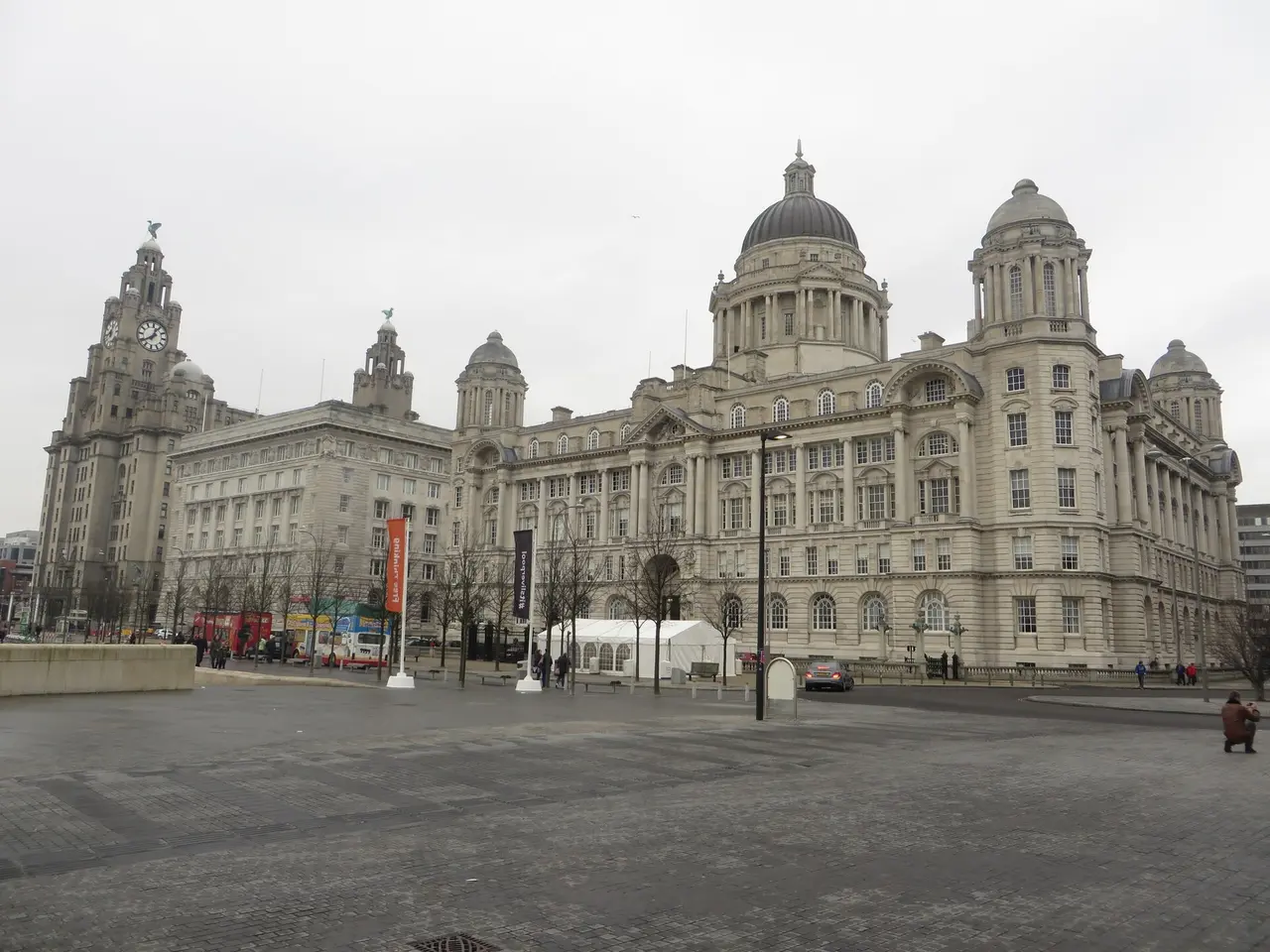
The Three Graces

The Royal Liver Building, Cunard Building and Port of Liverpool Building dominate Pier Head. The copper Liver Birds are the city's emblem.

Cavern Club

Rebuilt a few metres from the original club demolished in 1973, it still hosts live music every day in a vaulted cellar on Mathew Street.

Anglican Cathedral

A red sandstone building completed in 1978 after more than seventy years of work, the largest cathedral in the United Kingdom. Its tower is open to visitors.

Metropolitan Catholic Cathedral

Consecrated in 1967, this modern rotunda crowned with stained glass contrasts with its neighbour. Locals nickname it Paddy's Wigwam.

Walker Art Gallery

A free national museum known for its Pre-Raphaelite collection, old masters and modern British art, opposite St George's Hall.

Anfield Stadium

Home of Liverpool FC, with over 60,000 seats. Guided stadium tours and the club museum run on non-match days, booking online is recommended.

Another Place, Crosby

One hundred cast-iron figures by Antony Gormley stand facing the sea on Crosby beach, submerged and revealed again with the tides.

What to discover in Liverpool, district by district?

The waterfront, from Pier Head to the docks

The Waterfront stretches for about two kilometres along the Mersey and can be walked in half a day. At Pier Head, the Museum of Liverpool faces early 20th-century buildings, reminders of the era when the port ranked among the busiest in the United Kingdom. Further south, the 1846 warehouses of the Royal Albert Dock house museums, restaurants and The Beatles Story. The site lost its UNESCO listing in 2021, but it remains the city's favourite place for a stroll. Bring a jacket: the wind off the estuary blows all year round.

Hope Street and the Georgian Quarter

East of the centre, Hope Street links the city's two cathedrals in one kilometre, the Anglican one to the south and the Catholic one to the north, hence the local joke about the only street that runs from one to the other. Around it lies the Georgian Quarter, with early 19th-century brick houses and painted doors, oriented towards the university and the Philharmonic Hall. The Philharmonic Dining Rooms, a pub with Art Nouveau interiors, is a classic stop. Allow half a day including the climb up the Anglican tower.

The Cavern Quarter and the shopping centre

Around Mathew Street, a handful of lanes hold most of the Beatles memories: live music bars, statues, souvenir shops and the club where the band played nearly 300 times between 1961 and 1963. The mood is festive every night and loud at weekends. Two streets away, Liverpool ONE, an open-air shopping district opened in 2008, and Lime Street station frame the pedestrian core. Uphill, William Brown Street groups St George's Hall, the Central Library and two national museums, all within a ten-minute walk.

Ropewalks, Bold Street and the Baltic Triangle

Between the centre and the docks, the Ropewalks district takes its name from 18th-century rope makers. Bold Street is lined with cafes, vegetarian restaurants and world cuisines, and leads to St Luke's Church, bombed in 1941 and left roofless. Further south, a fifteen-minute walk away, the Baltic Triangle has turned its warehouses into studios, craft breweries and street food halls. It is the area for a night out away from the tourist trail, and home to Chinatown, whose arch marks the entrance on Nelson Street.

Anfield, the Wirral shore and the coast

Anfield stadium lies about five kilometres north of the centre, twenty minutes by bus. Across the river, the Mersey Ferry links Pier Head with Seacombe and Woodside on a loop of around fifty minutes, the best view of the skyline. To the north, Merseyrail reaches Crosby beach in about twenty minutes. Liverpool is also a departure port for neighbouring Ireland: an overnight ferry reaches Dublin in roughly eight hours. Set aside a full day for these trips outside the centre.

Getting there

Airports serving Liverpool, from main hubs to secondary ones.
  • ADXLeuchars Station AirfieldLeuchars, FifeSecondary
  • BBSBlackbushe AirportCamberley, SurreySecondary
  • BEBBenbecula AirportBalivanichSecondary
  • BEQRAF HoningtonBury Saint Edmunds, SuffolkSecondary
  • BEXRAF BensonWallingford, OxfordshireSecondary
  • BHDGeorge Best Belfast City AirportBelfastSecondary

Practical information for Liverpool

Entering the UK

EU visitors need a passport, as national ID cards are no longer accepted, plus an ETA electronic travel authorisation applied for online before departure.

From London

Direct trains from London Euston to Lime Street in about 2 h 15; tickets are much cheaper when booked several weeks ahead.

Airports

Liverpool John Lennon lies about twelve kilometres south-east, linked by bus. Manchester Airport, with more routes, is about an hour away by direct train.

Merseyrail

The urban rail network serves the centre via an underground loop (Lime Street, Central, Moorfields, James Street) and reaches Crosby and the Wirral.

National museums

Free entry to the Museum of Liverpool, the Maritime Museum, the Walker Art Gallery and the World Museum; only some temporary exhibitions charge a fee.

Match days

On Premier League weekends hotels and trains fill up fast: check the Liverpool FC and Everton fixtures before booking.

Power sockets

Type G sockets with three rectangular pins, 230 V: an adapter is essential for continental European devices.

Liverpool in pictures

Photo credits : Graham Robson, CC BY-SA 2.0, Wikimedia Commons ; Rodhullandemu, CC BY-SA 4.0, Wikimedia Commons ; Chowells, CC BY 2.5, Wikimedia Commons ; Diliff, CC BY-SA 3.0, Wikimedia Commons

Frequently asked questions about Liverpool

Can you visit John Lennon's and Paul McCartney's childhood homes?
Yes, Mendips (Lennon) and 20 Forthlin Road (McCartney) belong to the National Trust and can only be seen on a guided tour, with a minibus from the centre. Places are limited: book several weeks ahead in summer.
Is today's Cavern Club the one where the Beatles played?
Not exactly. The original club was demolished in 1973 during building works, then rebuilt in the 1980s a few metres away, partly with original bricks. Entry is charged in the evening and on some afternoons; mornings are quieter.
How do you get tickets for a match at Anfield?
Liverpool FC tickets go overwhelmingly to season ticket holders and club members. For a visitor, the realistic options are official membership with a ballot or hospitality packages, which cost far more. Beware of unofficial resellers.
Where is Everton's new stadium?
Everton left Goodison Park in 2025 for a new stadium built on Bramley-Moore Dock, on the banks of the Mersey north of the centre. You can walk there from Pier Head in about thirty minutes along the docks.
How long do you need for the Royal Albert Dock?
Allow half a day to wander and see one museum, a full day if you combine the Maritime Museum, the International Slavery Museum and The Beatles Story. The first two are free, The Beatles Story charges admission.
Can you climb the tower of Liverpool's Anglican Cathedral?
Yes, the tower is open with a ticket, partly by lift and then by stairs. On a clear day the view stretches over the Mersey, Wales and the Wirral. Access to the nave itself remains free.
What is there to see in Crosby and how do you get there?
Crosby beach is home to Another Place, an Antony Gormley installation of one hundred cast-iron figures. Take Merseyrail to Blundellsands & Crosby, about twenty minutes from the centre, then walk for fifteen minutes. Come at low tide to see the statues in full.
Is two days enough for Liverpool?
Two days cover the waterfront, the cathedrals and the Cavern Quarter. Add a third day for Anfield, the Beatles homes or Crosby. To continue to Scotland, the Scottish capital is about four hours away by train.
Is the Mersey Ferry worth it?
Yes, the River Explorer cruise of around fifty minutes gives the best view of the Three Graces and the docks, with recorded commentary. It leaves Pier Head several times a day and stops at Seacombe and Woodside.
What is scouse?
It is both the local accent and the dish that gave residents their nickname: a beef or lamb stew with potatoes and vegetables, inherited from the port's sailors. You will find it in pubs, often served with pickled red cabbage.
When is the Grand National at Aintree?
One of the world's most famous steeplechases is run every year in early April at Aintree racecourse, north of Liverpool. During the three-day festival, city hotels are fully booked and prices rise sharply.
Is Liverpool a rainy city?
The climate is oceanic: rain spread across the year, rarely heavy, and mild temperatures. From May to September days are longer and drier, ideal for the waterfront. In winter, pack a windproof jacket and umbrella for the gusts coming off the sea.

Plan your trip to Liverpool

Build your day-by-day itinerary and manage budget, bookings and packing in PlanTripNow.
Aperçu de l'application PlanTripNow