Skip to content

Visit Seoul : palaces, neighbourhoods and day trips

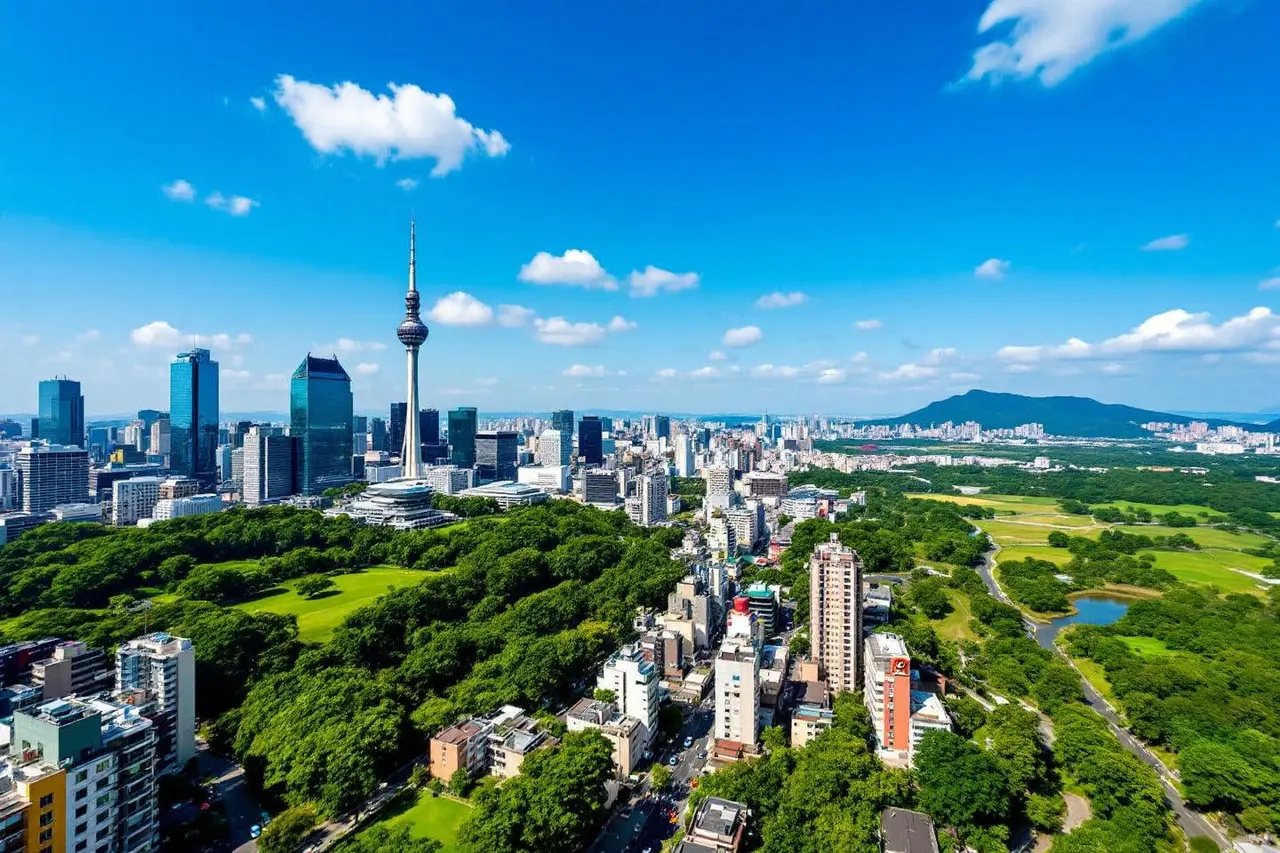
Seoul reads on two planes: at ground level, the Joseon palaces, the hanok lanes and the covered markets; up high, the Gangnam towers and the granite ridges that ring the city. The metro links it all in under 40 minutes. Two days for the essentials, four to add the DMZ and a fortress.

At a glance

Visa
None
Tourist stay of up to 90 days
7-day budget
€840
Per person, comfort profile, excluding international flights.

Why visit Seoul?

Seoul is one of the safest and best-connected capitals in Asia, 11 hours' flight from Paris. You get around almost entirely by metro, the city blends UNESCO-listed royal heritage with global pop culture, and French nationals are exempt from the K-ETA until the end of 2026.

When to visit Seoul

Temperatures, rainfall and crowds month by month, to pick your window.
When to visit Seoul
MonthTemperaturesRainCrowdsVerdict
January-5 to 2 °C3 dQuietDry, biting cold, often below freezing all day: low season, but blue skies and ski resorts an hour away.
February-3 to 5 °C3 dModerateStill winter, but Lunar New Year (Seollal) shuts shops for a few days and packs transport.
March2 to 11 °C5 dModerateThe thaw takes hold and the first cherry trees open in the south of the city right at month's end.
April8 to 18 °C7 dPackedCherry blossom around 10 April along the Han and at Yeouido: the spring tourist peak.
May14 to 24 °C7 dBusyArguably the finest month: palaces framed in green, clear skies, before the summer humidity.
June19 to 28 °C8 dModerateRising heat and the first monsoon (jangma) rains in the last ten days of the month.
July22 to 29 °C13 dQuietPeak monsoon: torrential rain, flood risk, stifling humidity and rock-bottom rates.
August23 to 30 °C12 dModerateThe hottest month, still wet and typhoon-prone, though Korean holidays bring the city to life.
September18 to 26 °C7 dBusySkies clear after Chuseok and the air turns dry and bright: the second high season begins.
October11 to 20 °C5 dPackedThe best month: red foliage on Bukhansan, 20°C days, deep blue skies, hotels fully booked.
November4 to 12 °C6 dModerateThe last colours drop fast and the cold returns: crowds fall away after the first fortnight.
December-3 to 4 °C4 dModerateDry cold and lights everywhere, with a bump in visitors around the year-end holidays.
Source: Normales KMA (Korea Meteorological Administration) 1991-2020, station de Séoul (weather box Wikipedia) ; relevé septembre 2026

Seoul's must-sees

Palaces, viewpoints and cultural sites, both north and south of the Han River.

Gyeongbokgung

The main Joseon dynasty palace, burned then rebuilt, with the Gyeonghoeru pavilion on its pond and the National Palace Museum.

Changdeokgung

A palace UNESCO-listed for how it follows the terrain; the Secret Garden is only visited on a guided tour, by reservation.

Bukchon Hanok Village

A residential quarter of lived-in traditional houses between two palaces, with six marked viewpoints over the city.

N Seoul Tower

On top of Namsan, a 360-degree panorama over the city; reached by funicular, cable car or the wall trail.

Jongmyo Shrine

A UNESCO-listed Confucian royal shrine, a long wooden hall holding the tablets of the Joseon kings; guided visit, closed Tuesday.

Gwangjang Market

A 1905 covered market known for its bindaetteok, mayak gimbap and tteokbokki stalls, eaten on shared stools.

Dongdaemun Design Plaza

A building of aluminium curves by Zaha Hadid, design exhibitions and a night market that sets up after 10pm.

Bukhansan National Park

A massif of granite peaks at the city's edge, marked trails and a mountain fortress, reachable by metro and bus.

Cheonggyecheon Stream

A restored, pedestrianised watercourse running 11 km through the centre, below street level, with footbridges and murals.

Seoul Sky

The Lotte World Tower observatory in Gangnam, glass floors on the 118th floor, timed ticket to book online.

What to discover in Seoul, neighbourhood by neighbourhood?

Gyeongbokgung and the Joseon palaces

Five royal palaces survive north of the river. Gyeongbokgung, the main one, holds the changing of the guard at 10am and 2pm; Changdeokgung, UNESCO-listed, can only be visited on a guided tour for its Secret Garden, which must be booked. Entry costs 3,000 won per palace, but it is free if you wear a hanbok rented from one of the nearby shops, for one to two hours and around 15,000 won.

Bukchon and Samcheong-dong

Between Gyeongbokgung and Changdeokgung, Bukchon village lines up hundreds of lived-in hanok houses along sloping lanes. Six viewpoints are marked on the ground; signs and volunteers remind visitors that people live there and ask for quiet before 10am and after 5pm. The neighbouring Samcheong-dong street extends the walk uphill with galleries, teahouses and cafes, and the small Bukchon craft museums along it are free and open until 6pm. Allow two hours for the loop, more with a hanbok photo stop.

Myeongdong and Namsan

Myeongdong is the district of cosmetics, department stores and evening street food, and it gets very busy. From there, a funicular or a 20-minute walk leads up to the N Seoul Tower, on top of Namsan (262 m), for the view over the whole basin. The old city-wall trail loops around the hill in 1h30, past sections of the 14th-century fortification. Come at dusk to catch the city both by daylight and lit up, then walk back down to Myeongdong for dinner.

Hongdae and Yeonnam-dong

Around Hongik University, Hongdae comes alive at night: busking, bars, vintage shops, arcades. The quieter neighbouring Yeonnam-dong has grown along a former railway turned linear park, the Gyeongui Line Forest. This is the area to eat late and follow it with a cafe open until 2am. It is about 20 minutes by metro line 2 from the palaces, and Hongik University station has nine exits set far apart, so check which one you need before you surface.

Gangnam and the Han River

South of the river, Gangnam lines up office towers, luxury shops and the Lotte World Tower, the fifth tallest in the world at 555 m, whose Seoul Sky observatory is booked online. The eleven riverside parks along the Han connect by metro: in summer people picnic on delivered fried chicken and rent bikes into the night. Yeouido park, the largest, also hosts the spring cherry-blossom festival and the autumn fireworks; Ttukseom and Banpo, with its rainbow bridge fountain, are quieter alternatives.

Itaewon, Yongsan and the museums

Long an international district near the former US base, Itaewon stays cosmopolitan for food and bars. Right next to it, the National Museum of Korea, free and one of the largest in Asia, needs half a day, and the Leeum-Samsung Museum, closed on Monday, gathers historic and contemporary art in a complex by three architects. The whole area is covered in half a day, ending with an international dinner in Itaewon or a beer on the Haebangchon hill behind it.

Day trips from Seoul

The demilitarized zone with North Korea can only be visited on a guided tour booked several days ahead, passport required, for half a day. The UNESCO-listed Hwaseong fortress in Suwon is an hour away by metro. Nami Island and the Petite France park make a day trip by train and bus, around 1h30 each way. Many visitors book these three through an agency, but Suwon and Nami are both straightforward to reach independently with a T-money card.
How much it costs

Per person per day, excluding international travel.
Budget
45 €/ day
1 930 € for 2 people, 7 days, return flights included
Accommodation
17 €
Food
16 €
Local transport
4 €
Sights and activities
8 €
Comfort
120 €/ day
2 980 € for 2 people, 7 days, return flights included
Accommodation
58 €
Food
38 €
Local transport
8 €
Sights and activities
16 €
Premium
269 €/ day
5 066 € for 2 people, 7 days, return flights included
Accommodation
135 €
Food
72 €
Local transport
20 €
Sights and activities
42 €
Prices checked: Prix relevés en septembre 2026, hors floraison des cerisiers (mi-avril) et feuillages d'automne (mi-octobre) : fourchettes recoupées entre seoultourism.org, thebrokebackpacker et korea-insider, conversion au taux d'environ 1450 KRW pour 1 EUR, tarifs hôteliers Booking. Occupation : dortoir pour backpacker, double partagée à deux pour comfort et premium. Vol A/R Paris-Séoul inclus dans le total semaine, estimé 1300 EUR pour deux hors haute saison (novembre le moins cher, juillet le plus cher).

Getting there

Airports serving Seoul, from main hubs to secondary ones.
  • CJJCheongju International Airport/Cheongju Air Base (K-59/G-513)CheongjuMain
  • CJUJeju International AirportJeju CityMain
  • GMPGimpo International AirportSeoulMain
  • ICNIncheon International AirportSeoulMain
  • MWXMuan International AirportMuanMain
  • PUSGimhae International AirportBusanMain

Entry, health and safety

For FR travellers

Entry requirements

No visa for a tourist stay

Pour un court séjour de moins de 90 jours, les ressortissants français sont dispensés de visa. L'exemption temporaire de l'autorisation K-ETA a été prolongée jusqu'au 31 décembre 2026 : elle n'est donc pas obligatoire pour le moment (un K-ETA déjà délivré reste valable jusqu'à son expiration). Un passeport français en cours de validité, non endommagé, suffit ; la règle des six mois ne s'applique pas.

Stay allowed for up to 90 days.

Health

Advised: Vaccinations françaises à jour. Selon les conditions du séjour : hépatite A, fièvre typhoïde, et encéphalite japonaise pour les séjours en zone rurale entre mai et octobre.

Assurance médicale et rapatriement recommandée ; peu de médecins parlent anglais hors des grands hôpitaux de Séoul, l'application Emergency Ready App aide à localiser les services d'urgence anglophones. Qualité de l'air parfois mauvaise en ville, en particulier au printemps avec les poussières jaunes venues du continent. La zone démilitarisée (DMZ) avec la Corée du Nord est déconseillée sauf raison impérative, les relations intercoréennes connaissant des périodes de tension récurrentes.

Safety

Normal precautions

Emergency

112 (police) / 119 (secours)

Checked in septembre 2026 against the official source. Entry rules change: check the official source before you travel, it alone is authoritative.

Seoul travel basics

Transport

A rechargeable T-money card, sold and topped up at every convenience store; it works on the metro, buses and taxis. The metro is simple, signed in English, with last trains around midnight.

Maps and apps

Google Maps gives no reliable walking directions in Korea for legal reasons: install Naver Map or KakaoMap, and Kakao T to hail a taxi.

K-ETA

The exemption for French nationals is extended to 31 December 2026: nothing to apply for before departure, a valid passport is enough.

Payment

Cards work everywhere, including markets and for a metro ticket; foreign contactless is accepted almost everywhere.

Power sockets

Type F, 220 V, the same as French sockets: no adapter needed.

Tipping

Not practised, in restaurants or taxis; service is included.

Korean age

The traditional age system was abolished in 2023: official age is now international age, relevant for age-restricted entries.

Public holidays

During Seollal (lunar new year) and Chuseok, many shops and museums close for two to three days and transport is packed.

Air quality

Pollution and yellow-dust episodes mainly from March to May; the AirKorea app gives the index, an FFP2 mask helps on red days.

Wifi

Free public wifi is widespread; an eSIM or pocket router can be picked up at Incheon airport for constant connection.

Time difference

UTC+9 all year, 7 or 8 hours ahead of France; no clock change.

Seoul in pictures

Photo credits : Basile Morin, CC BY-SA 4.0, Wikimedia Commons ; kallerna, CC BY-SA 4.0, Wikimedia Commons

Similar destinations

Other cities you might like as much as Seoul.

Seoul: frequently asked questions

Do you need a K-ETA for Seoul in 2026?
No. The K-ETA exemption for French nationals has been extended to 31 December 2026. A valid passport is enough for a tourist stay of under 90 days, with no prior online application required.
How many days do you need to visit Seoul?
Two full days cover the palaces, Bukchon, Namsan and one modern district. A third day allows the DMZ, a fourth the Suwon fortress or a Bukhansan hike. Beyond that, Seoul works as a base for train trips around the country.
Where should you stay in Seoul: Myeongdong, Hongdae or Gangnam?
Myeongdong is central and handy for the palaces but very commercial, Hongdae suits travellers who want to go out at night, Gangnam is smarter and far from the historic sites. Insadong and Jongno are a good middle ground.
Can you visit the DMZ freely from Seoul?
No, access to the demilitarized zone is only by guided tour, booked several days ahead with your passport shown. Tours including the Joint Security Area at Panmunjom must be booked even earlier and are subject to clearance.
Does wearing a hanbok get you into the palaces for free?
Yes. Wearing a hanbok, rented from a shop near Gyeongbokgung for one or two hours, gives free entry to the royal palaces and Jongmyo Shrine. Rental costs around 15,000 to 20,000 won depending on the outfit.
Does Google Maps work in Seoul?
Poorly. Because of mapping-data laws, Google Maps does not show walking routes in South Korea. Download Naver Map or KakaoMap before you arrive, both available in English, along with Kakao T for taxis.
Is the changing of the guard at Gyeongbokgung paid?
No, the ceremony takes place in front of the Gwanghwamun gate, outside the paid enclosure, at 10am and 2pm except Tuesday and in heavy rain. Only entry to the palace itself costs 3,000 won.
Is a fried-chicken picnic by the Han worth it?
Yes, it is a local summer habit. You order from a riverside park such as Yeouido or Ttukseom, delivery reaches you on the lawn in about 30 minutes, and you rent a bike or a mat on the spot. Bring insect repellent.
Can you day-trip to Busan from Seoul?
It is possible but tight: the KTX links the two cities in 2h40, meaning over five hours of train return. A night there is better, or fold Busan into a wider itinerary with Gyeongju.

Plan your trip to Seoul

Build your day-by-day itinerary and manage budget, bookings and packing in PlanTripNow.
Aperçu de l'application PlanTripNow