Visit Strasbourg

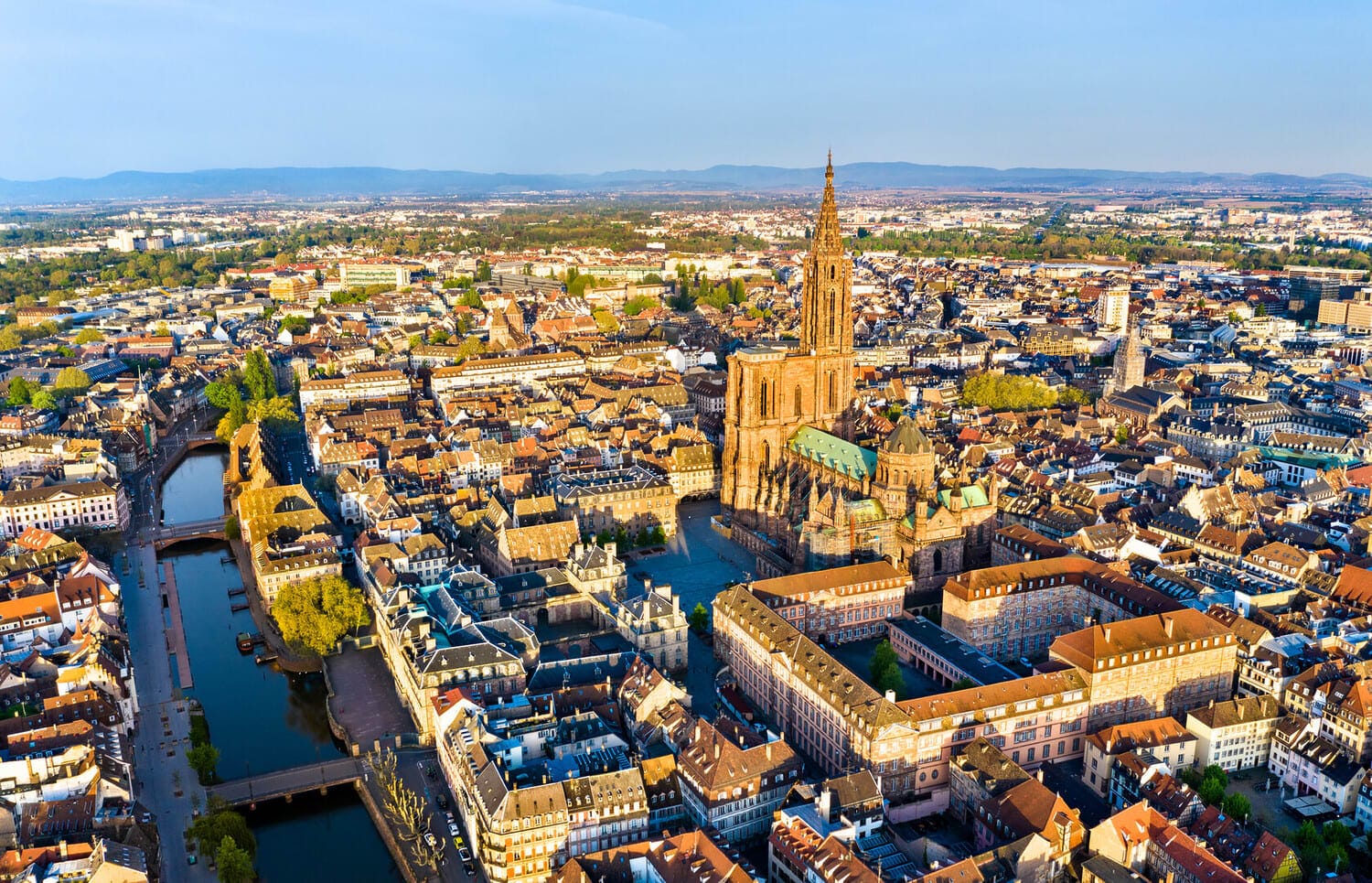
Strasbourg is walked on its Grande Île, between the pink sandstone cathedral, the canals of Petite France and the imperial avenues of the Neustadt. The city doubles as a European quarter and serves as a gateway to the Alsace wine route. Two days are enough, more in December for the Christmas market.

Why visit Strasbourg?

Strasbourg is the capital of Alsace and one of the three capitals of the European Union, 1h50 from Paris by high-speed train. Its centre, the Grande Île, was the first entire city centre to be UNESCO World Heritage listed, and the city borders Germany, reached by tram in fifteen minutes.

Strasbourg's must-sees

Monuments of the Grande Île and European institutions, all reachable on foot or by tram.

Notre-Dame cathedral

A Gothic masterpiece in pink Vosges sandstone, a 142-metre spire, a carved facade and the Pillar of Angels inside.

Astronomical clock

An 1842 mechanism in the south transept, with the parade of apostles at 12:30pm; access on a limited ticket collected the same morning.

Cathedral platform

332 steps up to 66 metres, at the foot of the spire, for a view over the rooftops, the Black Forest and the Vosges.

Petite France

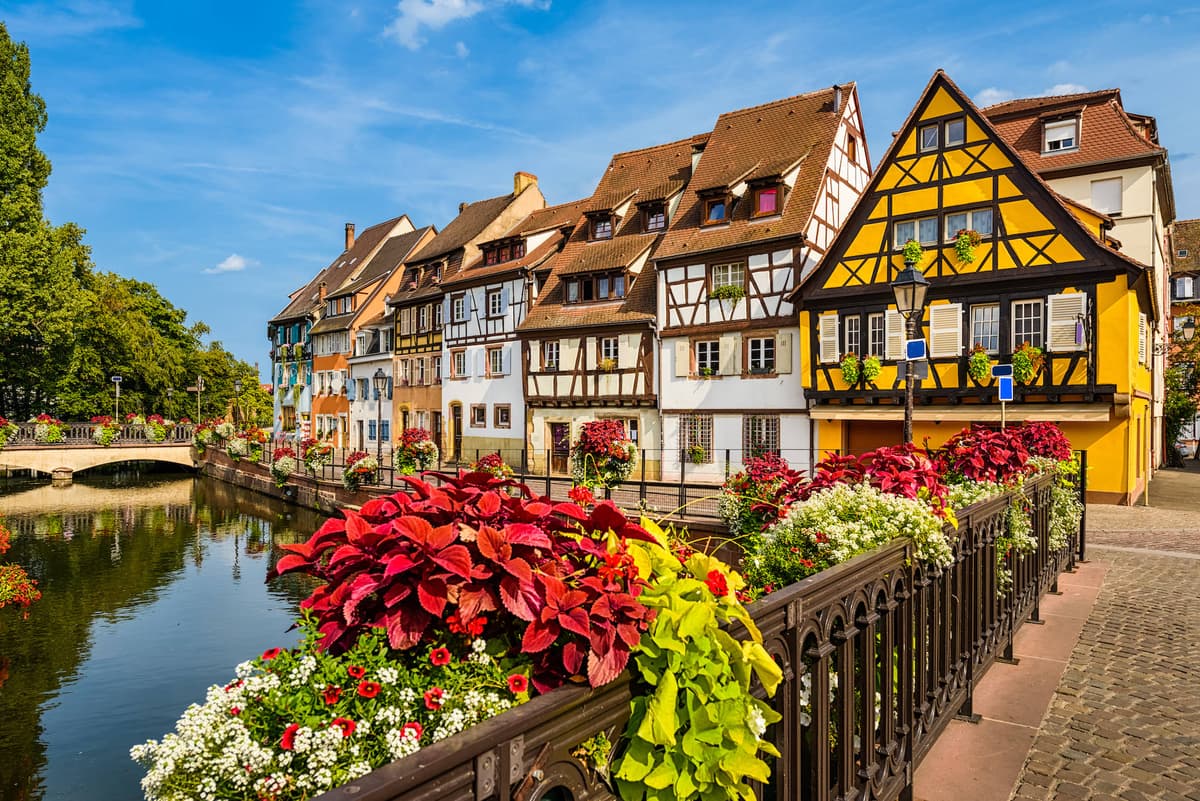
A quarter of half-timbered houses on the canals, working locks and tarte flambée restaurants along the water.

Rohan Palace

A former 18th-century bishop's palace holding the Decorative Arts, Fine Arts and Archaeology museums, on the Ill.

European Parliament

A circular glass building of 1999 on the Ill, visitable by reservation, with an exhibition space, the Simone Veil Parlamentarium.

What to discover in Strasbourg, neighbourhood by neighbourhood?

The Grande Île: cathedral and centre

The island, ringed by the arms of the Ill, holds the entire historic centre. Notre-Dame cathedral, the tallest in Europe until the 19th century with its 142-metre spire, is admired for its carved facade, its 1842 astronomical clock (the parade of apostles at 12:30pm, a ticket to collect from 11:30am) and its platform, reached by 332 steps. Around it, Place Gutenberg and Place Kléber, the cathedral quarter and the department stores take half a day on foot.
Petite France and the Covered Bridges

At the western tip of the island, the former tanners' and millers' quarter lines up its 16th-century half-timbered houses along the canals, with locks still in use. The Covered Bridges, a run of medieval towers, and the panoramic terrace of the Vauban Dam just behind give the best overall view, for free. The quarter is very busy by day; come early for photos, or late in the evening once the groups have left.

The Neustadt and the European quarter

North and east of the island, the Neustadt is the German city built after 1871: straight avenues, Wilhelmine palaces, Place de la République around a garden. This quarter, also UNESCO-listed, is walked as far as the Orangerie park and its stork enclosure. Further out, the European Parliament and the Council of Europe can be visited by reservation on session days, with ID.

Around Strasbourg: the wine route and Colmar

The city is the ideal base for southern Alsace. Colmar and its Unterlinden museum are 35 minutes away by direct train, Obernai and Mont Sainte-Odile 30 minutes, the wine-route villages (Riquewihr, Eguisheim, Kaysersberg) reachable by bus or organised tour. For the Haut-Koenigsbourg castle, perched at 800 metres, a car or organised tour is needed, about 50 minutes away, with tour minibuses leaving daily from the cathedral square in season.

Strasbourg in pictures

Similar destinations

Other cities you might like as much as Strasbourg.

Strasbourg: frequently asked questions

Is the Strasbourg Christmas market worth the crowds?
Yes for the atmosphere, the lit cathedral and the big tree on Place Kléber, but avoid the Advent weekends when you shuffle along the streets. Come on a weekday, stay in town to enjoy the evenings, and know that hotel prices double.
How many days do you need to visit Strasbourg?
Two full days are enough for the cathedral, Petite France, the Neustadt and the Rohan Palace museums. A third day allows Colmar and a wine-route village, a fourth a full day for the Haut-Koenigsbourg castle and Ribeauvillé.
Can you visit Colmar as a day trip from Strasbourg?
Yes, a direct train links the two cities in 35 minutes, with frequent departures. Start with the Unterlinden museum and the Isenheim Altarpiece at opening, then Little Venice and the covered market. You can add Eguisheim by bus in the afternoon.
Do you need a car for the wine route from Strasbourg?
Not for Colmar, Obernai, Sélestat or Barr, served by train. But the prettiest villages (Riquewihr, Kaysersberg, Hunawihr) and the Haut-Koenigsbourg are only reachable by car, by bike in summer, or on a one-day organised tour from Strasbourg.
Can you easily cross into Germany from Strasbourg?
Yes, tram D crosses the Rhine to Kehl in fifteen minutes, on the same ticket as the city network. You go for the Two Banks garden, the pedestrian footbridge and cheaper shopping. Keep ID on you, as occasional border checks take place.
When should you climb the cathedral platform in Strasbourg?
Early morning to avoid the queue, or late afternoon for the raking light on the rooftops and the Vosges. The climb is 332 steps, no lift; the ticket is bought on site and the last climb is about an hour before closing.

Plan your trip to Strasbourg

Build your day-by-day itinerary and manage budget, bookings and packing in PlanTripNow.
Aperçu de l'application PlanTripNow