Travel to Sri Lanka: when to go, budget and itinerary

Rock fortresses, trains winding through tea bushes and beaches lined with stilt fishermen: Sri Lanka fits on an island you can cross in half a day's drive. This page gathers month-by-month climate, a real budget and realistic 7 to 15-day itineraries.

Why visit Sri Lanka?

This Indian Ocean island, just off neighboring India, packs eight UNESCO World Heritage sites, cool hillside tea country and two distinct tropical coastlines into a territory the size of Ireland. Its short distances let travelers combine temples, safaris and beaches without the long transfers common elsewhere in Asia.

What to discover in Sri Lanka?

The Cultural Triangle

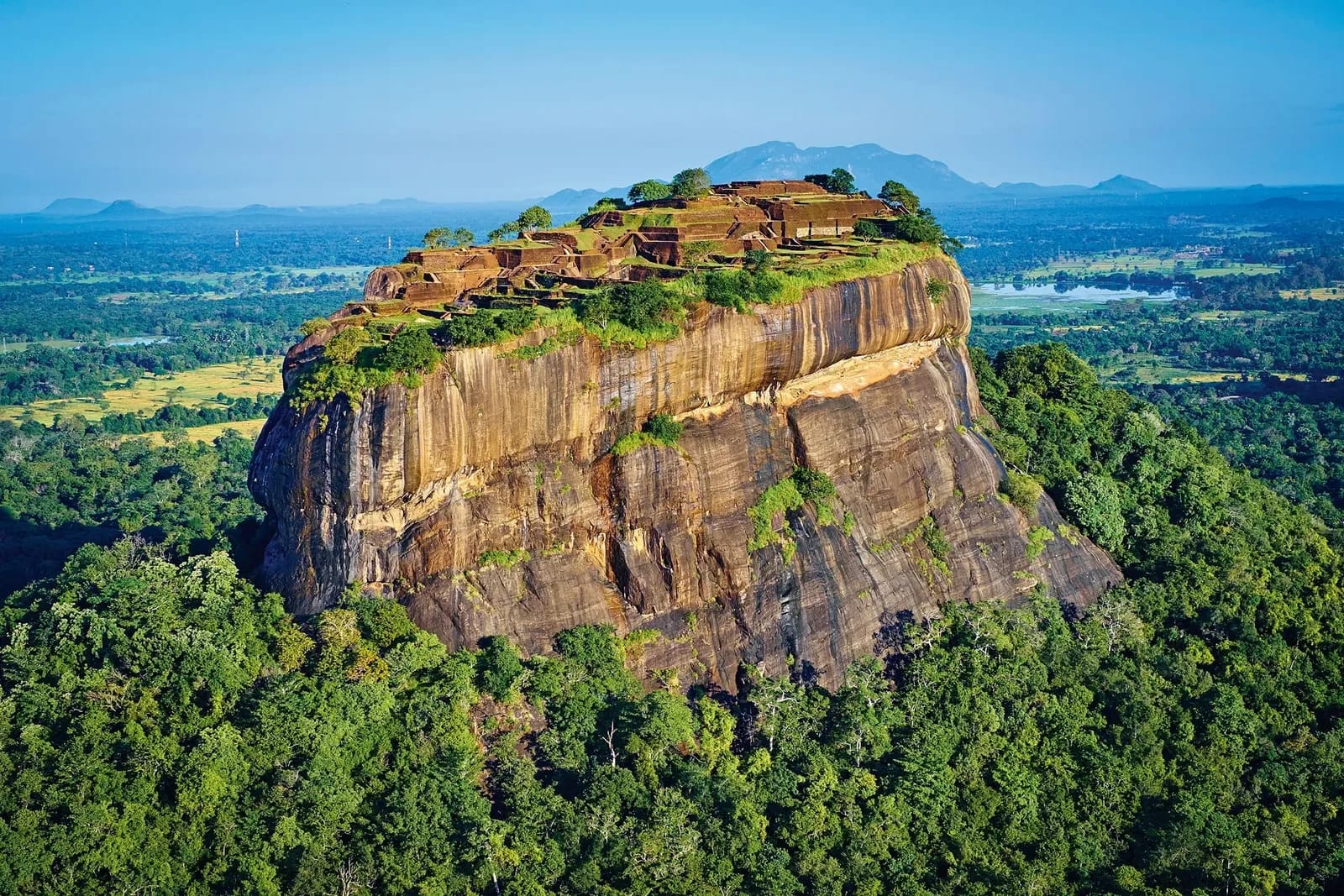
Sigiriya, Dambulla and Polonnaruwa form the historic heart of the country, 3-4 hours' drive from Colombo. Sigiriya's rock fortress, with its water gardens and 1,500-year-old frescoes, is best climbed early to beat the heat: allow 1.5 hours for the ascent. Dambulla's five painted cave temples take about 90 minutes to visit. Two nights on site are enough for both without rushing.
Kandy and the Buddhist heartland

The last royal capital before British rule, Kandy holds the Temple of the Sacred Tooth Relic, a major pilgrimage site drawing worshippers from across the Buddhist world, with daily drum ceremonies at 5:30am, 9:30am and 6:30pm. Set aside half a day for the temple and the surrounding lake walk. The city is mainly the starting point for one of Asia's most celebrated train rides to Ella, best booked at least two weeks ahead in reserved second class.

The tea highlands

Around Nuwara Eliya and Ella, terraced hills climb to 1,900 metres, where night temperatures drop below 15°C, a sharp contrast with the coast's 30°C; a light jacket is worth packing even in the tropics. Tea factories offer free walk-in visits of about an hour, tasting included. The Nine Arches railway bridge and the two-hour round-trip hike up Little Adam's Peak are Ella's two must-do outings.

The south coast, surf and whales

From Galle to Tangalle, the south coast strings together a UNESCO-listed Dutch colonial fort, surf breaks at Weligama and blue whale-watching trips off Mirissa, in season from December to April, when morning seas stay calm enough for the boats to head further offshore. Unlike the nearby Maldives, beaches here don't require booking a whole private island: several seaside towns combine easily into a single 3 to 4-night stay.

The east coast, still uncrowded

Trincomalee and its Nilaveli and Uppuveli beaches follow a reversed climate calendar: the dry season runs April to September, exactly when the south is under monsoon rain, making the two coasts a natural year-round pairing for travelers chasing sun. Diving on Pigeon Island's reefs and a tourist crowd still much thinner make it a worthwhile alternative for two to three nights, provided travelers accept a 4-hour drive from the Cultural Triangle.

Jaffna and the Tamil north

Closed to travelers for decades during the civil war that ended in 2009, the Jaffna peninsula reveals a Tamil and Hindu culture distinct from the rest of the island: the colorful Nallur temple, a Dutch fort and a lively market. Allow 3 hours' drive from Anuradhapura; stay on marked roads, as some rural areas still hold residual landmines from the conflict.

Cities to visit in Sri Lanka

Featured destinations appear first.
Coming soon.

Sri Lanka in pictures

Don't miss

Ten sites that sum up Sri Lanka's range on their own.

Sigiriya

Fifth-century rock fortress rising 200 metres, with frescoes of maidens and water gardens still visible at its base.

Temple of the Tooth, Kandy

Sanctuary holding a sacred relic of the Buddha, surrounded by daily drum ceremonies and flower offerings.

Kandy-Ella train

A ride through tea plantations and over suspension bridges, widely ranked among Asia's most beautiful train journeys.

Nine Arches Bridge

Stone viaduct built without steel during World War I, framed by tea plantations near Ella.

Dambulla caves

Five painted cave shrines dating back over two thousand years, with more than 150 Buddha statues carved into the rock.

Galle Fort

17th-century Dutch fortified city, UNESCO-listed, with ramparts, a lighthouse and lanes lined with shops and cafes.

Udawalawe National Park

Savanna reserve home to several hundred wild elephants, spotted on early-morning 4x4 safaris.

Whale watching, Mirissa

Boat trips to one of the world's densest concentrations of blue whales, from December to April.

Stilt fishermen

Iconic silhouettes perched on wooden poles off Weligama, most often photographed at sunset.

Jaffna peninsula

Tamil and Hindu land in the island's north, with the colorful Nallur temple and cuisine distinct from the rest of the country.

Similar destinations

Other countries you might like as much as Sri Lanka.

Similar regions

Other regions you might like as much as Sri Lanka.

Frequently asked questions

Do you need to book the Kandy-Ella train in advance?
Yes, reserved second-class seats sell out fast and open for booking about a month ahead, so book at least two weeks in advance. Without a reservation, unreserved third class remains an option, though it often means standing or sitting in the corridors.
Can you combine the Cultural Triangle and the south coast beaches in one week?
It's possible but tight: allow at least 7 days and skip either Jaffna and the east coast, or part of the tea highlands. Ten days allow a relaxed run through Sigiriya, Kandy, Ella and Galle without overly long driving days.
When can you see blue whales at Mirissa?
The season runs from December to April, peaking in February-March when the south coast sea is calmest. Morning trips between 6:30 and 7am offer the best sighting odds before the wind picks up.
Is the Jaffna peninsula safe for travelers?
Yes, for tourist areas and main roads, widely visited since the civil war ended in 2009. It remains advisable to stay on marked paths in certain rural areas along the former front line, where not all residual landmines have been cleared.
Should you visit the east coast instead of the south coast?
The two follow opposite calendars: the south coast (Galle, Mirissa) is dry from December to April, the east coast (Trincomalee) from April to September. Traveling in July-August naturally points toward the east rather than the south, then deep in monsoon season.
How much time should you allow for Sigiriya?
Half a day is enough for the rock climb and gardens, starting at opening time around 7am to beat the heat and crowds. Combining it with Dambulla, 20 minutes away, allows both Cultural Triangle sites to be covered in a single day.
Are elephants easy to see in Sri Lanka?
Yes, especially at Udawalawe National Park, where wild herds are spotted on nearly every 2 to 3-hour morning safari. Avoid attractions offering elephant rides or bathing, practices widely criticized by animal welfare organizations.

Plan your trip to Sri Lanka

Day-by-day itinerary, budget, bookings and packing in a single app.
Aperçu de l'application PlanTripNow