Skip to content

Visiting Saudi Arabia: when to go, budget and itineraries

Closed to travellers until 2019, Saudi Arabia now opens with a simple online e-visa. Within a few hours by road or air you move from the Nabataean tombs of Hegra to the coral houses of Jeddah, then to the perched stone villages of the Asir, with almost no crowds.

At a glance

Currency
Saudi Riyal
Time difference
UTC+3
Visa
Required
Tourist stay of up to 90 days
7-day budget
€805
Per person, comfort profile, excluding international flights.

Can you travel to Saudi Arabia today?

Since 10 November 2026, France advises against the whole country except for essential travel (orange zone), because of missile and drone fire linked to the regional conflict. The Yemen border strip, about a hundred kilometres deep, including Abha, Najran and Jizan, is formally advised against, as are King Khalid airport in Riyadh and King Fahd airport in Dammam, including in transit. Check your own government's advice. Otherwise, the country issues an online tourist eVisa.

When to visit Saudi Arabia

Temperatures, rainfall and crowds month by month, to pick your window.
When to visit Saudi Arabia
MonthTemperaturesRainCrowdsVerdict
January7 to 21 °C2 dBusyArguably the best month: 21 °C afternoons, cool nights and Riyadh Season in full swing.
February10 to 24 °C2 dBusyStill mild and bright, but Ramadan often starts in late February: sleepy days, lively evenings.
March14 to 28 °C3 dModerateThe desert's wettest month, a few short storms, and temperatures still ideal for AlUla.
April19 to 34 °C4 dModerateLast comfortable window before the furnace; plan mornings for Diriyah and open-air sites.
May24 to 40 °C1 dQuietHighs cross 39 °C; some years this is the Hajj period, with Jeddah and Medina packed.
June26 to 43 °C0 dVery quietBrutal dry heat and a dusty white sky: only for travellers staying in air-conditioned interiors.
July27 to 44 °C0 dQuietThe yearly peak near 44 °C; only vacationing Saudi families lift visitor numbers.
August27 to 44 °C0 dQuietAs stifling as July; the highland Asir around Abha is the only cool escape.
September24 to 41 °C0 dQuietThe heat starts to ease late in the month, yet afternoons still brush 41 °C.
October19 to 36 °C1 dModerateComfortable travel returns: mild evenings, and the Riyadh and AlUla seasons kick off.
November13 to 27 °C2 dBusyPerfect conditions for the desert and festivals; Riyadh hotels fill up fast.
December9 to 22 °C2 dPackedAbsolute high season: ideal weather, year-end holidays, concerts and the Grand Prix send demand soaring.
Source: Tableau cadré sur Riyad et le plateau central du Nedjd, région d'entrée principale du pays ; une moyenne nationale n'a pas de sens (côte de la mer Rouge, montagnes de l'Asir et désert du Nord ont des climats distincts). Normales 1991-2020, Climates to Travel recoupé avec Wikipedia (station de Riyad) et weather-and-climate.com, relevé septembre 2026.

What is there to see in Saudi Arabia?

Riyadh and the Nejd plateau

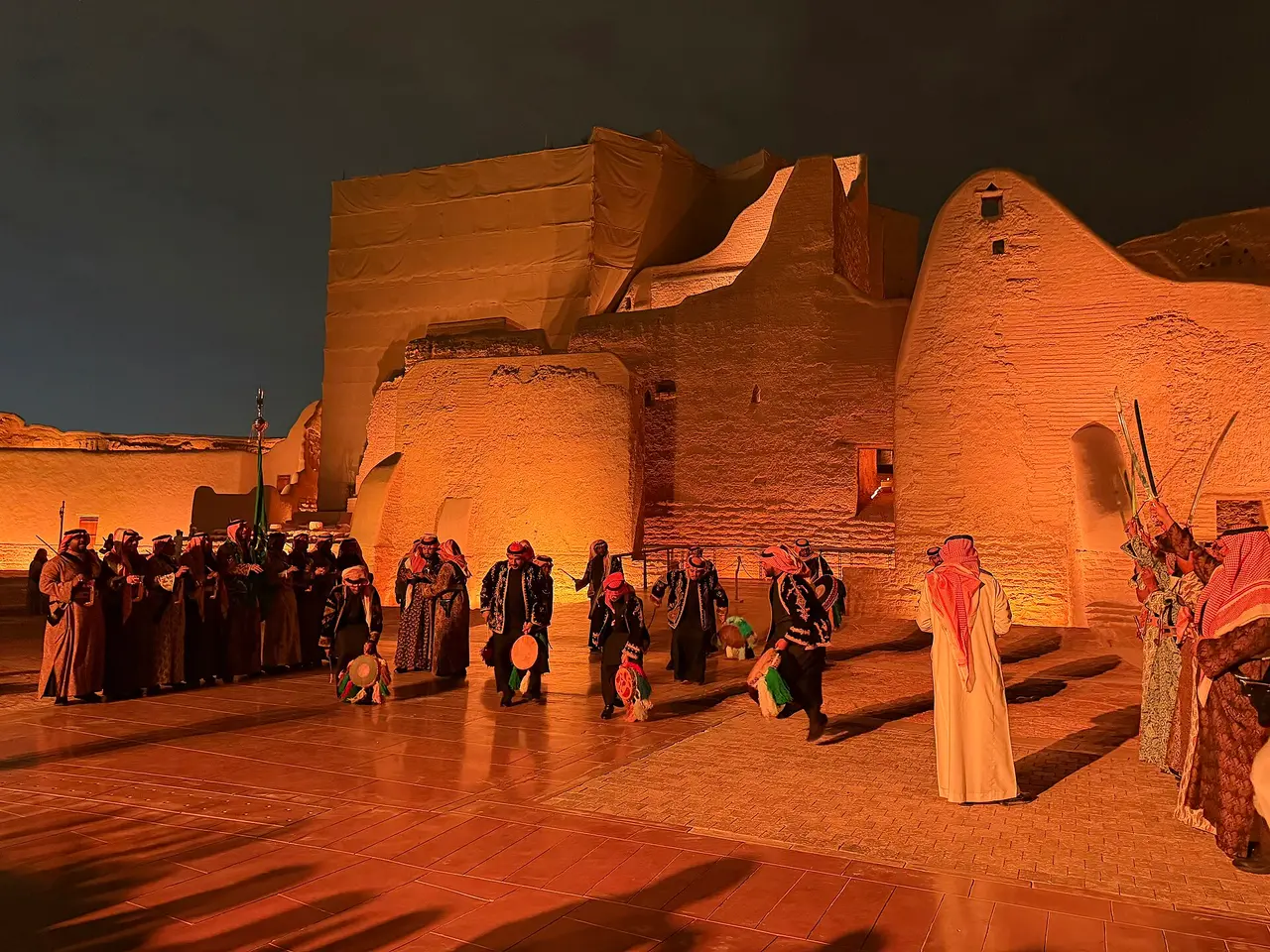
The capital is the gateway: most long-haul flights land here and inland distances are then covered by air. Allow three nights for old Diriyah and its UNESCO-listed At-Turaif mud-brick quarter, the National Museum and a full day at the Edge of the World, the Tuwaiq cliff 90 minutes down a track. Few capitals in Asia have taken their current shape so recently. Evenings from November to March are cool here, so pack a jacket.
AlUla and the Nabataean heritage

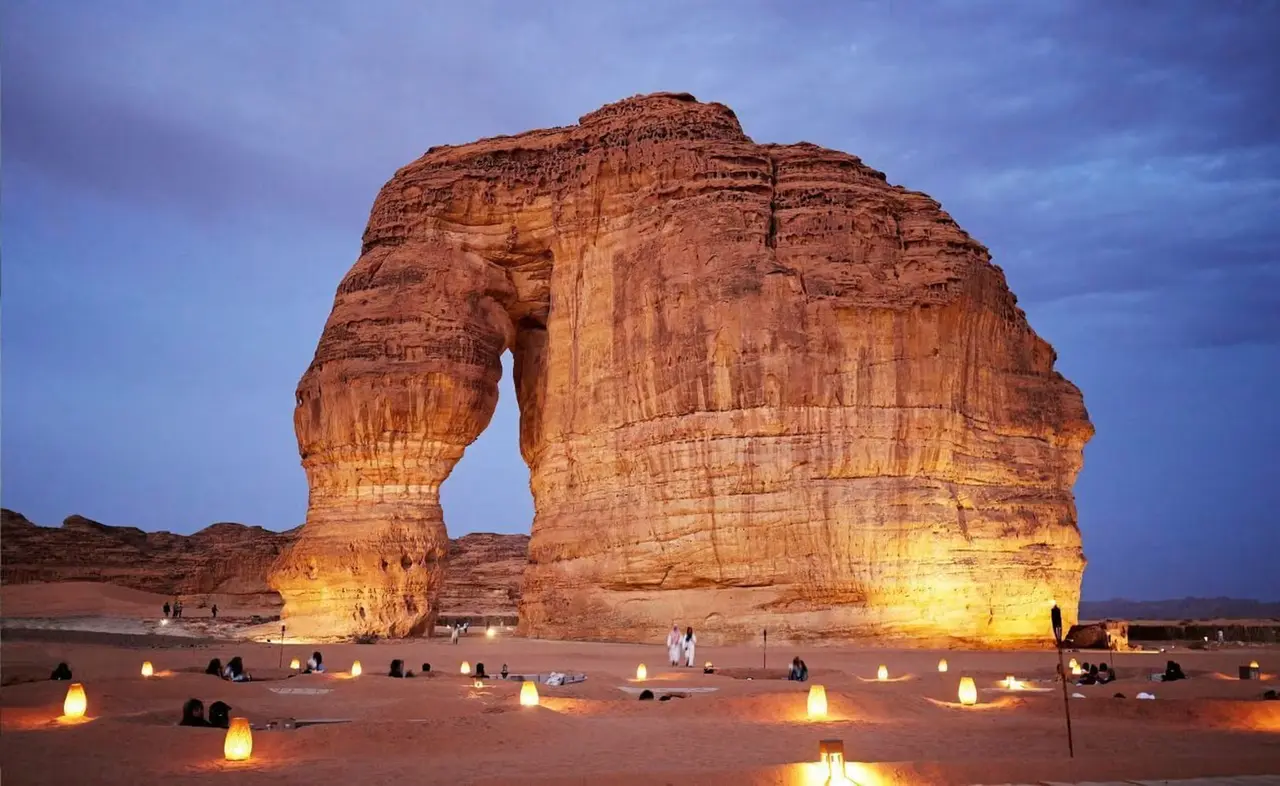
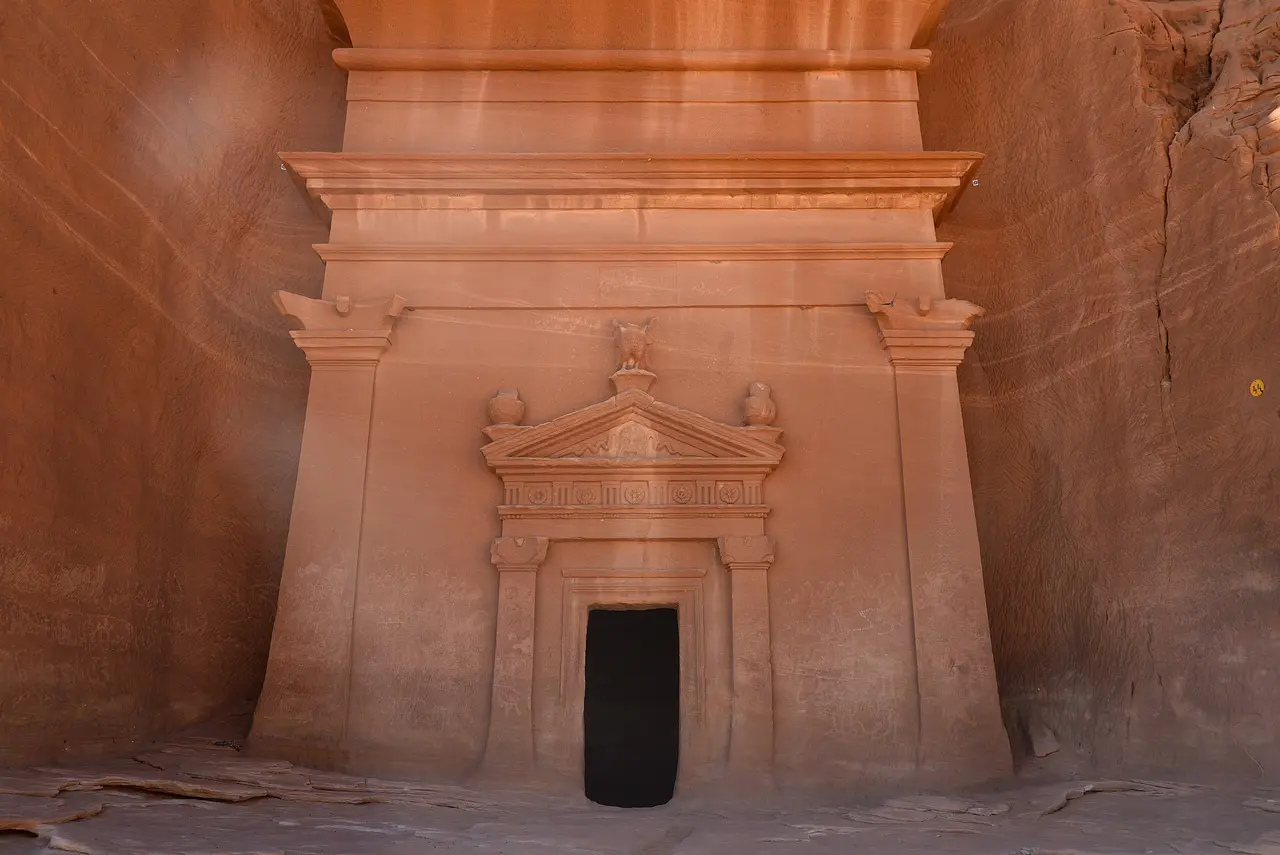
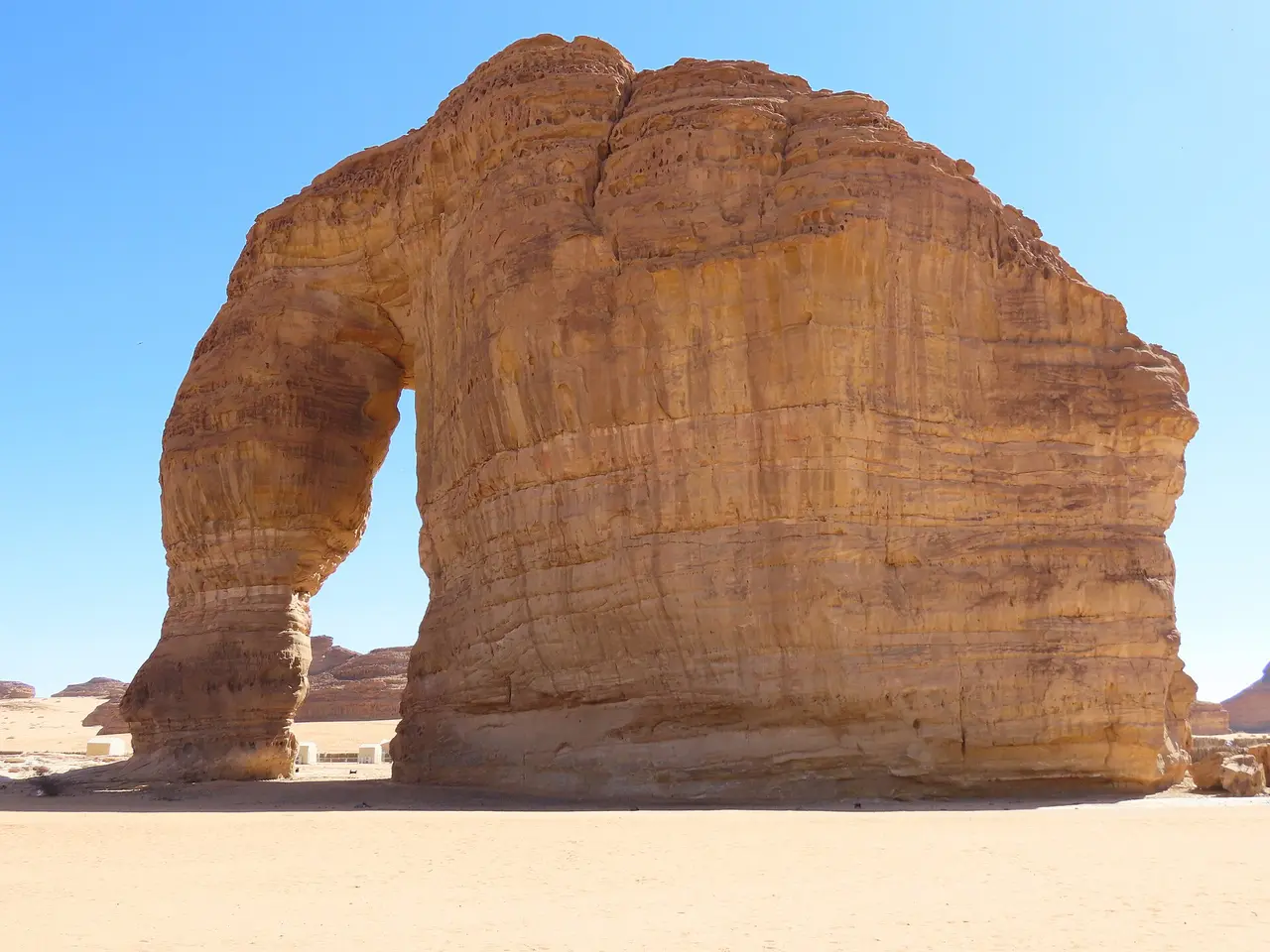
An hour's flight from Riyadh, AlUla holds the country's first UNESCO site: Hegra, the southern sister of Petra, with more than a hundred monumental tombs cut into sandstone. Visits run on booked time slots with a rawi guide. Add the mud-brick old town, the palm oasis, Dadan, Jabal Ikmah and Elephant Rock at sunset. Three to four nights are warranted. A sunrise hot-air balloon flight should be booked several weeks ahead.

Jeddah and the Red Sea coast

The country's second city and the historic gateway for pilgrims, Jeddah keeps at Al-Balad a UNESCO-listed quarter of coral houses with wooden balconies; walk it in late afternoon, once the heat drops. The Red Sea offers coral reefs reached on a dive trip less than an hour by boat. It is also the logical starting point to reach the United Arab Emirates or head up to Taif and the Asir.

The Asir mountains

In the southwest the Asir rises above 2,000 metres: mild temperatures, summer fog and slate villages clinging to cliffs. Rijal Almaa and its museum, the Habala plateau and Asir National Park around Abha take two to three days with a 4x4. Note: the border strip with Yemen, which includes Abha and Khamis Mushait, has been formally advised against by France since 10 November 2026; do not plan a stay in this region while the warning remains.

The northwest and the Tabuk desert

Between AlUla and the Red Sea, the Tabuk region hides Wadi Disah, a sandstone canyon of palm groves crossed by a stream you sometimes wade through; the gorge is reached by 4x4. You will also find stations of the old Hejaz railway and, further north, the emerging NEOM hub. Plan at least two nights and an off-road vehicle so you are not stuck on the paved road.

Customs, society and daily life

The country applies Islamic law: no alcohol on sale or import, clothing covering shoulders and knees for everyone, and strict prayer times when some shops close for twenty minutes. Since 2019 women travel and drive freely and the abaya is no longer required for visitors. The weekend is Friday and Saturday. During Ramadan, eating or drinking in public during daylight is forbidden; morning visits remain possible but everything slows down.

Cities to visit in Saudi Arabia

Featured destinations appear first.
Coming soon.

How much it costs

Per person per day, excluding international travel.
Budget
51 €/ day
1 754 € for 2 people, 7 days, return flights included
Accommodation
22 €
Food
14 €
Local transport
6 €
Sights and activities
9 €
Comfort
115 €/ day
2 650 € for 2 people, 7 days, return flights included
Accommodation
45 €
Food
30 €
Local transport
15 €
Sights and activities
25 €
Premium
310 €/ day
5 380 € for 2 people, 7 days, return flights included
Accommodation
130 €
Food
70 €
Local transport
40 €
Sights and activities
70 €
Prices checked: Relevé septembre 2026. Sources : agrégateurs de prix (budgetyourtrip, explore-saudi.com, houseofsaud.com, lostwithpurpose) et récits de voyage 2025-2026 ; conversion 1 SAR = 0,24 EUR. Budget cadré sur l'itinéraire classique Riyad, Djeddah, AlUla ; les zones rurales coûtent moins, AlUla nettement plus. Hors haute saison (éviter décembre-janvier et le Hajj). Vol A/R Paris-Riyad estimé à 520 EUR par personne hors vacances scolaires (Saudia / correspondance Gulf, relevé kayak.fr et bourse-des-vols septembre 2026). Occupation : lit en dortoir pour backpacker, chambre double partagée à deux pour comfort et premium. Pas d'alcool en vente dans le pays.

Getting there

Airports serving Saudi Arabia, from main hubs to secondary ones.
  • AHBAbha International AirportAbhaMain
  • AJFAl-Jawf International AirportAl-JawfMain
  • AQIQaisumah–Hafar Al-Batin International AirportQaisumahMain
  • DHAKing Abdulaziz Air BaseDhahranMain
  • DMMKing Fahd International AirportAd DammamMain
  • ELQPrince Naif bin Abdulaziz International AirportQassimMain

Entry, health and safety

For FR travellers

Entry requirements

Visa required

Visa touristique électronique (e-visa) à obtenir en ligne sur Visit Saudi avant le départ. Valable un an, il autorise des séjours multiples de 90 jours maximum, sans dépasser 180 jours par an. Une assurance médicale couvrant le séjour est obligatoire et son justificatif est demandé à l'arrivée. Pénalité de 100 SAR par jour de dépassement.

Stay allowed for up to 90 days.

Passport valid for 6 months beyond your return date.

Health

Advised: Aucun vaccin exigé à l'entrée pour un séjour touristique. Le ministère signale une hausse des cas de rougeole et invite à vérifier que la vaccination est à jour. Le vaccin quadrivalent contre les méningocoques (ACWY) n'est obligatoire que pour les pèlerins du Hajj et de la Omra.

France Diplomatie déconseille l'ensemble du pays sauf raison impérative (zone orange) depuis le 10 novembre 2026, en raison des tirs de missiles et de drones liés au conflit régional. Formellement déconseillés : la bande frontalière avec le Yémen sur une centaine de kilomètres (Najran, Abha, Khamis Mouchaït, Jizan) et les aéroports King Khalid de Riyad et King Fahd de Dammam, y compris en escale. En cas d'alerte, rester à l'abri loin des vitres. Chaleur extrême de mai à septembre, risque de coup de chaleur et de déshydratation.

Safety

Avoid non-essential travel

Checked in novembre 2026 against the official source. Entry rules change: check the official source before you travel, it alone is authoritative.

Saudi Arabia in pictures

Photo credits : Following Hadrian, CC BY-SA 2.0, Wikimedia Commons ; Uhooep, CC BY-SA 4.0, Wikimedia Commons ; Ahad.F, CC BY-SA 4.0, Wikimedia Commons ; S0lL0 TRAVELER, CC BY-SA 4.0, Wikimedia Commons ; Anne and David, Public domain, Wikimedia Commons

Sites not to miss

From Nabataean tombs to mountain villages, the essentials of a first trip.

Hegra

More than a hundred monumental Nabataean tombs in sandstone, Saudi Arabia's first UNESCO site, visited on booked time slots near AlUla.

Diriyah and At-Turaif

The birthplace of the Saudi state, a maze of restored mud-brick palaces northwest of Riyadh, open in the evening.

The Edge of the World

A sharp cliff of the Tuwaiq escarpment overlooking the plain, 90 minutes down a track from Riyadh, spectacular at sunset.

Al-Balad, Jeddah

Old Jeddah and its coral houses with wooden mashrabiya screens, UNESCO-listed, best walked on foot at the end of the day.

Elephant Rock

An elephant-shaped sandstone arch in the AlUla desert, heavily photographed in evening light from the loungers set at its base.

Rijal Almaa

A hanging village of the Asir with decorated stone-and-slate towers, turned into a museum, reached from Abha.

Wadi Disah

A sandstone canyon in the Tabuk region, palm groves and a stream between 300-metre walls, explored by 4x4 and on foot.

Riyadh National Museum

Eight galleries from Arabian prehistory to the unification of the kingdom, the best introduction to the country before hitting the road.

Jabal Ikmah

An open-air library near AlUla, hundreds of Dadanitic and Lihyanite inscriptions carved on the walls of a narrow pass.

Practical information

France Diplomatie warning
Orange zone: country advised against except for essential travel; Yemen border strip and Riyadh and Dammam airports formally advised against (advice of 10 November 2026). Check your own government's advice.
Alcohol
Banned for sale, consumption and import, including in international hotels.
Dress code
Shoulders and knees covered for everyone; the abaya is no longer required for visitors since 2019.
Ramadan
Eating, drinking or smoking in public during daylight is forbidden; reduced hours and sites closing earlier.
Weekend
Friday and Saturday; some sites close on Friday morning for the main prayer.
Prayer times
Five daily breaks when many shops pull down the shutters for twenty to thirty minutes.
Power socket
Type G (British), 230 V; an adapter is needed from continental Europe.
Payment
Contactless cards and Apple Pay accepted almost everywhere, including in Careem and Uber taxis.
Tap water
Not recommended for drinking; bottled water is cheap and available everywhere.
Insurance
Medical insurance covering the stay is required with the e-visa and checked on arrival.

Similar destinations

Other countries you might like as much as Saudi Arabia.

Similar regions

Other regions you might like as much as Saudi Arabia.

Frequently asked questions about Saudi Arabia

Can a non-Muslim visit Mecca and Medina?
Mecca is closed to non-Muslims, and so is central Medina around the Prophet's Mosque. The rest of the country, including AlUla, Jeddah and Riyadh, is open to anyone holding a tourist e-visa.
How many days for Riyadh and AlUla?
Seven days are enough for this pair: three nights in Riyadh with the Edge of the World, three in AlUla for Hegra and the old town, linked by a one-hour domestic flight. Below six days the travel weighs too heavily.
Is Hegra worth it if you have already seen Petra?
Yes: Hegra shares Petra's Nabataean civilisation but is visited almost alone, with isolated tombs in the desert and timed, guided access. The experience is more contemplative and far less crowded than in Jordan.
Can you travel to Abha despite the closeness of Yemen?
No, not under current conditions: since 10 November 2026, France formally advises against the entire Yemen border strip, including Abha and Khamis Mushait, regularly targeted by drone and missile fire. The rest of the country is itself advised against except for essential travel.
How do you get to AlUla from Riyadh or Jeddah?
AlUla airport has daily domestic flights from Riyadh and Jeddah, about one hour in the air. Driving is possible but takes seven to eight hours from Riyadh, with little of interest along the way.
Can women travel alone in Saudi Arabia?
Yes. Since 2019 women, Saudi and foreign alike, move around, drive and book a hotel without a guardian. Modest clothing is still expected and normal caution applies, but no rule requires a companion.
When is the best time for the Red Sea in Jeddah?
From October to April the water stays around 26 to 28 °C and the air becomes bearable again. In summer the sea tops 30 °C and the air nears 40 °C with high humidity, which limits daytime outings.
Do you need a 4x4 to visit Saudi Arabia?
Not for the cities or the roads between them, where a sedan is fine. But the Edge of the World, Wadi Disah and the Asir tracks require a real off-roader; for those excursions it is better to book through a local operator.

Plan your trip to Saudi Arabia

Day-by-day itinerary, budget, bookings and packing in a single app.
Aperçu de l'application PlanTripNow