Trinidad and Tobago travel guide: what to see and when to go

Two islands, two rhythms: Port of Spain's carnival, steelpan and scarlet-ibis mangroves on one side, Tobago's empty beaches and reefs on the other. Enough to build a tailored trip between culture, nature and doing nothing at all.

Why visit Trinidad and Tobago?

Trinidad and Tobago sits off the beaten Caribbean path: few giant resorts, but the region's most celebrated carnival, rare biodiversity for two small islands (hummingbirds, leatherback turtles, scarlet ibis), and Tobago beaches that still feel uncrowded. It suits curious travellers more than a standard beach package.

What to discover in Trinidad and Tobago

Port of Spain and carnival

The capital moves to steelpan and soca, peaking during carnival, two days before Ash Wednesday (February or March depending on the year), preceded by weeks of build-up fetes. Outside that window, allow two to three days for Queen's Park Savannah, the Magnificent Seven mansions and the Charlotte Street market. Book accommodation months ahead if your trip lands on carnival, since rooms in the city sell out fast and prices rise sharply for the whole festival period.
Northern Range nature

Less than an hour from the capital, the Northern Range holds most of Trinidad's biodiversity: the Caroni mangrove swamp, where thousands of scarlet ibis fly home to roost each evening, and the Asa Wright Nature Centre, a former cocoa estate turned reserve known for its hummingbirds from first light. A night on site is worth it to enjoy the trails before the day-trip crowds.

The north-east coast and leatherback turtles

The beaches of Matura and especially Grande Riviere host, between March and August, one of the world's highest densities of leatherback turtle nesting, overseen by local conservation programmes. The drive from Port of Spain takes about two and a half hours; night walks are booked on site in small groups, usually between 8pm and midnight. Outside that season, the coast is still worth the trip for its wild beaches and the hike to the Rio Seco waterfalls, far from the crowds found on busier Caribbean islands.

The south and the pitch lake

Less visited, southern Trinidad is worth the detour for the La Brea Pitch Lake, the world's largest natural asphalt deposit, worked for over a century and still active. San Fernando, the country's second city about two hours from the capital, makes a practical base: half a day usually covers the guided tour of the lake and a quick look at the waterfront before heading back north or on to Piarco airport.

Tobago, the beach break

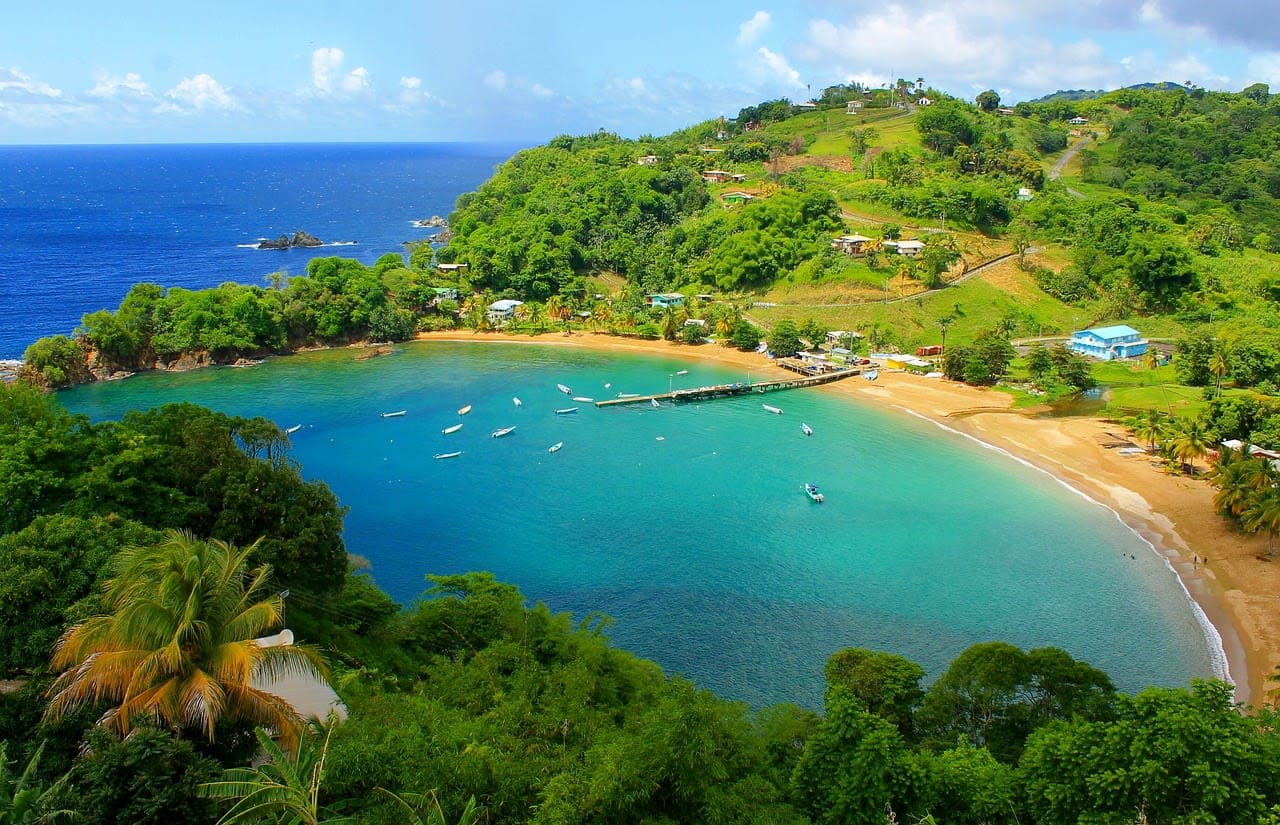
A twenty-five-minute flight from Trinidad, Tobago shifts gears entirely: Pigeon Point and its photographed jetty, snorkelling at Buccoo Reef and the Nylon Pool near Crown Point, then the wilder north-eastern tip around Speyside and Charlotteville for diving and the Main Ridge Forest Reserve, the oldest protected forest reserve in the western hemisphere. Three to five days cover the island at an easy pace, with a noticeably quieter feel than the busier beaches of the Bahamas.

Cities to visit in Trinidad and Tobago

Featured destinations appear first.
Coming soon.

Trinidad and Tobago in pictures

Not to be missed

The unmissable sites and experiences of Trinidad and Tobago.

Port of Spain carnival

The Caribbean's most flamboyant: feathered costumes, street parades and soca music over several weeks, peaking two days before Ash Wednesday.

Steelpan and panyards

Born on the streets of Port of Spain in the 20th century, the steelpan is rehearsed in panyards, often open to visitors outside carnival season.

Caroni mangrove swamp

A nature reserve where thousands of scarlet ibis fly in to roost each evening, best seen on a guided pirogue trip at sunset.

Asa Wright Nature Centre

A former cocoa estate turned bird reserve, known for its hummingbirds and the Guianan cock-of-the-rock from the earliest hours of the day.

Grande Riviere leatherback turtles

One of the world's highest densities of leatherback turtle nesting between March and August, on a beach overseen by local conservation programmes.

La Brea Pitch Lake

The world's largest natural asphalt deposit, a geological curiosity worked for over a century and still active today.

Pigeon Point, Tobago

Tobago's most photographed beach, with its thatched jetty and calm waters ideal for a family swim.

Buccoo Reef and Nylon Pool

A protected coral reef reached by glass-bottom boat, followed by a shallow natural pool where you stand waist-deep in turquoise water.

Similar destinations

Other countries you might like as much as Trinidad and Tobago.

Similar regions

Other regions you might like as much as Trinidad and Tobago.

Frequently asked questions about Trinidad and Tobago

When is carnival in Trinidad and Tobago?
Traditionally the two days before Ash Wednesday, so February or March depending on the liturgical calendar. The main event is preceded by several weeks of build-up fetes held across the whole country, not only in Port of Spain.
How do you get from Trinidad to Tobago?
A domestic flight links Piarco to Tobago in about 25 minutes, with several daily departures on Caribbean Airlines. A ferry also runs, slower at roughly two and a half hours, but noticeably cheaper for budget travellers.
Where can you see leatherback turtles in Trinidad and Tobago?
Grande Riviere and Matura beaches, on Trinidad's north-east coast, are the main nesting sites, generally visible between March and August on guided night walks organised by local conservation groups after sunset.
Are Port of Spain's neighbourhoods safe for tourists?
The tourist centre and Queen's Park Savannah are fine to visit by day. Some areas such as Laventille, Morvant or Beetham should be avoided, including by car, unless there is a compelling reason to go.
Is Tobago good for diving?
Yes, the north-eastern tip around Speyside and Little Tobago offers drop-offs rich in marine life, with currents that can run strong and conditions generally better suited to experienced divers than complete beginners.
Do Canadians need a visa for Trinidad and Tobago?
No, a tourist stay of up to 90 days does not require a visa for Canadian citizens, provided the passport is valid for at least six months beyond the stay.
Can you drink tap water in Trinidad and Tobago?
Water is treated in Port of Spain and other major towns, but taste and quality vary quite a bit by neighbourhood. Bottled water remains the safer, and more common, choice outside established hotels and resorts.

Plan your trip to Trinidad and Tobago

Day-by-day itinerary, budget, bookings and packing in a single app.
Aperçu de l'application PlanTripNow