Visit Corsica: when to go, what to see and what it costs

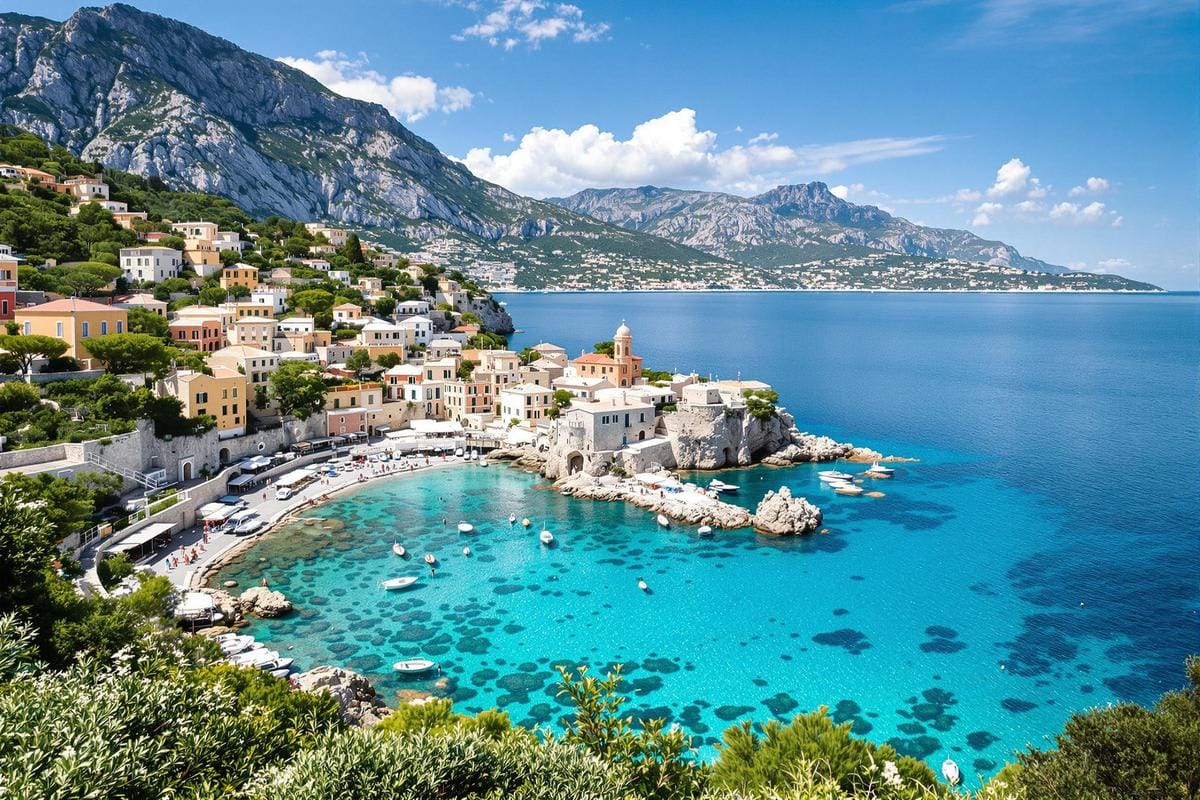
Corsica is both island and mountain: 1,000 kilometres of coast, peaks above 2,700 metres and the GR20 crossing them. People come for the southern beaches, the red calanques of the west and the Balagne villages. Skip August, expensive and packed; aim for May, June or September.

Why visit Corsica?

Corsica gathers within 8,700 square kilometres what elsewhere is spread across several regions: turquoise water, high mountains, forests and medieval villages. A territory of France with a strong identity, it suits a road trip, with nature protected by a regional park covering two thirds of the island.

What is there to discover in Corsica?

The far south, Bonifacio and Porto-Vecchio

From Figari airport, the far south lines up the best-known beaches: Palombaggia, Santa Giulia, Rondinara. Bonifacio, with its citadel on limestone cliffs and the King of Aragon staircase cut into the rock, is the launch point for trips to the Lavezzi islands, a nature reserve where landings are capped. Behind the coast, the Ospedale plateau and its forests offer a cooler escape. Allow three full days for the area.
The west coast, Ajaccio, Piana and Scandola

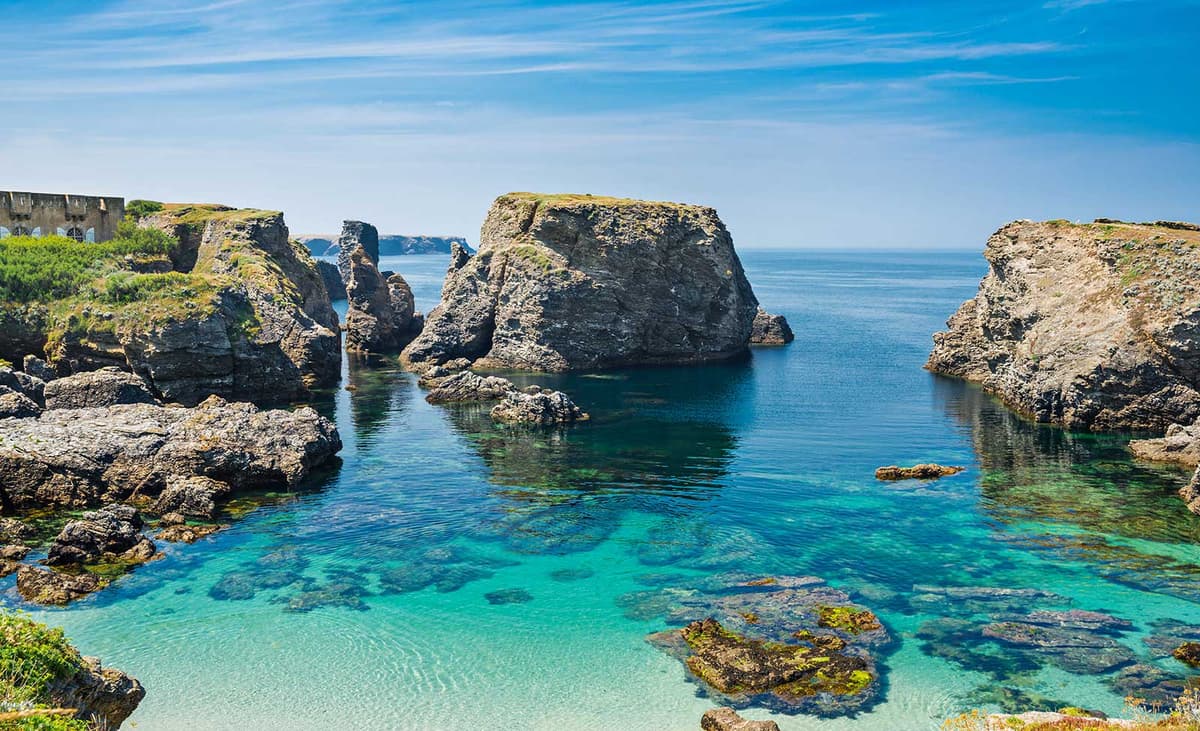
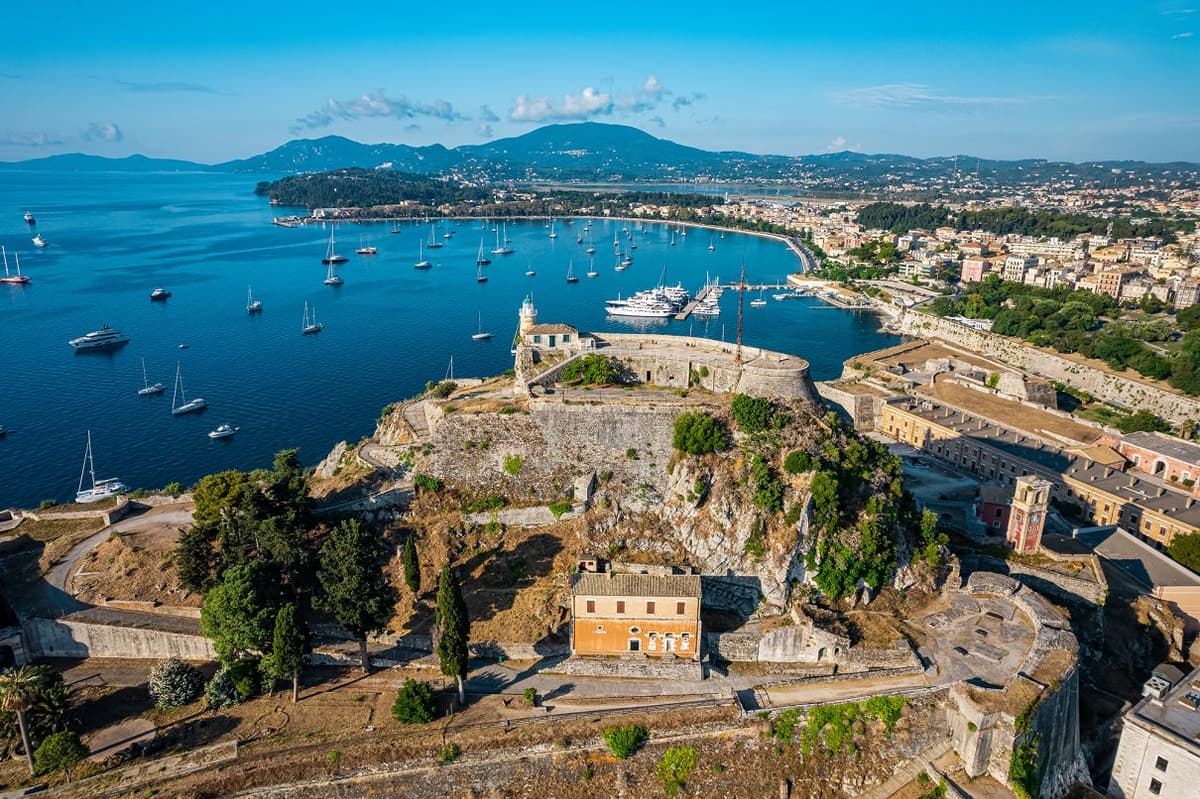
Ajaccio, Napoleon's city, keeps the Maison Bonaparte and the Fesch museum, France's second collection of Italian primitives. To the north, a winding road leads to the Piana calanches, red rocks listed by UNESCO, best walked at sunrise or sunset once the coaches have gone. The neighbouring Scandola reserve can only be seen from the sea, with no landing, on a half-day boat trip from Porto or Cargese.

The north: Bastia, Cap Corse and the Balagne

Bastia, the northern gateway, has an old port and two citadels. Cap Corse, a 40-kilometre peninsula, is toured as a loop on the D80 corniche: fishing hamlets, Genoese towers, the Mattei windmill, the Patrimonio vineyard and the port of Centuri, known for spiny lobster. Further west, the Balagne combines beaches, the Genoese citadel of Calvi and hilltop villages linked by a craftspeople's road, Sant'Antonino, Pigna, Corbara. The little Balagne train runs along the coast between Calvi and Ile-Rousse, with request stops at the coves.

The mountains, the GR20 and the regional park

The interior is an alpine massif: Corte, the former capital, and its citadel, the Restonica valley and its pools, the Bavella needles, the Vizzavona forest. The GR20, which crosses the island north to south over 180 kilometres and 12,000 metres of ascent, is rated one of Europe's toughest trails and is walked from mid-June to mid-October. Gentler variants, Mare a Mare and Mare e Monti, link two coasts in three to ten days.

Cities to visit in Corsica

Featured destinations appear first.
Coming soon.

Corsica in pictures

Corsica highlights

Twelve sites covering the coast, the mountains and the villages of the island.

Bonifacio

A 9th-century citadel on white limestone cliffs overhanging the strait, with the King of Aragon staircase cut into the rock.

Lavezzi islands

A granite archipelago and nature reserve off Bonifacio, with clear water and a waymarked path; daily visitor numbers are limited.

Piana calanques

Needles and walls of red granite dropping into the Gulf of Porto, a World Heritage site; stunning in low-angle sunlight.

Scandola reserve

A protected volcanic peninsula, reachable only by boat and with no landing, with sea caves and bird colonies.

Palombaggia

A pale-sand beach fringed by umbrella pines and pink rocks near Porto-Vecchio, mobbed from mid-morning in summer.

GR20

A crossing of the island in 15 stages over about 180 kilometres and 12,000 metres of ascent, for seasoned walkers only.

Bavella needles

A group of jagged peaks at 1,600 metres, between laricio pine forest and road passes, with the Trou de la Bombe trail.

Gulf of Porto and Girolata

A road-free hamlet reached on foot or by boat, at the head of a classified gulf, between the Piana calanques and Scandola.

Calvi citadel

A Genoese fortress above the bay and beach, claiming Christopher Columbus's birthplace; home to the Calvi on the Rocks festival.

Agriates desert

Fifty kilometres of wild coast between Saint-Florent and the Ostriconi, with Saleccia and Loto beaches, reached on foot or by boat shuttle.

Restonica valley

A gorge above Corte leading to the Melo and Capitello lakes, with clear rock pools; road access is regulated in summer.

Sant'Antonino

One of Corsica's oldest villages, perched at 500 metres in the Balagne, with vaulted lanes and a view over the coast and vineyards.

Similar regions

Other regions you might like as much as Corsica.

Similar destinations

Other countries you might like as much as Corsica.

Frequently asked questions about Corsica

Ferry or plane to reach Corsica?
Flying is faster and often cheaper out of season, but means renting a car on arrival. The ferry, from Marseille, Toulon or Nice, lets you bring your own vehicle: worth it for a long stay or a family, and best booked as soon as sales open.
How many days to visit Corsica?
A week covers one half of the island, south or north. To tour the whole coast without rushing, allow ten to fourteen days. The terrain and road conditions slow every journey down: do not overload the plan.
Can you walk the GR20 without being a climber?
The GR20 needs no climbing technique, but good fitness and a head for exposed sections, cables and scree. The southern half, from Vizzavona to Conca, is more accessible and takes five to six days for a first attempt.
North or south of Corsica: where to start?
The south, around Bonifacio and Porto-Vecchio, for the beaches and a first seaside stay. The north, Cap Corse and the Balagne, for the villages, the nearby mountains and slightly fewer crowds. The two connect via the west coast and Corte.
How do you visit the Scandola reserve?
Only from the sea: boats leave from Porto, Calvi, Ajaccio and Cargese for a half-day, often with a swim stop at Girolata. Landing in the reserve is forbidden and the number of boats is now capped.
Where are the best beaches in Corsica?
The south holds the best known: Palombaggia, Santa Giulia, Rondinara, Petit Sperone. Elsewhere, Saleccia in the Agriates, the Ostriconi beach, Nonza with its black shingle, and Saleccia and Loto reached by boat from Saint-Florent.
Is Corsica expensive compared with the rest of France?
In July and August, yes: lodging, car hire and the crossing rise sharply, and many places open only in season. In May, June, September and October, prices come close to the mainland, with a better choice.

Plan your trip to Corsica

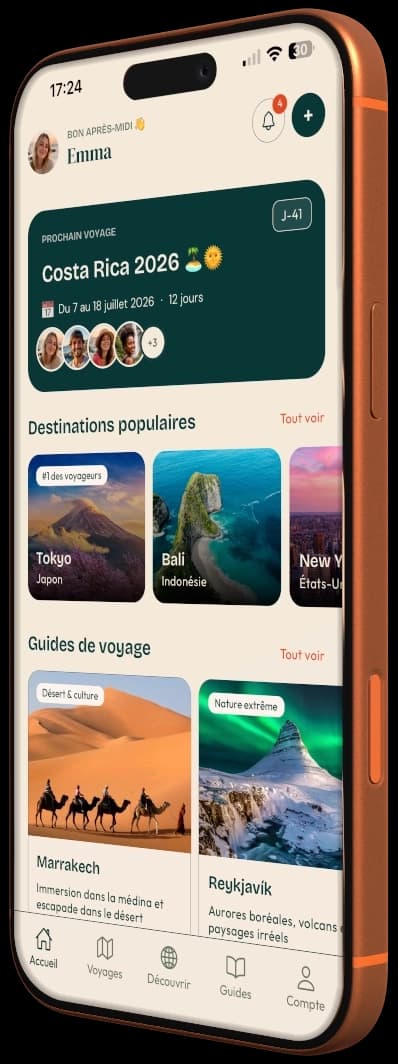
Day-by-day itinerary, budget, bookings and packing in a single app.
Aperçu de l'application PlanTripNow