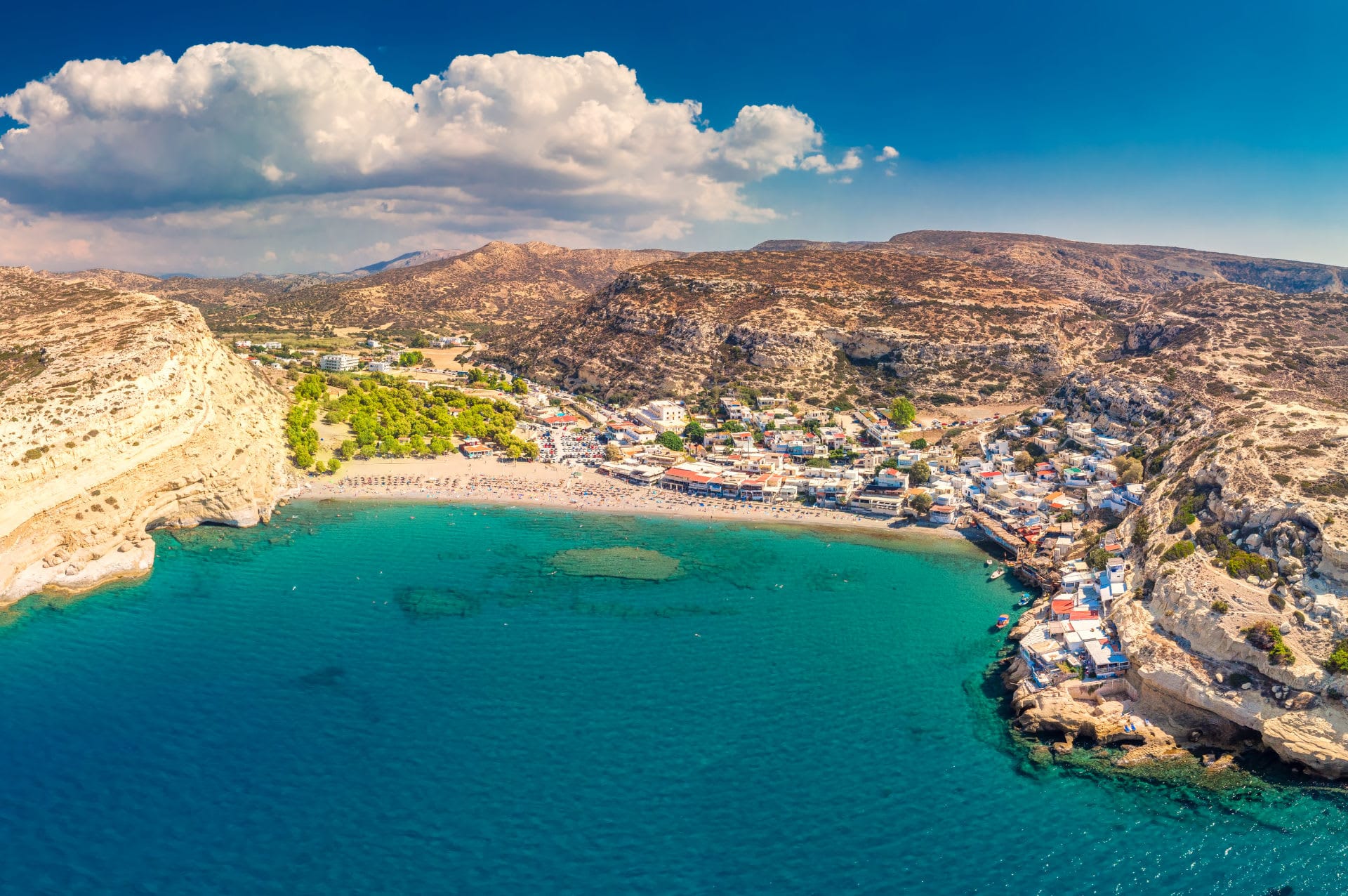
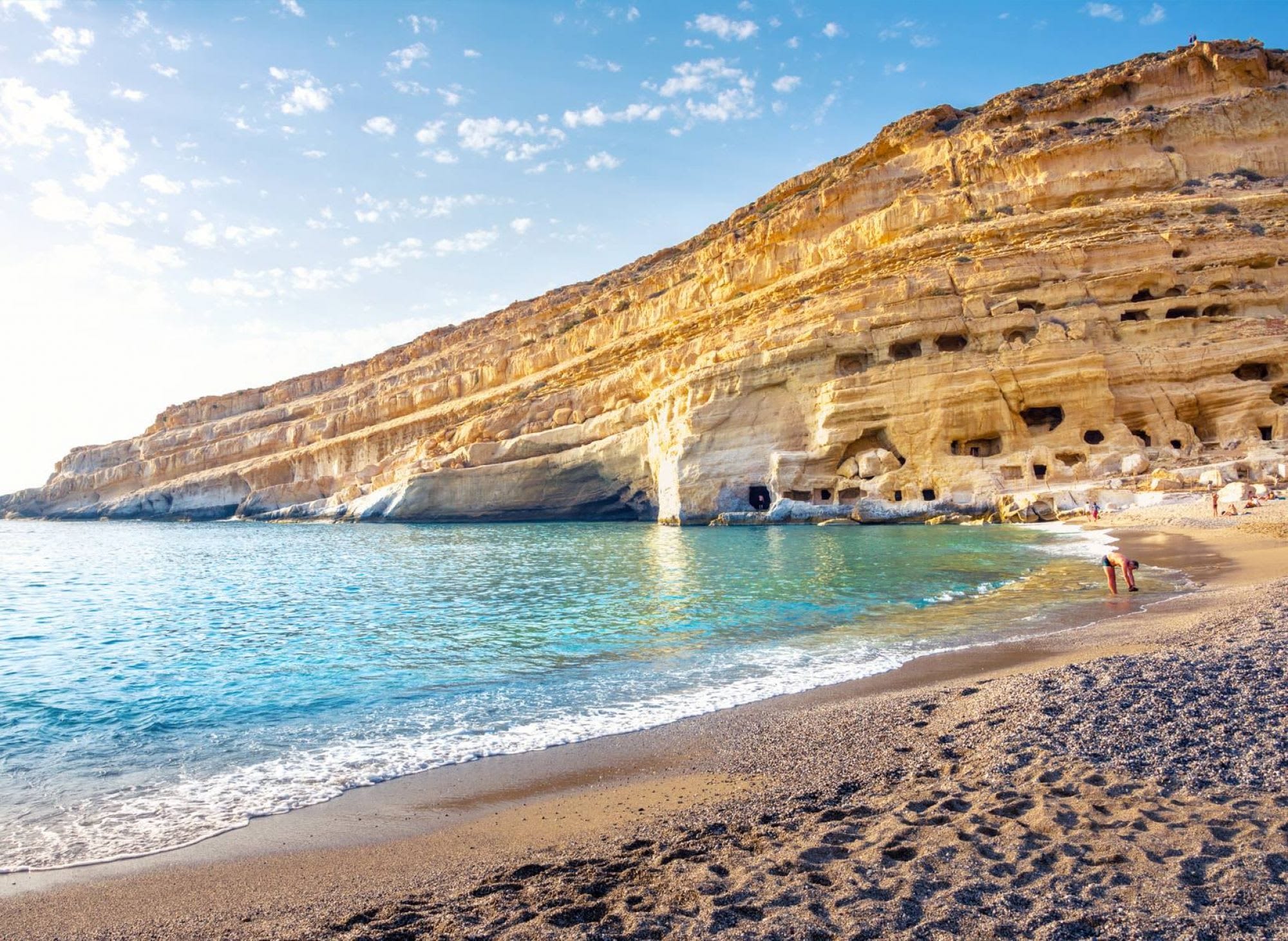
The island capital is the base for the Minoan heritage. The palace of Knossos, 5 km away, is best visited at the 8 a.m. opening to beat the heat and the cruise groups, allow two hours. The combined ticket with the archaeological museum of Heraklion costs about 20 euros and stays valid for a week; the museum, in the centre, holds the frescoes and the Phaistos Disc and is worth half a day. To the south, on the Messara plain, the site of Phaistos is less spectacular but almost empty. Fifteen minutes from Knossos, the wine village of Archanes extends the Minoan day away from the coaches; an extra day adds Matala beach and its cliff-carved caves.
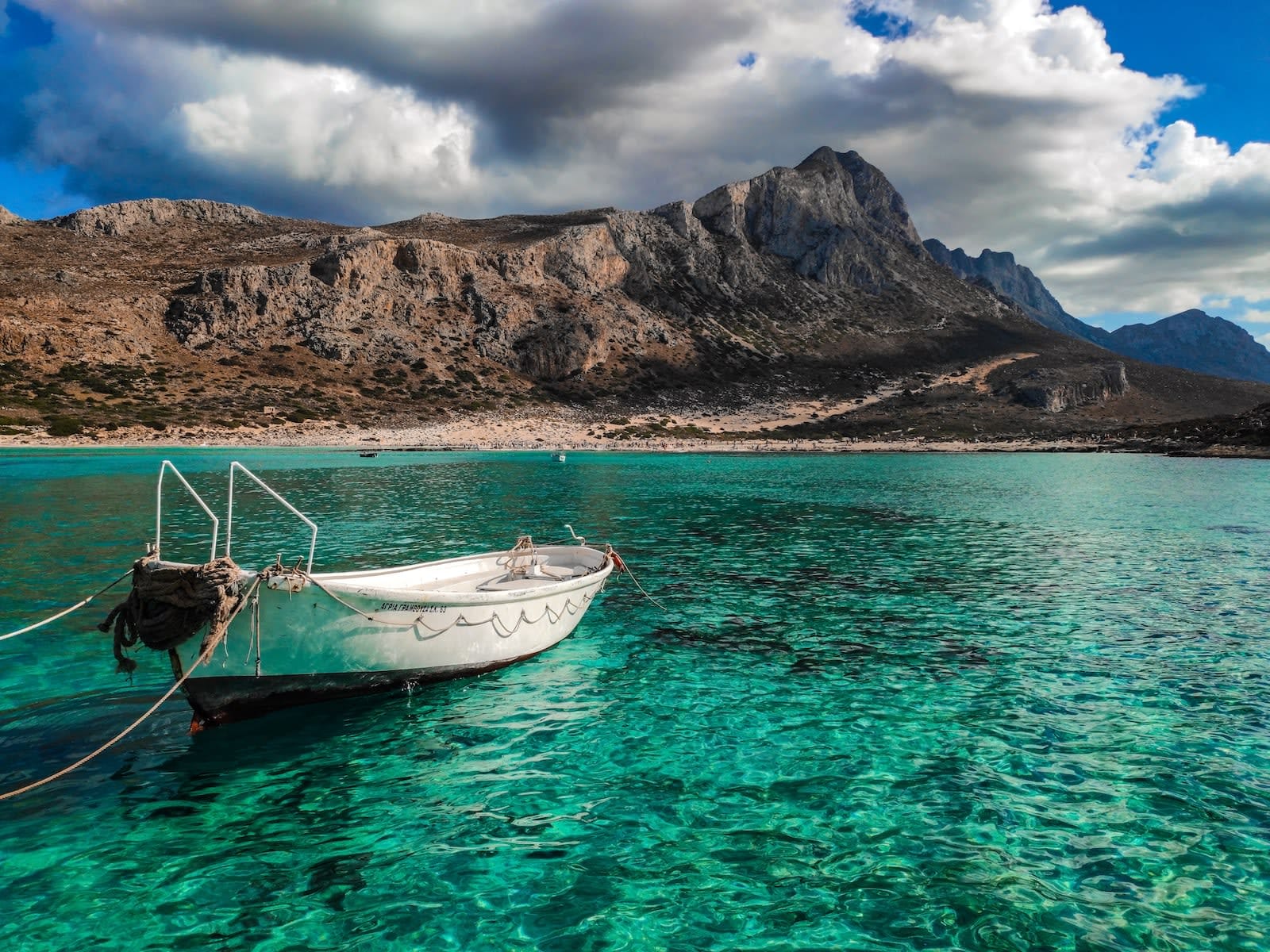
Chania, in the west, has the finest historic centre on the island: a Venetian harbour closed off by a lighthouse, a cross-shaped covered market and a maze of Ottoman lanes. It is the base for the north-west beaches, the Balos lagoon and Elafonissi, an hour and a half by road or by boat from Kissamos. The Akrotiri peninsula, its monasteries and the tomb of Venizelos round off a first day. To the south, the road-free village of Loutro and the Aradena gorge are reached from Chora Sfakion, on foot or by coastal boat. Plan at least three nights in Chania, and keep a buffer day in case the meltemi blocks the crossings to Balos.
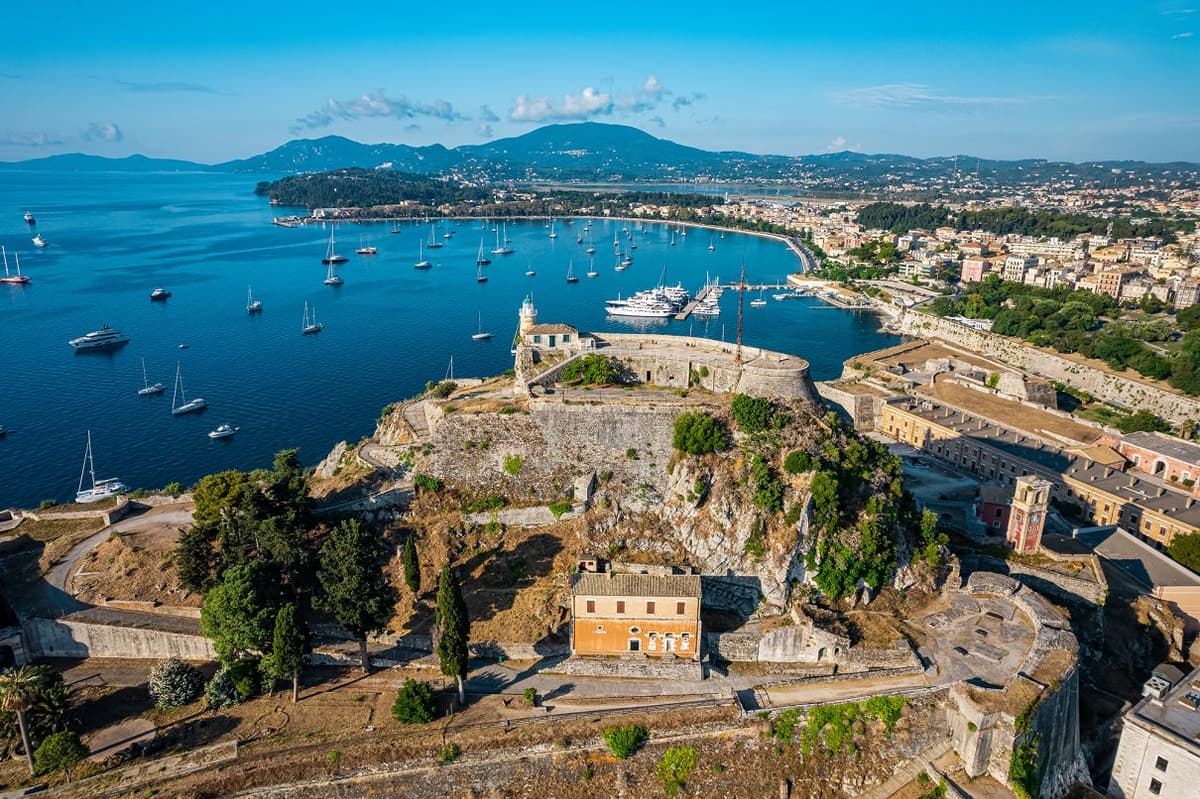
Halfway between the two, Rethymno lines up a Venetian and Ottoman old town below the Fortezza, one of the largest fortresses in Greece. The town makes an ideal one-night stop between west and east. Inland, the monastery of Arkadi, a symbol of Cretan resistance in 1866, is 40 minutes away by road. Higher up, the villages of the Amari valley stay off the tourist track, with fresco-painted Byzantine churches. To the south, the Nida plateau, at the foot of Psiloritis at 1,400 m, is the trailhead for the summit and holds the Idaean cave, another supposed birthplace of Zeus.
The east of the island centres on the Gulf of Mirabello and Agios Nikolaos. From the harbour, a boat reaches the fortified islet of Spinalonga in 20 minutes, a leper colony that closed in 1957. The Lasithi plateau, at 850 m, keeps a few cloth-sailed windmills and the Psychro cave where Zeus is said to have been born. Further on, the palm grove of Vai and the site of Gournia, the only fully excavated Minoan town, mark the eastern tip, beyond the fortified monastery of Toplou. Allow two nights for Agios Nikolaos and the gulf, a third if you push on to Sitia.
Three ranges top 2,000 m: the White Mountains in the west, Psiloritis in the centre at 2,456 m, the Dikti in the east. Walking down the Samaria Gorge, 16 km from the Omalos plateau to the Libyan Sea, takes five to seven hours and is only open from May to October. For a short version, the Imbros gorge, 8 km and two hours, or the walk to the road-free village of Loutro, reachable only on foot or by boat. In winter, Psiloritis is skied on a small area at Anogia. The European E4 path crosses the whole island over about 320 km. Start early: past 10 a.m., the heat becomes a safety factor in the gorges.
The south coast, facing Africa, stays the wildest: Preveli beach and its palm grove at a river mouth, the coves of Sfakia, the long pink strand of Triopetra. Many are reached only by dirt tracks or by local shuttle boat from Chora Sfakion or Agia Galini. The water is cooler than in the north because of currents rising from the deep, but the beaches are rarely crowded, even in August. Paleochora and Sougia, in the south-west, are linked by a three-hour coastal path and by a daily boat that also serves Agia Roumeli. This is the area to choose for a slow, car-free stay.
Crete has made wine since Minoan times. The Peza appellation, south of Heraklion, can be toured in an afternoon and offers native grapes such as vidiano and liatiko. At the table, the Cretan diet means dakos, a barley rusk with tomato and mizithra, bouboristi snails, cheese pastries and raki served free at the end of the meal. Many village tavernas have no menu: you choose in the kitchen. The harvest calendar sets the rhythm: wild greens in spring, Rethymno cherries in June, the grape harvest and freshly distilled raki in October, olives from November to January.