Skip to content

Fort-de-France , Martinique's bay city: what to see and how to explore beyond

Many visitors pass through Fort-de-France without stopping, on their way from the airport to the southern beaches. That is a shame: around La Savane, a library shipped from Paris in pieces, a metal cathedral and a fort still held by the Navy tell three centuries of Caribbean history, one ferry ride from Les Trois-Îlets.

At a glance

Visa
None
7-day budget
€1,302
Per person, comfort profile, excluding international flights.
Recommended length
3 days
For a first trip, without rushing.

Should you stay in Fort-de-France to visit Martinique?

Without a car, yes: it is the only place on the island where both the buses and the passenger ferries to the bay's beaches set off. With a car, the city makes a central base, halfway between Saint-Pierre in the north and Les Anses-d'Arlet in the south. Beach-only travellers are better off in Les Trois-Îlets or the south, coming into town for a day.

When to visit Fort-de-France

Temperatures, rainfall and crowds month by month, to pick your window.
When to visit Fort-de-France
MonthTemperaturesRainCrowdsVerdict
January22 to 28 °C19 dBusyStart of the dry season, cool trade winds and short showers in the hills; Carnival rehearsals already liven up the centre on Sundays.
February22 to 28 °C14 dPackedCarnival fills the downtown streets until Ash Wednesday, plus winter holidays: hotels are full, book early.
March22 to 29 °C12 dBusyThe least rainy month at Desaix, clear light for driving up to Balata or crossing the bay by ferry.
April23 to 29 °C13 dBusyEaster and its family beach picnics in the south, still dry; the first sargassum mats may reach the Atlantic side.
May24 to 30 °C13 dQuietA good compromise: the winter crowds have gone, the heat is still bearable and fares drop. 22 May marks the abolition of slavery.
June24 to 30 °C17 dQuietThe hurricane season officially opens on 1 June; tropical waves become more frequent, often a few hours of rain then sunshine.
July24 to 30 °C21 dModerateThe city's cultural festival and school holidays: busier at the market, but already over 200 mm of rain on average.
August24 to 30 °C19 dModerateSticky heat and the start of the hurricane peak: check the Météo-France warning level before every boat trip.
September25 to 31 °C17 dVery quietThe hottest month and the most exposed to hurricanes; a quiet city and rock-bottom prices, but leave spare days.
October24 to 30 °C18 dVery quietStill the rainy season, with over 240 mm of rain: Balata and the Route de la Trace are intensely green, but showers are heavy.
November24 to 29 °C19 dQuietThe hurricane season officially ends on 30 November; rain is still plentiful but prices stay low before the December rush.
December23 to 28 °C18 dBusyChanté Nwel carol evenings in the neighbourhoods and the trade winds return: flights and rooms at top prices over the holidays.
Source: Normales 1991-2020 de la station Météo-France Fort-de-France Desaix (143 m, sur les hauteurs de la ville), reprises par fr.wikipedia.org ; jours de pluie = jours avec au moins 1 mm, arrondis (beaucoup sont des averses brèves, le front de mer en reçoit un peu moins que Desaix) ; température de la mer dans la baie de Fort-de-France d'après climatestotravel.com ; saison cyclonique de juin à novembre, pic d'août à octobre (Météo-France Antilles-Guyane) ; affluence et prix estimés d'après le calendrier des vacances et du Carnaval ; relevé octobre 2026

Nine landmarks for visiting Fort-de-France

Heritage in town, nature in the hills, beaches across the bay.

Schœlcher library

Iron-and-glass pavilion from the 1889 World's Fair, rebuilt in Fort-de-France and listed as a historic monument in 1993.

Saint-Louis cathedral

Metal-framed church completed in 1895 by Pierre-Henri Picq after the 1890 fire, recognisable by its tall spire.

Fort Saint-Louis

Seventeenth-century fortress still occupied by the French Navy, open to visitors only with a guide.

La Savane gardens

Large five-hectare public garden between the fort and the centre, the starting point for walks and ferries.

Covered market

Market hall for spices, fruit and flavoured rums, with Creole food counters for a quick lunch.

Aimé Césaire cultural park

Former floral park renamed in 2008 in honour of the poet and mayor, a venue for exhibitions and shows.

Balata garden

Botanical garden opened in 1986 on the Route de la Trace, with treetop walkways and views of the pitons.

Saint-Pierre

The island's former capital, destroyed by Mount Pelée in 1902, whose ruins can be visited at the foot of the volcano.

Anse à l'Âne

Sheltered beach on the south shore of the bay, reached by ferry from the Pointe Simon quay.

What to discover in Fort-de-France?

La Savane, an open-air living room

Everything starts at La Savane, a garden of about five hectares between the fort and the centre, reopened in 2011 after several years of works. Locals come here to jog early in the morning, picnic on Sundays and wait for the ferries at the nearby quay. It is the best starting point for a walking tour: the library, the prefecture and the first shopping streets are a few minutes away. Come before 10 am, as the heat builds fast and the palm shade is no longer enough by midday, especially from August to October.

Two buildings by Pierre-Henri Picq

The Schœlcher library has a remarkable story: built in 1886-1887 in the Tuileries garden, it served as a pavilion at the 1889 World's Fair in Paris, before being taken apart, shipped across the Atlantic and rebuilt on the edge of La Savane. The great fire of 1890, which destroyed most of the books, then the 1891 hurricane delayed its opening until 1893. The same architect designed the Saint-Louis cathedral, completed in 1895 on a metal frame to replace the church destroyed in the 1890 fire; its spire still rises above the downtown rooftops.

Fort Saint-Louis, monument and naval base

Set on its own peninsula, Fort Saint-Louis is the very origin of the city: a first palisade named Fort-Royal around 1639, then a fortress completed by the Count of Blénac after 1677. It is still occupied by the French Navy, which shapes the visit: entry is with a guide only, for just over an hour, and only part of the ramparts is open. Tickets are sold at the tourist office. From the bastions, the view takes in the whole bay as far as Les Trois-Îlets.

The covered market, Terres-Sainville and Césaire's legacy

The covered market is the centre's food stop: spices, chillies, tropical fruit, rums flavoured with local ingredients, and small counters serving Creole lunches at fair prices. Across the canal, the working-class Terres-Sainville district keeps its low houses and corner shops. The city also bears the mark of Aimé Césaire, poet of négritude and mayor from 1945 to 2001: the former floral park, renamed the Aimé Césaire cultural park, hosts exhibitions and shows. Almost everything closes on Sundays, so save this area for a weekday.

The bay by ferry, beaches included

The city's great asset for car-free travellers is the Blue Lines ferry service from the Pointe Simon quay to the village of Les Trois-Îlets, the Pointe du Bout marina and Anse à l'Âne, at 5 euros one way and 7 euros return according to fares listed in 2026. You can spend a beach day there and be back in town for dinner. Further south, Les Anses-d'Arlet and its turtles do require a car. As for sargassum, landings mostly affect the Atlantic coast rather than the bay.

The hills and the north: Balata, the Trace and Saint-Pierre

About ten kilometres up the Route de la Trace, the Balata garden, opened in 1986, runs its walkways above tropical flowers for 16 euros, daily from 9 am to 6 pm. The road continues through rainforest to the north, listed as a UNESCO World Heritage Site in 2023 along with Mount Pelée and the pitons. Saint-Pierre, the former capital razed by the eruption of 8 May 1902, can be explored through its ruins and memorial. The volcano remains on yellow alert: read the observatory bulletin before any hike.

Sample itineraries

Three routes built around the time you actually have.
3daysRecommended

Fort-de-France in 3 days: Balata, Saint-Pierre and Les Anses-d'Arlet

  1. Balata garden and Aimé Césaire cultural park
  2. Saint-Pierre and Mount Pelée
  3. Les Anses-d'Arlet and its turtles

Best for: The rental-car version, using the city as a base: rainforest in the hills, the memory of the 1902 eruption to the north, then turquoise sea to the south. Very little time is spent in the centre itself.

How much it costs

Per person per day, excluding international travel.
Budget
80 €/ day
2 220 € for 2 people, 7 days, return flights included
Accommodation
38 €
Food
28 €
Local transport
6 €
Sights and activities
8 €
Comfort
186 €/ day
3 704 € for 2 people, 7 days, return flights included
Accommodation
71 €
Food
65 €
Local transport
30 €
Sights and activities
20 €
Premium
310 €/ day
5 440 € for 2 people, 7 days, return flights included
Accommodation
100 €
Food
110 €
Local transport
45 €
Sights and activities
55 €
Prices checked: Relevé octobre 2026. Hébergement : combien-coute.net d'après hotels.com et Booking (mise à jour du 28/09/2026 : hôtel 1-2 étoiles 131 EUR la nuit en moyenne, fourchette 61 à 324 EUR ; 3 étoiles 142 EUR ; 4 étoiles 185 EUR ; 5 étoiles 220 EUR). La moyenne « auberge de jeunesse » du même site (110 EUR, dortoirs et chambres mélangés) n'a pas été retenue : le profil backpacker est calé sur le bas de la fourchette 1-2 étoiles (environ 75 EUR la chambre double). Prix par nuit et par personne, chambre double partagée à deux, mix 4 et 5 étoiles en premium. Repas : déjeuner 20 EUR et dîner trois plats 45 EUR en moyenne à Fort-de-France (combien-coute.net, octobre 2026). Transports : ticket de bus 1,5 EUR et location de voiture 54 EUR les 24 h (combien-coute.net, octobre 2026), navette maritime Blue Lines vers les Trois-Îlets 5 EUR l'aller simple et 7 EUR l'aller-retour (fiche martinique-tour.com 2026, annuaire non officiel) ; voiture partagée à deux en comfort et premium. Activités : jardin de Balata 16 EUR (site officiel jardindebalata.fr, tarif non daté), fort Saint-Louis environ 8 EUR en visite guidée (guides de voyage non officiels, non datés), sortie en mer aux dauphins depuis les Anses-d'Arlet dès 120 EUR (Manawa, 2026). Vol Paris-Fort-de-France aller-retour direct : moyenne 551 EUR en septembre (ou-et-quand.net), 539 EUR chez liligo pour Air France (recherches récentes, octobre 2026) ; valeur retenue 550 EUR par personne hors vacances scolaires. En août la moyenne monte à environ 1 000 EUR et en décembre à 733 EUR (ou-et-quand.net) : ces chiffres valent pour mai-juin et septembre-novembre.

Getting there

Airports serving Fort-de-France, from main hubs to secondary ones.
  • AGFAgen La Garenne airportAgenSecondary
  • AJAAjaccio Napoléon Bonaparte airportAjaccioSecondary
  • ANEAngers Marcé airportAngersSecondary
  • ANGAngoulême Brie-Champniers airportAngoulêmeSecondary
  • AUFAuxerre Branches airportAuxerreSecondary
  • AURAurillac airportAurillacSecondary

Entry, health and safety

For FR travellers

Entry requirements

No visa for a tourist stay

Aucune formalité d'entrée : Fort-de-France est en Martinique, département français, et le vol direct depuis la métropole est un trajet intérieur. La compagnie contrôle l'identité de chaque passager : carte nationale d'identité en cours de validité, passeport, titre de séjour ou permis de conduire avec une photo ressemblante. L'application France Identité est acceptée au dépôt des bagages et à l'embarquement depuis le 24 juin 2026 ; un livret de famille ne suffit pas. Un passeport devient nécessaire en cas d'escale dans un pays étranger. Un enfant de moins de 13 ans accompagné d'un adulte est dispensé de la vérification.

Health

Dengue : Santé publique France classe la Martinique en phase 2.1 (foyers épidémiques isolés, situation stable) dans son bulletin du 10 septembre 2026, avec des foyers récents aux Anses-d'Arlet et aux Trois-Îlets : protégez-vous des moustiques. Sargasses : sur les plages touchées, l'ARS Martinique recommande de ne pas se baigner, de ne pas toucher les algues et de s'éloigner des échouages (émanations d'hydrogène sulfuré). Montagne Pelée en vigilance jaune, probabilité d'éruption à court terme jugée faible (OVSM-IPGP, bilan du 28 août 2026). Saison cyclonique du 1er juin au 30 novembre : suivez la vigilance de Météo-France et les consignes de la préfecture.

Emergency

112

Checked in octobre 2026 against the official source. Entry rules change: check the official source before you travel, it alone is authoritative.

Practical information for Fort-de-France

Best time

February to April, the least rainy months; May and November for gentler prices.

Hurricane season

From 1 June to 30 November, peaking from August to October: follow the Météo-France warnings.

Daily budget

About 80 euros in a small hotel, 186 euros in a 3-star with a shared car, 310 euros in a 4 or 5-star (2026 survey).

Flight from Paris

Around 550 euros return in September, close to 1,000 euros in August (comparison sites, 2026).

Documents

Domestic trip from mainland France for French nationals: a valid ID card is enough, a passport if you change planes abroad.

Getting around

City bus at 1.5 euros and ferries to Les Trois-Îlets; a rental car at around 54 euros a day for the rest of the island.

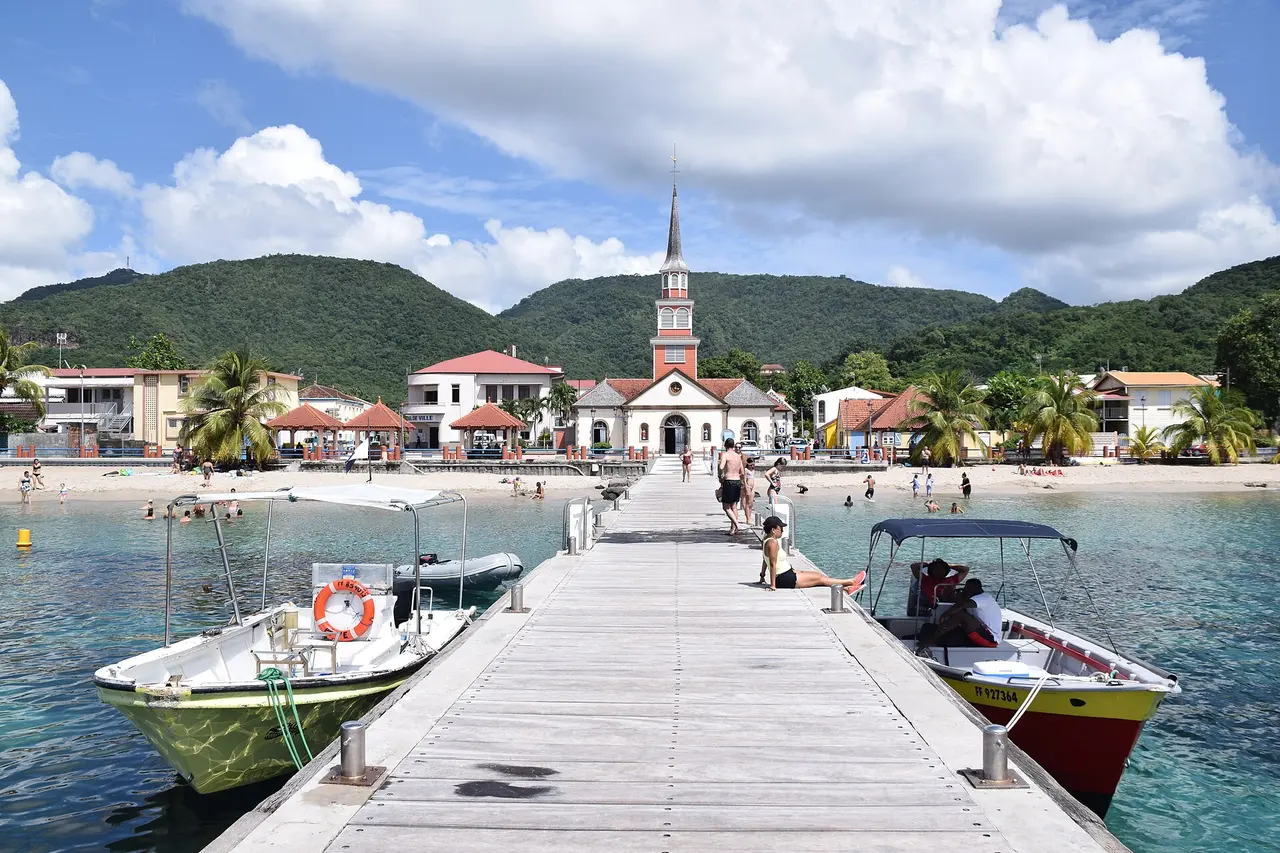
Fort-de-France in pictures

Photo credits : AronMSzabo, CC BY-SA 4.0, Wikimedia Commons ; JLXP, CC BY-SA 4.0, Wikimedia Commons ; Aristoi, CC BY-SA 4.0, Wikimedia Commons

Frequently asked questions about Fort-de-France

How many days should you spend in Fort-de-France?
One day is enough for the centre, La Savane, the Schœlcher library, the cathedral and the market. Allow two to four days if you use the city as a base for the ferry to Les Trois-Îlets, Balata, Saint-Pierre or Les Anses-d'Arlet.
Can you visit Fort-de-France without a car?
Yes for the centre, which is easy to walk, and for the bay's beaches thanks to the Blue Lines passenger ferries. For Balata, Saint-Pierre or Les Anses-d'Arlet, a rental car is far more practical than the intercity buses.
How do you visit Fort Saint-Louis?
Only on a guided tour, because the fort is still a French Navy base. Tickets are sold at the tourist office, the tour lasts just over an hour and covers only part of the fortress. Check the opening days before you go.
When should you avoid Fort-de-France?
From late August to October, at the heart of the hurricane season, when rainfall tops 200 mm a month and the hurricane risk is highest. Prices are at their lowest, but leave spare days and take out cancellation insurance.
Does sargassum reach Fort-de-France?
Landings mainly affect Martinique's Atlantic coast and much less the bay of Fort-de-France. If a beach is hit, the regional health agency advises against swimming, touching the seaweed or staying nearby because of the fumes.
Can you climb Mount Pelée from Fort-de-France?
Mount Pelée, in the north of the island, is on yellow alert from the Martinique volcanological and seismological observatory, which judges a short-term eruption unlikely. Check its latest bulletin and the state of the trails before any climb, and set off early.
Do you need a passport to travel to Fort-de-France?
Not for French nationals on a direct flight from mainland France: it is a domestic trip and a valid ID card is enough. Non-French travellers follow the entry rules for France, and a passport is needed if you change planes abroad.
Fort-de-France or Pointe-à-Pitre for a first trip to the French Caribbean?
Fort-de-France for a compact island where everything is within a day's reach, from volcano and rainforest to southern beaches. Guadeloupe offers more variety with its neighbouring islands, but involves more driving and boat trips.
How much does a week for two cost?
Based on our 2026 survey, allow about 2,200 euros in a small hotel, 3,700 euros in comfort with a car and 5,400 euros at premium level, flights from Paris included, outside school holidays and December.

Plan your trip to Fort-de-France

Build your day-by-day itinerary and manage budget, bookings and packing in PlanTripNow.
Aperçu de l'application PlanTripNow