Visit Lisbon

Stretched over its hills above the Tagus, Lisbon runs on foot, tram and funicular, between the maze of Alfama and the open Pombaline grid of the Baixa. Allow 3 days for the city, one more for the Sintra day trip.

Why visit Lisbon?

Lisbon holds a centre rebuilt on a plan after the 1755 earthquake, perched medieval districts crossed by tram 28, and monumental Belem facing the ocean. It is a year-round visit; sun arrives by March, crowds and prices peak from June to September.

Lisbon's must-sees

Eleven places that sum up the city, from the explorers' monastery to the viewpoints of Alfama.

Jeronimos Monastery

Manueline masterpiece in Belem, carved UNESCO-listed cloister. Closed Mondays, long daytime queue.

Tram 28

The mythical line climbing from Alfama to the Bairro Alto past the cathedral. Ride early, often packed.

Sao Jorge Castle

Moorish fortress atop Alfama, panoramic ramparts over the Tagus and the 25 de Abril bridge.

Belem Tower

Manueline bastion at the river's edge, symbol of the Discoveries, to pair with the nearby monastery.

Santa Justa Lift

Wrought-iron 1902 lift linking the Baixa to the Carmo, a viewpoint on top, long queue at midday.

Senhora do Monte viewpoint

The highest lookout in the city, in Graca, especially fine at sunset.

Pasteis de Belem

The original home of the pastel de nata, an 1837 recipe, takeaway or at the counter on site.

LX Factory

Former plant under the 25 de Abril bridge, now a street of shops, cafes and a late-night bookshop.

Oceanarium

At the Parque das Nacoes, one of Europe's largest aquariums, central tank visible on two levels.

Elevador da Bica

Yellow 1892 funicular descending a steep street toward the Tagus, one of the most photographed in the city.

Time Out Market

Hall of the Mercado da Ribeira gathering Portuguese chef counters, open late, very busy in the evening.

What to discover in Lisbon?

The Baixa and the Chiado

The Pombaline centre, laid out on a grid after 1755, runs from the Praca do Comercio open to the Tagus up to the Rossio. The wrought-iron Santa Justa lift links the lower town to the Carmo in thirty seconds, but the queue exceeds an hour at midday: better to go early or use the street behind. The neighbouring Chiado gathers historic bookshops, literary cafes and shops. Allow half a day, ending with a drink at the Santa Catarina viewpoint.

Alfama, Graca and the Mouraria

The oldest district withstood the earthquake: its stepped lanes, strung laundry and azulejo houses climb toward Sao Jorge castle. Tram 28 crosses all of Alfama but stays packed: ride it early, or walk. The Santa Luzia and Portas do Sol viewpoints give the view over the rooftops and the Tagus. Higher up, Graca and Senhora do Monte offer the widest outlook in the city.

Belem and the Discoveries

To the west, Belem lines up Manueline monuments tied to the great voyages. The UNESCO-listed Jeronimos Monastery closes on Mondays and is best seen early to skip the queue; the Belem Tower and the Padrao dos Descobrimentos edge the river. The box of pasteis de Belem, baked on site since 1837, is a takeaway. Allow half a day, extended by LX Factory, a former plant turned cafe district.

The Bairro Alto and Principe Real

On the hill facing the castle, the Bairro Alto is quiet by day and loud by night, when its tiny bars spill into the street. The Gloria funicular climbs there from the Baixa. Just above, Principe Real lines up designer shops, a garden with a century-old cedar and rooftop bars. In the evening, people often head down to Cais do Sodre and the Pink Street to carry on.

The Parque das Nacoes

To the east, the former site of the 1998 World Expo forms a contemporary riverside district: the Oceanarium, one of the largest in Europe, a cable car along the river and the Calatrava-designed Oriente station. It is also the departure point for the train to Sintra or the north. Allow two to three hours, especially worthwhile with children or in bad weather.

The Sintra day trip

40 minutes by train from the Rossio, Sintra packs palaces and gardens into an often-misty forest. The colourful, perched Pena Palace is best at opening with a timed ticket; the Quinta da Regaleira and its initiation well are a twenty-minute walk away, and the ruined Moorish castle overlooks both. Leaving, bus 403 reaches Cascais and the coast in about 40 minutes. Plan a full day, and avoid summer weekends when the queues and buses are overwhelmed.

The far bank: Cacilhas and Caparica

A ten-minute ferry from Cais do Sodre reaches Cacilhas, facing the city: seafood restaurants along the quay, the panoramic Boca do Vento lift and the Cristo Rei statue reached by a short bus ride. Further on, the Costa da Caparica unrolls some fifteen kilometres of open beach served by a little seasonal train in summer. Allow half a day to a full day depending on the season and the weather.
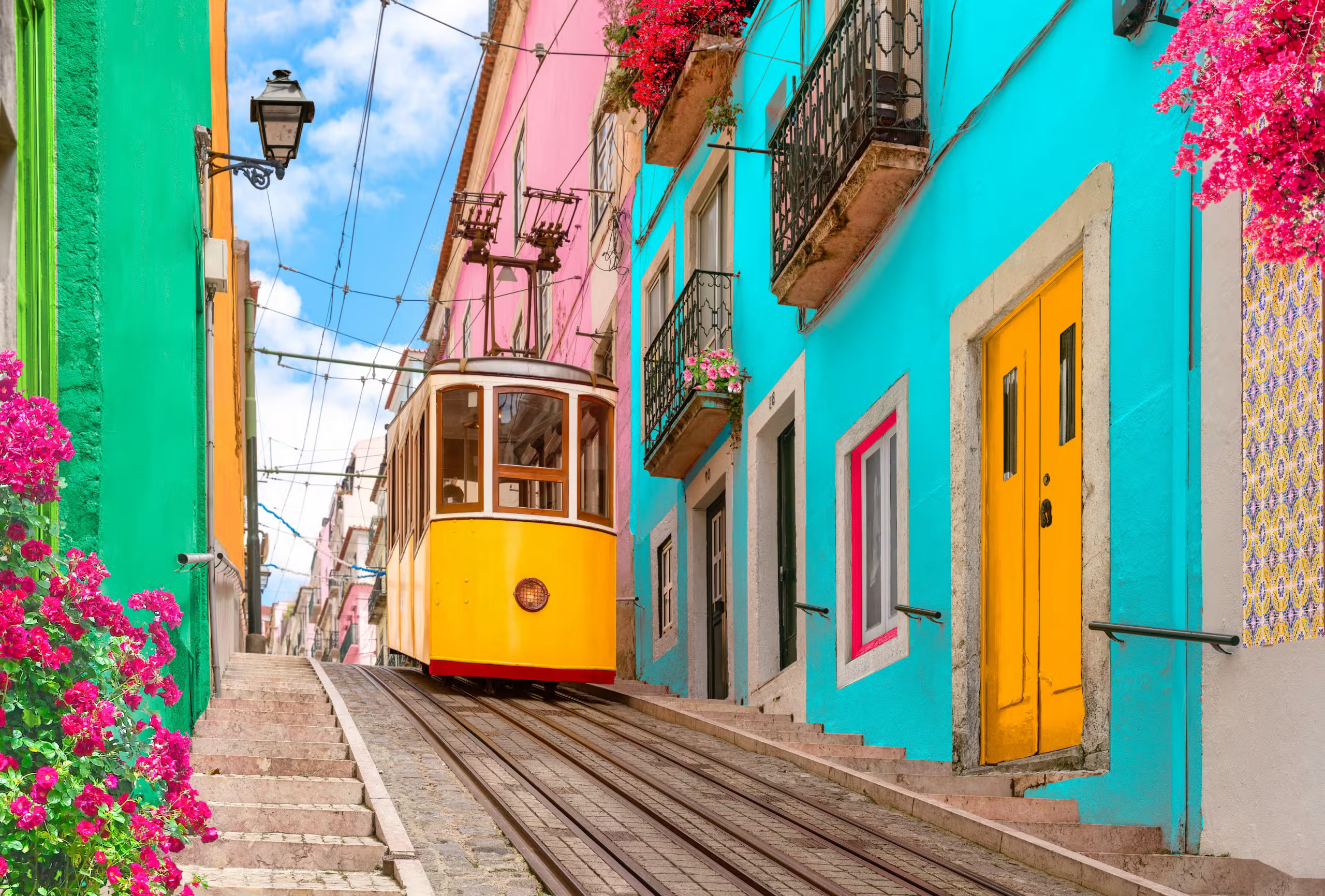
Lisbon in pictures

Similar destinations

Other cities you might like as much as Lisbon.

Frequently asked questions about Lisbon

Is the tram 28 really worth it?
It is a fine crossing of Alfama and the Bairro Alto, but the car is often jammed and targeted by pickpockets. Board it at the Martim Moniz terminus early in the morning, or walk the same route, which is often more pleasant.
How many days to visit Lisbon without rushing?
Three days cover the Baixa, Alfama, Belem and an evening of fado at a reasonable pace. A fourth day lets you add Sintra or the south bank without ending up worn out by the hills.
Can Sintra be done in a day from Lisbon?
Yes, targeting two sites: the Pena Palace at opening with a timed ticket, then the Quinta da Regaleira. Add Cascais on the way back by bus 403. Avoid summer weekends, when queues and traffic explode.
Is the pastel de nata in Belem worth the queue?
The queue moves fast for takeaway; it is the room that gets full. The 1837 recipe differs slightly from the classic pastel de nata, creamier. Good spots also exist elsewhere in the city, with no wait.
Can you swim near Lisbon?
Not in the city: the beaches are on the Cascais line (Carcavelos, Estoril) 30 minutes by train, or on the Costa da Caparica to the south, reached by ferry then bus. The Atlantic stays cool, around 18 to 20 °C in summer.
Lisbon or Porto for a first trip to Portugal?
Lisbon offers a varied capital and access to Sintra and the ocean; Porto is more compact, with the Douro and the wine cellars. The two link in 3 hours by train and combine easily in a week.
How do you reach southern Portugal from Lisbon?
A direct train links Lisbon to Faro, gateway to the Algarve, in 3 hours from the Oriente station. Long-distance buses also serve the seaside resorts. Renting a car is only useful once you are there.
Is Alfama safe in the evening?
Yes, it stays lively and busy until late, especially around the casas de fado. As in any big city, keep your bag in front of you in the dim lanes and avoid deserted shortcuts late at night.
Do you need to book the Belem monuments?
The Jeronimos Monastery should be booked online to skip a queue that exceeds an hour in season. The Belem Tower too, its slots limited by the size of the staircase. The other sites in the district are taken on the spot.
Are the funicular and lift included in the transport pass?
Yes: the 24h Navegante pass covers the Santa Justa lift and the three funiculars (Gloria, Bica, Lavra), on top of the metro, buses and trams. Bought singly, one lift ride costs more than 5 euros.

Plan your trip to Lisbon

Build your day-by-day itinerary and manage budget, bookings and packing in PlanTripNow.
Aperçu de l'application PlanTripNow