Visiting Edinburgh : castle, Old Town and festivals
A castle set on an ancient volcano, medieval closes tumbling off the Royal Mile, immaculate Georgian squares and a wild hill right in the centre: Edinburgh is best explored on foot, neighbourhood by neighbourhood. Three days cover the essentials, one more adds the Forth bridges or Rosslyn.
Discover
Why visit Edinburgh?
Edinburgh packs a medieval Old Town and a Georgian New Town into a compact centre, jointly listed by UNESCO since 1995. Its major national museums are free and Holyrood Park offers a real hike fifteen minutes from the Royal Mile. Every August the city hosts the largest performing arts festival in the world.
Edinburgh's must-sees
Landmarks, free museums and viewpoints, nearly all within walking distance of the Royal Mile.
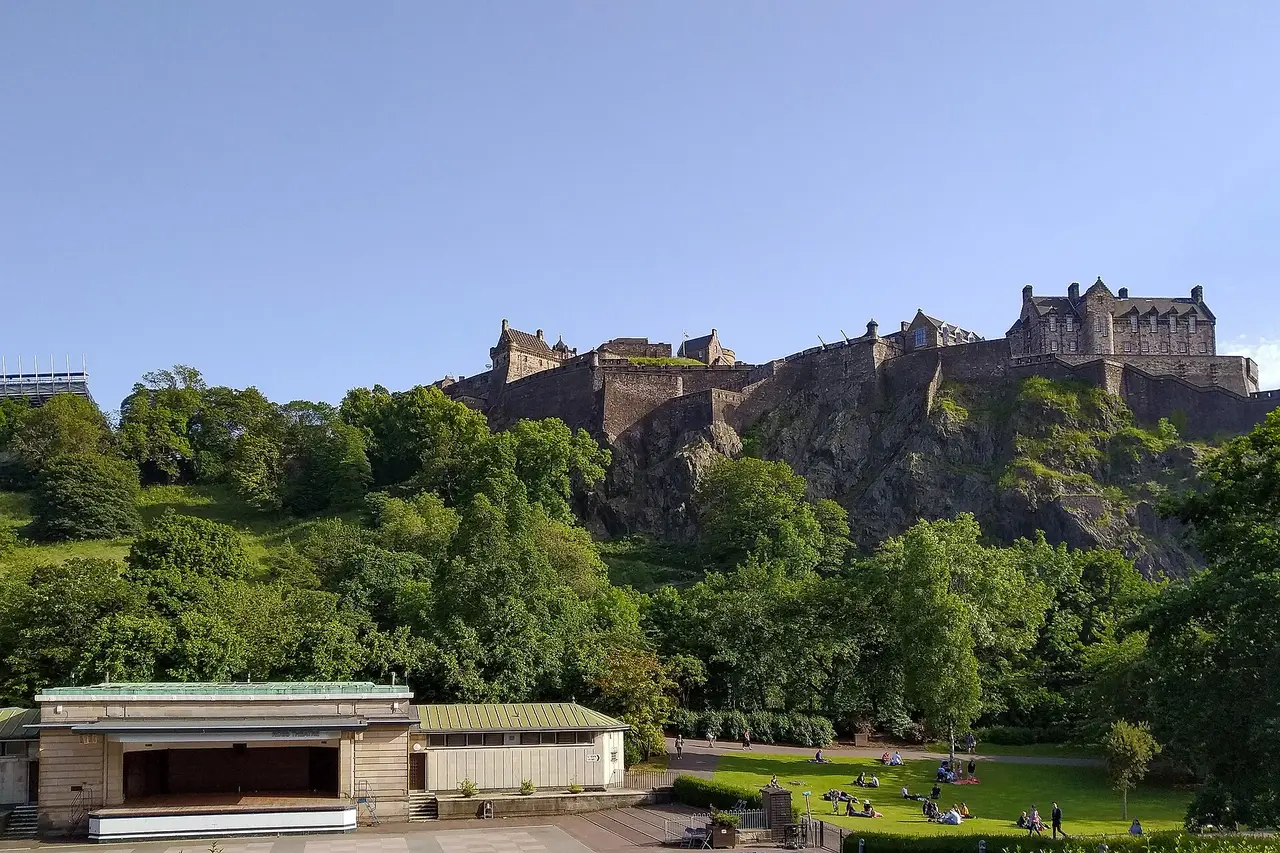
Edinburgh Castle
A fortress perched on volcanic rock, home to the Honours of Scotland, the oldest crown jewels in the British Isles, and St Margaret's Chapel, the city's oldest building.
Arthur's Seat
An extinct volcano rising to 251 metres in the heart of Holyrood Park. From the summit, a 360-degree view over the city, the Firth of Forth and the Fife hills.
Palace of Holyroodhouse
The monarch's official residence in Scotland, at the foot of the Royal Mile. Royal apartments, Mary Queen of Scots memories and the adjoining abbey ruins. Closed during royal stays.
National Museum of Scotland
Free, it traces Scottish history from geological origins to today and displays Dolly the cloned sheep. Its rooftop terrace offers a fine view of the castle.
Calton Hill
A hill crowned with neoclassical monuments, including the unfinished National Monument modelled on the Parthenon. A ten-minute climb from Princes Street, ideal at sunset.
Scott Monument
A 61-metre Gothic spire dedicated to the writer Walter Scott, on Princes Street. Its 287 steps lead to a narrow gallery facing the Old Town.
Royal Yacht Britannia
The royal family's yacht from 1954 to 1997, moored in Leith. Tour the decks, the royal apartments and the engine room with an audio guide.
Greyfriars Kirkyard
A 16th-century graveyard with carved tombs, tied to the legend of the loyal dog Greyfriars Bobby, whose statue stands right by the entrance on Candlemaker Row.
Real Mary King's Close
17th-century streets buried beneath the City Chambers on the Royal Mile, open only on tours led by a costumed guide. Booking advised, especially in summer.
Scottish National Gallery
On the Mound, free entry to Raphael, Titian, Vermeer and great Scottish portrait painters such as Raeburn, a short walk from Waverley station.
Forth Bridge
A cantilever railway bridge completed in 1890 and listed by UNESCO in 2015. Admire it from South Queensferry or cross it by train towards Fife.
Rosslyn Chapel
A 15th-century chapel in Roslin, about ten kilometres south, famous for its profusion of stone carvings. Allow roughly an hour for the visit.
What to see in Edinburgh, neighbourhood by neighbourhood?
The Old Town and the Royal Mile
The Royal Mile links the castle to the Palace of Holyroodhouse over roughly 1.8 km, sloping gently along a volcanic ridge. On either side open dozens of closes, narrow passages dropping between tenements of six to ten storeys, among the tallest in Europe in the 17th century. Allow a full day to walk down it, stepping into St Giles' Cathedral and a few closes, and arrive before 10 am to beat the tour groups. This is the historic heart of Scotland, a constituent nation of the United Kingdom.
The Georgian New Town
Built from 1767 on James Craig's grid plan, the New Town lines up neoclassical facades, squares and private gardens north of the Princes Street Gardens valley. George Street gathers bars and restaurants, Princes Street the department stores facing the castle. Do not miss Charlotte Square and the Georgian House, a townhouse furnished as it was in the late 18th century. The area takes two to three hours on foot and is the most convenient base to stay in, ten minutes from Waverley station and the tram.
The Grassmarket, Victoria Street and the Southside
Below the castle's southern flank, the Grassmarket was long a market square and a site of public executions; today its pubs host the liveliest evenings in the Old Town. Curving, colourful Victoria Street runs down to it from George IV Bridge. Further south, the Southside holds the historic buildings of the university, founded in 1583, and the Meadows, a vast park where locals picnic at the first sign of sun. Plan half a day combining Greyfriars graveyard, the National Museum and a break in a café on Nicolson Street.
Holyrood and its royal park
At the foot of the Royal Mile, the Holyrood area brings together the monarch's official residence in Scotland, the ruins of a 12th-century abbey and the Scottish Parliament, opened in 2004. Behind it spreads Holyrood Park, about 260 hectares of hills, lochs and cliffs inside the city, dominated by Salisbury Crags. Allow two hours there and back for the main ascent by the most direct path, and wear closed shoes: the ground turns slippery after rain, which falls all year round. Early in the morning, the park is almost empty.
Stockbridge, Dean Village and the Water of Leith
North-west of the New Town, Stockbridge has kept a village feel, with independent shops, cafés and a Sunday market. The Water of Leith, a small river in a deep cut, links it to Dean Village, a former mill hamlet of sandstone houses tucked at the bottom of a gorge, fifteen minutes on foot from Princes Street. A walkway follows the river for around twenty kilometres down to Leith; the stretch from Dean Village to Stockbridge, extended to the free Royal Botanic Garden, fills a pleasant morning. It is the calmest area to stay in.
Leith, Edinburgh's port
An independent town until 1920, Leith is now Edinburgh's port and foodie district. Along the Shore, a quay lined with old warehouses, pubs, seafood bars and well-regarded restaurants follow one another. Since 2023, the tram extension to Newhaven has linked Leith to the centre in about twenty minutes, making it an often cheaper base than the Old Town. The Royal Yacht Britannia is moored at Ocean Terminal; allow half a day for the ship and a stroll along the quays in the early evening.
August and Hogmanay
In August, Edinburgh hosts the International Festival, the Fringe, the largest performing arts festival in the world, and the Royal Edinburgh Military Tattoo on the castle esplanade, all at once. The city then runs on thousands of shows, but accommodation prices often double or more: book six months ahead, or skip this month if festivals are not your goal. In late December, Hogmanay spreads New Year celebrations over several days, with the big ticketed street party on the 31st. May, June and September offer the best balance between weather and crowds.
Day trips and onward travel
Some twenty minutes away by train, South Queensferry looks out on the three Forth bridges, including the 1890 railway bridge listed by UNESCO. Rosslyn is under an hour south by bus, Portobello beach twenty minutes east. Glasgow is just 50 minutes by train. Loch Ness can be done as a day tour, but twelve hours mostly spent on a coach are tiring: the Highlands deserve two or three nights. To extend the trip, Liverpool and its docks can be reached by rail, and a flight of about an hour takes you to neighbouring Ireland.
Getting there
Airports serving Edinburgh, from main hubs to secondary ones.
ADXLeuchars Station AirfieldLeuchars, FifeSecondary
BBSBlackbushe AirportCamberley, SurreySecondary
BEBBenbecula AirportBalivanichSecondary
BEQRAF HoningtonBury Saint Edmunds, SuffolkSecondary
BEXRAF BensonWallingford, OxfordshireSecondary
BHDGeorge Best Belfast City AirportBelfastSecondary
Practical information for Edinburgh
Airport
13 km west of the centre, linked by tram (about 30 minutes to Princes Street) or by the very frequent Airlink 100 bus.
Entering the UK
Passport and Electronic Travel Authorisation (ETA) required for EU, Swiss and Canadian nationals, to be obtained online before departure.
Visitor levy
5% of the room rate since 24 July 2026, charged on the first five consecutive nights.
Scottish banknotes
Three Scottish banks issue their own pound sterling notes: valid throughout the UK, they are sometimes refused in England.
Power sockets
Type G with three rectangular pins, 230 V: an adapter is essential.
Tipping
10 to 12.5% in restaurants if service is not already added to the bill; nothing is expected at the pub bar.
Weather
Cool and changeable: around 19 °C in summer, rain possible all year and frequent wind. A waterproof jacket is essential, even in July.
Daylight hours
Over 17 hours of daylight in late June, about 7 hours in late December: factor this into winter sightseeing plans.
Buses and tram
Contactless payment accepted on board Lothian buses and the tram. The centre is best covered on foot, but expect climbs and stairs.
Free museums
The National Museum, the national galleries and the Royal Botanic Garden are free to enter; only temporary exhibitions charge.
Edinburgh in pictures
Photo credits : Matti Blume, CC BY-SA 4.0, Wikimedia Commons ; Peter S, CC BY-SA 2.0, Wikimedia Commons ; Ermell, CC BY-SA 4.0, Wikimedia Commons ; Daniel Kraft, CC BY-SA 3.0, Wikimedia Commons ; Scglossop1, CC BY-SA 4.0, Wikimedia Commons
Frequently asked questions about Edinburgh
Are three days enough to see the castle, Arthur's Seat and Leith?
Yes. Spend day one on the castle and the Royal Mile, day two on Holyrood, Arthur's Seat and Calton Hill, day three on the New Town, Dean Village and Leith. A fourth day allows a trip to the Forth bridges or Rosslyn without rushing anything.
Do you need to book Edinburgh Castle in advance?
Yes, especially from April to October: timed tickets online are cheaper than at the gate and morning slots go fast in August. Allow two to three hours for the visit, and be there at 1 pm for the daily gun salute, fired every day except Sunday.
Where to stay during the Fringe without paying a fortune?
Book during the previous winter, or aim for Leith and Portobello, linked to the centre by tram or bus in twenty to thirty minutes. University residences also rent rooms in summer. Glasgow, 50 minutes away by train, remains a fallback when everything is full or overpriced.
Can you climb Arthur's Seat without being a hiker?
Yes, the climb from the Palace of Holyroodhouse side takes about 45 minutes on a steep but non-technical path. The final stretch is rocky and slippery in the rain: shoes with a good grip are recommended, and skip the summit in strong wind.
Are Scottish banknotes accepted in London?
Legally they are pounds sterling like any other, but some English shopkeepers refuse them because they are unfamiliar. Before heading to England, spend your Scottish notes locally or pay by card, which is accepted almost everywhere in the UK.
When should you book the Royal Edinburgh Military Tattoo?
As early as possible: tickets go on sale several months before August and the best seats sell quickly. The show takes place in the evening on the castle esplanade, outdoors whatever the weather: bring warm clothes and a waterproof.
Calton Hill or Arthur's Seat: which viewpoint to choose?
Calton Hill is a ten-minute walk from Princes Street and frames the castle, the Royal Mile and the Scott Monument, ideal at sunset. Arthur's Seat, higher up, offers a full panorama out to Fife but requires a proper climb of about 45 minutes.
Can you visit the Scottish Parliament at Holyrood?
Yes, for free. The building designed by architect Enric Miralles and opened in 2004 can be explored on your own or with a guide. On business days, you can also watch debates from the public gallery, ideally after booking a seat.
Is Loch Ness doable as a day trip from Edinburgh?
Yes on an organised tour, but the day lasts around twelve hours, most of them on the coach. If the Highlands appeal to you, take the train to Inverness instead, about three and a half hours away, and stay two or three nights.
Which Edinburgh museums are free on a rainy day?
The National Museum of Scotland, the Scottish National Gallery on the Mound, the Portrait Gallery and the modern art galleries are free, as is the Writers' Museum devoted to Burns, Scott and Stevenson. Only temporary exhibitions at the national museums charge.
Train or plane from London to Edinburgh?
The direct train from King's Cross to Waverley takes about 4 hours 20 minutes and arrives right in the centre, below the castle. The flight lasts just over an hour, but transfers and security almost cancel out the gain. The Caledonian Sleeper night train leaves Euston and arrives in the morning.
Plan your trip to Edinburgh
Build your day-by-day itinerary and manage budget, bookings and packing in PlanTripNow.