Skip to content

Visit Moorea : what to do on Tahiti's sister island and when to go

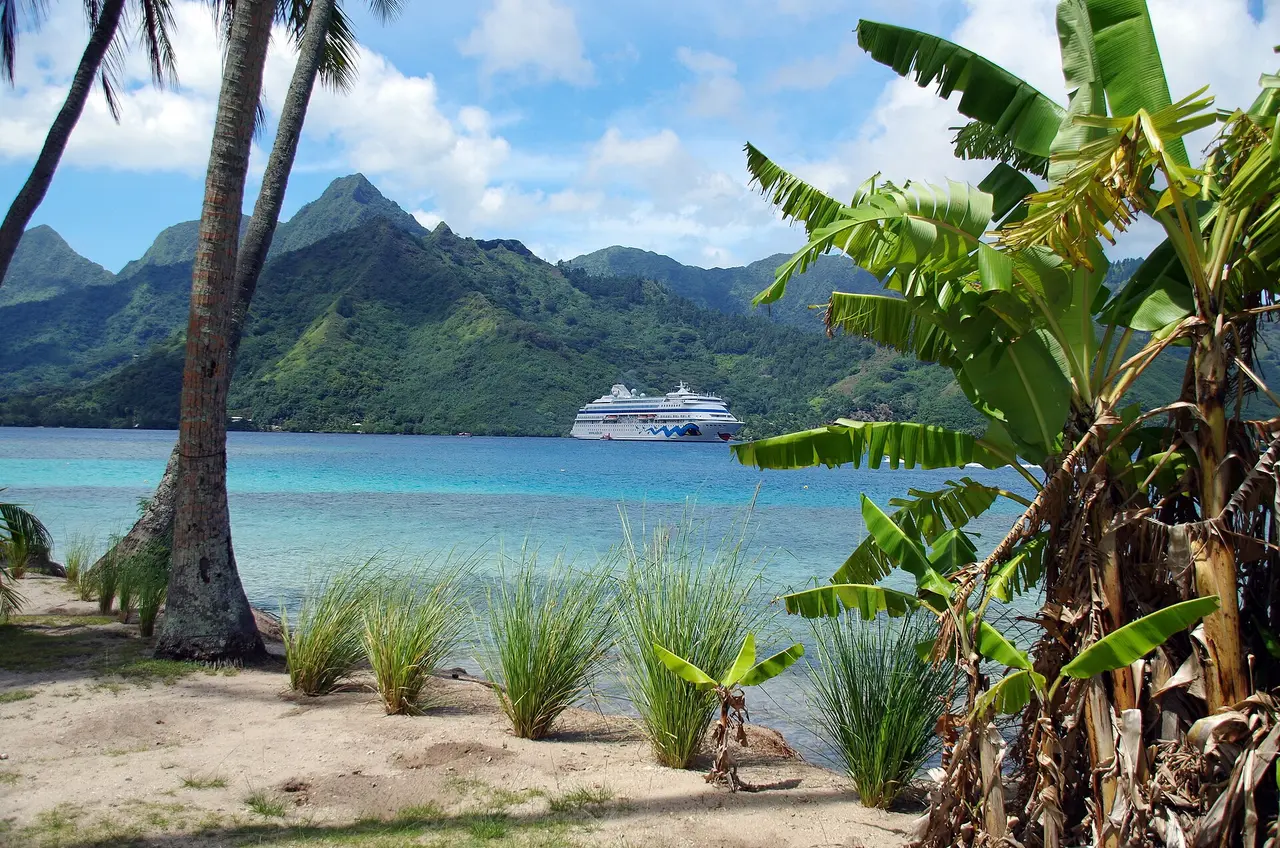
Moorea reveals itself from the ferry: sharp green peaks plunging into a lagoon of a thousand shades of blue. On the island, you swim with rays over a sandbank, climb to the Belvedere between the two bays and, in season, watch humpback whales that come to calve.

At a glance

Visa
None
7-day budget
€2,135
Per person, comfort profile, excluding international flights.

Why visit Moorea?

Moorea, an island of the Society archipelago in French Polynesia, is about 45 minutes by ferry from Papeete. It charms with Cook's and Opunohu bays, a lagoon rich in rays and blacktip reef sharks, and its hikes. Allow three to four days, ideally from June to October, during the dry season.

When to visit Moorea

Temperatures, rainfall and crowds month by month, to pick your window.
When to visit Moorea
MonthTemperaturesRainCrowdsVerdict
January23 to 31 °C15 dQuietRainy season and humid heat: heavy but short showers, a warm 28 °C lagoon.
February23 to 31 °C13 dVery quietThe quietest and cheapest month, at the heart of cyclone season: follow meteo.pf.
March23 to 32 °C11 dQuietThe warmest lagoon of the year, ideal for snorkelling despite a few storms.
April23 to 32 °C9 dModerateEnd of the rainy season, a green Opunohu valley for hiking to the Belvedere.
May23 to 31 °C9 dModerateDrier air and walkable trails: a good compromise before the high season.
June22 to 30 °C6 dBusyThe dry season begins, with clear skies over Cook's and Opunohu bays.
July21 to 30 °C6 dPackedHeiva in Tahiti and French holidays: full guesthouses, the first whales offshore.
August21 to 30 °C5 dPackedHumpback whale season, watched at sea with licensed operators, but prices at their peak.
September22 to 30 °C5 dModerateWhales still around and crowds thinning: the best month of the year.
October22 to 31 °C8 dModerateThe last whales and a calm lagoon, with the first showers at the end of the month.
November23 to 31 °C10 dQuietRain gradually returns and cyclone season begins, with falling rates.
December23 to 30 °C15 dModerateWet season and year-end holidays: frequent showers, busy flights from Paris.
Source: Climat cadré sur la station de Papeete, à environ 17 km de l'autre côté du chenal : normales 1981-2010 publiées par Meteociel et reprises par Wikipédia, recoupées avec la station Météo-France de Tahiti-Faa'a (écart inférieur à 1 °C chaque mois). Température de la mer : moyennes des dix dernières années de seatemperature.info. Saison des pluies de novembre à mars et saison cyclonique de novembre à avril (Météo-France Polynésie). Hémisphère sud : la saison sèche va de juin à septembre. Les vallées intérieures de Moorea sont plus arrosées que la côte. Relevé novembre 2026.

Moorea's must-sees

Panoramas, lagoon and marine encounters, the outings that make Moorea.

The Belvedere

A viewpoint above Cook's and Opunohu bays, reached by car through the Opunohu valley.

Opunohu Bay

A deep bay framed by green peaks, with Mount Rotui as a backdrop, an anchorage for sailing boats.

Stingray sandbank

A lagoon sandbank where you swim among stingrays and blacktip reef sharks.

Titiroa Marae

A restored ancient Polynesian place of worship in the Opunohu valley, under tall trees.

Tiahura coral garden

A snorkelling site in the north-west, reached from the beach, rich in reef fish.

Mount Rotui

The peak separating the two bays, whose steep climb offers a view over the whole island.

Temae Beach

A white sand public beach near the airport, with views of Tahiti across the channel.

What to discover in Moorea?

Cook's and Opunohu bays

Two deep bays cut into the north coast, framed by Mount Rotui. The coast road, about 60 km long, circles the island in half a day with stops. The best views are in the morning, when the light hits the peaks. The head of Opunohu Bay serves as an anchorage for sailing boats, and small villages line Cook's Bay. Plan photo stops at the head of each bay along the way.

The Opunohu valley and the Belvedere

At the head of the bays, the Opunohu valley holds pineapple plantations, the agricultural school selling its juices and jams, and several marae, restored ancient Polynesian places of worship. The road climbs to the Belvedere, which takes in both bays and Mount Rotui. Several trails start there, including the Three Coconuts trail, about four hours return. Bring water and closed shoes for the trails, which can be muddy.

The lagoon, its rays and its motu

Moorea's lagoon is famous for sandbanks where you swim among stingrays and blacktip reef sharks used to visitors. Half-day outrigger canoe or boat trips often include snorkelling and a picnic on a motu. The Tiahura coral garden, in the north-west, can also be reached by swimming from the beach. Book the day before in high season and check exactly what the trip includes.

Humpback whales and marine life

From July to October, humpback whales come to calve and mate in Polynesian waters. Whale-watching trips at sea follow strict rules on approach distances; choose a licensed operator. The rest of the year, turtles, eagle rays and reef fish are seen while snorkelling or diving with the island's dive centres. August and September are often the best months to spot them, with calmer seas.

Beaches, kayaks and local life

The public beaches of Temae, near the airport, and Tiahura, in the north-west, are the most accessible. Kayaks and paddleboards can be rented at most guesthouses. For food, food trucks and snacks serve raw fish in coconut milk and grills at gentler prices than hotel restaurants. The island stays calm: most shops close early in the evening. On Sundays, many shops stay closed, so stock up the day before.

How much it costs

Per person per day, excluding international travel.
Budget
115 €/ day
4 290 € for 2 people, 7 days, return flights included
Accommodation
60 €
Food
30 €
Local transport
10 €
Sights and activities
15 €
Comfort
305 €/ day
6 950 € for 2 people, 7 days, return flights included
Accommodation
150 €
Food
60 €
Local transport
45 €
Sights and activities
50 €
Premium
610 €/ day
11 220 € for 2 people, 7 days, return flights included
Accommodation
300 €
Food
120 €
Local transport
70 €
Sights and activities
120 €
Prices checked: Relevé novembre 2026. Montants convertis au taux fixe de 1 EUR = 119,33 XPF. Hébergement à Moorea : Travelocity et Expedia (pensions de 112 à 830 dollars la nuit, la plupart entre 140 et 200 ; grands hôtels en bord de lagon de Manava, Hilton et Sofitel entre 510 et 610 dollars la nuit). Pas de dortoir fiable : profil backpacker calé sur une pension simple. Prix par nuit et par personne, chambre double partagée à deux pour les trois profils. Repas, roulottes, location de voiture et demi-journée guidée repris du relevé de Papeete d'octobre 2026 (combien-coute.net, Tahiti Tourisme). Vol Paris-Papeete aller-retour avec une escale env. 1 300 € par personne (partirou.com et liligo.fr), plus le ferry Aremiti Papeete-Moorea à 4 700 XPF l'aller-retour (env. 40 €, tarifs depuis le 19 juillet 2026), soit 1 340 € retenus. Hors juillet-août, quand les prix montent.

Getting there

Airports serving Moorea, from main hubs to secondary ones.
  • AGFAgen La Garenne airportAgenSecondary
  • AJAAjaccio Napoléon Bonaparte airportAjaccioSecondary
  • ANEAngers Marcé airportAngersSecondary
  • ANGAngoulême Brie-Champniers airportAngoulêmeSecondary
  • AUFAuxerre Branches airportAuxerreSecondary
  • AURAurillac airportAurillacSecondary

Entry, health and safety

For FR travellers

Entry requirements

No visa for a tourist stay

Trajet intérieur : la Polynésie française est une collectivité d'outre-mer, un Français n'a ni visa ni formalité d'entrée pour rejoindre Tahiti puis Moorea. Un document d'identité en cours de validité suffit, la carte nationale d'identité comprise, et la compagnie vérifie qu'il correspond au billet. Si le vol fait escale dans un pays étranger, un passeport en cours de validité est exigé, ainsi que l'autorisation propre au pays d'escale : pour une escale aux États-Unis, une ESTA, à demander au moins 72 heures avant le départ, même en simple transit.

Health

Risques naturels : saison des pluies de novembre à mars et saison cyclonique de l'hémisphère sud de novembre à avril, parfois mai (Météo-France Polynésie, meteo.pf). Consultez la carte de vigilance de meteo.pf avant une traversée vers Moorea ou une randonnée en vallée. Règles ESTA : site du Haut-commissariat de la République en Polynésie française.

Checked in novembre 2026 against the official source. Entry rules change: check the official source before you travel, it alone is authoritative.

Practical information for Moorea

Formalities

An overseas collectivity: a valid ID card is enough for French citizens, but a passport and ESTA are required if the flight stops in the United States. Other nationalities should check French Polynesia's own entry rules.

Ferry

Frequent links between Papeete and Moorea in about 45 minutes; the tourist return fare is 4,700 XPF with Aremiti.

Getting around

A single irregular bus circles the island: rent a car, scooter or e-bike to be independent.

CFP franc

Fixed parity with the euro, about 119 XPF to 1 euro; cards accepted in hotels, cash useful at food trucks.

Cyclones

Cyclone season runs from November to April: check Météo-France Polynésie alerts before going out to sea.

Whales

Regulated whale watching from July to October: minimum approach distances apply, so choose a licensed operator.

Tourist tax

A per-person, per-night tourist tax is often added to the room price; check the amount when booking.

Coral

Use reef-safe sunscreen and never stand on the coral.

Moorea in pictures

Photo credits : Balou46, CC BY-SA 4.0, Wikimedia Commons ; Michael R Perry, CC BY 2.0, Wikimedia Commons ; Jérémie Silvestro (If you can improve this photo development, ask me the RAW .), CC BY-SA 4.0, Wikimedia Commons ; David Broad, CC BY 3.0, Wikimedia Commons ; Charles J. Sharp, CC BY-SA 4.0, Wikimedia Commons ; Guellouz Mehdi, CC BY-SA 4.0, Wikimedia Commons

Frequently asked questions about Moorea

How do you get from Papeete to Moorea?
By ferry from the port of Papeete, about 45 minutes, with several crossings a day. There is also a short flight, but the ferry remains the most practical and cheapest option, and you can bring a rental car on board.
Moorea or Bora Bora?
Moorea is more accessible, cheaper and more mountainous, ideal for combining hiking and lagoon. Bora Bora is more spectacular for its lagoon and overwater bungalows, but much more expensive and reachable only by plane from Tahiti.
When can you see whales in Moorea?
From July to October, when humpback whales come to Polynesian waters. Trips run with licensed operators who respect regulated approach distances. August and September are often the best months. Book ahead in peak season.
How many days do you need in Moorea?
Two days are enough for the island loop, the Belvedere and a lagoon trip. Three to four days let you add a hike, snorkelling and, in season, whale watching, without rushing.
Do you need to rent a car in Moorea?
It is advisable: the bus is rare and irregular. A car, scooter or e-bike lets you circle the island and drive up to the Belvedere. You can rent at the ferry landing or book ahead in high season.
What is the best season for Moorea?
From June to October, the dry season, with clearer skies and the whales. From November to April, it is hotter and more humid, with frequent showers and a cyclone risk, but prices fall.

Plan your trip to Moorea

Build your day-by-day itinerary and manage budget, bookings and packing in PlanTripNow.
Aperçu de l'application PlanTripNow