India travel guide: when to go, what to see and how to plan it

India is not a country you visit, it is one you cross. In two weeks you go from the marble domes of Agra to the blue lanes of Jodhpur, from the pyres of Varanasi to the paddy fields of Kerala. A first trip focuses on the north; the whole country takes several visits.

Why visit India?

India packs in a rare density of heritage: around forty UNESCO-listed sites, regional cuisines that change every 300 kilometres, and landscapes from the Thar Desert to the glaciers of Ladakh. It is also one of the cheapest destinations in the world once the flight is paid for. The trade-off is a genuine sensory shock, better absorbed on a short route like the Golden Triangle than on a single sweep across the subcontinent. See also the other countries of Asia.

What to discover in India?

Delhi and the Golden Triangle

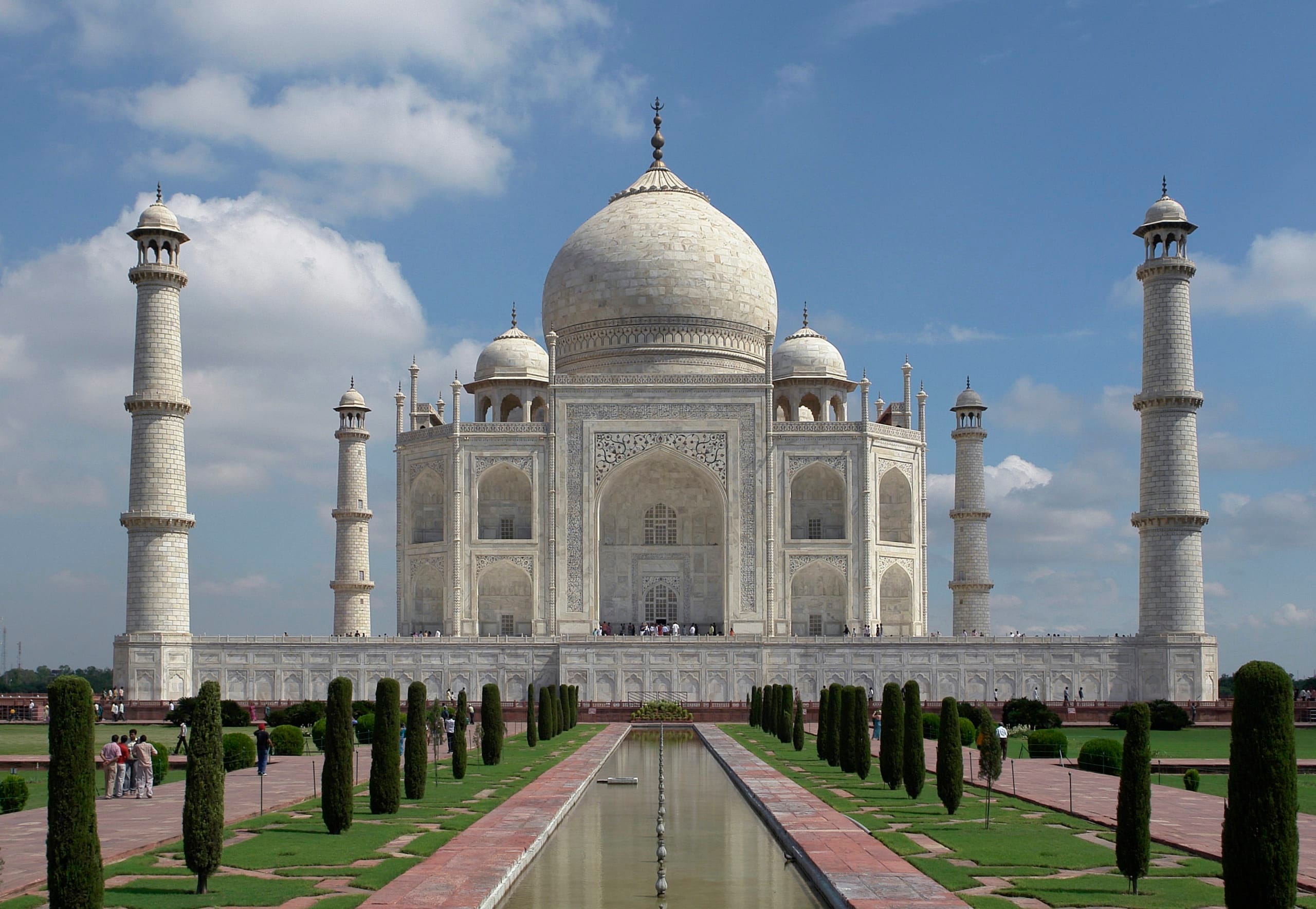
The country's introductory circuit: Delhi, Agra and Jaipur form a triangle of about 720 kilometres that loops in 5 to 7 days. Delhi sets the Mughal city (Jama Masjid, Red Fort, closed Mondays) against the colonial avenues of New Delhi. Agra fits into a morning at the Taj Mahal, best entered at opening time and never on a Friday when it is closed. Jaipur, the pink city, deserves three nights for Amber Fort, the City Palace and its textile bazaars. The fast train links Delhi to Agra in under two hours.
The Rajasthan of the maharajas

Beyond Jaipur, Rajasthan lines up fortress towns: Jodhpur with Mehrangarh Fort above the blue old town, Udaipur and its palaces on Lake Pichola, Jaisalmer deep in the Thar Desert. Allow ten days to see three or four without rushing, road transfers running 4 to 6 hours between stops. The best window is November to February; from April afternoons pass 40 degrees. Domestic flights from Udaipur or Jodhpur save a long drive back to Delhi.

Varanasi and the Ganges valley

Varanasi, on the banks of the Ganges, is the spiritual heart of Hinduism: pilgrims bathe at dawn and cremation fires burn continuously on the ghats. A boat at sunrise then the evening aarti ceremony at Dashashwamedh Ghat sum up the city in two set pieces. An hour away, Sarnath marks where the Buddha gave his first sermon. Two nights are enough. The city is reached by air from Delhi, Agra or Khajuraho, another regional must-see for its carved temples.

Kerala and the backwaters

In the far south-west, Kerala shows a calmer face of India: lagoons fringed with coconut palms, tea plantations at Munnar around 1,600 metres, Arabian Sea beaches at Varkala. A night aboard a houseboat on the Alleppey canals is the signature experience, to book with mosquito nets. Allow a week to combine Kochi, the backwaters and the hills. The climate reverses the northern logic: the monsoon hits hard from June to August, and the good season runs December to March. The mood is close to neighbouring Sri Lanka.

Goa and the west coast

A former Portuguese colony, Goa keeps listed baroque churches at Old Goa and Creole architecture in Panjim. The north (Anjuna, Arambol) lives at night, the south (Palolem, Agonda) stays quiet. The dry season runs November to March; during the monsoon most beach shacks close. Further north, the Karnataka coast around Gokarna offers less crowded coves. For a purely beach holiday, Thailand is easier to reach, but Goa pairs well with a cultural circuit.

The Indian Himalaya

The mountainous north is visited in summer, when the plains swelter. Ladakh, a high-altitude desert around Leh at 3,500 metres, is reachable by road only from June to September and needs two days of acclimatisation. Himachal Pradesh (Manali, Dharamsala, seat of the Tibetan government in exile) and Sikkim, watched over by Kangchenjunga, round out the options. Sikkim and several border zones require a permit, applied for online or on arrival. Trekking here recalls Nepal, with slightly heavier logistics.

The Dravidian south and its temples

Tamil Nadu unfolds living temple-cities: Madurai and its Minakshi temple with multicoloured gopurams, Thanjavur, Mahabalipuram and its seaside bas-reliefs. The pace is slower than the north, the food vegetarian and spiced, chai replaced by filter coffee. Allow ten to twelve days for a Chennai, Pondicherry, Kaveri delta and Madurai circuit. The pleasant window runs November to February, avoiding the north-east monsoon from October to December on the east coast.

Cities to visit in India

Featured destinations appear first.
Coming soon.

India in pictures

Major sights to see in India

From Mughal monuments to southern temples, a selection of places that shape most itineraries.

Taj Mahal

White marble mausoleum in Agra, a 17th-century Mughal masterpiece, best visited at opening time; closed on Fridays.

Amber Fort

Sandstone and marble palace-fortress on a hill near Jaipur, with pillared courtyards and a hall of mirrors.

Varanasi ghats

Steps down to the Ganges where ritual baths, cremations and the evening fire ceremony take place.

Mehrangarh Fort

Massive citadel rising 120 metres above Jodhpur, one of India's best preserved, with a museum and ramparts.

Alleppey backwaters

Network of Kerala lagoons and canals cruised by houseboat, among paddy fields, palms and villages on the water.

Minakshi Temple

Vast Hindu complex in Madurai with towers covered in thousands of painted figures, still in active worship.

Ajanta and Ellora caves

Buddhist, Hindu and Jain sanctuaries carved into rock near Aurangabad, with monumental frescoes and sculpture.

Lake Palace, Udaipur

White marble palace that seems to float on Lake Pichola, emblem of Rajasthan's most romantic city.

Ladakh monasteries

Buddhist gompas clinging to cliffs around Leh, such as Thiksey or Hemis, at high altitude.

Mahabalipuram

Group of temples and reliefs cut from granite on the Bay of Bengal shore, south of Chennai.

Similar destinations

Other countries you might like as much as India.

Similar regions

Other regions you might like as much as India.

Frequently asked questions about travelling to India

How long do you need for the Golden Triangle?
Five to seven days are enough for Delhi, Agra and Jaipur without rushing. Four days is possible but very tight, with a single night in Agra and long days on the road.
Is the Taj Mahal worth it despite the crowds?
Yes, provided you enter at opening time around 6 am: the light is soft and the first hour stays bearable. It is closed on Fridays for prayer. Avoid the middle of the day.
North or south India for a first trip?
The north (Golden Triangle, Rajasthan, Varanasi) has the best-known monuments but a stronger culture shock. The south (Kerala, Tamil Nadu) is gentler, greener and slower, ideal if you want to ease in.
Can you drink chai and eat street food safely?
Chai, which is boiled, is generally safe. For street food, choose busy stalls where everything is cooked in front of you and served piping hot. Avoid raw salads, standing sauces and juices cut with water.
Do you need a guide or a driver for Rajasthan?
A driver with a car is common and affordable for linking Jaipur, Jodhpur and Udaipur: it avoids stations and long haggling. A guide is hired by the day, monument by monument, not for the whole trip.
When should you go to Ladakh and do you need to acclimatise?
June to September, when the road from Manali or Srinagar is open. With Leh at 3,500 metres, plan two effort-free days on arrival before any trek or high pass. The season is short and early snow can close passes.
Is the overnight train a good option in India?
Yes for long distances: 2AC or 3AC class offers berths, sheets and curtains at a modest price. Book early on IRCTC, as popular trains sell out weeks in advance, and ask about the foreign-tourist quota if seats look full.
How much does two weeks in India cost excluding flights?
In comfort travel, budget around 55 to 60 euros per day per person with 3-star hotels, restaurants and a train-taxi mix. On a backpacker budget, 25 to 30 euros is enough in guesthouses and public transport.
Are Diwali and Holi worth planning around?
Holi (March) is spectacular in the north but services run at half speed on the day itself. Diwali (October or November) lights up the cities but pushes prices up and fills trains around the date.

Plan your trip to India

Day-by-day itinerary, budget, bookings and packing in a single app.
Aperçu de l'application PlanTripNow