Visit the French Riviera: when to go, what to see and where to stay

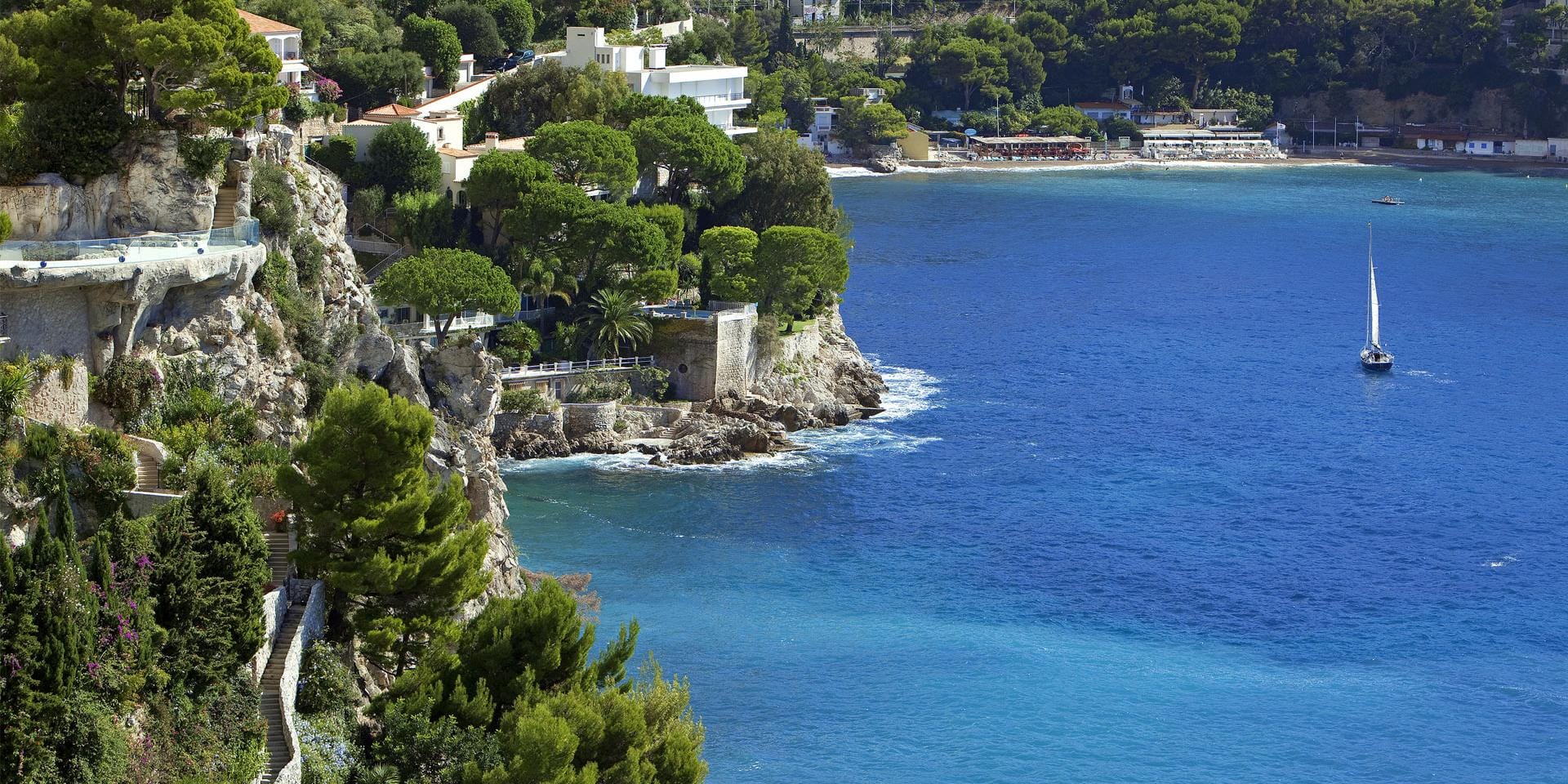
From Menton to Saint-Tropez, the French Riviera strings together beaches, cities of art and hilltop villages over about 150 kilometres. People come for Nice and Monaco, the corniches, the Lerins islands and the red rocks of the Esterel. The train runs along the eastern coast, a car is needed beyond. Skip July and August, expensive and packed.

Why visit the French Riviera?

The French Riviera combines, on a narrow strip, a mild Mediterranean climate, a dense artistic heritage from Matisse to Picasso, and landscapes that run from sea to pre-Alps in a few kilometres. This south-eastern coast of France is served by the country's second airport and by a regional train linking most resorts without a car.

What is there to discover on the French Riviera?

Nice, capital of the Riviera

France's fifth city, Nice deserves two full days. Old Nice and its Cours Saleya market, Castle Hill for the view over the Baie des Anges, the 7-kilometre Promenade des Anglais, and the Matisse and Chagall museums in the Cimiez district. The old town and the green corridor are walked; the tram covers the rest. It is also the best base for rail trips to Monaco, Menton or Antibes.
From Cannes to Antibes, the western Riviera

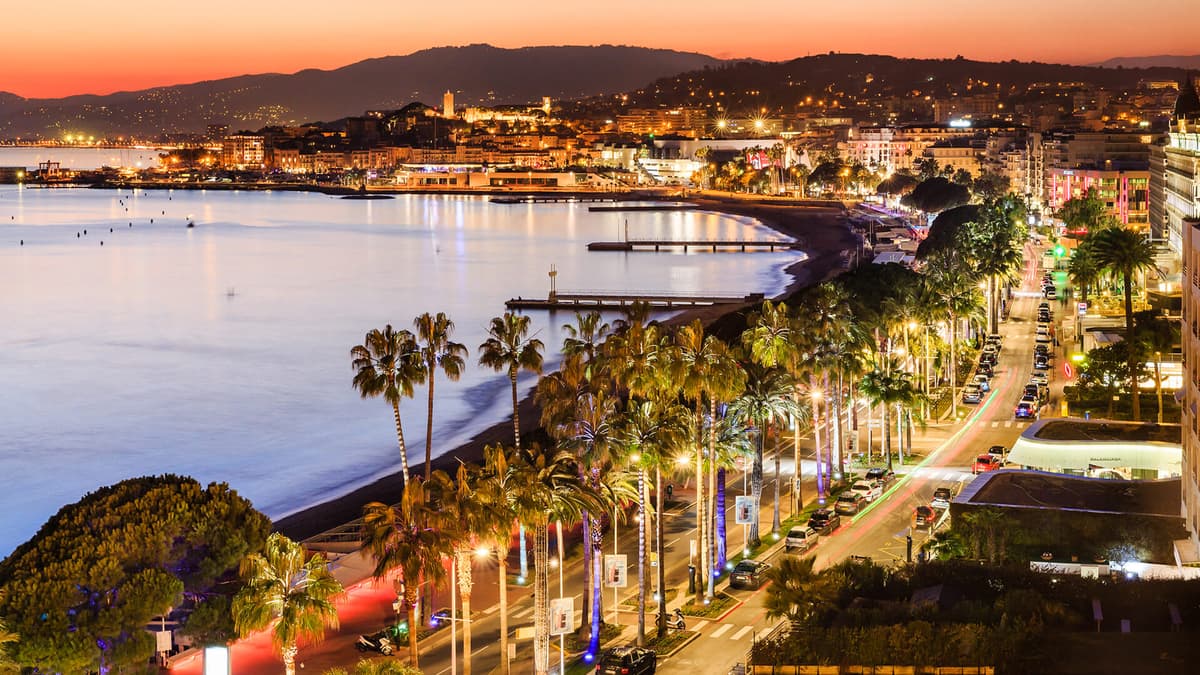
West of Nice, the coast turns more urban and more glamorous. Cannes lines up the Croisette, the old Suquet quarter and the Forville market; a boat reaches the Lerins islands in 20 minutes. Antibes keeps its ramparts, its covered Provencal market and the Picasso museum in the Chateau Grimaldi. Between the two, the Cap d'Antibes is walked on a coastal path of about 5 kilometres, between coves and villas.

The Principality of Monaco and the corniches

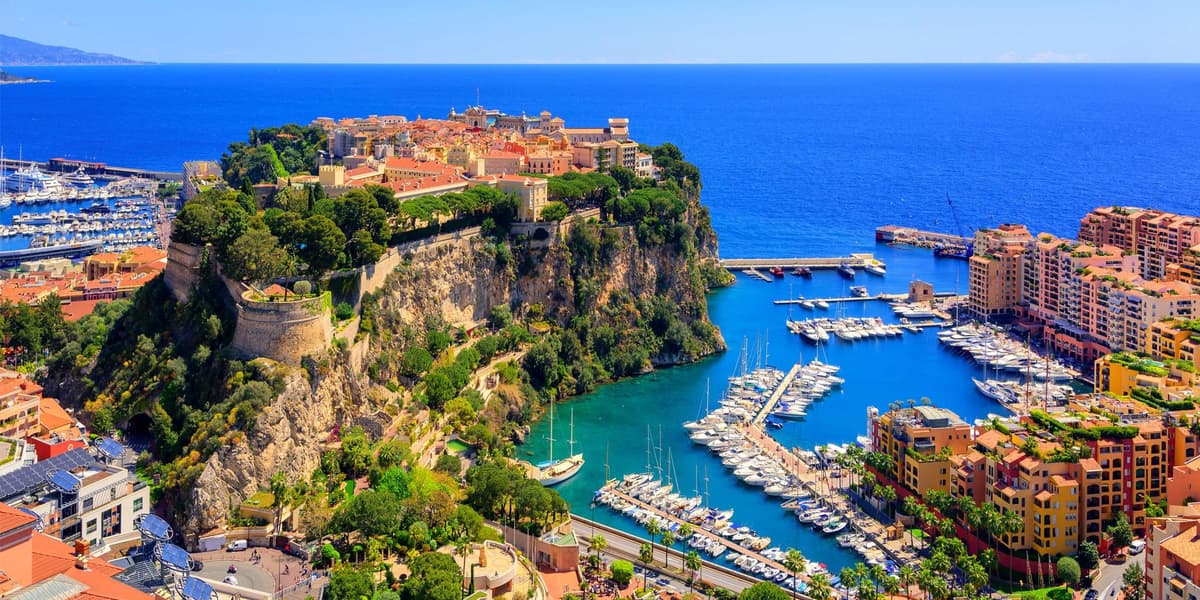
A sovereign state of 2 square kilometres, Monaco is seen in a day: the Rock and the princely palace, with the changing of the guard at 11:55am, the exotic garden clinging to the cliff, the oceanographic museum and the Monte-Carlo district. Three corniche roads link Nice to Monaco at different heights; the Moyenne Corniche passes the hilltop village of Eze and its Nietzsche path, which descends on foot to the sea.

Menton, the coast and the Italian border

At the far east, Menton enjoys the mildest microclimate on the coast, which explains its gardens of citrus and rare plants: Val Rahmeh, Serre de la Madone, Fontana Rosa. The old town rises in a gradient of colour to the Vieux-Chateau cemetery, with its view of Italy. The border is crossed on foot or by bus, and Ventimiglia with its big Friday market is 20 minutes away.

The hinterland: Grasse, Vence and the gorges

Behind the coast, the land rises fast. Grasse, the world capital of perfume since the 17th century, opens its perfume houses to visitors, with scent workshops by booking. Saint-Paul-de-Vence and Gourdon are among the most visited hilltop villages, and the Maeght foundation, on the edge of Saint-Paul, holds one of Europe's richest modern art collections. Higher up, the Loup and Verdon gorges offer swimming and hiking.

The Gulf of Saint-Tropez and the Esterel massif

To the west, the Var Riviera changes scenery. Saint-Tropez keeps its harbour, its citadel and the Place des Lices, with its market on Tuesday and Saturday; Pampelonne beach is reached by the coastal path. Between Saint-Raphael and Cannes, the Esterel massif raises its red porphyry rocks above the sea along the Corniche d'Or, with trails toward the Pic de l'Ours and coves reached on foot.

Cities to visit in French Riviera

Featured destinations appear first.
Coming soon.

French Riviera in pictures

French Riviera highlights

Eleven sites covering the coast, the hinterland and the principality.

Promenade des Anglais

Nice's 7-kilometre seafront, born in the 19th century from funding by the English colony; bikes, skates and blue chairs.

Old Nice and Cours Saleya

A maze of Italian-style lanes, a flower and produce market Monday to Saturday, antiques on Monday, socca from the quarter's ovens.

Lerins islands

Two islands off Cannes: Sainte-Marguerite and the fort that held the Man in the Iron Mask, Saint-Honorat and its Cistercian monastery.

Antibes Picasso Museum

In the Chateau Grimaldi where Picasso worked in 1946; it keeps the works made on site, the artist's gift to the town.

The Rock of Monaco

The principality's old town on a headland, with the Grimaldi palace, the cathedral where Grace Kelly and Rainier III rest, and the changing of the guard.

Monaco Exotic Garden

A thousand species of succulents and cacti on a cliff, with a prehistoric cave and a sweeping view over the principality.

Eze

A medieval village perched at 429 metres, entirely pedestrian, with an exotic garden at the top and the Nietzsche path down to the sea.

Menton gardens

About ten remarkable gardens making the most of the coast's mildest microclimate: citrus, tropical plants and century-old olive groves.

Maeght Foundation

A private modern art museum founded in 1964 near Saint-Paul-de-Vence, with spaces designed by Giacometti, Miro, Braque and Calder.

Grasse perfume houses

Fragonard, Galimard and Molinard open their factories to visitors; workshops to compose your own scent, by booking.

Esterel Corniche d'Or

A road cut into the red porphyry between Saint-Raphael and Cannes, with calanques, coves and coastal paths at the water's edge.

Similar regions

Other regions you might like as much as French Riviera.

Similar destinations

Other countries you might like as much as French Riviera.

Frequently asked questions about the French Riviera

Which town should you use as a base on the French Riviera?
Nice for a first visit: central, well served by train and airport, lively year-round. Antibes or Cannes for the western part and the Lerins islands. Menton for a quieter pace and easy access to Italy and Monaco.
Can you visit the French Riviera without a car?
Yes for the eastern coast: the regional train links Menton, Monaco, Eze, Nice, Antibes and Cannes all day, and buses serve the villages. For Saint-Tropez, the Esterel or the Grasse hinterland, a car becomes necessary.
How much is a day on a private beach in Nice or Cannes?
In Nice, a lounger on a private beach costs 20 to 35 EUR for a half-day, drinks not included. In Cannes and Saint-Tropez, rates often climb past 40 EUR. Public beaches, supervised in summer, stay free.
Do you need a passport to go to Monaco?
No for a French or EU national: there is no systematic check and an identity card is enough. Still, it is best to carry an ID document, as it may be asked for, notably at the casino.
Can you enter and visit the Monte-Carlo casino?
Yes: the rooms can be visited in the morning without playing, for a fee, and open to gaming in the afternoon and evening. Access is for adults only, with an ID document and proper dress, trousers and closed shoes in the evening.
Nice or Cannes: which to prefer?
Nice for the size, the neighbourhood life, the museums and the Italian-style old town. Cannes for the Croisette, the more chic atmosphere and quick access to the Lerins islands. Nice suits a multi-day stay, Cannes a stopover.
How do you get to the Lerins islands from Cannes?
Shuttles leave from the Quai des Iles, at the old port of Cannes, every 30 to 60 minutes; the crossing takes 15 to 20 minutes to Sainte-Marguerite. There are no cars or hotels on the islands: bring water and a picnic.
When is the Cannes Film Festival and can you attend?
In May, over about twelve days. Official screenings are for accredited guests, but the Cinema de la Plage offers free open-air evening screenings, and the atmosphere on the Croisette is open to everyone.
Is the French Riviera the same as Provence-Alpes-Cote d'Azur?
No. The French Riviera means the coast from Cassis or Menton, depending on the definition, to the Italian border. The Provence-Alpes-Cote d'Azur region is far larger and also takes in inland Provence and the southern Alps.

Plan your trip to French Riviera

Day-by-day itinerary, budget, bookings and packing in a single app.
Aperçu de l'application PlanTripNow