A stay on the Costa Brava: when to go and which area to choose

In the north-east of Catalonia, the Costa Brava unrolls 200 kilometres of schist cliffs, pine woods and coves linked by a former customs path. Cadaques and Cap de Creus in the north, the Palafrugell coves in the centre, the stone villages of the Emporda inland.

Why choose the Costa Brava?

The Costa Brava combines coves reached on foot along the cami de ronda, one of the Mediterranean's best marine reserves at the Medes Islands, Dali's legacy in Cadaques and Portlligat, and a hinterland of fortified golden-sandstone villages. It is reached in 1 hr 30 by road from Barcelona or through Girona airport.

What to discover on the Costa Brava

The central coast: Begur and Palafrugell

This is the most classic stretch. From Begur, crowned by a ruined castle, you drop down to the coves of Sa Tuna, Aiguablava and Fornells. The cami de ronda links Calella de Palafrugell, Llafranc and Tamariu on foot in two to three hours, passing below the Sant Sebastia lighthouse. The Cap Roig botanical gardens, balconied over the sea, are visited in the late afternoon. Allow three days for this sector alone.
The rocky north: Cadaques and Cap de Creus

At the end of a mountain road, Cadaques has kept the look of a white fishing village, despite the artists who adopted it. Next door, Dali's house at Portlligat is visited by strict named booking. The Cap de Creus natural park ends the Iberian peninsula in a chaos of rock carved by the tramuntana wind, with a lighthouse and schist coves where the water is often rough. Two nights are enough.

The south: Tossa de Mar, Lloret and Blanes

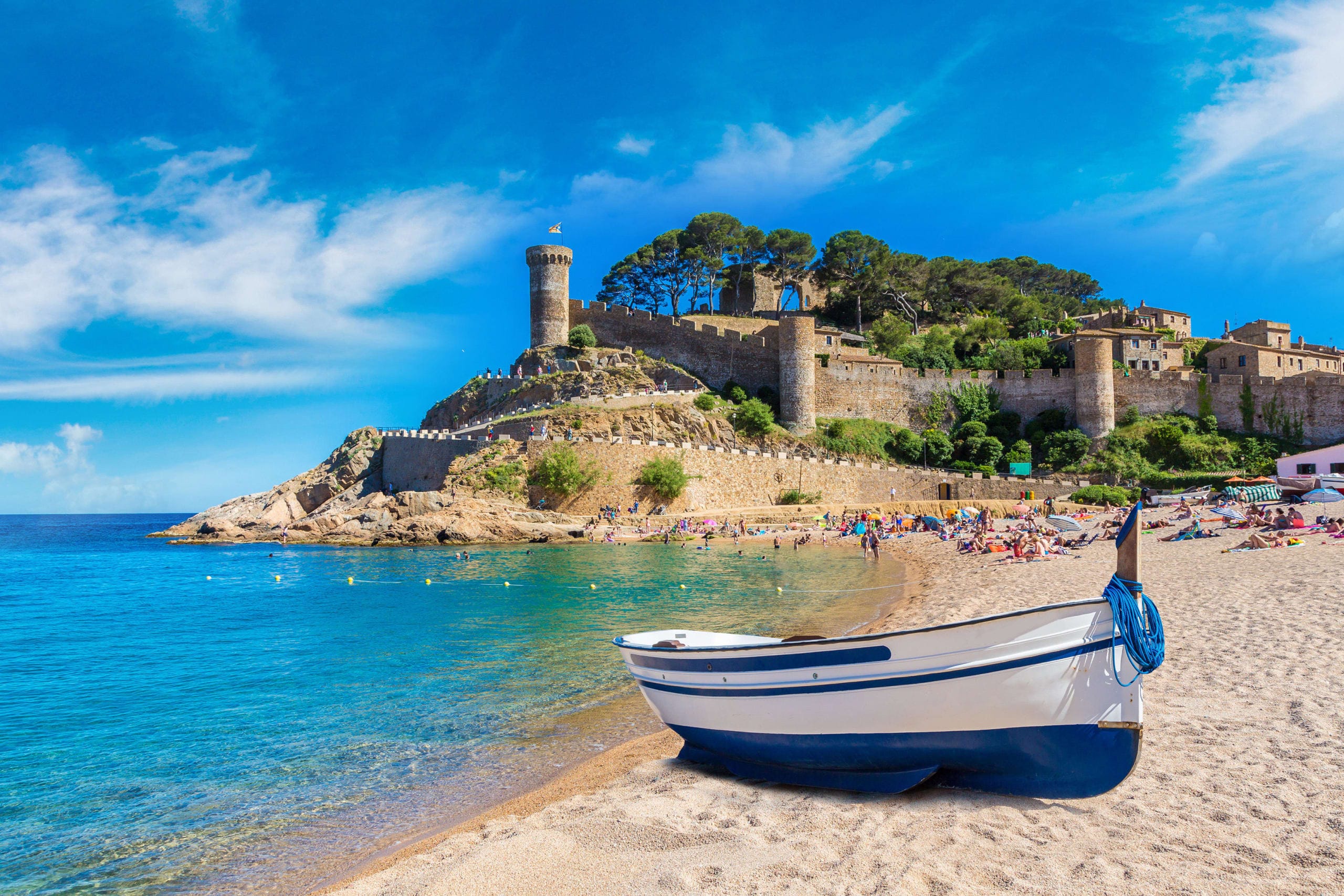
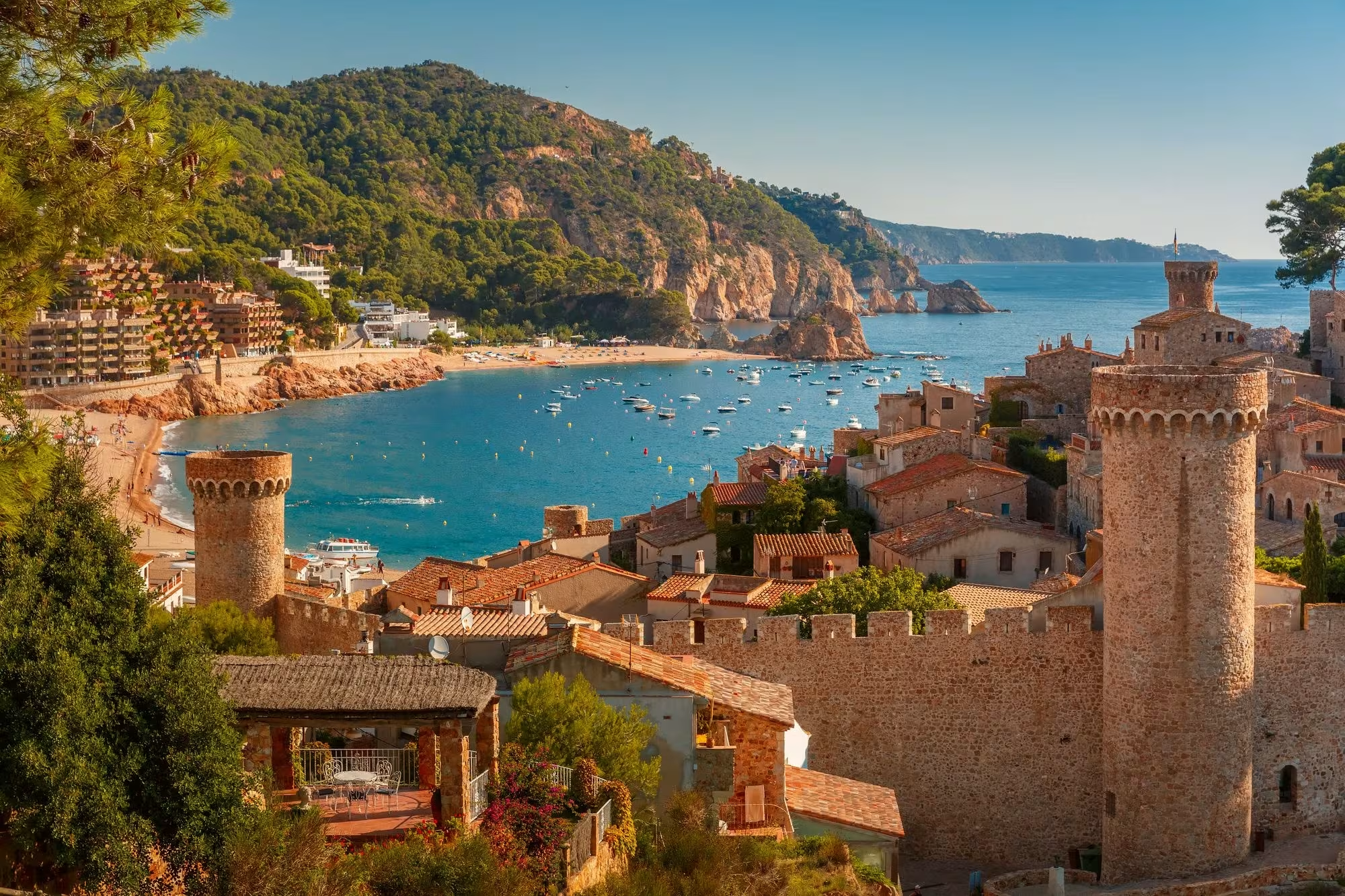
The southern coast is more built up, but Tossa de Mar keeps the Vila Vella, the only fortified medieval town still standing on the Catalan shore, above the beach. Blanes has the Marimurtra botanical garden, terraced over the sea. Lloret de Mar, heavily geared to mass tourism, is passed through rather than visited. This sector is the best served by train and bus from Barcelona.

The medieval Emporda hinterland

Less than twenty minutes from the coves, the Emporda lines up fortified golden-sandstone villages: Peratallada with its rock-cut moat, Pals and its watchtower, Monells and its arcaded square, Pubol and the castle Dali gave to Gala. The area produces wines under the Emporda label, tasted at the estates. It is the perfect fallback on tramuntana days, when the coast is not walkable.

Girona, the gateway to the Costa Brava

Many trips start in Girona, 40 minutes from the beaches. The old town, its colourful houses over the Onyar, its Jewish quarter and its ramparts are seen in a day, and the cathedral steps stood in for scenes in Game of Thrones. In May, the Temps de Flors festival turns courtyards and monuments into gardens. Girona airport handles the low-cost flights to the region. See also Catalonia and its capital Barcelona.

Cities to visit in Costa Brava

Featured destinations appear first.
Coming soon.

Costa Brava in pictures

Must-see sights on the Costa Brava

Coastal paths, a marine reserve, Dali's legacy and the villages of the Emporda.

The cami de ronda

The former customs path that follows the shore at water level, linking the coves on foot between Sant Feliu de Guixols and Cap de Creus.

Cap de Creus

The easternmost point of the Iberian peninsula, a natural park of tortured rock with a lighthouse and wind-battered coves.

Dali's house at Portlligat

The painter's studio and home beside a cove, visited only in small groups by named reservation.

The Medes Islands

A protected archipelago off L'Estartit, the best diving on the coast, rich in groupers, gorgonians and underwater caves.

The Cap Roig gardens

A terraced botanical garden above Calella de Palafrugell, over 1,000 species and a summer concert festival.

The Vila Vella of Tossa de Mar

The only fortified medieval village still standing on the Catalan coast, with its towers and wall walk above the beach.

Similar regions

Other regions you might like as much as Costa Brava.

Similar destinations

Other countries you might like as much as Costa Brava.

Frequently asked questions about the Costa Brava

Costa Brava north or south: which part to choose?
The north, around Cadaques and Cap de Creus, for wild landscapes and Dali, though the sea is often rough. The centre, between Begur and Palafrugell, for the finest coves reached on foot. The south is the most built up.
Can you visit the Costa Brava without a car?
The south yes, by train and bus from Barcelona to Blanes, Lloret and Tossa. For the centre and north, buses link Girona to the villages but run infrequently: a car for three or four days changes everything.
Which stretch of the cami de ronda should you do first?
The section from Calella de Palafrugell to Tamariu, about 6 kilometres and 3 hours, passes Llafranc, the Sant Sebastia lighthouse and a string of coves. The Begur to Aiguablava stretch is shorter and wilder.
When are the Costa Brava hotels and restaurants open?
Most operate from Easter to early November, peaking in July and August. Off-season, life concentrates in Girona, Palafrugell and Cadaques, while the smaller resorts wind down or close for the winter entirely.
How do you visit Dali's house at Portlligat?
Only by named reservation through the Dali museums website, in groups of ten, with a set time slot. Places often sell out several weeks ahead in summer. Parking at Portlligat is limited, so it is better to walk from Cadaques.

Plan your trip to Costa Brava

Day-by-day itinerary, budget, bookings and packing in a single app.
Aperçu de l'application PlanTripNow