Ionian Islands travel guide: which island to choose and when to go

Off mainland western Greece, the Ionian Islands stand apart from the Cyclades: green, wooded, rained on in winter and shaped by Venice and England rather than the Ottoman Empire. Seven main islands, from Corfu to Kythira, each with its own relief and character.

Why visit the Ionian Islands?

The Ionian Islands line the west coast of Greece, facing Italy. Never Ottoman, they were Venetian for four centuries and then briefly British, which left bell towers, cricket and arcaded architecture. People come for spectacular limestone beaches, lush greenery rare in Greece and a milder climate than the Aegean.

What to discover in the Ionian Islands?

Corfu, the northern gateway

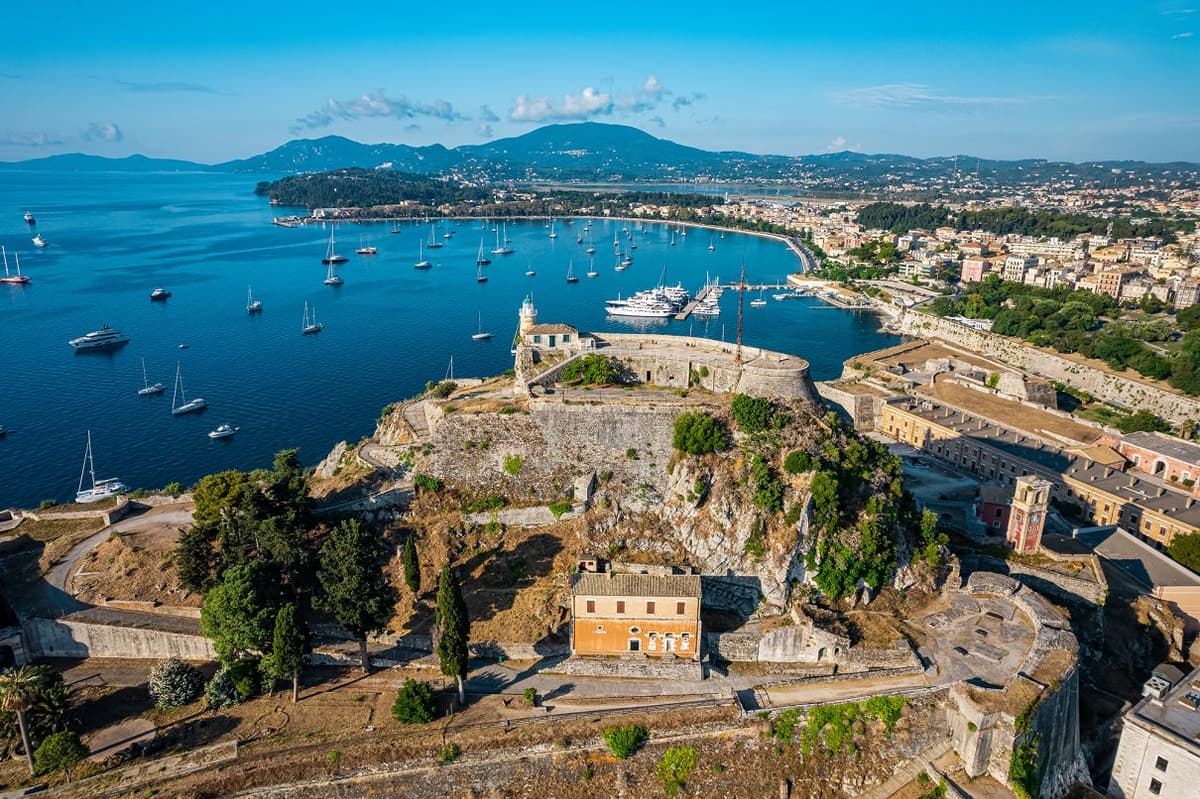
Corfu is the best known and most populated: a UNESCO-listed Venetian old town, a west coast cut around Paleokastritsa, more than a million olive trees planted under the Venetians. It is also the best served, with seasonal direct flights from Paris. Allow three to five days for the island alone. It works as a destination in its own right: see our dedicated guide to Corfu for itineraries and choosing an area. From the south of the island, a day trip reaches Paxos and Antipaxos, about an hour's crossing, leaving early from Kavos or Kerkyra.
Lefkada, joined to the mainland

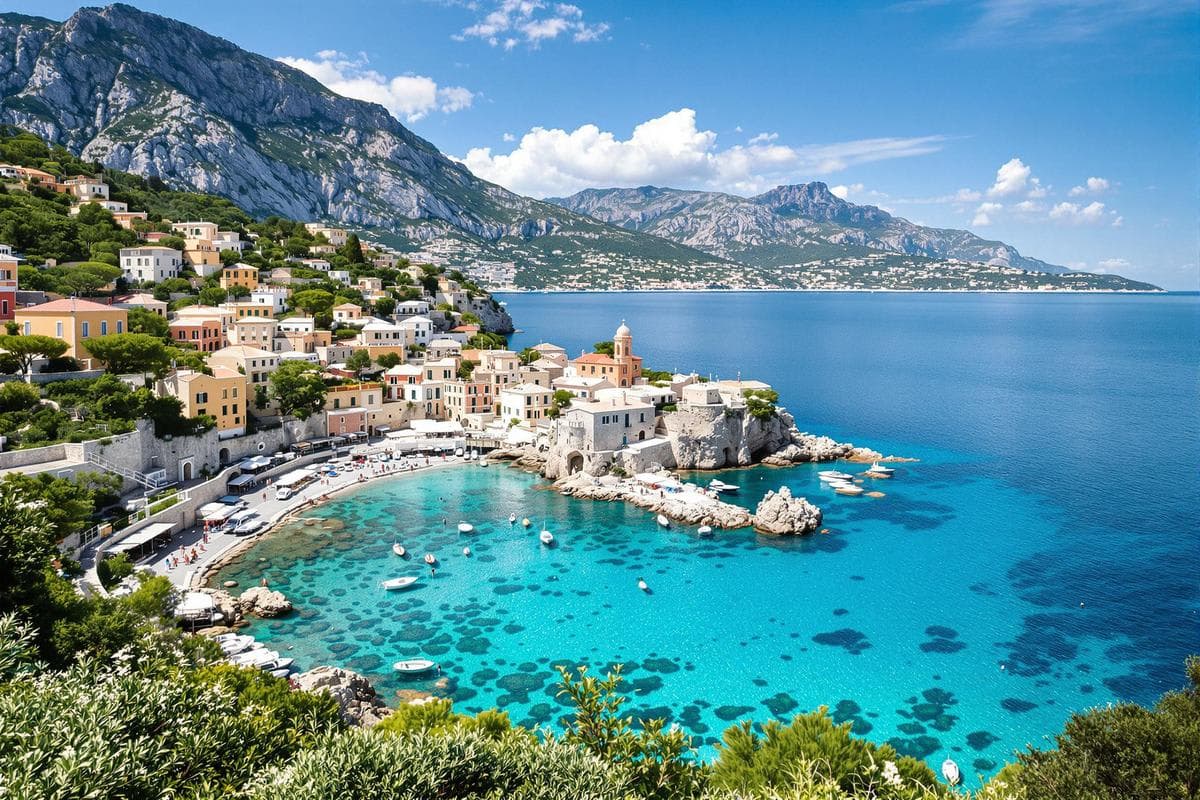
Lefkada is the only Ionian island you reach by car, over a swing bridge from the coast of Acarnania: no ferry or flight to an island needed. Its west coast lines up the most photographed beaches of the archipelago, Porto Katsiki and Egremni, below white cliffs, with sand that turns the water turquoise. The more sheltered east is a sailing anchorage around Nydri. The mountainous interior hides villages such as Karya, known for its embroidery, and waterfalls near Nydri. Three days is enough, with Preveza airport 20 minutes away.

Kefalonia, the largest

Kefalonia is vast and mountainous, dominated by Mount Ainos at 1,628 m and its forest of endemic black fir, the archipelago's only national park. Three bases: Argostoli for the Melissani and Drogarati caves and turtles seen from the quay, the north for Assos and its fortified peninsula and for Fiskardo spared by the 1953 earthquake, Sami for Antisamos beach and the ferry to Ithaca. The drive down to Myrtos beach, between two cliffs, is the postcard image of Greece. The mountain roads are narrow and winding: allow more time than the map suggests, often double between Argostoli and Fiskardo. Five days.

Ithaca and Paxos, the quiet ones

Ithaca, the island of Odysseus, is tiny and barely developed: a harbour at the head of a deep bay, Vathy, the hillside village of Kioni, the Cave of the Nymphs and one main road. You do it by scooter in two days. Paxos, smaller still, is covered in olive trees; its three harbours, Gaios, Lakka and Loggos, each sit in a cove, and Antipaxos opposite has Caribbean-grade water. Neither has an airport: you arrive by ferry from Corfu, Lefkada or the mainland, one to two rotations a day off season.

Zakynthos and the turtle coast

Zakynthos is the most contrasting island: to the north-west, Shipwreck Beach ringed by cliffs and the blue caves of Cape Skinari, to the south Laganas bay, the main loggerhead turtle nesting site in the Mediterranean, protected as a marine park. The town, destroyed by the 1953 earthquake, was rebuilt to the original Venetian plans. Laganas is also the nightlife heart of the archipelago: choose your base accordingly, as the north around Volimes stays quiet. Nesting beaches close at night from May to October and approaching the nests is banned. Three to four days.

Kythira, the island apart

Kythira belongs to the Ionian Islands only administratively: it sits south of the Peloponnese, on the hinge between the Aegean and the Ionian Sea, and is reached by ferry from Neapoli or by a small plane from Athens. The island is arid, almost Cycladic, with a Venetian chora, gorges, the Fonissa waterfall and hard-to-reach beaches. It is a destination for quiet, with no mass tourism, where you come to walk and do nothing. The chora is topped by a Venetian kastro. Allow at least four days given the logistics.

Cities to visit in Ionian Islands

Featured destinations appear first.
Coming soon.

Ionian Islands in pictures

The Ionian Islands' must-sees

Named sites to spread across the islands you choose: a spectacular beach, a cave or a village.

Myrtos beach

An arc of white pebbles between two cliffs on the west coast of Kefalonia, one of the most reproduced views in Greece.

Melissani cave

An underground lake on Kefalonia whose roof collapsed; at midday the sun turns the water electric blue above the boats.

Shipwreck Beach

A cliff-enclosed cove on Zakynthos with the rusted hull of a coaster run aground in 1980, seen only from the sea or a viewpoint.

Porto Katsiki

A Lefkada beach below a sheer white cliff, reached by a long staircase, with pale sand and turquoise water.

Fiskardo

The only Kefalonia village spared by the 1953 earthquake, with its 18th-century Venetian houses around a yacht harbour.

Drogarati cave

A 60 m deep formation cave on Kefalonia with prized acoustics, occasionally used for concerts.

Mount Ainos

The summit of Kefalonia at 1,628 m, the archipelago's only national park, covered in a forest of black fir unique to the island.

Similar regions

Other regions you might like as much as Ionian Islands.

Similar destinations

Other countries you might like as much as Ionian Islands.

Ionian Islands FAQ

Corfu, Kefalonia or Zakynthos for a first stay?
Corfu for the town and heritage, with a direct flight. Kefalonia for nature, caves and spectacular beaches if you accept doing some driving. Zakynthos if your priority is Shipwreck Beach and the turtles, while avoiding the Laganas base.
Can you visit several Ionian Islands in one week?
Yes for Lefkada, Kefalonia and Ithaca, linked by short ferry from June to September. Combining Corfu with the south of the archipelago is harder: direct links are rare and often route via the mainland.
How do you get to Lefkada?
By car: Lefkada is joined to the mainland by a swing bridge, reached without a ferry from Preveza airport 20 minutes away, or from Athens in a four-hour drive. It is the easiest island in the archipelago to reach.
Can you get close to the turtles on Zakynthos?
Not on land: the Laganas nesting beaches are closed at night and approaching the nests is banned. At sea, guided trips sometimes let you glimpse turtles coming up to breathe, without chasing or feeding them.
Why are the Ionian Islands so green?
They get two to three times more rain than the Cyclades, mostly November to March, carried by depressions from the Adriatic. Hence the olive groves, cypresses and undergrowth, an almost Tuscan landscape rare elsewhere in Greece.
What is the link with the 1953 earthquake?
In August 1953, a series of quakes destroyed Kefalonia, Zakynthos and Ithaca. The towns were rebuilt in earthquake-resistant concrete, often without character, which is why the old charm concentrates at Fiskardo and on Corfu, both spared.
Is Shipwreck Beach still accessible?
Yes by sea, on a trip from Porto Vromi or Agios Nikolaos, but access can be restricted in some years due to cliff rockfalls. The viewpoint overlooking it stays open and free.
Is Ithaca really the island of Odysseus?
The present island bears the name of Homer's Ithaca and claims the link, with sites like the Cave of the Nymphs and the School of Homer. Some archaeologists, however, place Homeric Ithaca elsewhere, on Lefkada or in western Kefalonia.

Plan your trip to Ionian Islands

Day-by-day itinerary, budget, bookings and packing in a single app.
Aperçu de l'application PlanTripNow