Kyushu travel guide: what to do, when to go and which route

Kyushu, in the south-west, is the most volcanic of Japan's main islands: Aso and its huge caldera, Sakurajima smoking above Kagoshima, and more than two thousand hot springs in Beppu alone. It is also Nagasaki, the country's only window on the world during two centuries of closure.

Why visit Kyushu?

Kyushu is the southern gateway of Japan, linked to Honshu by a rail tunnel and the shinkansen. Less travelled than the Tokyo-Kyoto route, it offers a milder climate, a recognisable cuisine, tonkotsu ramen and shochu, and a concentration of geothermal features found nowhere else in the country.

What to discover in Kyushu?

Fukuoka and the north

Fukuoka, the liveliest city on the island, is best discovered in the evening at its yatai, mobile street stalls set up along the Naka river, where you eat the local tonkotsu ramen. The Dazaifu shrine, 40 minutes away, draws students praying before exams and is covered in plum blossom in February. To the south-west, the Kawachi Fuji-en park and its wisteria tunnels bloom in late April, by reservation. The street feel is more relaxed than in Kanto.

Nagasaki and the west coast

Nagasaki was the only port open to the Dutch and the Chinese during Japan's closure, before becoming the second city hit by the atomic bomb in 1945. The Peace Park and the museum retrace that episode; the Glover Garden, the Chinatown and the abandoned industrial islet of Gunkanjima, visited by boat, tell the city's other story. Allow two days, the local dish being champon.

Mount Aso and Kumamoto

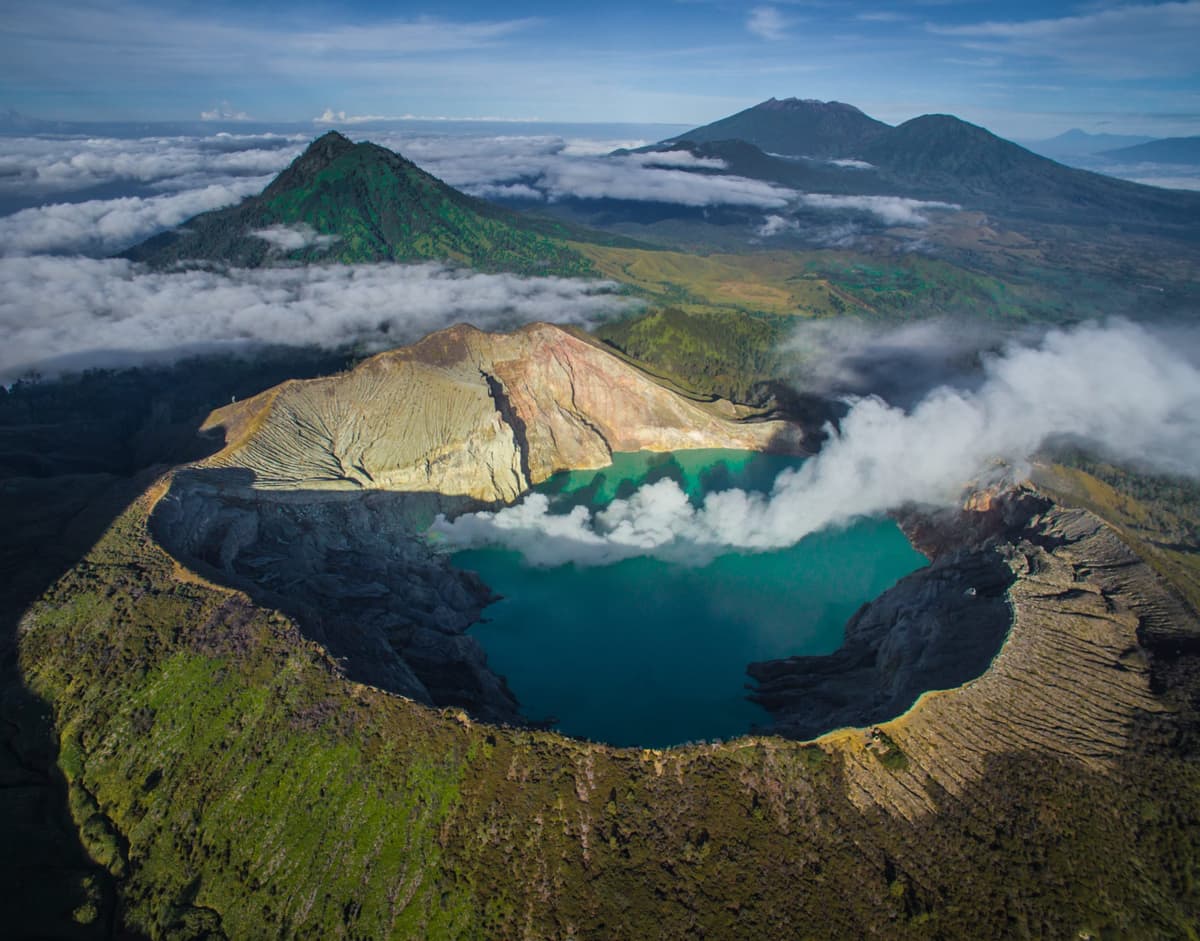
Mount Aso holds one of the largest active calderas in the world, 25 km across, with villages and rice fields inside. You can approach the smoking Nakadake crater when the alert level allows, otherwise walk the Kusasenri grasslands. Kumamoto Castle, damaged by the 2016 earthquake, has partly reopened. A day for the caldera, one for the city and the Suizenji garden, laid out as a miniature of the old Tokaido road with a small Mount Fuji.

Beppu, Yufuin and the hot springs

Beppu produces more steam than any other Japanese town. The eight hells circuit gathers coloured 90-degree pools, to look at rather than use; the real baths, including hot sand baths, are elsewhere in town. Yufuin, 25 minutes away, is more refined, below Mount Yufu, with private-bath ryokan. The two combine over two nights, and the Kunisaki peninsula nearby adds Buddhist rock carvings and old temples.

The south: Kagoshima, Takachiho, Yakushima

Kagoshima lives under the ash of Sakurajima, an active volcano crossed by a 15-minute ferry. To the north, the basalt gorge of Takachiho, where you row beneath a 17 m waterfall, is the cradle of Japan's founding myths. Offshore, the island of Yakushima and its ancient cedar forest, a UNESCO site, needs two days and good fitness for the Jomon Sugi trail.

Cities to visit in Kyushu

Featured destinations appear first.
Coming soon.

Kyushu in pictures

Kyushu's must-sees

Named sites to spread between the urban north, the Aso caldera and the volcanic south.

Fukuoka yatai

Mobile street stalls set up each evening along the Naka river, the speciality being tonkotsu pork-broth ramen.

Nagasaki Peace Park

A memorial and museum on the site of the 1945 atomic bombing, with the Peace Statue and the hypocentre.

Nakadake crater

The smoking crater of Mount Aso, approachable on foot when the volcanic alert level allows, otherwise closed without notice.

Beppu's eight hells

Vividly coloured geothermal pools, cobalt, blood red, grey mud, seen on a circuit of about two hours.

Takachiho gorge

A defile of basalt columns rowed through beneath a 17 m waterfall, linked to the myth of the sun goddess.

Sakurajima

An active volcano facing Kagoshima, erupting regularly, with viewpoints and a public foot bath on the bay.

Yakushima forest

A mountain island covered in ancient cedar forest, a UNESCO site, the inspiration for the film Princess Mononoke.

Similar regions

Other regions you might like as much as Kyushu.

Similar destinations

Other countries you might like as much as Kyushu.

Kyushu FAQ

How many days for Kyushu?
Five days for the north and centre, Fukuoka, Nagasaki, Kumamoto and Aso. Seven days to add the south, Kagoshima and Takachiho. Yakushima deserves two more days, with the weather as the limiting factor.
Can you actually go up to the Aso crater?
Yes when the alert level is at its lowest: a road and a car park lead to the edge of Nakadake. But access closes without notice in case of gas release or activity; do not build a whole day around this one point.
Do you need a car to visit Kyushu?
Not for the cities, all linked by train. A car becomes useful for the Aso caldera, the Takachiho area, the Kurokawa hot springs and the Kunisaki peninsula, poorly served by public transport.
Can you use Kyushu onsen with a tattoo?
In many public baths, no. The solution is to book a ryokan with a private in-room bath, rent a family bath by the hour, or choose one of the tattoo-friendly onsen, whose list is growing, especially in Beppu.
Is Yakushima worth the extra trip?
Yes for lovers of ancient forest and hiking: the trail to the Jomon Sugi cedar is about 22 km there and back in a day. No for a short trip or if the weather looks bad, the island being one of the wettest in the country.
When can you see cherry blossom in Kyushu?
Kyushu is often the first region in Japan to bloom, from late March in Fukuoka and Kumamoto, sometimes a few days earlier in the south at Kagoshima. Kumamoto Castle and Maizuru park in Fukuoka are among the best spots.

Plan your trip to Kyushu

Day-by-day itinerary, budget, bookings and packing in a single app.
Aperçu de l'application PlanTripNow