Hokkaido travel guide: winter or summer, which route and budget

Hokkaido is another Japan: half as populated as the Tokyo region across a larger area than Austria, with no rainy season, brown bears in the parks, some of the best ski resorts in the world and hills of lavender in summer.

Why visit Hokkaido?

Hokkaido is the northernmost region of Japan, settled late, in the 19th century, and laid out on a grid that sets it apart from the rest of the country. People come for two opposite seasons: winter for the snow, summer for the cool air, the flowers and wide-open nature rare in the archipelago.

What to discover in Hokkaido?

Sapporo and its surroundings

The island capital, Japan's fifth city, is walkable: Odori Park, the clock tower, the Nijo market. In February, the Snow Festival lines up monumental sculptures over 1.5 km. An hour away, Mount Moiwa offers a night view, and the Okurayama ski jump can be visited. Allow two days, plus an evening for soup curry and miso ramen, two local inventions you will not find on menus in Kanto. The Susukino district, the largest nightlife area north of Tokyo, and the nearby crab market extend the evening.

Otaru and the west coast

Forty minutes by train from Sapporo, Otaru was a prosperous trading port until the 1920s. Its canal lined with stone warehouses lights up with gas lamps at dusk. Sakaimachi street packs in blown-glass workshops, music boxes and sushi counters. Further north, the Shakotan peninsula, its cliffs and deep colour known as Shakotan blue, is visited in summer along the coast road. The music box museum and the Otaru beer brewery round off a half-day; in December, the canal light festival lines the water with floating candles.

Furano, Biei and the farming centre

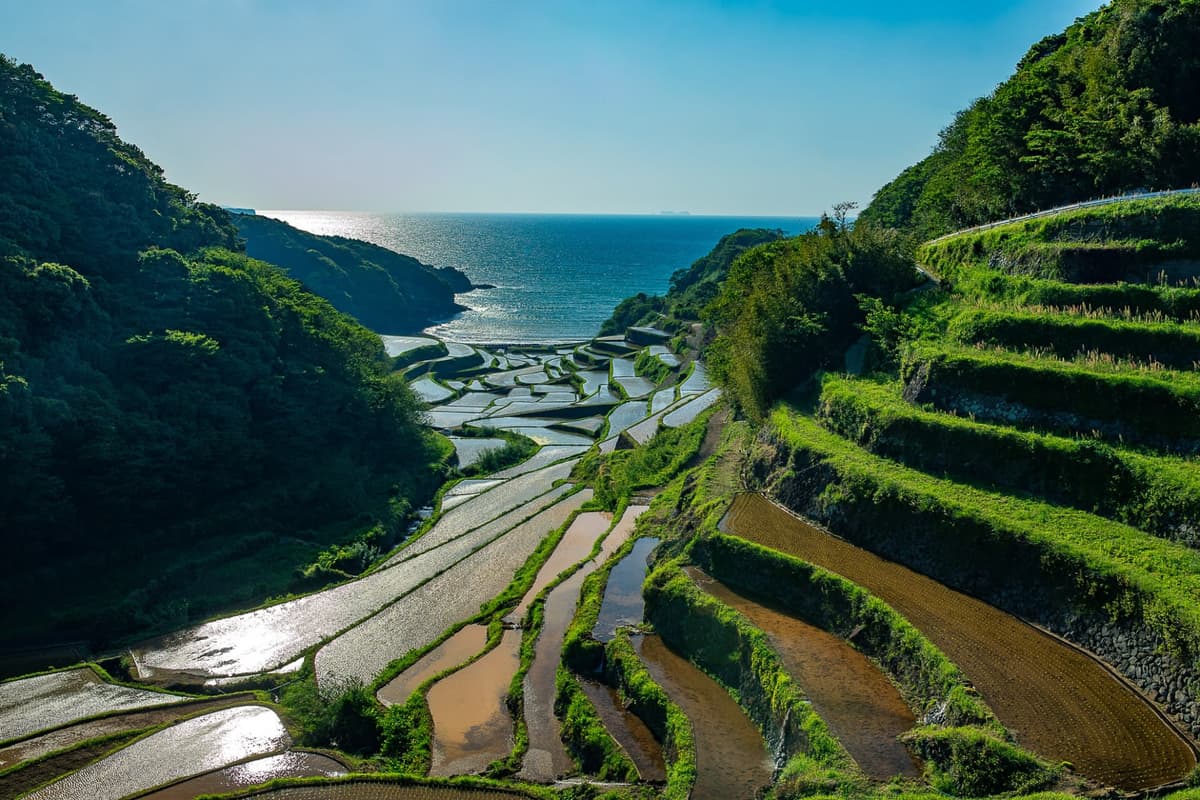
The centre of the island is a chessboard of fields. In Furano, flower farms such as Farm Tomita peak with lavender in July. In Biei, the patchwork hills road and the Blue Pond of Shirogane, tinted by minerals, are photographed at daybreak before the coaches. Outside July and August, aim for the late-September foliage. A car is all but essential to link the scattered viewpoints. The scenic Furano-Biei Norokko train runs in summer between the two towns and stops at a temporary station opened for the season, right by the fields.

Daisetsuzan, the roof of the island

Japan's largest national park, Daisetsuzan peaks at Asahidake, 2,291 m. A ropeway climbs to 1,600 m, the start of a 90-minute walking loop between fumaroles and mountain pools. Autumn foliage begins around mid-September here, the earliest in the country. The Sounkyo gorges and their waterfalls, plus the hot springs of the same name, round off the stop. Snow is possible on the trails until late June.

The south: Toya, Noboribetsu and Hakodate

The south lines up the crater lakes of Toya, with fireworks every evening from April to October, and Noboribetsu, the island's most famous hot-spring resort, whose Hell Valley spews sulphur and steam. Hakodate, the first port opened to foreigners in 1859, offers a famous night view from its mountain, a morning seafood market and a star-shaped fort, Goryokaku, pink with cherry blossom in early May. Between the two, Mount Yotei, an almost perfect cone nicknamed the Fuji of Ezo, dominates the Niseko area and is climbed in one long summer day.

The wild east: Shiretoko, Akan and Kushiro

The east takes time and a car. The Shiretoko peninsula, a UNESCO site, is followed by boat to see brown bears and waterfalls dropping into the sea; in February and March, drift ice reaches Abashiri. The Akan park and its lakes shelter the marimo algae balls. The Kushiro marshes are the main refuge of the Japanese crane, visible all year but spectacular dancing on the snow in January.

Niseko and skiing

In the west, Niseko gets one of the heaviest powder-snow accumulations in the world each winter, about 14 m per season, which has made it a high-priced international resort. Rusutsu, Furano and Kiroro, less known, offer comparable snow for less. The season runs from December to early April; spring skiing under a higher sun goes on until Golden Week. Book accommodation for the January and February peak up to a year ahead, especially in Niseko itself.

Cities to visit in Hokkaido

Featured destinations appear first.
Coming soon.

Hokkaido in pictures

Hokkaido's must-sees

Named sites to spread by season, ski and snow in winter, flowers and hiking in summer.

Sapporo Snow Festival

In early February, dozens of monumental ice and snow sculptures across Odori Park and the Susukino site.

Otaru canal

A former trading canal lined with stone warehouses and gas lamps, especially photogenic under snow.

Furano lavender fields

Flower farms in the valley, including Farm Tomita, in full mauve and multicoloured bloom in July.

Blue Pond of Biei

A small lake of milky-blue water from minerals, bristling with dead tree trunks, near Shirogane.

Asahidake

The island's highest peak at 2,291 m, reached by ropeway, with a walking loop between fumaroles and lakes.

Jigokudani of Noboribetsu

A hell valley of fumaroles and bubbling springs that feed the baths of the hot-spring resort.

Hakodate night view

A panorama over the lit-up isthmus from Mount Hakodate, rated one of the finest night views in Japan.

Shiretoko and Abashiri drift ice

Sea ice from the Amur river that reaches the north-east coast in February and March, visited by icebreaker.

Kushiro cranes

Japanese cranes, near extinct a century ago, nesting in the marshes and displaying on the snow in winter.

Similar regions

Other regions you might like as much as Hokkaido.

Similar destinations

Other countries you might like as much as Hokkaido.

Hokkaido FAQ

Should you visit Hokkaido in winter or summer?
They are two different trips. Winter for skiing, the Snow Festival and the drift ice. Summer, June to September, for cool air when the rest of Japan swelters, the lavender fields and hiking. Spring and autumn are shorter and drabber.
How many days for Hokkaido?
Five days for the centre, Sapporo, Furano and Daisetsuzan. Seven days to add the hot-spring south and Hakodate. The wild east, Shiretoko and Kushiro, deserves five more days on its own.
Can you visit Hokkaido without a car?
Partly: Sapporo, Otaru, Hakodate and Asahikawa are linked by train. But the Biei hills, the parks and the east are hard without a car, with infrequent buses. In winter, a private driver is an option.
Where and when can you see drift ice in Hokkaido?
On the north-east coast, around Abashiri, Utoro and Rausu, in February and early March. Tourist icebreakers run daily when the ice is present; the arrival date varies from year to year.
Are the Furano lavender fields only in July?
Lavender blooms from late June to early August, peaking around mid-July. The farms' other flowers, poppies, lupins, sunflowers, run from May to September, but the classic image of mauve rows is July.
Is Niseko worth its high prices?
For the quality and quantity of powder, yes, but lodging costs two to three times more there than elsewhere on the island. Rusutsu, Furano or Kiroro offer comparable snow and a more Japanese feel for far less.
Does the national Japan Rail Pass work in Hokkaido?
Yes on the island's JR lines, including the shinkansen to Hakodate. But if you do not leave Hokkaido, the regional Hokkaido pass is almost always a better fit and cheaper.
Are you really likely to meet a bear while hiking?
Encounters stay rare but possible on almost every trail on the island, including near the resorts. Carry a bell, travel in a group, check the signs and tourist offices for recent closures.

Plan your trip to Hokkaido

Day-by-day itinerary, budget, bookings and packing in a single app.
Aperçu de l'application PlanTripNow