Visit Saint-Martin: when to go, what to see and the two countries

Saint-Martin is the smallest island in the world shared between two states: the northern half is French, the southern half, Sint Maarten, is Dutch. Thirty-seven beaches, an airport where planes graze the sunbathers, a lagoon full of yachts and a cuisine renowned in Grand-Case. The best season is December to April.

Why visit Saint-Martin?

Saint-Martin is a French collectivity in the northern Caribbean, outside the EU customs territory. Part of France, it stands out for its sharing with the Netherlands since 1648, with no physical border, and for a density of beaches, restaurants and watersports rare for a 53-square-kilometre island. Its neighbour Saint-Barthelemy is 40 minutes away by ferry.

What is there to discover in Saint-Martin?

The French side: Marigot and the west

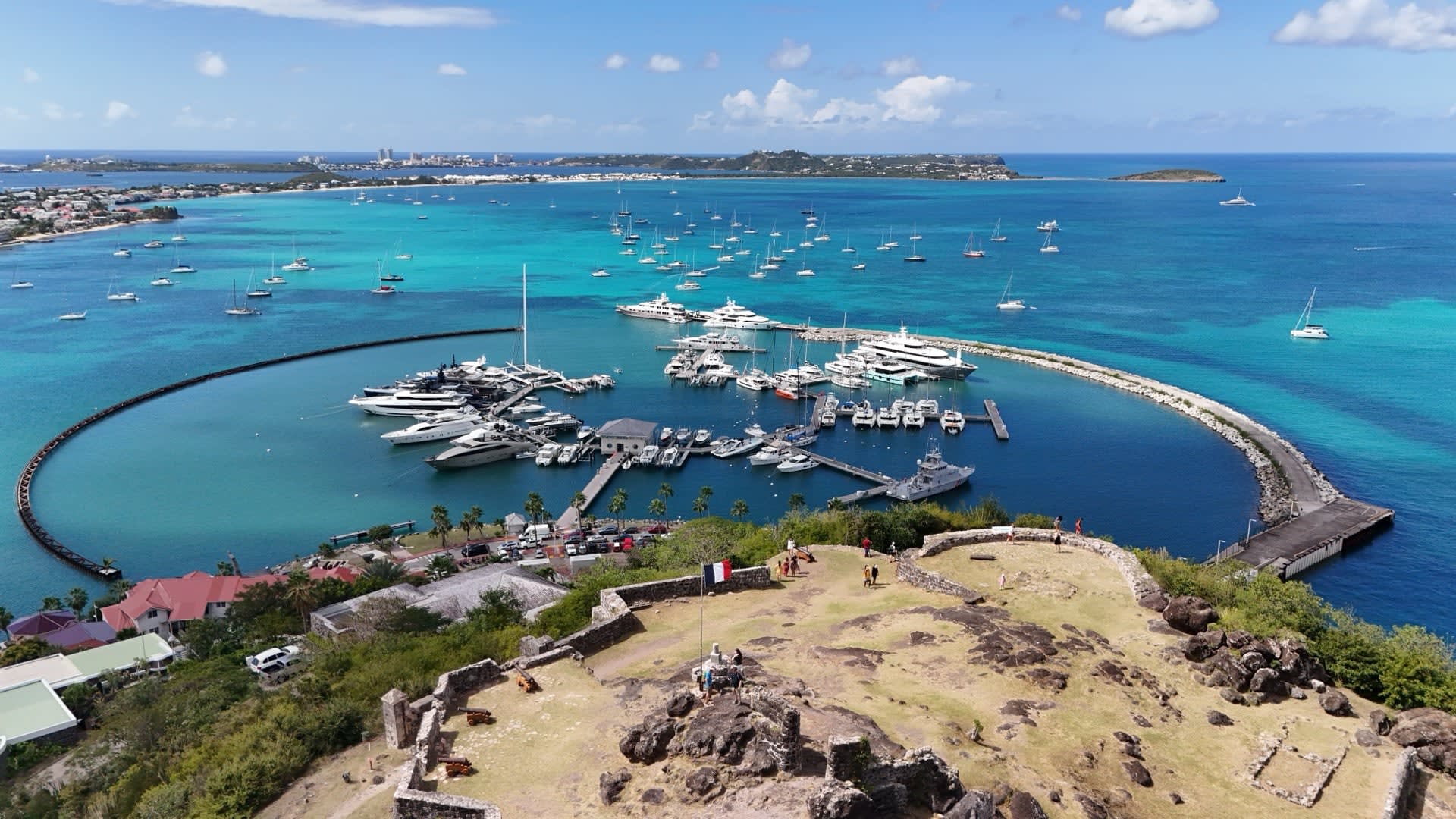
Marigot, the main town of the French side, is arranged around its marina, its Wednesday and Saturday market and Fort Louis, which overlooks the bay and faces Anguilla. The west coast lines up quieter beaches, Friar's Bay and Happy Bay, the latter reached only on foot. In the centre, Pic Paradis rises to 424 metres: a trail climbs it in an hour with a view over both countries, and Loterie Farm offers canopy courses in the dry forest.

Orient Bay and the French east

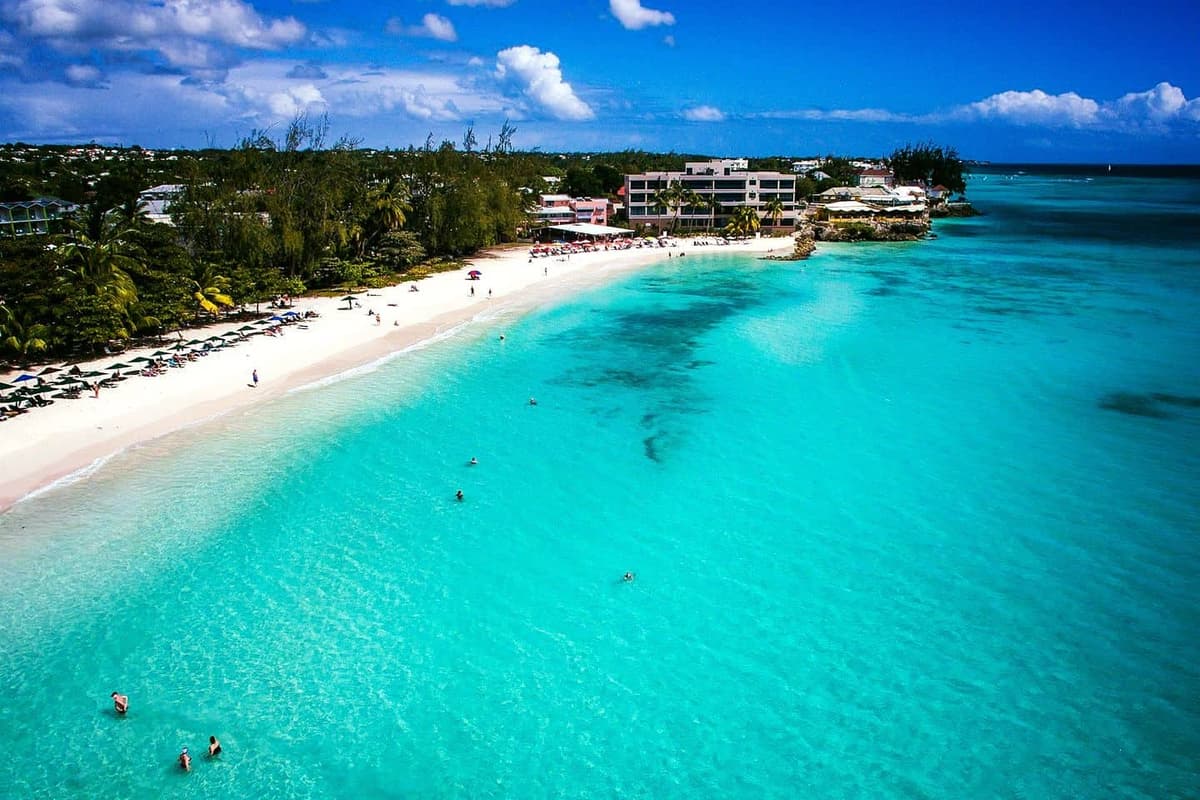
Orient Bay is the island's largest beach, over two kilometres long, lined with beach shacks and clubs, with a naturist end to the south. Facing it, Pinel islet is a five-minute shuttle away and serves as a snorkelling reserve; Tintamarre, further out by boat, is an uninhabited island with a turtle beach and clay springs. The sheltered Baie de l'Embouchure is the island's main kitesurfing spot.

The Dutch side: Sint Maarten

To the south, Sint Maarten has a completely different feel: Philipsburg and its Front Street lined with duty-free shops, the casinos, and above all Maho Beach, at the end of the Princess Juliana international airport runway, where wide-body jets pass a few metres over people's heads on landing. The Simpson Bay lagoon, one of the largest in the Caribbean, concentrates the yachts, marinas and nightlife, with a lifting bridge that opens several times a day.

The islets and the nature reserve

The Saint-Martin nature reserve protects over 3,000 hectares of land and sea on the French side: the Pinel, Tintamarre and Petite Clef islets, the Etang aux Poissons and several seagrass beds and reefs. Anchoring, fishing and collecting are regulated there. It is the best area for snorkelling and for watching green and hawksbill turtles, which come to nest on the eastern beaches between April and November.

Grand-Case and the Saint-Martin table

Grand-Case, on the north coast, is dubbed the gastronomic capital of the Caribbean: its single street lines up around thirty restaurants and the lolos, street barbecues where you eat grills, fish and conch fritters for a few euros. Local cooking blends Creole, French and Indian influences. The Grand-Case Gourmet Festival, at year's end, and the Tuesday Harmony Nights liven up the village in high season.

Cities to visit in Saint Martin (French part)

Featured destinations appear first.
Coming soon.

Saint Martin (French part) in pictures

Saint-Martin highlights

Nine sites covering the beaches, the two countries and the nature reserve.

Fort Louis

An 18th-century fort overlooking Marigot and its marina, with a view of the bay, of Anguilla and of the Dutch side.

Pic Paradis

The island's high point at 424 metres, in the heart of the dry forest; a one-hour trail leads to a panorama over both countries.

Orient Bay

The island's largest beach, over 2 kilometres of sand, lined with beach clubs and watersports, with a naturist zone.

Pinel islet

A small islet in the nature reserve, a 5-minute shuttle from Orient Bay, ringed by shallow water for snorkelling.

Tintamarre

An uninhabited island reached by boat, with a white-sand beach, grey clay springs and a turtle nesting site.

Maho Beach

A beach at the end of the Princess Juliana airport runway: airliners pass a few metres above the sunbathers on landing.

Front Street, Philipsburg

The shopping street of the Dutch capital, lined with pastel buildings and duty-free shops, along the Great Bay boardwalk.

Simpson Bay lagoon

A large sheltered body of water shared between the two countries, a superyacht anchorage, marinas and nightlife, with a lifting bridge.

Loterie Farm

A private estate on the slopes of Pic Paradis, with treetop courses, ziplines, forest trails and a swimming pool.

Similar regions

Other regions you might like as much as Saint Martin (French part).

Similar destinations

Other countries you might like as much as Saint Martin (French part).

Frequently asked questions about Saint-Martin

Saint-Martin or Sint Maarten: what is the difference?
It is the same island, shared since 1648. Saint-Martin, in the north, is a French collectivity; Sint Maarten, in the south, is an autonomous country within the Kingdom of the Netherlands. Language, currency and feel differ, but you move freely between them.
Do you need a passport for Saint-Martin?
An identity card is enough to arrive at Grand Case airport, on the French side. But most flights land at Princess Juliana, on the Dutch side, which requires a passport valid at least six months and the ED Card form completed online before boarding.
Can you move freely between the French and Dutch sides?
Yes, there is no physical border, no checkpoint and no customs. You cross the island by car without stopping; only a monument and signs mark the passage from one country to the other.
What is the best time for Saint-Martin?
From December to April: dry weather, steady trade winds, clear sea. February and March are the driest months. From June to November it is hurricane season, wetter, with a peak of risk and closures in September and October.
Where can you watch planes land at Maho Beach?
At Maho Beach, on the Dutch side, right at the end of the Princess Juliana airport runway. Wide-body jets pass a few metres over the beach on approach; a board at the nearby bar shows the arrival times of the flights.
Is Saint-Martin safe?
Tourist areas and beaches pose no particular problem during the day. As on many Caribbean islands, it is advised to avoid some isolated areas at night, mostly on the Dutch side, and to leave nothing in a parked car.
Which currency should you use in Saint-Martin?
The euro on the French side, the Netherlands Antillean guilder on the Dutch side, but in practice the euro and the US dollar are accepted across the island. Many shops apply a convenient fixed rate between the two.
Can you go to Saint-Barthelemy or Anguilla from Saint-Martin?
Yes. Ferries link Marigot or Oyster Pond to Gustavia, on Saint-Barthelemy, in about 40 minutes, and Marigot or Blowing Point to Anguilla in 30 minutes. Anguilla is a British territory: a passport is required.

Plan your trip to Saint Martin (French part)

Day-by-day itinerary, budget, bookings and packing in a single app.
Aperçu de l'application PlanTripNow