Skip to content

Visiting Tuscany: when to go, budget and itineraries

Florence and its museums, Siena and its shell-shaped square, then cypress hills, vineyards and tufa villages all the way to the sea. Tuscany is really two trips: the art cities by train, the countryside by car. Choose according to your days, not the postcard.
  • 3 cities

At a glance

Currency
Euro (€)
Time difference
UTC+1
Visa
None
Tourist stay of up to 90 days
7-day budget
€1,246
Per person, comfort profile, excluding international flights.

Why visit Tuscany?

Tuscany, in central Italy, brings together several UNESCO sites: the historic centres of Florence, Siena, San Gimignano and Pienza, Pisa's cathedral square and the landscape of Val d'Orcia. People come for Renaissance art, the wines of Chianti and Montalcino, and country roads that reward an unhurried pace.

When to visit Tuscany

Temperatures, rainfall and crowds month by month, to pick your window.
When to visit Tuscany
MonthTemperaturesRainCrowdsVerdict
January2 to 11 °C8 dVery quietNo queue at the Uffizi and rock-bottom hotels, but the hills stay cold and grey.
February3 to 13 °C7 dVery quietViareggio's carnival, six parades in February 2026, livens up the coast while Florence stays quiet.
March5 to 16 °C8 dQuietA good compromise for the art cities: 16 °C in the afternoon and still few coaches.
April8 to 20 °C10 dBusyMild at 20 °C, but Easter fills Florence and April counts ten rainy days.
May12 to 25 °C8 dPackedOur favourite month for the countryside: 24 °C, eight rainy days and pleasant roads, so book early.
June16 to 29 °C6 dBusyLong evenings in the villages, a 21 °C sea: the last real window before the furnace.
July19 to 32 °C4 dPackedToo hot for Florence at noon; aim for Siena's Palio on 2 July or the sea.
August19 to 33 °C5 dPackedAvoid inland: 33 °C in the afternoon, crowds and prices at their peak, so save this month for the sea.
September15 to 27 °C6 dPackedGrape harvest in Chianti and a sea still warm at 22 °C: the best month, in high demand.
October11 to 22 °C9 dBusyStill 21 °C in the afternoon with less pressure on prices, provided you accept the first heavy rains.
November7 to 16 °C9 dQuietThe wettest month with a risk of flooding, offset by San Miniato's white truffle market.
December3 to 12 °C8 dQuietFlorence lights up for Christmas and prices climb late in the month while the countryside sleeps.
Source: Normales 1991-2020 de Florence (cadrage sur la ville de référence de la région) : climatestotravel.com recoupé avec les normales OMM CLINO de Firenze Peretola publiées par climate-zone.com, relevé du 30 octobre 2026. Température de la mer à Livorno : climatestotravel.com recoupé avec seatemperature.info. Les collines de Sienne et du Val d'Orcia sont un peu plus fraîches, la côte plus douce en hiver. Événements : carnaval de Viareggio 2026 (Il Fatto Quotidiano, 2 février 2026), marché de la truffe de San Miniato du 14 au 29 novembre 2026 (italia.it), Palio de Sienne (Visit Tuscany). Affluence et prix : estimations éditoriales.

What to discover in Tuscany?

Florence and the hills of Fiesole

Florence needs three full days and strict planning: the Uffizi costs €29 booked ahead, €25 on the day and €16 after 4 p.m., and it closes on Mondays. Stay in the Oltrarno, which is calmer than the area around the station, and keep one late afternoon for the climb to San Miniato. Fiesole, on its hill to the north, makes for an easy late-day outing. Avoid July and August: afternoon heat exceeds 32 °C and queues lengthen outside every major monument.

Chianti, between Florence and Siena

Florence and Siena are about 70 km apart by road, an hour on the direct route, but allow a full day if you go through Greve, Radda or Castellina. The road winds between vines, olive groves and wine estates, and each cellar stop quickly lengthens the day. Without a car, a guided trip remains the simplest way to link several villages. If you drive, plan on a driver who skips the tasting. September, the harvest month, is the liveliest.

Siena and the Val d'Elsa

From Florence, the bus reaches Siena in 1 hr 15 and stops closer to the centre than the train, which takes 1 hr 30. Two nights are enough for the cathedral, the Campo and the lanes of the contrade. The Palio, on 2 July and 16 August, transforms the city: hotels fill and prices rise, so book very early or stay away. The neighbouring Val d'Elsa takes half a day, with San Gimignano and its towers, then walled Monteriggioni on the way back.

Val d'Orcia and Montalcino

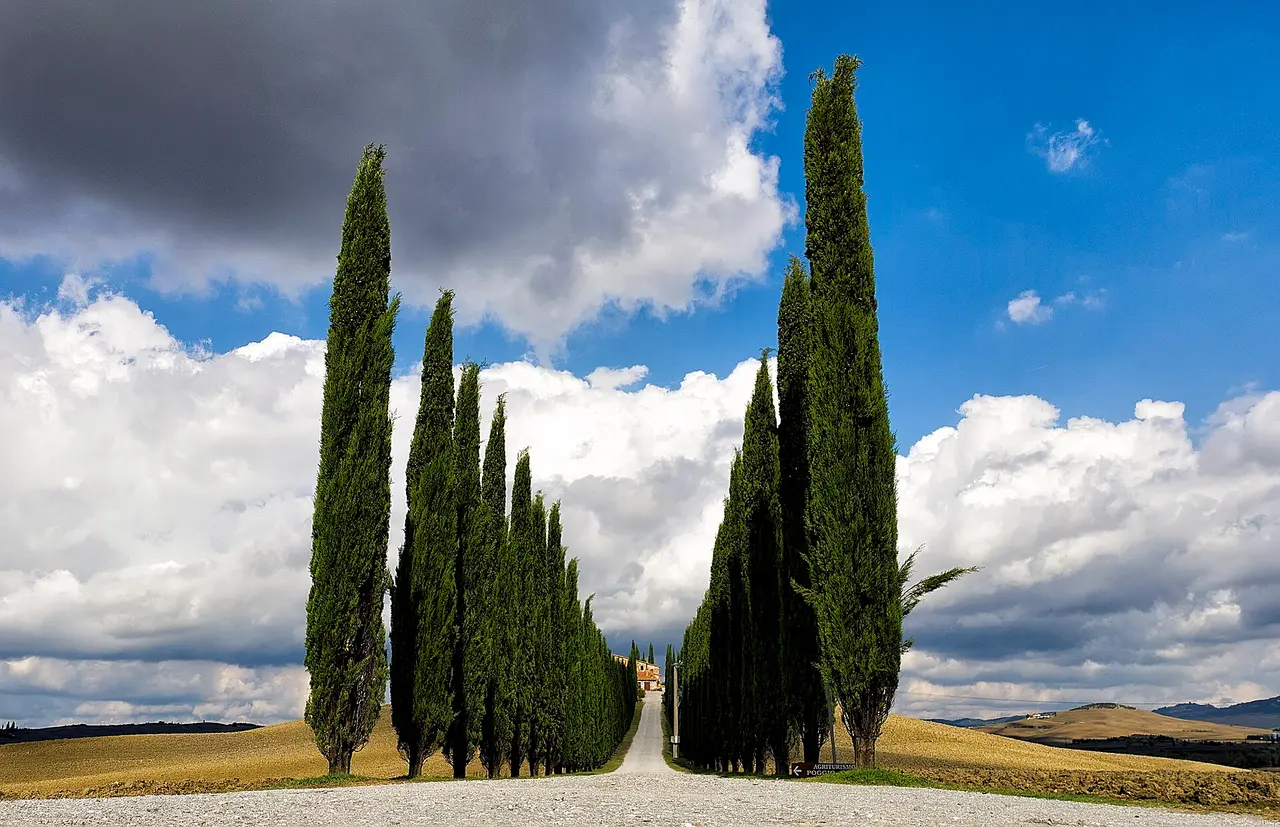
This is the Tuscany of desktop wallpapers: bare hills, lone cypresses and stone towns, on the UNESCO list since 2004. Pienza lies just over an hour's drive from Siena and makes a good base for three nights. Montalcino for Brunello, Bagno Vignoni and the thermal pool filling its square, and the San Quirico d'Orcia cypresses beside the Via Cassia fit into two easy days. A car is simplest: the train stops at Buonconvento, then you need a bus. May stays mild at 24 °C in Florence, against over 32 °C in July and August.

Lucca, Pisa and Versilia

The north-west works without a car: Pisa and Lucca are 30 minutes apart by train, and Pisa airport saves you going through Florence. One day is enough for Pisa and two nights for Lucca, whose walls, about 4 km around, are best done by bike. Further north, Viareggio in Versilia is known for its carnival, with six parades in February 2026. If you are heading for the sea and the cliffs, the Cinque Terre lie just across the border in Liguria, a logical two-day extension.

The Maremma and the Tuscan Archipelago

The south-west remains the least visited part of the region. Pitigliano and Sorano, built on tufa, are linked by vie cave, sunken roads through the rock attributed to the Etruscans. At Saturnia, the Mulino falls run at 37.5 °C, free and always open, but with no facilities on site. From Piombino, the ferry reaches Portoferraio on Elba in about an hour: allow at least three days to make the crossing worthwhile. The sea at Livorno reaches 24 to 25 °C in July and August.

Food, wine and the rhythm of the seasons

Bistecca alla fiorentina is generally sold by weight, often per etto (100 g), as a 0.9 to 1.2 kg cut to share, served rare. Allow around €24 for a simple meal in Florence and €35 per person at a mid-range table, without drinks. A cover charge often appears on the bill. In San Miniato, the national white truffle market takes over the historic centre on the last three weekends of November, from 14 to 29 November in 2026.

Cities to visit in Tuscany

Featured destinations appear first.

How much it costs

Per person per day, excluding international travel.
Budget
83 €/ day
1 522 € for 2 people, 7 days, return flights included
Accommodation
38 €
Food
26 €
Local transport
7 €
Sights and activities
12 €
Comfort
178 €/ day
2 852 € for 2 people, 7 days, return flights included
Accommodation
78 €
Food
60 €
Local transport
12 €
Sights and activities
28 €
Premium
425 €/ day
6 310 € for 2 people, 7 days, return flights included
Accommodation
190 €
Food
110 €
Local transport
55 €
Sights and activities
70 €
Prices checked: Relevé du 30 octobre 2026, hors haute saison, cadrage sur Florence et Sienne (ces prix baissent hors des villes, sauf agritourismes haut de gamme). Repas et transports : Numbeo Florence, mise à jour du 28 octobre 2026, 830 relevés de 68 contributeurs (repas bon marché 24 €, dîner de milieu de gamme pour deux 70 €, ticket urbain 1,70 €, taxi 3,30 € de prise en charge puis 1,10 €/km). Florence-Sienne : bus 4 à 6 €, train 11 à 16 € (Rome2Rio). Hébergement : lit en dortoir 25 à 45 € (Hostelz, Italyplanner, source non officielle) ; chambre double milieu de gamme 120 à 200 € au centre de Florence, 80 à 140 € en périphérie, 90 à 160 € à Sienne (guides 2026, non officiels) ; 4 et 5 étoiles à Sienne environ 159 et 547 USD (KAYAK, conversion non faite, ordre de grandeur). Chambre double partagée à deux pour comfort et premium, lit en dortoir pour backpacker. Poste premium transport et activités : estimation à partir des tarifs de taxi, sans location de voiture chiffrée. Taxe de séjour de Florence incluse dans l'hébergement : 4 € en auberge, 6 € en 3 étoiles, 7 € en 4 étoiles, sept premières nuits (tarifs de la délibération 535 de 2024, pas de nouvelle délibération connue en mars 2026, à vérifier sur le site de la commune). Activités : Offices 29 € en réservation, 25 € le jour même, 16 € après 16 h (uffizi.it, 2026). Prix officiels de la tour de Pise non lisibles à la date du relevé. Vol A/R Paris-Florence : 180 € par personne, tarif moyen PartirOu, cohérent avec Partir.com (176 €) et Liligo (206 €), soit 360 € pour deux. Août, Pâques et le Palio de Sienne sont nettement plus chers.
Entry, health and safety

For FR travellers

Entry requirements

No visa for a tourist stay

Pour un séjour de trois mois maximum, une carte nationale d'identité ou un passeport en cours de validité est exigé, à l'exclusion de tout autre document. Le livret de famille n'est pas un document de voyage, y compris pour les mineurs.

Stay allowed for up to 90 days.

Health

Advised: Être à jour du calendrier vaccinal français.

Chikungunya, dengue et fièvre du Nil occidental transmises par les moustiques ; tiques en milieu rural et en forêt, à rechercher après une promenade. Températures très élevées en été. Eau du robinet généralement potable, sauf dans certaines régions reculées. Sécurité : tout le territoire italien est en vigilance normale ; vigilance recommandée dans le tramway de Florence ; incendies de forêt, et crues et glissements de terrain en automne et en hiver.

Safety

Normal precautions

Emergency

112

Checked in octobre 2026 against the official source. Entry rules change: check the official source before you travel, it alone is authoritative.

Tuscany in pictures

Photo credits : Enrico Pighetti from Civitanova Marche, Italia, CC BY 2.0, Wikimedia Commons ; Dllu, CC BY-SA 4.0, Wikimedia Commons ; Massimo Catarinella, CC BY-SA 3.0, Wikimedia Commons ; Julian Lupyan, CC0, Wikimedia Commons ; Tom Chance, CC BY-SA 2.0, Wikimedia Commons ; Virtual-Pano, CC BY-SA 4.0, Wikimedia Commons ; Raimond Spekking, CC BY-SA 4.0, Wikimedia Commons ; Sergio Spolti, CC BY-SA 4.0, Wikimedia Commons ; Geak, CC BY-SA 4.0, Wikimedia Commons

What to see in Tuscany

Eleven sites that justify a detour on their own, from Florentine Renaissance art to the thermal pools of the Maremma.

Uffizi Gallery

Botticelli's Birth of Venus, Leonardo's Annunciation and Michelangelo's Doni Tondo, best booked in advance or visited after 4 p.m. to save money.

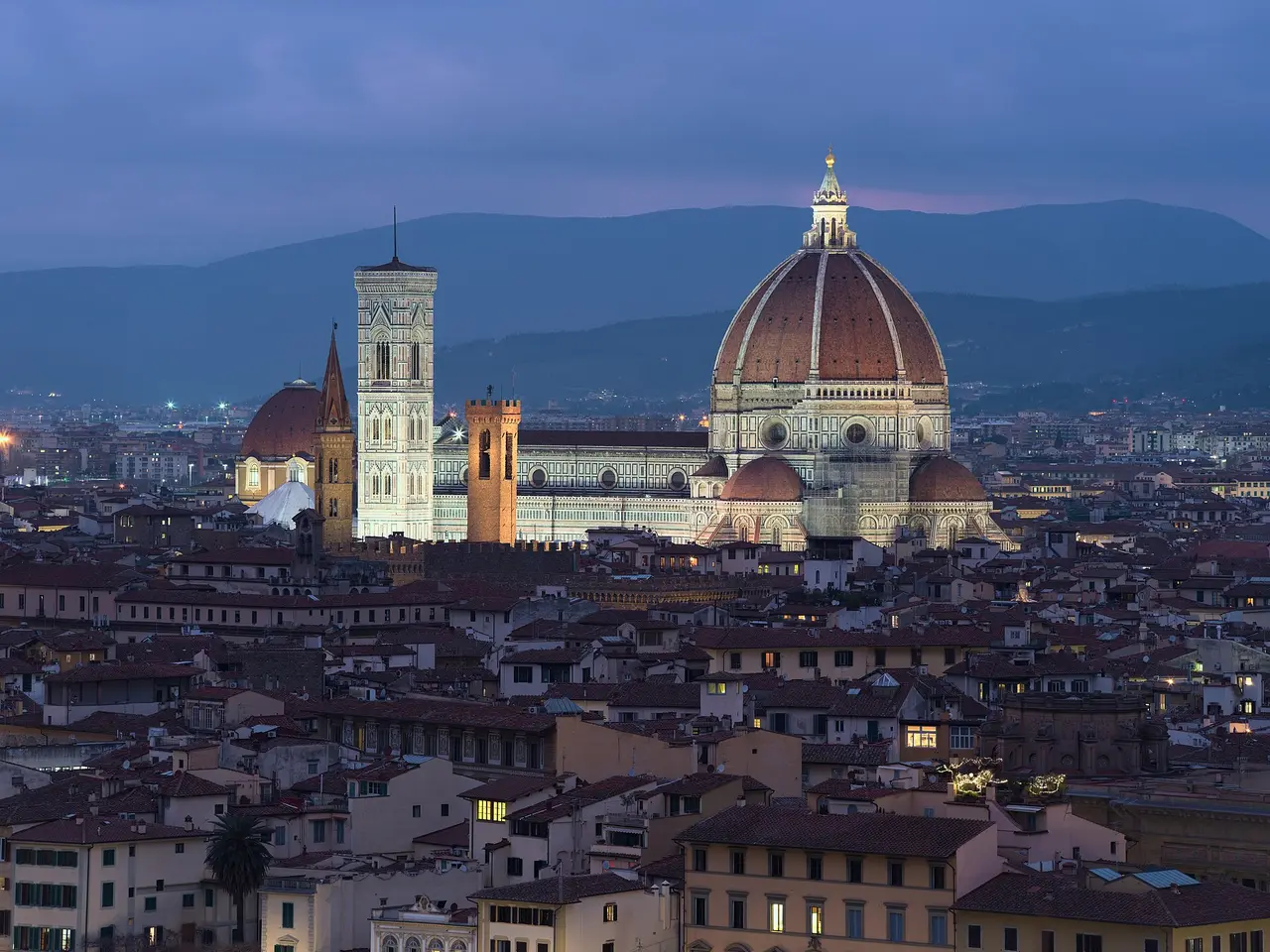
Brunelleschi's Dome

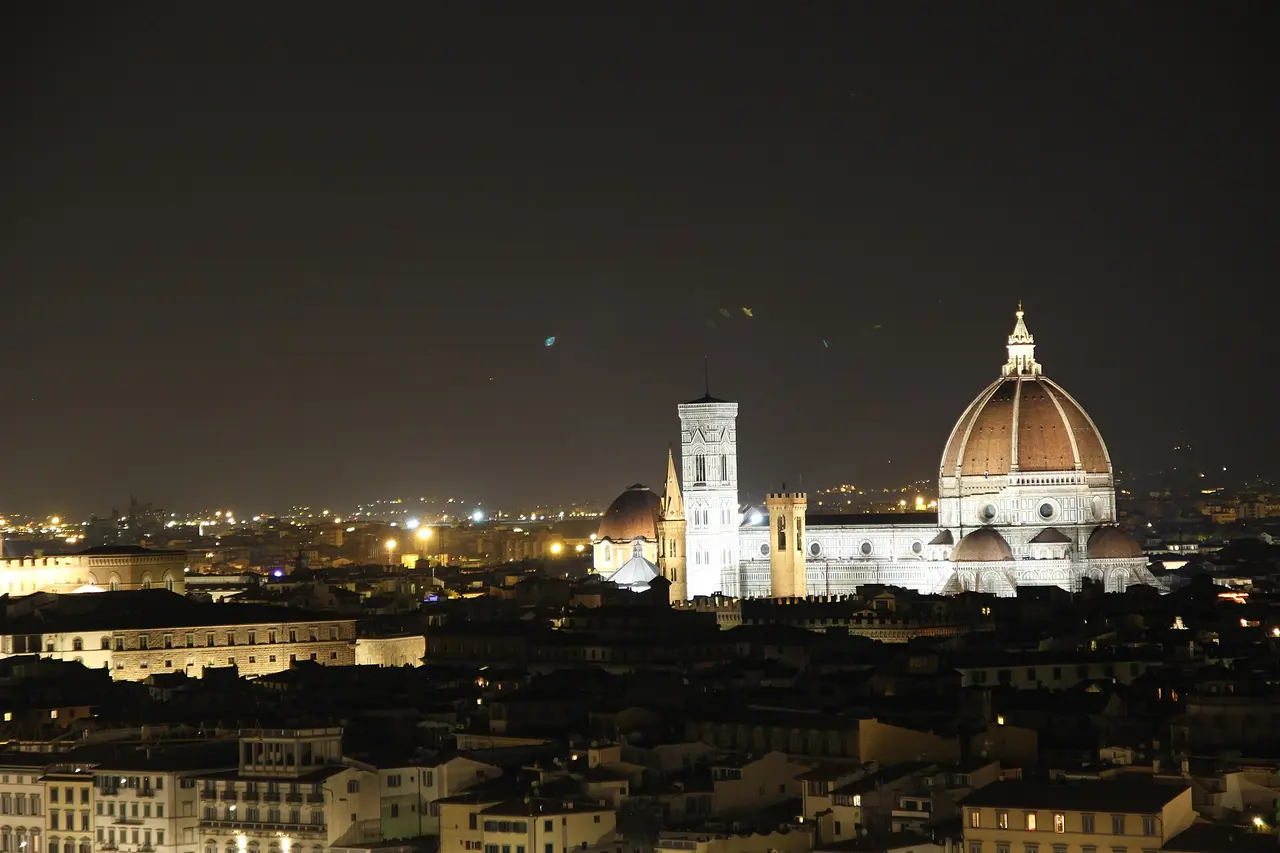
The climb on foot beneath the vault of Florence Cathedral runs on booked time slots, with a full view over the rooftops.

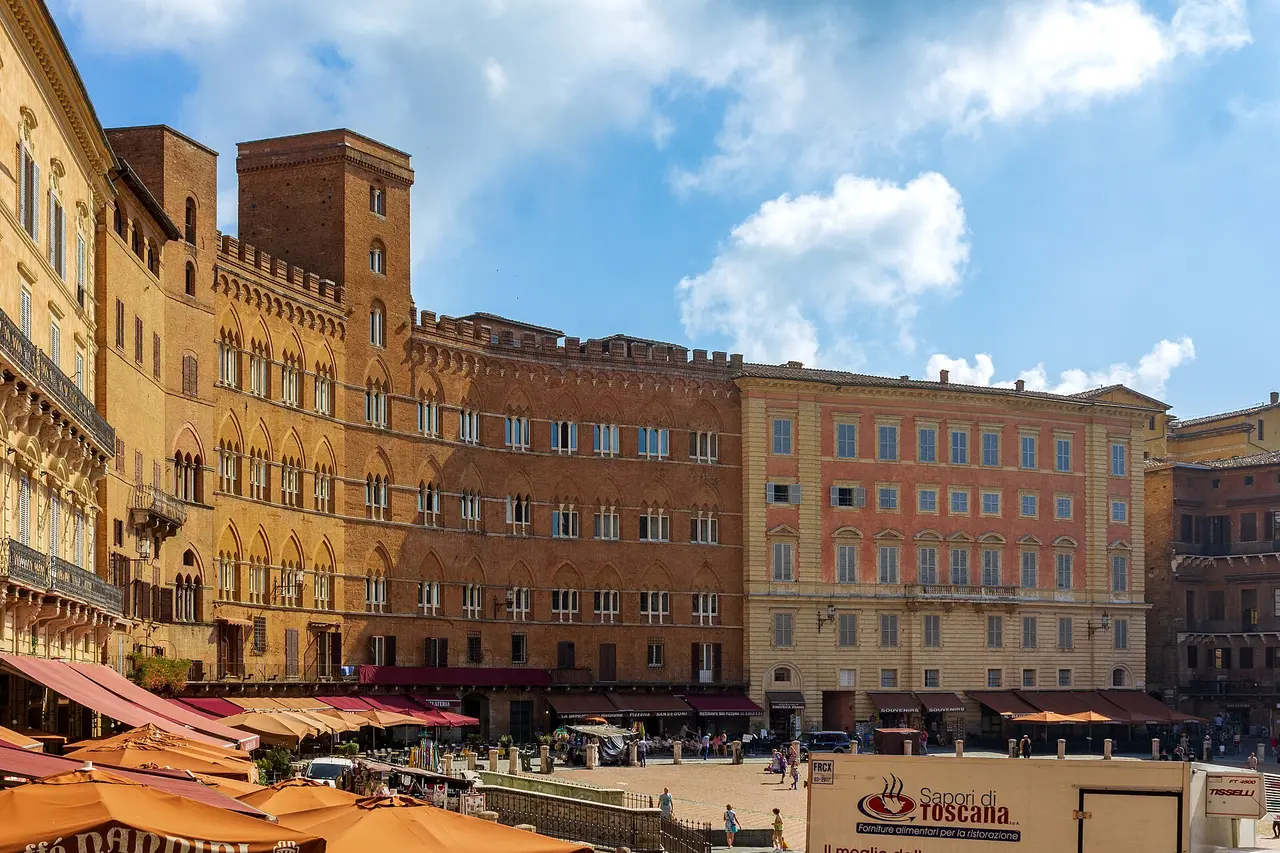
Piazza del Campo

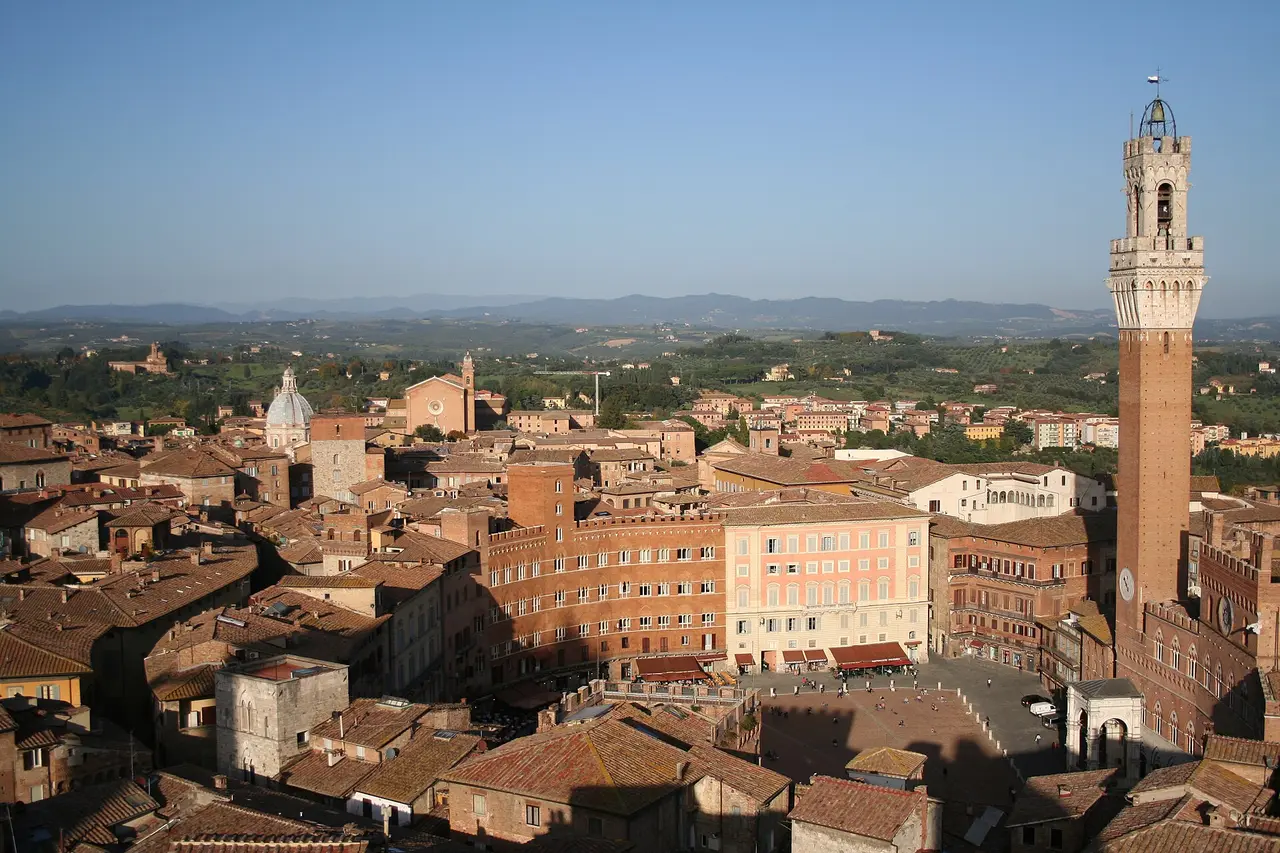
Siena's shell-shaped square, overlooked by the Torre del Mangia, hosts the Palio horse race twice a year, in July and in August.

Piazza dei Miracoli

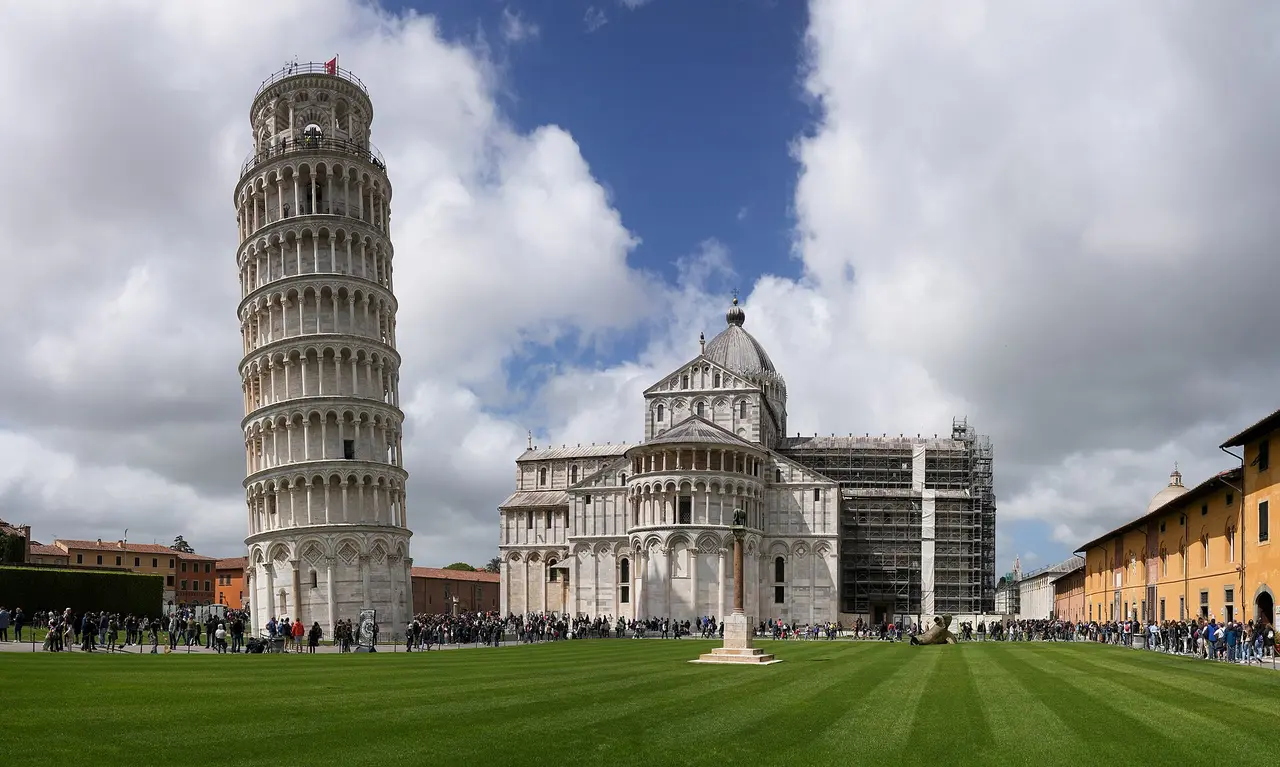
Pisa's cathedral, baptistery and leaning tower form a white marble ensemble on the UNESCO list, best visited at the end of the day.

San Gimignano Towers

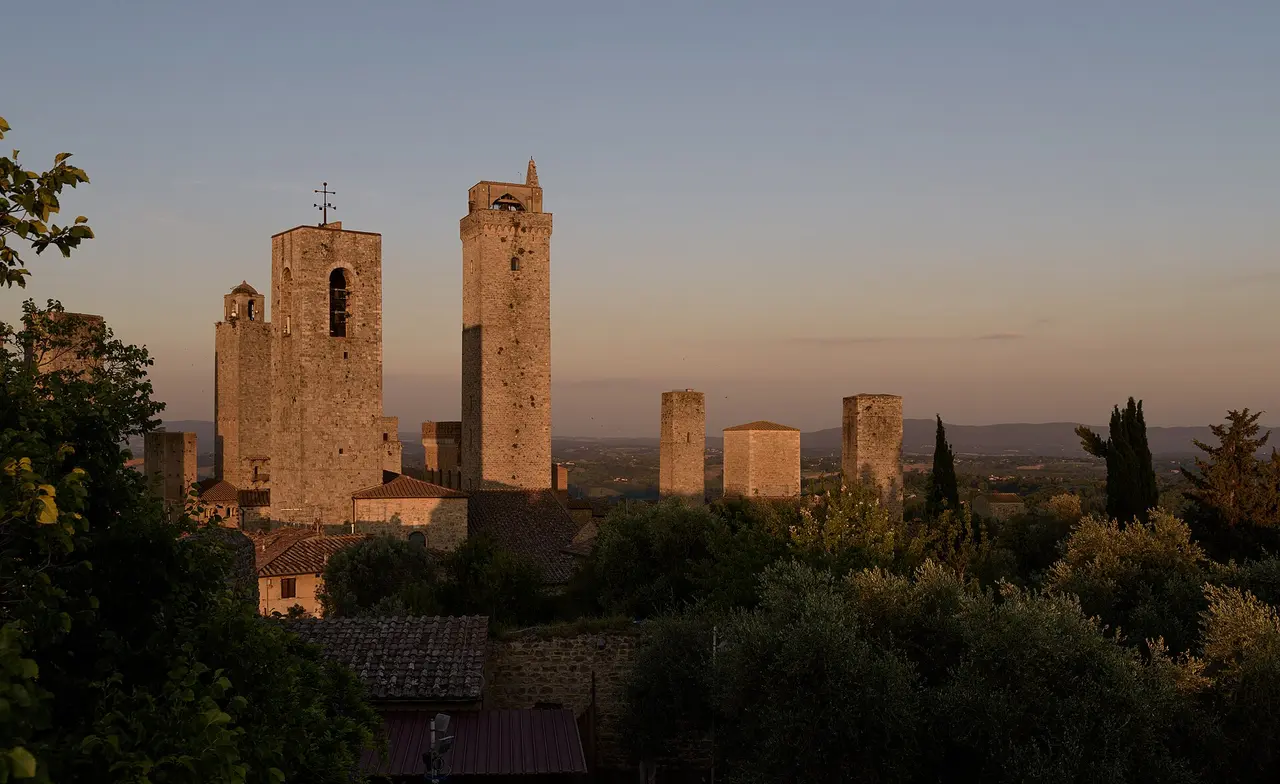
This medieval town, on the UNESCO list since 1990, keeps its stone towers and is far more pleasant early in the morning than when coaches arrive.

Monteriggioni Walls

A tiny fortified village near Siena, ringed by an intact medieval wall with fourteen towers, a former Via Francigena stop mentioned by Dante.

Piazza Pio II

The heart of Pienza, redesigned in the Renaissance as an ideal city, opens onto Val d'Orcia from its lanes and ramparts.

Lucca Ramparts

A tree-lined walkway of about 4 km along the top of the walls, to follow on foot or by bike around the city.

Sant'Antimo Abbey

A Romanesque travertine abbey church in the Starcia valley near Castelnuovo dell'Abate, about ten kilometres by road from Montalcino, an easy half-day side trip.

Mulino Falls

Saturnia's limestone pools, fed by water at 37.5 °C, are free and open all year round, ideally visited at dawn.

Pitigliano Rock

The village seems to grow out of its volcanic tufa cliff, and its former ghetto and synagogue earned it the nickname Little Jerusalem.

Practical information for Tuscany

Airports
Florence Peretola and Pisa Galilei are the two gateways: Pisa suits the coast and Lucca better.
ZTL zones
In Florence, cameras control access to the historic centre and the fine arrives later, through the rental firm: park outside.
Car or train
Trains are enough for Florence, Pisa and Lucca. A car remains simplest for Chianti, Val d'Orcia and the Maremma.
Tourist tax
In Florence, €3.50 to €7 per person per night depending on the accommodation, for the first seven nights. It varies by town.
Bookings
The Uffizi, the Accademia and Florence's dome should be booked ahead: dome slots go quickly.
Weekly closing
The Uffizi ordinarily closes on Mondays. Check each museum before building your schedule.
Coperto
The cover charge, roughly €1 to €3 per person, appears on the bill. A tip is not expected.
Train tickets
Paper tickets bought at the station must be validated on the platform before boarding or you risk a fine. Digital tickets do not.
Places of worship
Covered shoulders and knees are required at Florence Cathedral, even for the dome climb. Dress the same way elsewhere.
Tap water
Generally drinkable, except in some remote areas: ask locally if in doubt.
Ticks
Found in forests and rural areas: wear covering clothes and check your skin after a hike.
Emergencies
112 works everywhere and is free. Italian civil protection: 800 840 840, from Italy and in Italian.

Frequently asked questions about Tuscany

Florence or Siena: where should I stay to visit Tuscany?
Florence wins for museums and trains, Siena for the southern countryside. For a week, the most efficient plan is to sleep in both, or to replace Florence with a base in Pienza if you are coming mainly for the landscapes.
Can you visit Tuscany without a car?
Yes for Florence, Siena, Pisa and Lucca, linked by train or bus. It is harder for Val d'Orcia, where you combine a train to Buonconvento with a bus, and for the Maremma. A guided trip can replace a rental car for Chianti.
Is it better to fly into Florence or Pisa?
Pisa serves Lucca and the coast better, while Florence is more convenient for Chianti and Siena. Compare prices case by case: a return flight from Paris to Florence runs at around €180 per person outside school holidays.
Can you see the Siena Palio without booking?
The race on 2 July and 16 August can be watched for free, standing, from the centre of Piazza del Campo: arrive at least 90 minutes ahead, as access closes once the square is full. Seats are sold by building owners, often for several hundred euros. Rain can delay the race.
Does Val d'Orcia deserve several nights?
Yes, three nights in Pienza or Montalcino let you see the towns without rushing and catch the morning and evening light that makes the landscape. A simple day trip from Florence involves too much driving to really enjoy it.
Is Saturnia really free?
The Mulino falls are free and open at all hours, with no changing rooms or toilets on site. The nearby paid spa is a separate establishment. Bring a towel and suitable shoes and come early: access is possible 365 days a year, day or night.
Can you do Chianti in a day from Florence?
Yes, as long as you limit yourself to two villages and one booked winery. Since the driver cannot taste freely, a guided trip is often simpler. Staying a night leaves more time, especially during the September grape harvest.
Is Tuscany more expensive than the rest of Italy?
Our comfort budget reaches about €178 per person per day outside high season, against €154 for the classic Italian circuit. Hotels in Siena cost a little less than in Florence. See also Campania to compare.
Can you swim in Tuscany in October?
The sea at Livorno is still around 20 °C in October, which is possible for the brave, with a higher chance of rain. September is a much safer bet, with water at 22 °C and only six rainy days.
Is there a flood risk in Tuscany in autumn?
November is the wettest month in Florence, with about 115 mm, and France Diplomatie reports a risk of floods and landslides in autumn and winter. Follow local bulletins and leave some margin on country roads.

Plan your trip to Tuscany

Day-by-day itinerary, budget, bookings and packing in a single app.
Aperçu de l'application PlanTripNow