Visit Barcelona

Between Gothic alleys, Gaudí facades and the seafront, Barcelona is mostly a walking or short metro-ride city. Plan 2 to 4 days for the essentials, a little more if you add a day trip inland or toward the Costa Brava.

Why visit Barcelona?

Barcelona combines Gaudí's modernist architecture, a fully walkable medieval core and beaches reachable by metro, a rare combination at this scale in Europe. The city is worth visiting year-round, with a peak in crowds and prices in July-August.

Barcelona's must-sees

Ten places that sum up the city, from Spain's most visited monument to neighborhoods less featured in guidebooks.

Sagrada Família

Gaudí's unfinished basilica, Spain's most visited monument. Online booking required, with a timed slot chosen in advance.

Park Güell

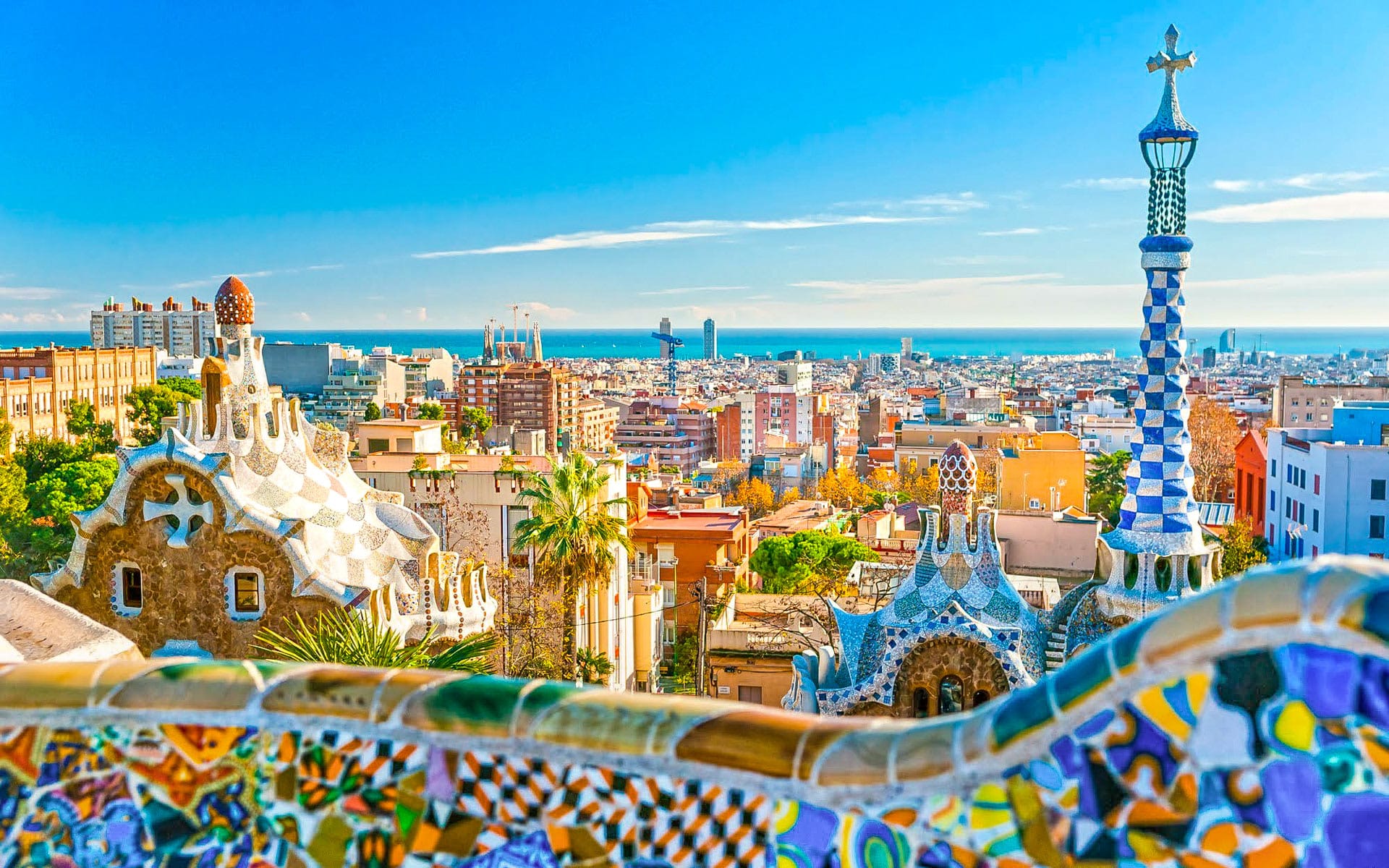
Gaudí's mosaic park, with a clear city view from the covered market terrace, entry capped by quota.

Casa Batlló

A wavy, sea-inspired facade on Passeig de Gràcia, with an included augmented-reality audio guide.

Gothic Quarter

A maze of medieval alleys around the cathedral, best explored without a fixed route, early in the morning.

La Boqueria

The historic covered market off La Rambla, with Iberian ham stalls and fruit cut to order.

Barceloneta

An urban beach reachable by metro, lined with chiringuitos and a marina.

Montjuïc

A green hill above the port, combining a military castle, museums and an evening fountain show.

Palau de la Música Catalana

A UNESCO-listed modernist concert hall with a colorful stained-glass ceiling, visible on a daytime tour.

Camp Nou

FC Barcelona's stadium, with museum and locker room tours offered on non-match days.

Bunkers del Carmel

A former anti-aircraft post turned free viewpoint, very popular with locals at sunset.

What to see in Barcelona?

Ciutat Vella: Gothic Quarter, Born and Raval

The historic core can be walked in half a day: the 13th-century Gothic cathedral, Roman remains visible under Plaça del Rei at the City History Museum, and Born's narrow alleys up to the Palau de la Música Catalana. The more working-class Raval, long overlooked by guidebooks, is now home to the MACBA contemporary art museum and most lunch menus under 15 EUR. Comfortable shoes help: the uneven cobblestones slow the walk down more than elsewhere in the city.
Eixample and modernist architecture

The grid laid out by engineer Ildefons Cerdà in the 19th century carries Gaudí's major works: Casa Batlló, La Pedrera and above all the Sagrada Família, under construction since 1882 with completion announced for 2026, over a hundred and forty years after the first stone was laid. Booking a timed slot online at least two weeks ahead avoids queues that can run past an hour in peak season. The neighborhood is still lived-in, with its own shops and covered markets, far from being a mere backdrop for tourists.

Gràcia and the heights of Park Güell

Once an independent village annexed to Barcelona in 1897, Gràcia keeps its small shaded squares and neighborhood bars, away from La Rambla's crowds. Park Güell, ticketed since 2013 to protect the site, is reached on foot with a twenty-minute uphill walk from Lesseps metro station, or by bus from downtown. The free lower section of the park, below the mosaic terrace, already offers a good view over the city without paying for entry.

Montjuïc, from the port to the museums

The hill overlooking the port is reached by cable car from Drassanes or by funicular from Paral·lel metro station. It brings together the 17th-century military castle, the Catalan national art museum (MNAC) housed in the former palace of the 1929 World's Fair, and the Olympic stadium built for the 1992 Games. The Magic Fountain below runs Thursday to Sunday evenings on a seasonal schedule, free entry and no booking required.

Barceloneta and the seafront

A former fishing quarter rebuilt after the 1992 Olympic Games, Barceloneta gives access to 4.5 kilometers of urban beaches all served by metro or tram. Chiringuitos, the seasonal beach bars, close early outside the tourist season; booking a table for a seafood dinner is worth it in July-August, when the best spots fill up by 8pm. The promenade continues to the Olympic Port and its twin towers.

Poble Sec and Paral·lel

This tapas neighborhood at the foot of Montjuïc remains largely spared by mass tourism: Carrer de Blai is lined with bars serving pintxos at 1.50-2 EUR each, cheaper and less crowded than those in the Gothic Quarter. Paral·lel avenue, once nicknamed Barcelona's Broadway for its theaters, still runs a few active venues on weekends, between cabaret and concerts, a side of the city rarely featured in mainstream guides.

Day trip in Catalonia: Girona and the Costa Brava

To get out of the city without a late return, Girona is 40 minutes away by direct train from Barcelona-Sants station: the cathedral, medieval walls and the Jewish Call quarter fit into a single day, with a last train back available in the evening. Unlike Madrid, the inland capital set on the Castilian plateau, Barcelona stays firmly Mediterranean, with Costa Brava beaches reachable within roughly an hour past Girona.

Barcelona in pictures

Similar destinations

Other cities you might like as much as Barcelona.

Frequently asked questions about Barcelona

Do you need to book Sagrada Família in advance?
Yes, always: time slots often sell out one to two weeks before the visit, and there is no last-minute ticket counter in high season, unlike some other monuments in the city.
How many days to see Barcelona at an easy pace?
Three days are enough to cover the Gothic Quarter, Sagrada Família, Park Güell and Montjuïc at a comfortable pace; a fourth day allows adding the Girona day trip without leaving exhausted.
Is an ID card enough for a French traveler?
Yes, Spain is part of the Schengen area: a valid national ID card or passport is enough to enter and stay, with no visa and no maximum length of stay.
Does the metro reach Sagrada Família and Park Güell?
Yes: line L2 or L5 goes directly to Sagrada Família, while line L3 followed by a twenty-minute uphill walk or a short bus ride reaches the entrance of Park Güell from the city center.
When does the Montjuïc Magic Fountain run?
The free show runs Thursday to Sunday evenings, with exact times that vary by season; it takes place on Avinguda Maria Cristina, right below the museum, with no booking required in advance.
Is Barcelona more expensive than the rest of Spain?
Accommodation costs noticeably more than in Madrid, especially since the municipal tourist tax doubled in April 2026; street food and tapas, by contrast, remain fairly comparable between the two cities.
Can you swim directly in the city?
Yes: Barceloneta and Bogatell beaches are lifeguarded throughout the summer season and reachable within a few metro stops, without ever needing to leave Barcelona to find sand and sea water.
Is a day trip to Girona worth it?
Yes, for a single day: 40 minutes by direct train is enough to see the old town, cathedral and walls, with a last train back in the evening that avoids staying overnight.

Plan your trip to Barcelona

Build your day-by-day itinerary and manage budget, bookings and packing in PlanTripNow.
Aperçu de l'application PlanTripNow