Visit Valencia

Valencia holds the balance between heritage and modernity: a compact Gothic old town, a former riverbed turned into a 9 km park, the City of Arts and Sciences at the end, and a long sandy beach twenty minutes away by tram. Three days are enough, more if you add the Albufera and its paella.

Why visit Valencia?

Valencia is Spain's third city and one of the cheapest on the Mediterranean coast, under two hours' flight from Paris. In a small area it brings together a cathedral holding a chalice venerated as the Grail, a Modernista market, Europe's largest oceanographic complex and a three-kilometre urban beach.

Valencia's must-sees

Gothic monuments in the centre, Calatrava's architecture and a giant aquarium, linked by the Turia garden.

Cathedral and Micalet

A Gothic cathedral with the octagonal Micalet bell tower (207 steps) and the Holy Chalice chapel, an agate cup venerated as the Grail.

Lonja de la Seda

A 15th-century former silk exchange, UNESCO-listed, with its twisted-column hall and an orange-tree courtyard.

Mercado Central

A 1928 Modernista hall of glass and ceramics, 1,200 fresh-produce stalls; closes in the afternoon and on Sunday.

City of Arts and Sciences

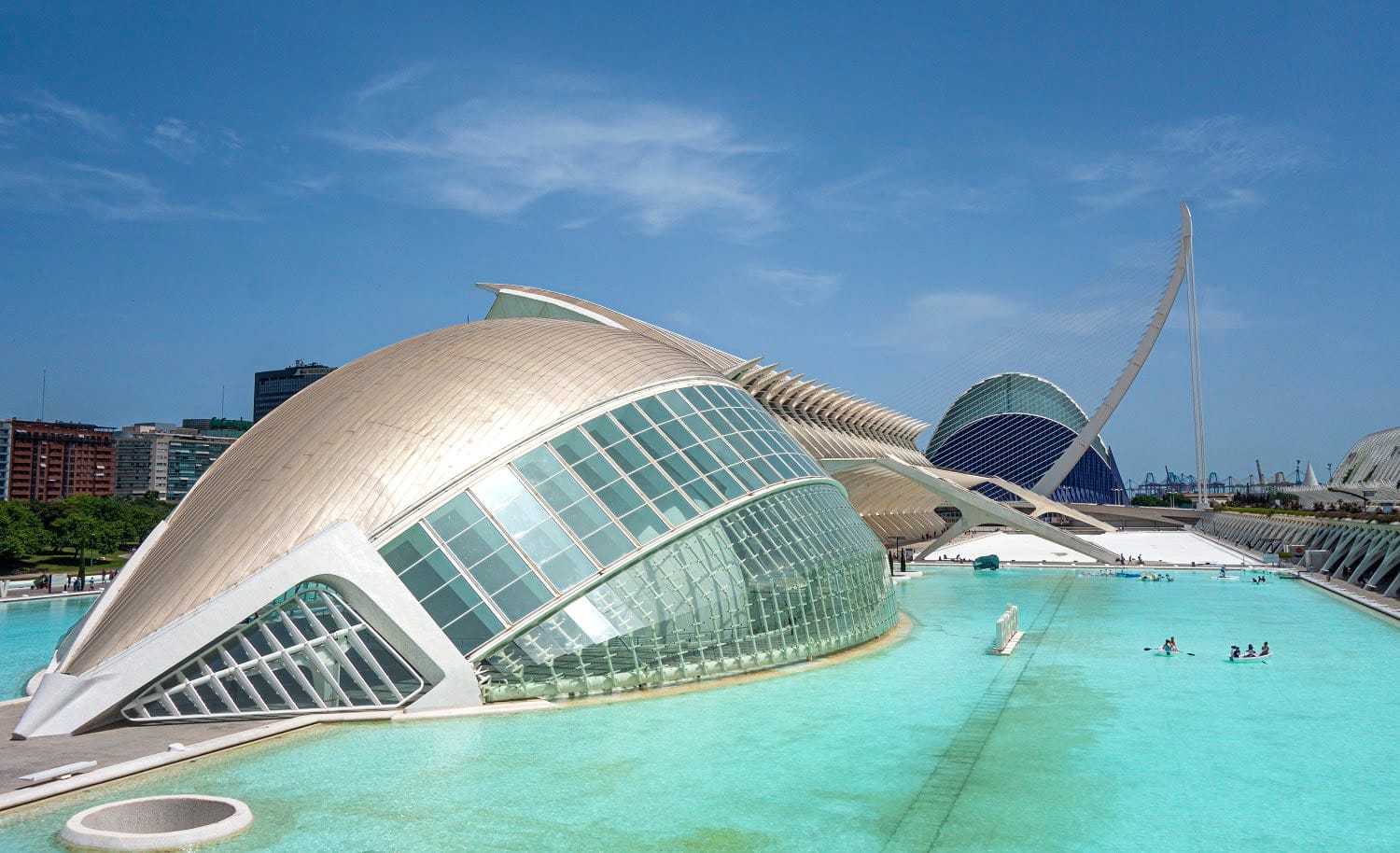
Calatrava's white ensemble: the Hemisfèric cinema, the Science Museum, the Umbracle and the opera house, around long reflecting pools.

Oceanogràfic

Europe's largest aquarium, ten marine ecosystems, a walk-through tunnel and Spain's only beluga pool.

Serranos towers

A 1392 Gothic fortified gate, the former northern entrance to the city, with terraces to climb for the old-town view.

Quart towers

A second medieval gate, to the west, still marked by cannonball impacts from Napoleon's troops in 1808.

Fine Arts Museum

Spain's second picture gallery after the Prado, a Sorolla room and Valencian primitives; free entry, closed Monday.

Gulliver in the Turia park

A 70-metre slide-sculpture of Gulliver tied down, which children freely climb and slide on.

What to discover in Valencia, neighbourhood by neighbourhood?

The Ciutat Vella: cathedral, Mercado Central, Lonja

The historic core is covered in a day. The cathedral, where you climb the 207 steps of the Micalet bell tower, keeps in a chapel an agate chalice venerated as the Holy Grail. Opposite it, the Lonja de la Seda, a UNESCO-listed former silk exchange, lines up its twisted columns. The Mercado Central, a 1928 Modernista hall with 1,200 stalls, closes in the afternoon and on Sunday: come before 2pm to grab lunch.

The Barrio del Carmen

Northwest of the cathedral, the Carmen is the liveliest old quarter: medieval lanes, remnants of Arab and Christian walls, street art on the crumbling facades, cocktail bars and horchaterías. It is crossed on foot in an hour, but is best enjoyed in the evening, when the terraces on the little squares fill up. The Serranos and Quart towers, two Gothic gates of the vanished walls, mark its edges and can be climbed for the view.

The Turia garden

After the 1957 flood, the river was diverted and its bed turned into a 9-kilometre linear park that rings the old town. You cover it on foot, running or by bike (Valenbisi stations everywhere): it is the best way to link the Serranos towers to the City of Arts in 30 minutes. Halfway along, the giant Gulliver, a 70-metre slide-sculpture, serves as a full-scale playground.

The City of Arts and Sciences

At the southern end of the Turia, Santiago Calatrava's white ensemble brings together five buildings: the spherical Hemisfèric cinema, the interactive Science Museum, the Umbracle plant walk, the Palau de les Arts opera house and the Oceanogràfic, Europe's largest aquarium, with its tunnels and beluga pool. Allow half a day for the Oceanogràfic alone, a full day for the whole complex; combined tickets are cheaper online.

El Cabanyal, the port and the beaches

To the east, the former fishing village of El Cabanyal lines up its low houses with azulejo facades, long under threat then saved, now being restored. It opens onto the Malvarrosa beach and its three-kilometre promenade, lined with restaurants serving paella at midday. Tram 4 or 6 links the centre to the beach in 20 minutes; swimming is pleasant from June to October.

The Albufera and El Palmar

Ten kilometres south, the Albufera is Spain's largest lagoon, ringed by the rice fields that supply Valencian paella. The village of El Palmar, on an island, lives off rice and boats: you have a wood-fired paella there, then take a traditional boat across the lake at sunset. The Racó de l'Olla trail has a bird hide over the reed beds. The 25 bus from the Porta de la Mar takes 40 minutes; bring insect repellent.
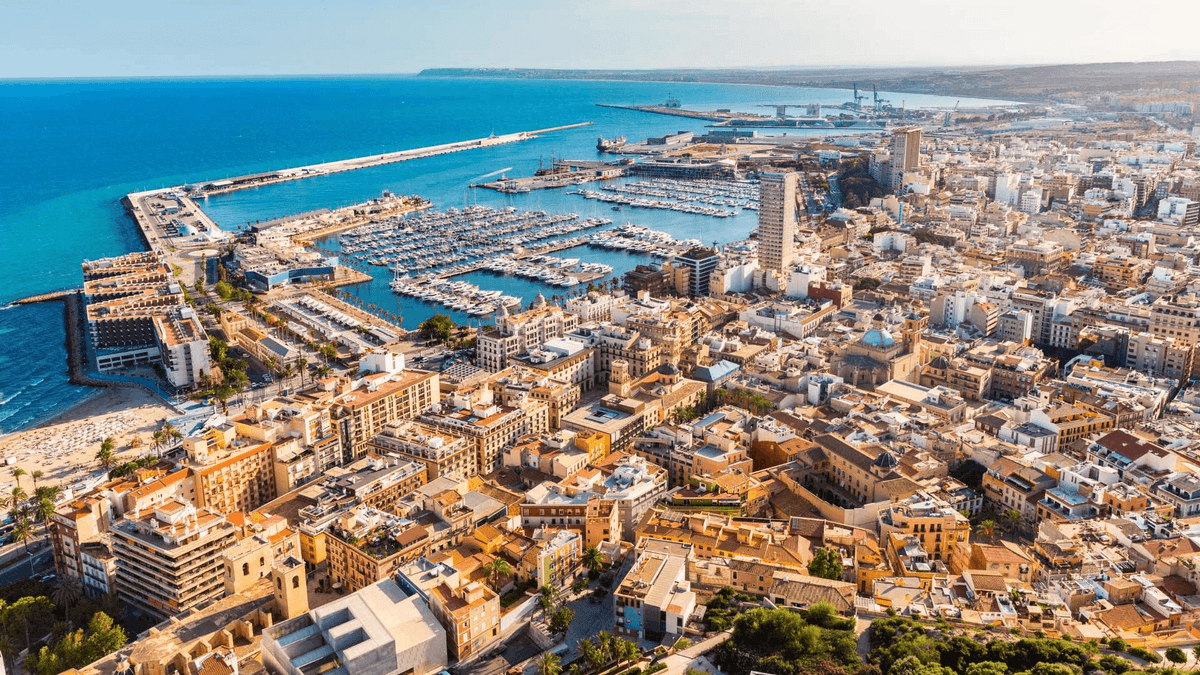
Valencia in pictures

Similar destinations

Other cities you might like as much as Valencia.

Valencia: frequently asked questions

Should you visit Valencia during Fallas?
It is spectacular (monumental figures, fires, costumed parades) but the city is saturated, very loud day and night from firecrackers, and prices triple. Worth doing once if noise does not bother you, best avoided for a quiet first visit to the city.
How many days do you need to visit Valencia?
Two days cover the old town and the City of Arts. A third allows the beach, El Cabanyal and the Albufera. Four days open up a train trip to Sagunto or Xàtiva. Valencia suits an extended weekend well.
Where can you eat real Valencian paella in Valencia?
Not on the Malvarrosa beach, too touristy, but in El Palmar by the Albufera, where the dish was born, or in the restaurants of the Ruzafa district. Authentic paella has chicken, rabbit and beans, never seafood, and is cooked over a wood fire.
Can you see the City of Arts in a single day?
The Oceanogràfic alone needs three to four hours. Combined with the Science Museum and a Hemisfèric screening, that fills a long day. If you must pick one, the Oceanogràfic wins, especially with children.
Is Valencia a proper beach city?
Yes: the Malvarrosa and the Patacona form three kilometres of wide sand reachable by tram from the centre, with a promenade and restaurants. The water is pleasant from June to October. For coves and clearer sea, you need to head down towards Xàbia or the Costa Blanca.
How do you get to the Albufera from Valencia?
The 25 bus leaves from the Porta de la Mar and takes about 40 minutes to El Palmar. You can also cycle there on the coastal path, about an hour. Agencies run half-days combining lunch and a sunset boat trip.
Can you reach Valencia by train from Madrid or Barcelona?
From Madrid, the AVE takes 1h40 and arrives at Joaquín Sorolla station, 15 minutes' walk from the centre. From Barcelona, allow 3 hours on the Euromed along the coast. No fast direct train yet links Valencia to Seville; you go via Madrid.
Is the Oceanogràfic worth the entry fee?
Yes for a family visit or if aquariums interest you: it is the largest in Europe, with belugas, hammerhead sharks and a walk-through tunnel. The ticket is expensive; book a combined pass with the Science Museum online to bring the cost down.

Plan your trip to Valencia

Build your day-by-day itinerary and manage budget, bookings and packing in PlanTripNow.
Aperçu de l'application PlanTripNow