Visit Chicago

Between the Loop and its skyscrapers, the terrace-lined river and the 30 kilometres of lakefront, Chicago is covered on foot, by bike and by elevated train. Plan 3 days for the city, one more for Hyde Park, Oak Park or a lake beach.

Why visit Chicago?

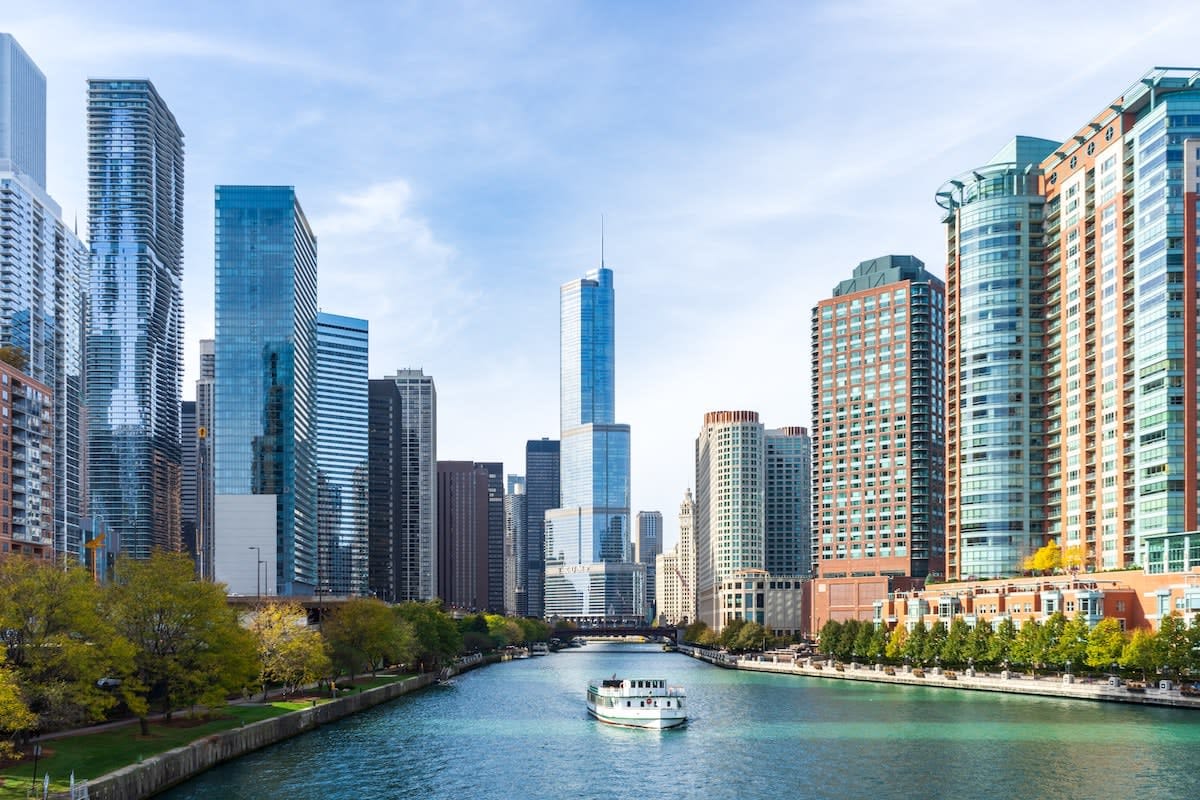
Chicago is the city where the skyscraper was born after the 1871 fire, and it keeps the finest sample of it, from the 1885 cradle to the contemporary glass towers, best seen from a river cruise. It also lines up 30 kilometres of public beaches and parks along Lake Michigan. The good season runs May to October; January and February are freezing.

Chicago's must-sees

Ten places that sum up the city, from the Millennium Park mirror to the 1914 ballpark.

Cloud Gate (the Bean)

The mirror sculpture in Millennium Park that reflects the skyline, the city's most photographed meeting and selfie point.

Art Institute of Chicago

The second-largest art museum in the United States, very strong in Impressionism and American art; ticket around 32 dollars.

Willis Tower Skydeck

An observation deck on the 103rd floor with a glass ledge suspended over the void at 412 metres.

Architecture cruise

90 minutes on the river to read a century and a half of skyscrapers; the Chicago Architecture Center's is the benchmark, April to November.

Navy Pier

A 900-metre pier into the lake with a Ferris wheel, a theatre and fireworks on Wednesday and Saturday in summer.

Field Museum

The natural history museum on the Museum Campus, known for Sue, the most complete Tyrannosaurus skeleton.

Wrigley Field

The Cubs' ballpark opened in 1914, ivy on the outfield walls, guided tours available on non-match days.

Chicago Cultural Center

A former library with free entry, crowned by the largest Tiffany glass dome in the world.

Lincoln Park Zoo

One of the last major free zoos in the United States, open year-round north of downtown.

360 Chicago

The observatory of the former John Hancock building, on the 94th floor, with a ride that tilts visitors out over the void.

What to see in Chicago?

The Loop and Millennium Park

The Loop, the business district, takes its name from the loop the elevated train tracks form above the streets. It holds Millennium Park and its Cloud Gate, the mirror sculpture nicknamed the Bean, the Art Institute with one of the richest Impressionist collections outside France (allow 2 hrs, about 32 dollars), and the Chicago Cultural Center with the largest Tiffany glass dome in the world, free to enter. The theatre district, around State Street, comes alive in the evening.
The Chicago River and architecture

The river crosses downtown from east to west and offers the best view on a century and a half of building: the 1888 Rookery, the white Wrigley Building, the corn-cob towers of Marina City, the Willis Tower and its glass-ledge Skydeck at 412 metres. Architecture cruises, April to November, last 90 minutes; the Chicago Architecture Center's is the benchmark. Along the bank, the Riverwalk lines up bars and docks for 2 kilometres.

The lakefront and the museums

The Lakefront Trail runs along Lake Michigan for about thirty kilometres, fully pedestrianised and cyclable, with not a single expressway on the water's edge. South of downtown, the Museum Campus brings together the Field Museum of natural history, the Shedd Aquarium and the Adler Planetarium, with the finest skyline view from the point. Navy Pier juts 900 metres into the lake, with its Ferris wheel. In summer, urban beaches like North Avenue are lifeguarded.

The North Side: Lincoln Park, Wicker Park and Wrigleyville

North of downtown, Lincoln Park unrolls its huge park, a free zoo and a botanical conservatory along the lake. Further west, Wicker Park and Bucktown concentrate thrift stores, record shops and cafes, linked by the 606, a former elevated rail line turned into a 4-kilometre trail. Wrigleyville is built around Wrigley Field, the Cubs' ballpark opened in 1914, which can be toured on non-match days.

The South Side: Hyde Park, Bronzeville and Pilsen

Hyde Park, 20 minutes by train from downtown, carries the neo-Gothic campus of the University of Chicago, Frank Lloyd Wright's Robie House and the future Obama Presidential Center. Bronzeville was the heart of the Great Migration and of Chicago jazz in the 1920s. Pilsen, the Mexican quarter around 18th Street, lines up murals, panaderias and the free National Museum of Mexican Art. These neighborhoods are visited by day and knowing your route.

Day trips and the Frank Lloyd Wright legacy

Oak Park, 25 minutes on the green L line, holds Frank Lloyd Wright's home and studio and the world's highest concentration of prairie-style houses, plus Hemingway's birthplace. The Indiana Dunes, dunes and beaches on the Indiana side of the lake, are an hour away on the South Shore train. Boston, two hours by plane, offers a sharp contrast: older, more compact, turned toward the Atlantic rather than an inland lake, but reached from the same United States.

Chicago in pictures

Similar destinations

Other cities you might like as much as Chicago.

Frequently asked questions about Chicago

Is Chicago a walkable city?
The Loop, the Riverwalk and the lakefront are done entirely on foot, and the elevated train covers the rest for under three dollars. A bike-share is ideal for the Lakefront Trail. A car only matters for the Indiana Dunes or Milwaukee.
Is the architecture cruise worth the price?
Yes, it is the city's signature activity: 90 minutes on the river with a volunteer docent from the Chicago Architecture Center narrating every tower. You understand Chicago better after it than after any museum. Book in summer, the season ends in November.
Is Chicago dangerous for tourists?
The neighborhoods travellers visit, the Loop, the North Side, Hyde Park and the lakefront, are safe by day and in the evening. Gun violence is concentrated in a few parts of the South and West sides where there is no reason to go at random.
Should you avoid Chicago in winter?
January and February are genuinely brutal, with deep negative wind-chills and a lake wind that cuts. The city stays liveable thanks to the underground Pedway, the big museums and the Christmas market, and hotels are half price, but the lake and the parks lose their point.
How do you get from O'Hare airport to downtown Chicago?
The blue metro line links O'Hare to the Loop in about 45 minutes for a slightly higher ticket price, with no transfer, 24 hours a day. It is far cheaper than a ride-hail, which takes the same time outside rush hour and much longer when traffic is heavy.
Chicago or New York for a trip to the United States?
Chicago is more open, greener along its lake and easier to cover in three days; architecture is the through-line. New York is denser, faster and needs more time. The two are two hours apart by plane and combine well.
Where can you try real deep-dish pizza in Chicago?
Historic names like Pizzeria Uno, Lou Malnati's and Giordano's compete over the paternity of this thick-crust pie with the sauce on top. Allow 45 minutes to bake: many places take the order by phone before you arrive.
Can you swim in Lake Michigan in Chicago?
Yes, from mid-June to early September: about twenty urban beaches are lifeguarded, including North Avenue and Oak Street a short walk from downtown. The water rarely tops 22 degrees and flags mark strong-current days, common after a storm.

Plan your trip to Chicago

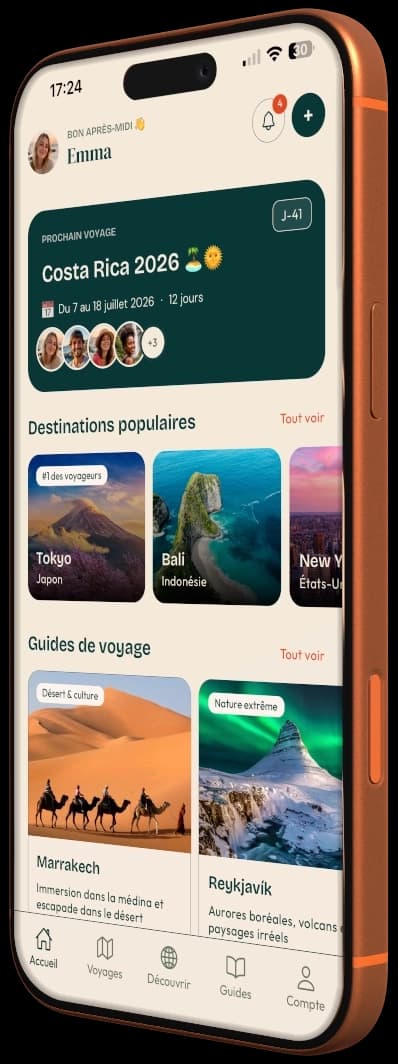
Build your day-by-day itinerary and manage budget, bookings and packing in PlanTripNow.
Aperçu de l'application PlanTripNow