Visit Washington

Washington is first walked, along the National Mall: the presidential monuments, the war memorials and a run of Smithsonian museums, all free. Then come Capitol Hill, Georgetown and the brick neighbourhoods where people live. Three days are enough for the essentials, four with Arlington and Mount Vernon.

Why visit Washington?

Washington is the capital of the United States and holds the largest concentration of free museums in the world, run by the Smithsonian Institution. The National Mall links the Capitol to the Lincoln Memorial over 3 kilometres, lined with monuments and national collections, all reachable without a car, under 8 hours' flight from Paris.

Washington's must-sees

Presidential monuments, free national museums and seats of federal power, nearly all on the Mall.

Lincoln Memorial

A marble temple holding the seated statue of Lincoln, facing the Reflecting Pool; open and lit 24 hours, free entry.

Washington Monument

A 169-metre obelisk at the centre of the Mall; a lift to the top on a free timed ticket to book the day before.

Vietnam Veterans Memorial

A black granite wall bearing the 58,000 names of the dead and missing, engraved in chronological order.

National Air and Space Museum

The Apollo 11 command module, the Spirit of St. Louis and the Wright brothers' Flyer; free, timed pass required.

African American History Museum

The newest Smithsonian, a journey from the hold of a slave ship to today; free but a timed pass is advised.

Natural History Museum

The Hope Diamond, a life-size blue whale and the dinosaur hall; one of the most visited museums in the country.

National Gallery of Art

European and American painting in the neoclassical West Building, an I. M. Pei East Building for modern art; free entry.

The Capitol

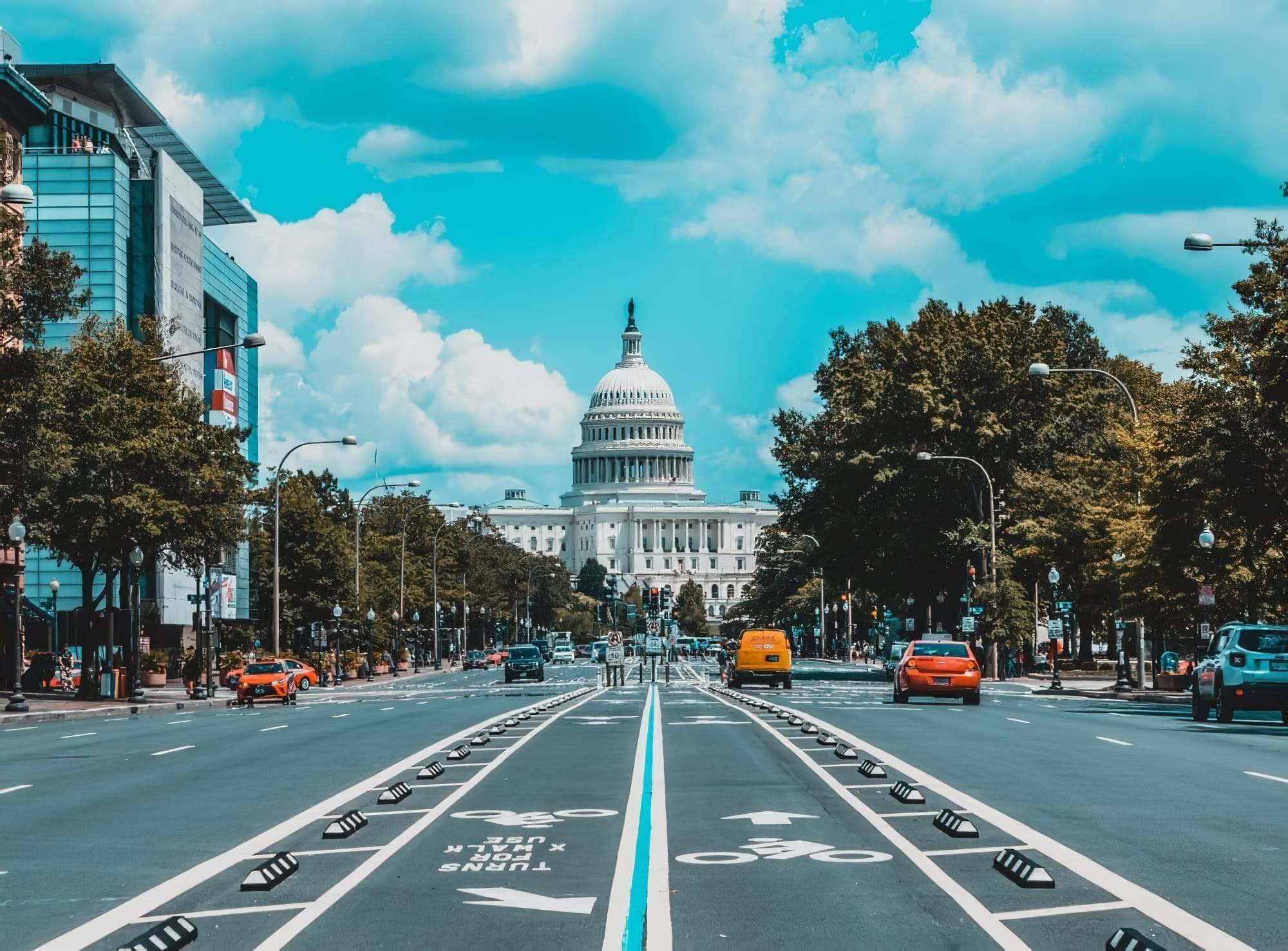
The seat of Congress under its cast-iron dome; a free guided tour of the rotunda and crypt, by reservation.

Library of Congress

The world's largest library, an ornate main reading room under a dome, a Gutenberg Bible on show; free entry.

Arlington National Cemetery

In Virginia, the Tomb of the Unknown Soldier with its changing of the guard, and the John Kennedy grave with its eternal flame.

Ford's Theatre

A still-working theatre where Lincoln was assassinated in 1865, with a museum and the Petersen House where he died, opposite.

What to discover in Washington, neighbourhood by neighbourhood?

The National Mall: monuments and memorials

The central esplanade stretches 3 km between the Capitol and the Lincoln Memorial. On foot, allow half a day to string together the Washington Monument (free timed-ticket climb), the World War II, Korea and Vietnam memorials, then the loop of the Tidal Basin past the Jefferson, Roosevelt and Martin Luther King memorials. The best light is late in the day, and the monuments stay open and lit until late in the evening.

The Smithsonian museums

Eleven of the seventeen Smithsonian museums line the Mall, all free: Air and Space, Natural History, American History, African Art, Asian Art, the National Portrait Gallery. The National Gallery of Art, independent but also free, holds the only Vermeer in the United States outside New York. You cannot do it all: pick two museums a day, arrive at the 10am opening, and note that most close at 5:30pm.

Capitol Hill and Congress

East of the Mall, Capitol Hill gathers the seat of Congress, the Library of Congress (the world's largest, with its ornate reading room) and the Supreme Court, all free but with a reservation needed for the Capitol. The residential quarter beyond lines up colourful terraced houses, the Eastern Market hall open Tuesday to Sunday, and the bar-and-restaurant street of Barracks Row.

The White House and the Penn Quarter

The White House is seen from outside from Lafayette Square to the north or the Ellipse to the south; the free interior tour must be requested weeks ahead through the embassy and is granted to a minority. The neighbouring Penn Quarter holds Ford's Theatre, where Lincoln was assassinated, the National Portrait Gallery and a Chinatown reduced to a few streets under a monumental arch.

Georgetown and the canal

The city's oldest quarter, older than the capital itself, lines up its cobbles and federal houses along the C&O canal and the Potomac. Not served by the metro, it is reached on foot from Foggy Bottom in 20 minutes or by the DC Circulator. You come for the towpath walk, the shops of M Street and Wisconsin Avenue, and the Dumbarton Oaks gardens.

U Street, Shaw and locals' Washington

North of the centre, U Street was the heart of the capital's Black life, nicknamed Black Broadway, with Ben's Chili Bowl open since 1958. The neighbouring Shaw and Logan Circle areas now hold restaurants, music venues and cafes. This is the Washington where people go out at night, fifteen minutes by metro from the Mall, very different from the monumental esplanade.

Across the Potomac

In Virginia, Arlington National Cemetery (the Tomb of the Unknown Soldier, the hourly changing of the guard, the John Kennedy grave) is one metro stop away. Old Town Alexandria, a colonial port with cobbled streets, is 20 minutes away. George Washington's Mount Vernon estate, on the Potomac, is reached by car or seasonal boat from the Wharf and needs half a day.
Washington in pictures

Similar destinations

Other cities you might like as much as Washington.

Washington: frequently asked questions

Are Washington's museums really free?
Yes. The seventeen Smithsonian museums, the National Gallery of Art, the National Zoo and the Holocaust Museum have no entry ticket. Some busy ones need a free timed pass booked online. Temporary exhibitions and the privately run Spy Museum still charge.
How many days do you need to visit Washington?
Three full days allow the Mall, three or four museums, Capitol Hill and Georgetown. A fourth day opens Arlington and Mount Vernon, or time for one more museum. With children, plan generously: distances on the Mall are deceptive, it is 3 km long.
Do you need to book to visit the Capitol and the White House?
The Capitol is visited for free by online reservation, made a few days ahead. The White House needs a request through the French embassy several weeks in advance and is granted to only a small share of applicants; otherwise, you see it from outside.
When can you see the cherry blossom in Washington?
The Tidal Basin cherry bloom falls between 20 March and 15 April depending on the year, and only lasts about a week at its peak. The festival draws huge crowds: come early in the morning, stay within walking distance, and book months ahead.
Can you visit Washington without a car?
Yes, and it is advised: parking is expensive and scarce, and the metro plus buses cover the whole centre. Only Mount Vernon and some Virginia trips are simpler by car or organised tour. Georgetown is done on foot or with the DC Circulator.
Do you need to reserve the African American History Museum?
Yes. Entry is free but a timed pass is strongly advised, booked online when they are released monthly. A limited number of walk-up tickets is handed out daily from 8:15am, gone within minutes at the weekend.
Is Washington a dangerous city?
The tourist areas (Mall, Capitol Hill, Georgetown, Dupont, Foggy Bottom, Penn Quarter) are safe and lively. As in any large US city, crime is concentrated in a few areas east of the Anacostia river, away from the sightseeing zones. Avoid the deserted Mall late at night.
Can you combine Washington and New York in one trip?
Yes, the two cities are linked in 3h15 by the Acela train or 3h30 by the regional train, and 4h30 by bus. It is a classic route, often with Philadelphia as a stop. Allow at least three nights per city to avoid rushing.
Can you day-trip to Mount Vernon from Washington?
Yes. George Washington's estate on the Potomac is reached in 40 minutes by car, by metro plus bus, or by seasonal boat from the Wharf. Allow half a day on site for the house, the gardens, the tomb and the former enslaved people's quarters.

Plan your trip to Washington

Build your day-by-day itinerary and manage budget, bookings and packing in PlanTripNow.
Aperçu de l'application PlanTripNow