Madagascar

Isolated in the Indian Ocean for millions of years, Madagascar harbors nature found nowhere else on Earth, from lemurs to centuries-old baobab forests. Between national parks, highlands and unspoiled beaches, the great island offers a naturalist adventure off the beaten path.

Why visit Madagascar?

Madagascar is home to exceptional biodiversity, with a very high share of endemic species, including numerous lemur species. Its varied landscapes blend tropical forests, highlands, rock formations and unspoiled beaches. The island remains relatively undertouristed, offering an authentic, nature-focused travel experience.

What to discover in Madagascar?

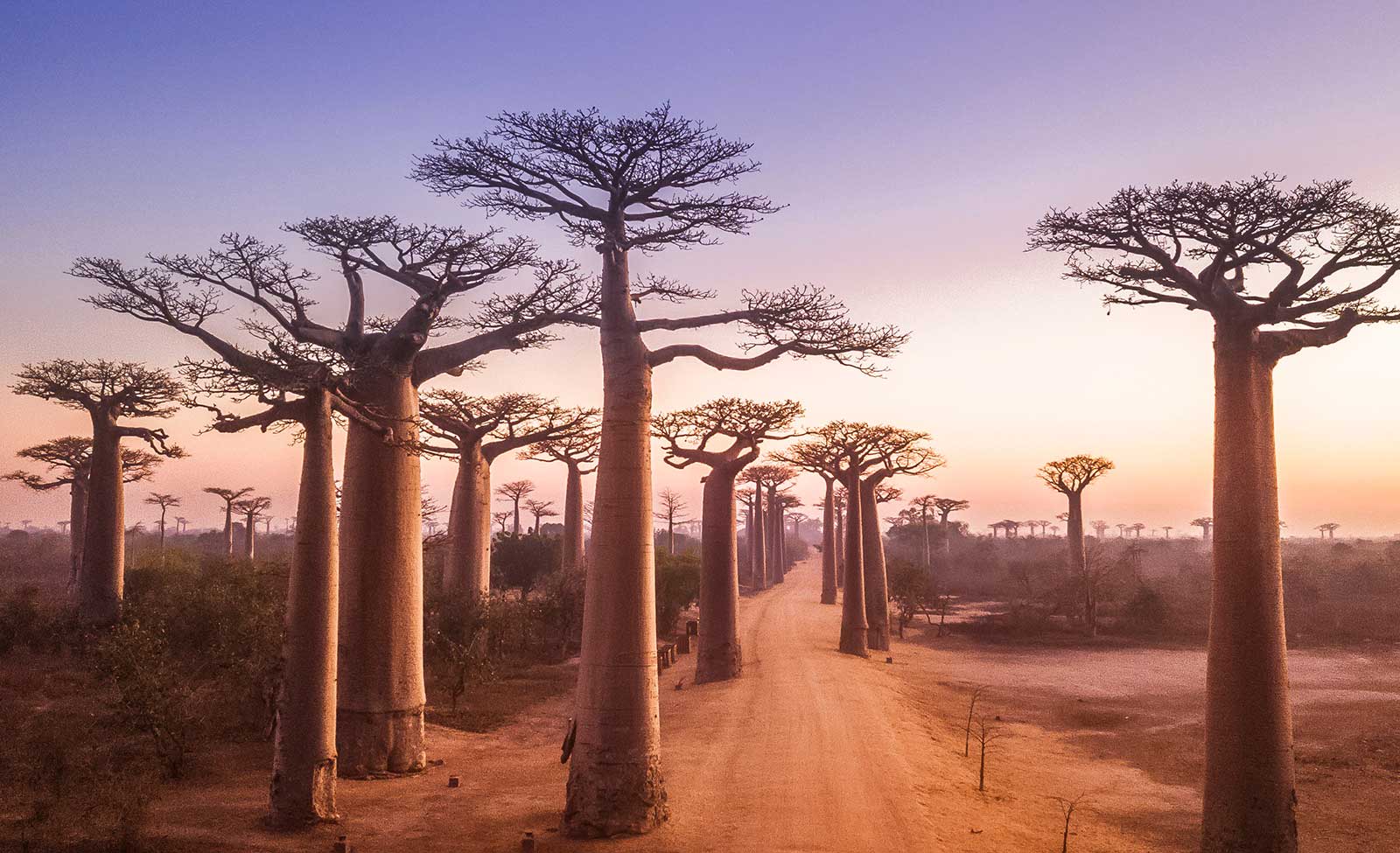
Madagascar's national parks, such as Andasibe-Mantadia or Isalo, allow visitors to observe lemurs in their natural habitat, surrounded by exceptional endemic flora that evolved in isolation over millions of years. The Avenue of the Baobabs, near Morondava, offers one of the island's most photographed landscapes, particularly striking at sunset. The highlands around Antananarivo reveal terraced rice fields and traditional villages, reflecting Madagascar's rich blended culture, drawing on African, Asian and Arab influences across the centuries.
Along the coast, the island of Nosy Be and its surroundings draw visitors with beaches and diving sites, while the more arid south reveals semi-desert landscapes around Isalo National Park. Long distances and road conditions can make travel slow, which makes a focused itinerary, tailored to chosen regions and experiences, a wiser approach than attempting to cover the entire island in a single, rushed trip, however tempting that overall plan may initially seem to first-time visitors.

Cities to visit in Madagascar

Featured destinations appear first.
Coming soon.

Madagascar in pictures

Madagascar highlights

A few iconic experiences to make the most of your trip to Madagascar.

Avenue of the Baobabs

Admire these centuries-old trees lining a dirt road near Morondava, especially striking at sunset against an orange sky in the dry season.

Andasibe-Mantadia Park

Spot lemurs, including the indri, in a humid tropical forest reachable on a day trip from Antananarivo over one or two days.

Isalo National Park

Explore canyons, rocky plateaus and natural pools in this arid landscape in the island's south, ideal for hiking and photography.

Nosy Be island

Enjoy white sand beaches and renowned diving sites around this island off Madagascar's northwest coast, popular for relaxed getaways and family trips.

Malagasy highlands

Cross terraced rice fields and traditional villages at the heart of the island's central highlands, between Antananarivo and Antsirabe in the country's center.

Endemic wildlife

Discover lemurs, chameleons and orchids unique to Madagascar, the result of millions of years of isolated evolution on the great island.

Practical information

Capital
Antananarivo
Area
about 587,041 km²
Population
about 30 million
Languages
Malagasy and French (official)
Currency
Malagasy ariary (MGA)
Time zone
UTC+3
Climate
Tropical, varies by region
Best season
April to November

Frequently asked questions about Madagascar

What is the best time to visit Madagascar?
The dry season, from April to November, is generally recommended for easier travel. The rainy season, from December to March, can make access to certain regions more difficult, particularly in the northeast.
Do I need a visa to visit Madagascar?
Most visitors need a visa, often issued on arrival for short tourist stays. It's best to check the requirements for your nationality before departing, as well as the maximum length of stay.
How much time should I plan for a trip to Madagascar?
Given the long distances and road conditions, two to three weeks allow you to explore several regions without rushing. A shorter trip can focus on one or two areas of the island.
What animals can be seen in Madagascar?
The island has a very high share of endemic species, including numerous lemur species, as well as chameleons and unique flora, especially within national parks such as Andasibe or Isalo.
Is it easy to get around Madagascar?
Roads can be in poor condition in some regions, making journeys slow at times. Domestic flights offer a faster way to reach certain distant areas, particularly toward the north and west of the island.
Is Madagascar suitable for a family trip?
Yes, provided the itinerary and pace are adapted, favoring reasonable distances between stops and nature activities accessible to all ages, such as watching lemurs up close in the national parks.

Plan your trip to Madagascar

Day-by-day itinerary, budget, bookings and packing in a single app.
Aperçu de l'application PlanTripNow