Malaysia travel guide: when to go, budget and itineraries

Malaysia packs Southeast Asia into a single ticket: the skyscrapers of Kuala Lumpur, the shophouses of Penang, the tea plantations of the Cameron Highlands, the beaches of Langkawi and the orangutan jungles of Borneo. It is an easy country to travel, where a good meal costs a couple of euros.

Why visit Malaysia?

Malaysia brings together three cultures, Malay, Chinese and Indian, a famous street-food scene and very varied landscapes, from the Andaman Sea islands to the old-growth forests of Borneo. English is widely spoken, transport is cheap and the 90-day visa exemption keeps planning simple. You can travel comfortably on a moderate budget, year-round if you pick the right coast.

What to see in Malaysia?

Kuala Lumpur and the Klang Valley

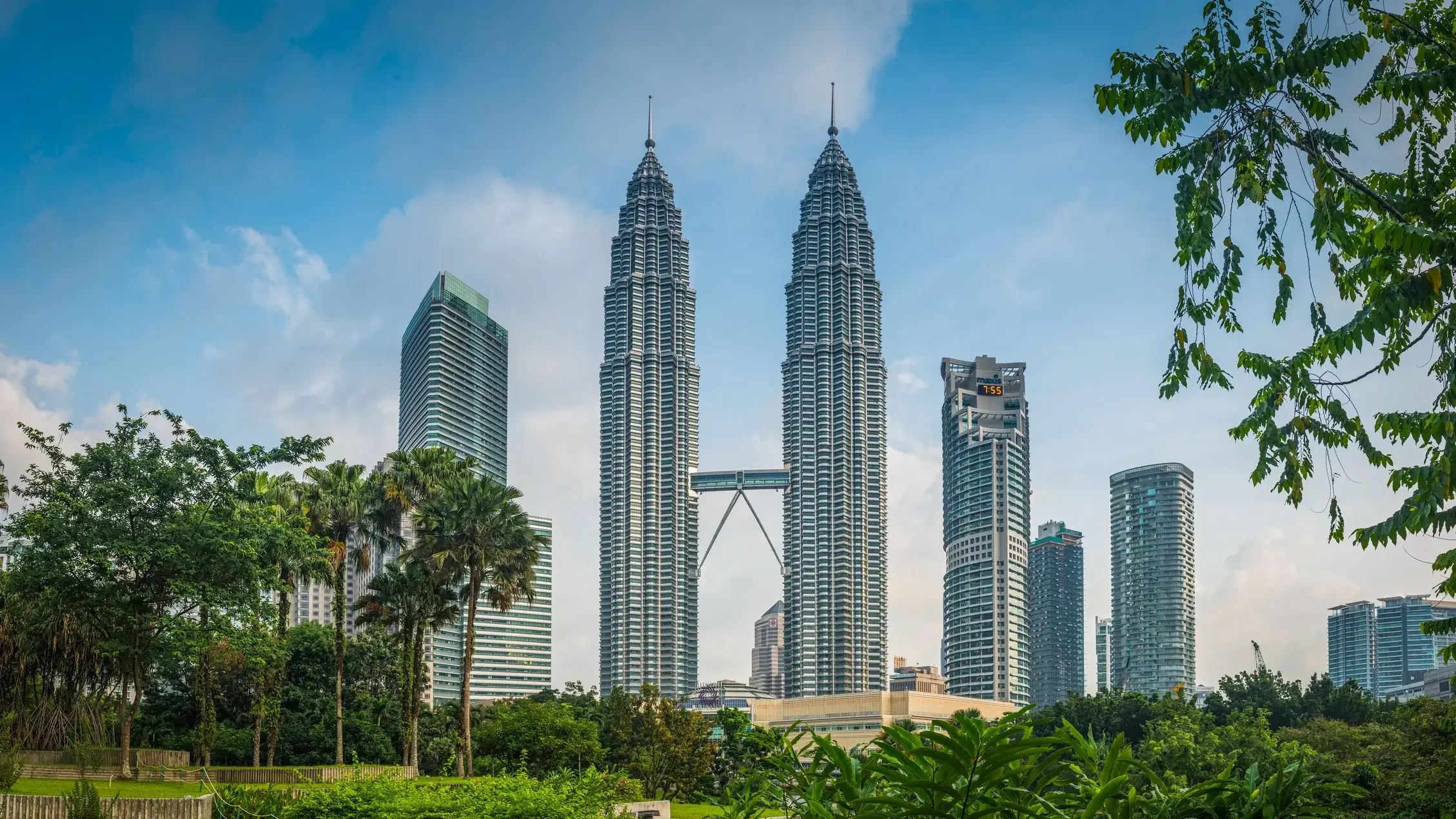
The capital takes two to three days: the Petronas Towers, Batu Caves, the Chinatown markets and the Islamic Arts Museum, closed on Mondays. KLIA airport, 45 minutes from the centre by express train, serves all of Southeast Asia and is the hub for reaching Borneo. Nearby, the administrative city of Putrajaya can be seen in half a day. It is the logical starting point for almost every itinerary, before heading north by train or taking a domestic flight. If you are combining countries, compare nearby routes in Thailand.
The west coast: Penang, Ipoh and Malacca

This is the best-connected axis in the country, doable by ETS train from Kuala Lumpur. George Town, on Penang, deserves three nights for its street food and its UNESCO-listed shophouses. Ipoh, halfway, can be seen in a day for its cave temples and white coffee. Malacca, south of the capital, needs two nights and ideally a weekend, for the Jonker Street night market held Friday to Sunday. This coast stays dry during the northeast monsoon, from November to February.

Langkawi and the Andaman Sea

Off the Thai border, the Langkawi archipelago lives on duty-free shopping and beaches: Pantai Cenang for buzz, Tanjung Rhu for quiet. You reach it by ferry from Penang, about 2h45, or by direct flight from Kuala Lumpur in one hour. Two to three nights are enough for the cable car, the sky bridge and a boat trip through the Kilim mangroves. The water is swimmable year-round, with a rougher sea in July and August.

The east coast, its islands and the monsoon

Facing the South China Sea, the Perhentian, Redang and Tioman islands offer the best snorkelling in the country, with turtles and reef sharks. They close from early November to late February, when the northeast monsoon makes the crossing impossible: the usable window runs March to October. Access is from the Kuala Besut jetty, then a 30-minute speedboat. Bring cash, ATMs are scarce or absent. The region is more conservative, so cover up in town.

The Cameron Highlands and the tea country

At 1,500 metres, the Cameron Highlands offer a cool climate, around 18 degrees, and landscapes of tea plantations reached by bus from Kuala Lumpur in four hours. Two nights let you visit a Boh factory, walk the numbered trails and reach the Mossy Forest, which can only be entered with a booked guide. Penang is then five hours away by road. Bring a fleece, nights drop below 15 degrees.

Malaysian Borneo: Sabah and Sarawak

One hour by air from the peninsula, Borneo holds Mount Kinabalu (4,095 metres), the orangutans of Semenggoh and Sepilok, and the wildlife cruises of the Kinabatangan river. Kuching, in Sarawak, is the base for Bako park, reached by boat. Allow at least four to five days for a real loop. The French foreign ministry advises against eastern and northern Sabah, around Sandakan and Semporna: favour Sarawak and western Sabah. From Kota Kinabalu, Singapore and Indonesia are under two hours away by air.

Cities to visit in Malaysia

Featured destinations appear first.
Coming soon.

Malaysia in pictures

Malaysia's must-sees

From the capital's skyscrapers to the forests of Borneo, the sites not to miss on a first trip.

Petronas Towers

The two 452-metre steel spires dominate Kuala Lumpur; the skybridge and observation deck must be booked online, and morning slots sell out fast.

Batu Caves

A staircase of 272 rainbow steps climbs to a Hindu shrine set in a limestone cave, guarded by a 43-metre golden statue of Murugan.

George Town

The UNESCO-listed heart of Penang blends Chinese temples, mosques, wall murals and one of the best street-food scenes in Asia.

Malacca

A former Portuguese then Dutch trading post, the town lines up a red church, a Chinatown and museums along a river fringed with painted houses.

Cameron Highlands

A cool plateau covered in tea plantations, strawberry farms and mossy forest, four hours by road from the capital.

Langkawi

A duty-free archipelago in the Andaman Sea, known for its beaches, its cable car and a sky bridge perched 700 metres above the jungle.

Perhentian Islands

Two white-sand islands on the east coast, prized for snorkelling with turtles, closed during the monsoon from November to February.

Mount Kinabalu

Malaysia's highest point at 4,095 metres, climbed over two days with a compulsory guide; the surrounding national park is UNESCO-listed.

Kinabatangan River

On this Borneo river, dawn and dusk cruises let you spot proboscis monkeys, hornbills and sometimes pygmy elephants.

Similar destinations

Other countries you might like as much as Malaysia.

Similar regions

Other regions you might like as much as Malaysia.

Frequently asked questions about Malaysia

Should I pick the east coast or the west coast of Malaysia?
It depends on the season. From November to February the monsoon closes the east-coast islands such as the Perhentians, so Penang, Langkawi and the west coast are the safe choice. From March to October the east coast becomes the better option for diving.
How many days to see the peninsula and Malaysian Borneo?
Allow at least fifteen days to combine both: a week on the peninsula between Kuala Lumpur, Penang and an island, then four to five days in Borneo. With ten days it is better to choose one or the other.
Is it safe to visit Sabah and the Sandakan area?
The French foreign ministry advises against eastern and northern Sabah, around Sandakan, Semporna and Tawau, due to kidnapping risk. Kota Kinabalu, Mount Kinabalu and all of Sarawak remain under normal precautions.
Is the MDAC arrival card really compulsory for Malaysia?
Yes. Since December 2023 every traveller must complete the digital MDAC form online within the three days before arrival, free of charge, on the immigration portal. Without it, boarding can be refused.
How do I get from Kuala Lumpur to Singapore or Thailand?
Regular buses and trains link the capital to Singapore in about five hours, and the train runs towards Thailand via Butterworth and Padang Besar. Low-cost domestic flights are also frequent and cheap.
Where can I see orangutans in Malaysia?
Two rehabilitation centres are open to visitors: Semenggoh near Kuching in Sarawak, and Sepilok near Sandakan in Sabah. Semenggoh pairs easily with a Bako park trip and avoids the advised-against zone of eastern Sabah entirely.
Is durian banned in Malaysian hotels?
Often, yes. This strong-smelling fruit is prohibited in many hotels, taxis and public transport, with dedicated signs. It is eaten at markets and street stalls instead, mostly from June to August.

Plan your trip to Malaysia

Day-by-day itinerary, budget, bookings and packing in a single app.
Aperçu de l'application PlanTripNow