Skip to content

Plan a trip to Sweden: when to go, budget and itineraries

Endless archipelagos, forest covering two thirds of the country, design-led cities and summer nights that never fall. Sweden runs from the cultivated south to the Arctic Circle, by train, ferry or car, with a relationship to nature that changes the way you travel.
  • 1 city

At a glance

Currency
Swedish Krona
Time difference
UTC+1
Visa
None
7-day budget
€1,008
Per person, comfort profile, excluding international flights.

Why visit Sweden?

Sweden is one of the largest countries in Europe yet one of the least densely populated, which means vast wilderness and a right of public access written into law (allemansratten). People come for Stockholm and its archipelago of 30,000 islands, for Lapland and its northern lights, and for logistics that make travel easy: punctual trains, English spoken everywhere, near-universal cashless payment.

When to visit Sweden

Temperatures, rainfall and crowds month by month, to pick your window.
When to visit Sweden
MonthTemperaturesRainCrowdsVerdict
January-3 to 1 °C9 dVery quietThe darkest month, barely six hours of daylight and a damp cold; only worth it if you want the city to yourself.
February-3 to 1 °C7 dQuietThe sportlov school break fills the northern ski resorts, while daylight slowly returns to Stockholm.
March-1 to 5 °C7 dQuietSnow is still possible but days lengthen fast; a good trade-off of low prices and empty museums.
April3 to 11 °C8 dQuietSpring gets going, tentative terraces and greening parks; Easter can push prices up for a week.
May7 to 17 °C8 dModerateArguably the best light-to-crowd ratio: seventeen hours of daylight, lilacs in bloom, crowds still reasonable.
June12 to 21 °C9 dBusyMidsummer (around 21 June) empties the cities and packs the archipelago; book well ahead for that week.
July15 to 24 °C9 dPackedPeak season and top prices; Swedes are on holiday, so ferries and red cabins sell out from spring.
August14 to 22 °C10 dBusyBaltic water at its warmest and mild evenings, though showers become frequent from mid-August.
September10 to 17 °C10 dModerateBack-to-school calm returns with the first autumn colours; forest mushroom picking is in full swing.
October6 to 10 °C11 dQuietShort grey days and cafes packed for fika: an indoor mood, few tourists, negotiable hotel rates.
November2 to 5 °C12 dVery quietThe absolute low point of the tourist year, dark by 3 pm; mainly of interest for chasing the aurora further north.
December-1 to 3 °C11 dModerateChristmas markets, Saint Lucia on the 13th and the Nobel ceremony on the 10th revive visitor numbers despite the darkness.
Source: Pays tres etire nord-sud : tableau cadre sur Stockholm et le sud-est, l'axe touristique principal (le Norrland et la montagne sont nettement plus froids et enneiges). Normales 1991-2020 station Observatorielunden via Wikipedia/SMHI, recoupees avec weather-and-climate.com ; temperatures de la mer Baltique (agregateurs seatemperature, moyennes pluriannuelles). Releve septembre 2026.

What to see in Sweden

Stockholm and Lake Malaren

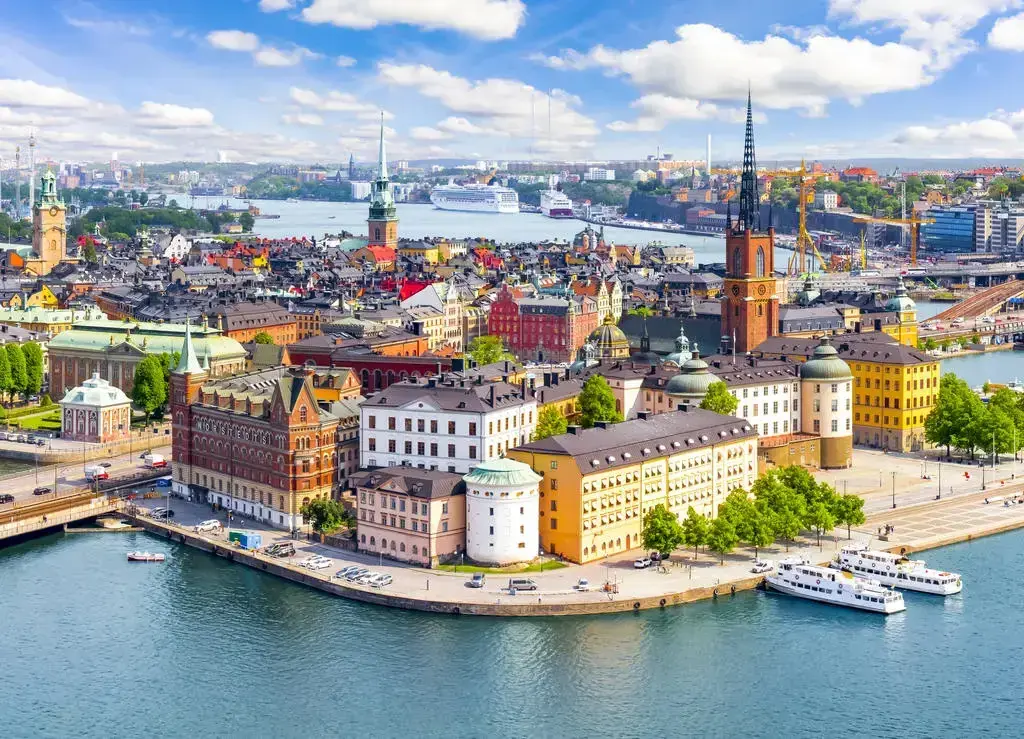
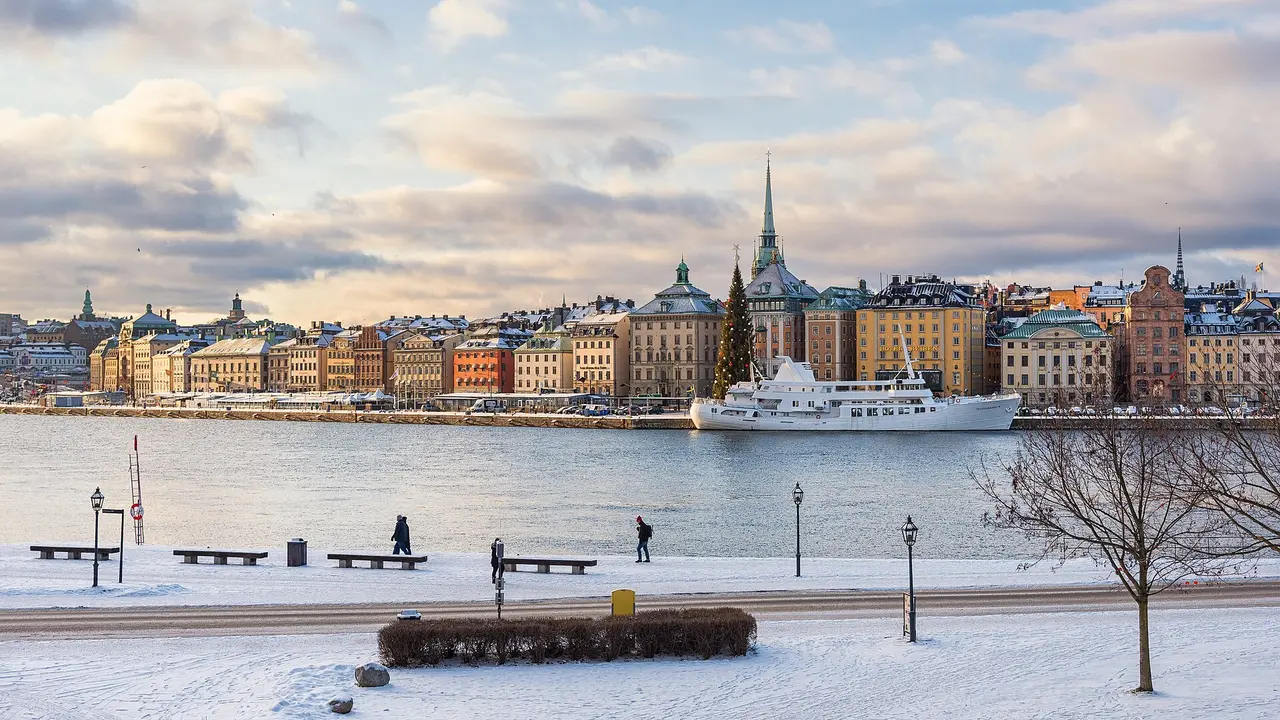
The capital spreads across fourteen islands linked by some fifty bridges. Allow three full days: Gamla Stan, the Vasa Museum and its 1628 warship, Skansen and a ferry trip into the near archipelago (Vaxholm is 1h15 by boat). Around the city, Lake Malaren serves Uppsala, a university town with a Gothic cathedral, 40 minutes by train, and Sigtuna, the country's oldest town. A 72-hour transit pass costs around 40 EUR and covers metro, buses and city boats.
Gothenburg and the west coast

The country's second city revolves around its canals, the wooden Haga district and a respected food scene. From here the southern archipelago is free with the transit card, and the Bohuslan coast runs north between pink granite and fishing villages. Gothenburg is three hours by train from Stockholm and just over two from Malmo, making it a practical gateway via Landvetter airport. Denmark is reachable by ferry from the region.

Scania and the farming south

The far south, Scania, feels closer to Denmark than to the rest of Sweden: grain plains, Renaissance castles, rapeseed fields in spring. Malmo, linked to Copenhagen in 35 minutes by train across the Oresund bridge, works as a base. On the Osterlen coast, the standing stones of Ales Stenar overlook the sea and villages such as Kaseberga live on smoked herring. A car helps here: distances between sites run 30 to 60 minutes.

Gotland and Oland, the Baltic islands

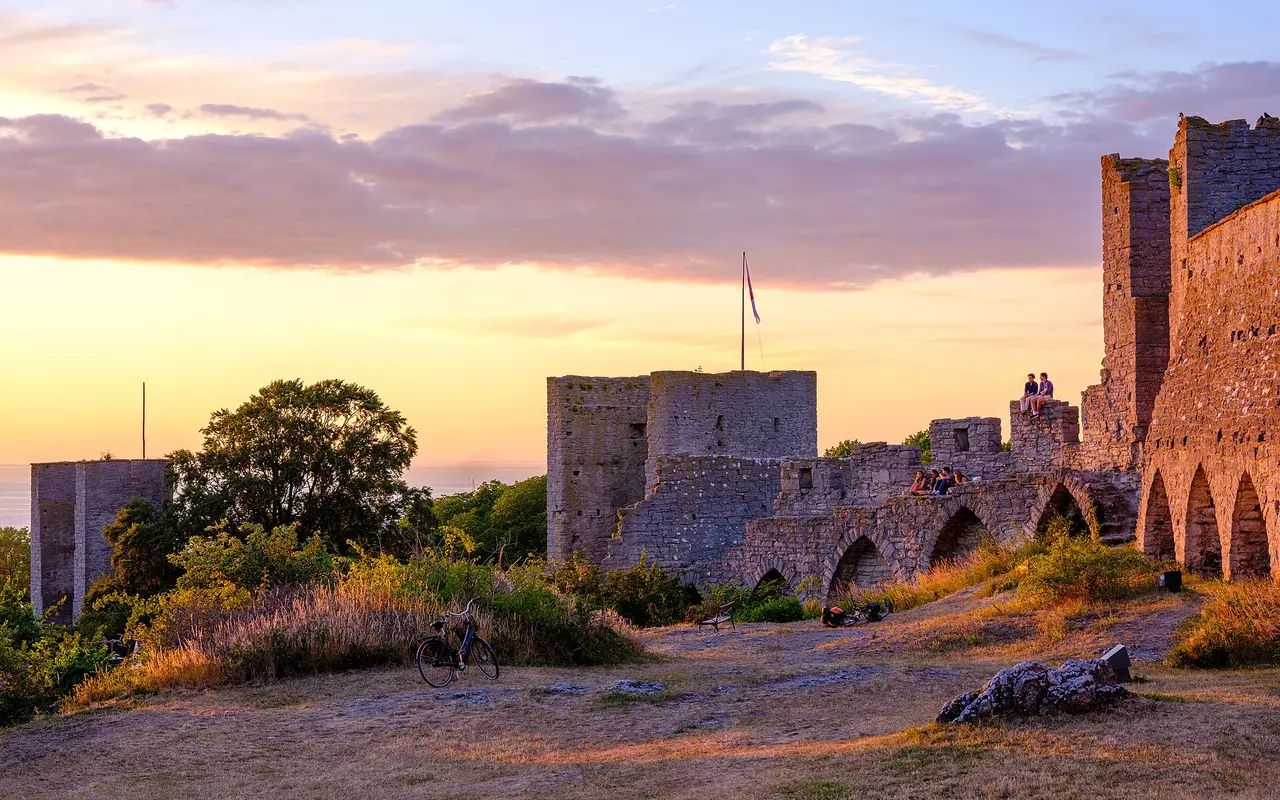
Gotland, about 3 hours by ferry from Oskarshamn or Nynashamn, holds Visby, a walled Hanseatic town listed by UNESCO, and limestone beaches. The island is best explored by bike. Oland, joined to the mainland by a 6 km bridge from Kalmar, is easier for a short visit: windmills, the Stora Alvaret limestone heath and the royal family's summer residence. Both islands fill up in July, when Swedes take their holidays; aim for June or August.

Dalarna and traditional Sweden

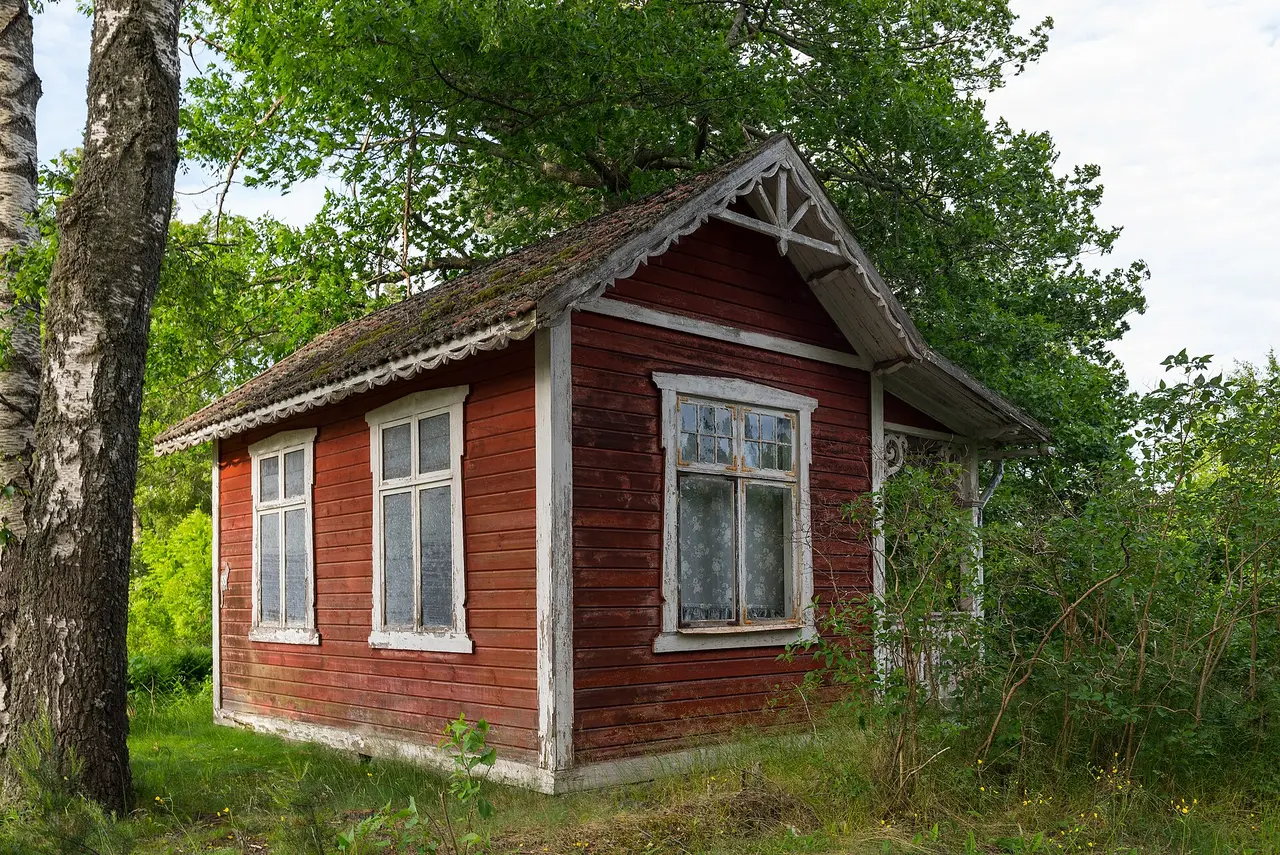
Around Lake Siljan, Dalarna concentrates the country's folk imagery: red cottages, Dala horses carved in Nusnas, especially lively Midsummer celebrations. It is also a starting point for hiking and canoeing. Rattvik and Mora, reached in 3h40 by train from Stockholm, make good bases. The Zorn Museum in Mora, devoted to the painter Anders Zorn, closes on Mondays outside the summer season.

Lapland and the far north

Beyond the Arctic Circle, Swedish Lapland lives by the midnight sun from late May to mid-July and the polar night in December and January. Abisko, known for its clear skies, is one of the best places in Europe for the northern lights, from September to March. Kiruna, a mining town being physically relocated, and the Sami village of Jukkasjarvi with its Icehotel complete the stop. You get there by plane (1h20 from Stockholm) or night train (about 16h). The range continues on the Norwegian side.

Cities to visit in Sweden

Featured destinations appear first.

How much it costs

Per person per day, excluding international travel.
Budget
74 €/ day
1 336 € for 2 people, 7 days, return flights included
Accommodation
35 €
Food
22 €
Local transport
7 €
Sights and activities
10 €
Comfort
144 €/ day
2 316 € for 2 people, 7 days, return flights included
Accommodation
65 €
Food
45 €
Local transport
12 €
Sights and activities
22 €
Premium
325 €/ day
4 850 € for 2 people, 7 days, return flights included
Accommodation
150 €
Food
90 €
Local transport
30 €
Sights and activities
55 €
Prices checked: Relevé septembre 2026. Sources : guides de budget dates (radicalstorage.com, gotripzi.com, stockholm-spirit.com, machupicchu.org), tarifs hôteliers Booking et prix supermarchés Willys/Lidl ; prix du vol via ou-et-quand.net et Air France. Vol A/R Paris-Stockholm estimé 150 EUR par personne hors vacances scolaires, reserve au moins trois semaines à l'avance (moyenne annuelle constatée 176 EUR, creux ~126 EUR en septembre). Occupation : lit en dortoir pour backpacker, chambre double partagée a deux pour comfort et premium. Budget cadre sur l'axe touristique classique Stockholm - Göteborg - sud du pays ; la Laponie et les lodges du Grand Nord (chiens de traineau, hotels de glace) coûtent nettement plus. Taxe de séjour déjà incluse dans les tarifs hôteliers suédois.

Getting there

Airports serving Sweden, from main hubs to secondary ones.
  • ARNStockholm-Arlanda AirportStockholmMain
  • GOTGöteborg Landvetter AirportGöteborgMain
  • KRNKiruna AirportKirunaMain
  • LLALuleå AirportLuleåMain
  • LPILinköping City AirportLinköpingMain
  • MMXMalmö Sturup AirportMalmöMain

Entry, health and safety

For FR travellers

Entry requirements

No visa for a tourist stay

La Suede est membre de l'Union européenne : les ressortissants français entrent librement avec une carte nationale d'identité ou un passeport en cours de validité, sans limite de durée pour un séjour touristique. Les autorités recommandent de voyager avec un passeport valide ou une carte d'identité au format électronique. Contrôles d'identité renforcés à la frontière avec le Danemark (pont de l'Öresund, ferries).

Health

Advised: Être a jour du calendrier vaccinal français (diphtérie, tétanos, poliomyélite, coqueluche, rougeole-oreillons-rubéole). Vaccination contre l'encéphalite a tiques conseillée selon les conditions du séjour, en zone rurale ou boisée.

Encéphalite a tiques transmise par les morsures de tiques au printemps et en été, surtout dans le centre-sud du pays entre Stockholm et Göteborg. Système de santé de bon niveau ; 1177 pour un conseil médical non urgent. Assurance maladie-rapatriement recommandée avant le départ.

Safety

Normal precautions

Emergency

112

Checked in septembre 2026 against the official source. Entry rules change: check the official source before you travel, it alone is authoritative.

Sweden in pictures

Photo credits : ArildV, CC BY-SA 4.0, Wikimedia Commons ; Dheerav2 at English Wikipedia, CC BY-SA 2.5, Wikimedia Commons ; Arild, CC BY-SA 2.0, Wikimedia Commons ; Marcusroos ( talk ) 18:39, 14 February 2009 (UTC), CC BY-SA 3.0, Wikimedia Commons ; Pudelek, CC BY-SA 4.0, Wikimedia Commons

Sweden's must-see sights

From urban landmarks to Arctic landscapes, these are the places most trips to Sweden are built around.

Vasa Museum

In Stockholm, the world's only near-intact 17th-century warship, raised in 1961 after 333 years on the seabed.

Gamla Stan

Stockholm's medieval core on its islet: cobbled lanes, Stortorget square, the royal palace and the country's narrowest street.

Abisko National Park

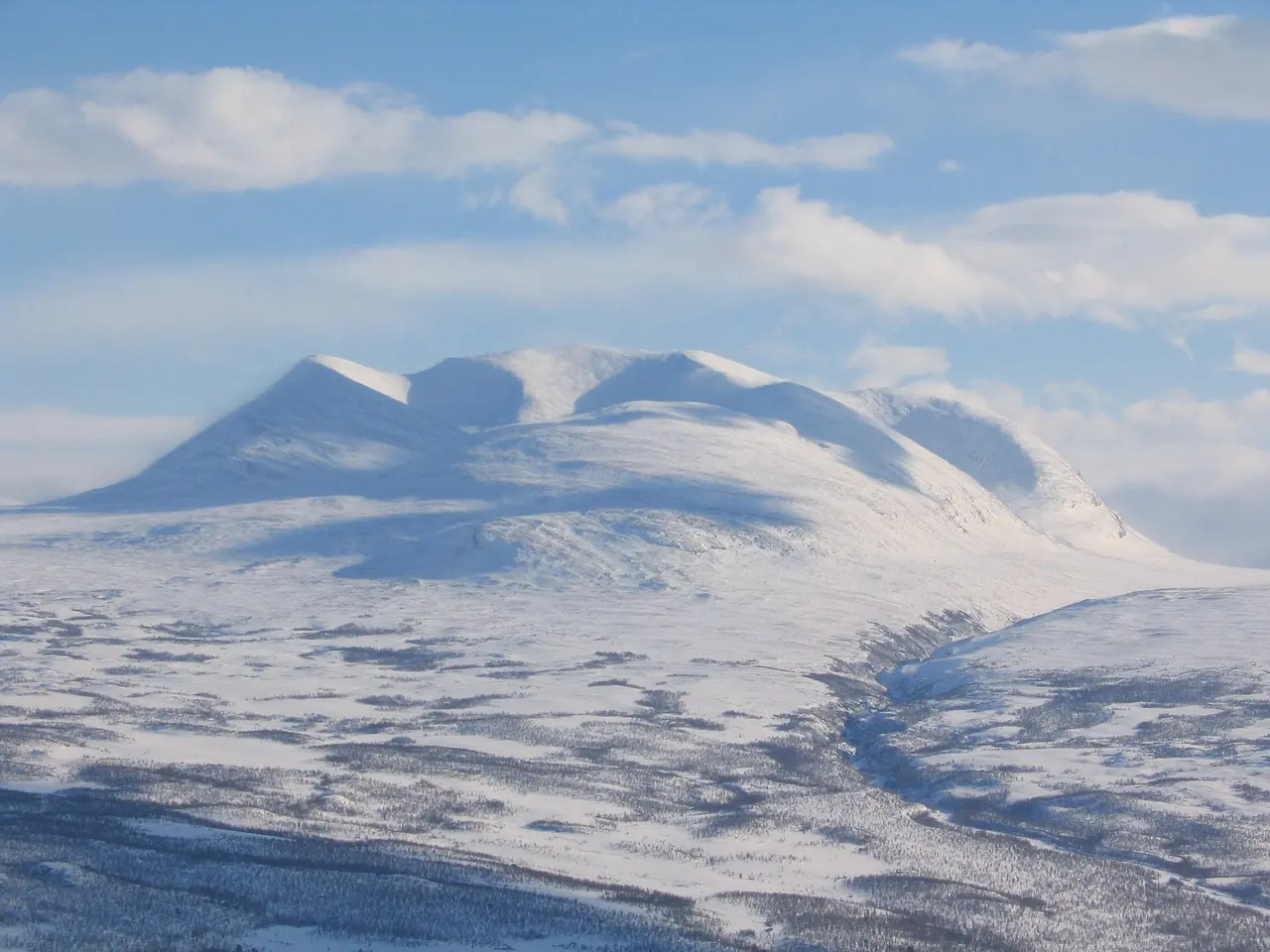
In Lapland, a glacial valley with a dry microclimate, a world reference for viewing the northern lights between September and March.

Icehotel, Jukkasjarvi

An ice hotel rebuilt every winter since 1989 beside the Torne River, with a refrigerated section open year-round.

Visby, Gotland

A UNESCO-listed Hanseatic town ringed by 3.5 km of 13th-century walls and church ruins overrun with roses.

Stockholm City Hall

Home of the Blue Hall where the Nobel banquet is held each 10 December, seen only on a guided tour, with a 106 m tower.

Oresund Bridge

A 16 km part-bridge, part-tunnel crossing between Malmo and Copenhagen, covered in 35 minutes by train to link Sweden with the continent.

Practical information for a trip to Sweden

Currency
Swedish krona (SEK). Sweden has not adopted the euro.
Cash
Almost useless: cards and contactless are accepted everywhere, even for tiny amounts and in public toilets.
Alcohol
Drinks above 3.5 percent are sold only in state-run Systembolaget shops, closed on Sundays and early on weekdays.
Access to nature
The allemansratten lets you walk, forage and camp one night on most private land, keeping your distance from homes.
Tap water
Drinkable and of very high quality across the country.
Power sockets
Types C and F, 230 V: same as mainland Europe, no adapter needed from France.
Tipping
Not expected: service is included. Diners sometimes round up the bill in restaurants.
Museums
Many close on Mondays; several national museums in Stockholm are free.
Daylight
Near-constant daylight in June in the north, and under 6 hours of light in Stockholm in December.
Mosquitoes
Widespread and persistent in Lapland and the north from June to August: repellent is essential.

Similar destinations

Other countries you might like as much as Sweden.

Similar regions

Other regions you might like as much as Sweden.

Frequently asked questions about travelling in Sweden

How many days do you need for Stockholm and Lapland?
Plan at least 8 to 10 days: three or four days for Stockholm and its archipelago, a domestic flight, then three or four days around Abisko and Kiruna. In under a week you have to choose one or the other.
Can you see the northern lights from Stockholm?
It is rare and unreliable: Stockholm is too far south and too bright. For real chances you need to go up to Lapland, to Abisko, Kiruna or Jukkasjarvi, between late September and early April.
Is the night train to Kiruna worth it?
Yes if the journey is part of the trip: about 16 hours from Stockholm, sleeper cabins, arriving at dawn in the far north. Otherwise the plane (1h20) saves a full day.
Do you need to rent a car to visit Sweden?
Not for Stockholm, Gothenburg, Malmo or the Lapland area around Kiruna, all well served by train and plane. A car becomes useful for Osterlen, Oland, Dalarna and the High Coast, where public transport is sparse.
When is Midsummer and do you need to book?
The festival falls on the Friday between 19 and 25 June. Cities empty out, the archipelago and countryside fill up, and many urban shops close that day. Book accommodation and ferries several months ahead.
Gotland or Oland, which should you choose?
Oland, joined by a bridge from Kalmar, suits a one or two-day detour by car. Gotland needs a 3-hour ferry but offers Visby, a UNESCO walled town, and deserves two to three days by bike.
Can you visit the Icehotel in Jukkasjarvi in summer?
Yes: the classic structure carved each winter melts in spring, but a section called Icehotel 365, refrigerated using solar power through the polar summer, stays open all year for a guided visit or a night in an ice room.
Is Sweden really a cashless country?
Almost entirely: many shops, museums and buses no longer accept banknotes at all, and some venues are card-only by policy. A fee-free international card is enough; carry a little cash only for the occasional rural market or roadside stall.

Plan your trip to Sweden

Day-by-day itinerary, budget, bookings and packing in a single app.
Aperçu de l'application PlanTripNow