The north-east coast takes two to three days. Saint-Malo and its walled-town ramparts, about 2 kilometres long, are the anchor point; Chateaubriand's tomb, on the Grand Be islet, is only reachable at low tide, so a tide table is essential. Dinard lines up its Belle Epoque villas and the Clair de Lune promenade, Cancale its oyster beds facing the bay of Mont-Saint-Michel. Further west, Cap Frehel with its heath and lighthouse, and Fort la Latte on its rocky spur, close the picture. The tidal range here regularly tops 12 metres at springs.
In the south, the Gulf of Morbihan is a small inland sea dotted with about forty islands, including the Ile aux Moines and the Ile d'Arz, served by boat from Vannes or Port-Blanc in around fifteen minutes. Nearby, the Carnac alignments count over 3,000 standing stones across 4 kilometres, freely accessible in winter and guided from June to September to protect the site. The Quiberon peninsula, joined by a thin isthmus, gives access to its wild coast and to the island ferries.
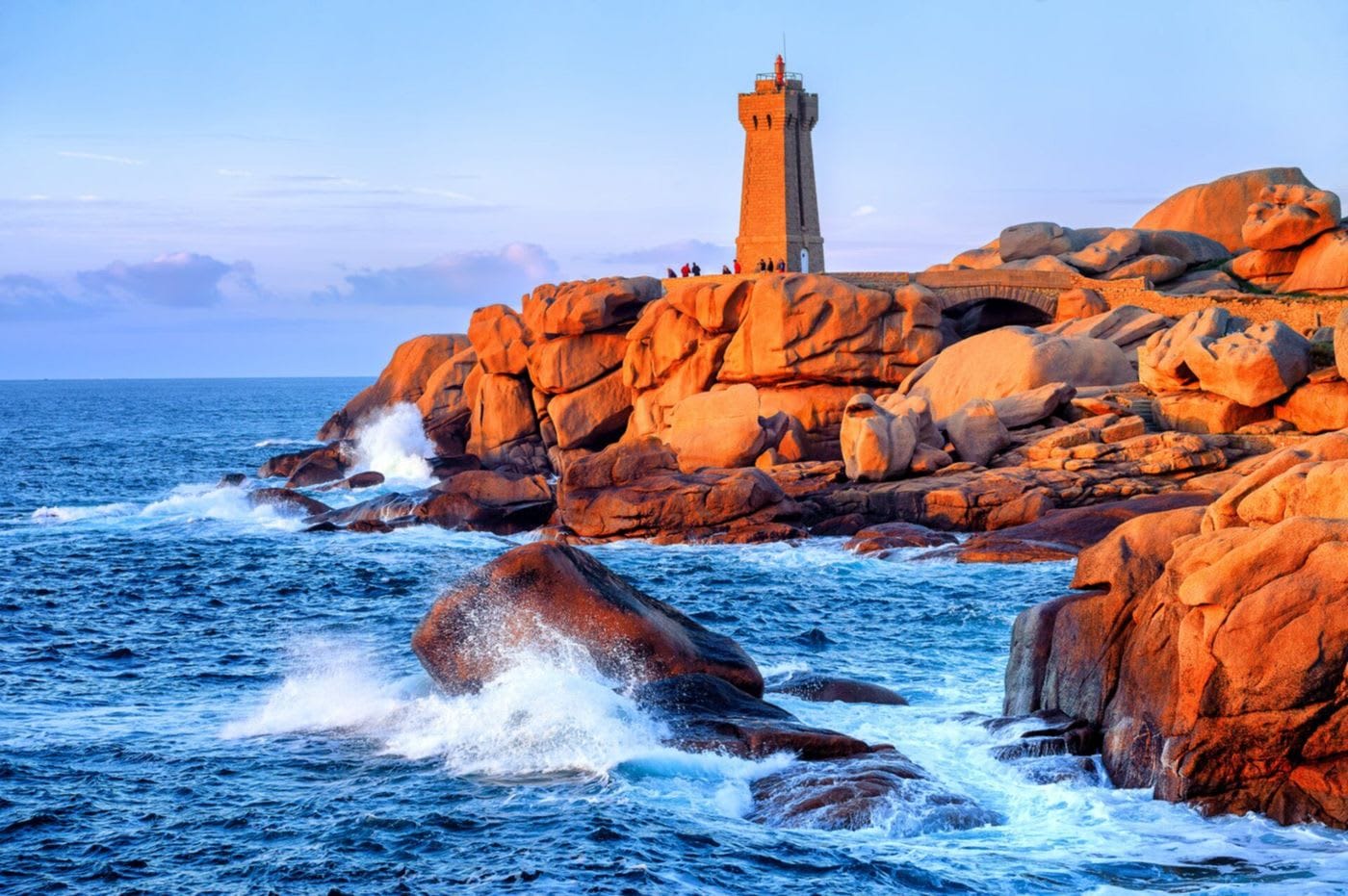
Between Perros-Guirec and Tregastel, over about 10 kilometres, pink granite forms a jumble of rounded boulders that the coast path hugs closely: allow an hour's walk between Trestraou beach and the Mean Ruz lighthouse at Ploumanac'h. Offshore, the Sept-Iles reserve, France's most important for seabirds, shelters gannets and puffins, best seen by boat from April to July. The car-free island of Brehat is a day trip from the Pointe de l'Arcouest.
The Breton end of the world has to be earned: the Pointe du Raz, a classified site, is reached by shuttle or a 15-minute walk from the car park, above the Baie des Trepasses. The Crozon peninsula lines up the Pointe de Pen-Hir and its Tas de Pois, the Cap de la Chevre and beaches with restricted summer access. For towns, Quimper and its cathedral, Locronan and its granite houses, Douarnenez and its port-museum. The parish closes of the Elorn, with carved calvaries from the 16th and 17th centuries, form a loop from Landerneau.
Brittany has around fifteen inhabited islands.
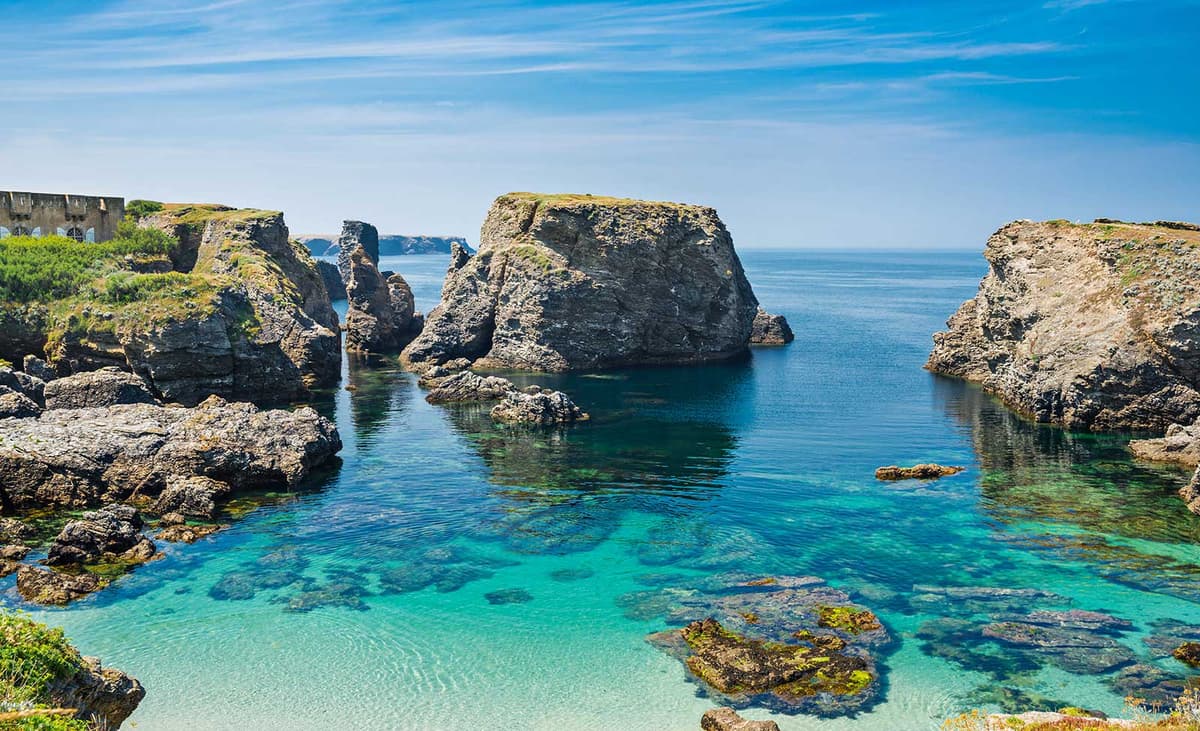
Belle-Ile-en-Mer, the largest, is 45 minutes by ferry from Quiberon and is toured by bike. Ouessant, at the far west, is 2h15 by boat from Le Conquet or 15 minutes by plane from Brest, and lives to the rhythm of the five lighthouses marking the Ushant traffic lane. Groix, to the south, fits into a day by mountain bike. Sein, almost at water level, and car-free Brehat complete the list. Book the crossing as soon as sales open in summer.
The interior, the Argoat, or land of woods, stands against the Armor, the land of the sea. The forest of Paimpont, identified with Arthurian Broceliande, is explored around the Val sans Retour and the Barenton spring. The Monts d'Arree, the region's high point at 385 metres on the Roc'h Ruz, offer bare moorland and peat bogs, with the Yeun Elez marsh at their foot. The 360-kilometre Nantes-Brest canal suits cycling along its flat towpaths, notably around Bon-Repos abbey.
The savoury buckwheat galette differs from the sweet wheat-flour crepe; both come with a bowl of cider. The coast supplies oysters from Cancale and Riec, scallops from the Brest roadstead, blue lobster and spider crab. Kouign-amann, born in Douarnenez, and prune far breton finish the meal. As for living culture, the fest-noz, a traditional dance listed by UNESCO, is danced in a chain all year; the Lorient Interceltic Festival, in early August, is its showcase.