Visit Alsace: when to go, what to see and what it costs

Between the Vosges and the Rhine, Alsace lines up flower-decked villages, a 170-kilometre vineyard and two cities of art, Strasbourg and Colmar. Come for the wine road in autumn, the Vosges summits in summer and the Christmas markets in December, when the region sells out.

Why visit Alsace?

Alsace packs a unique blend of German and French heritage onto a narrow strip: half-timbered houses, the Gothic cathedral of Strasbourg, a classified vineyard and the Vosges passes. Part of France, it is easily covered by train or car, with short distances between stops.

What is there to discover in Alsace?

Strasbourg and the Christmas capital

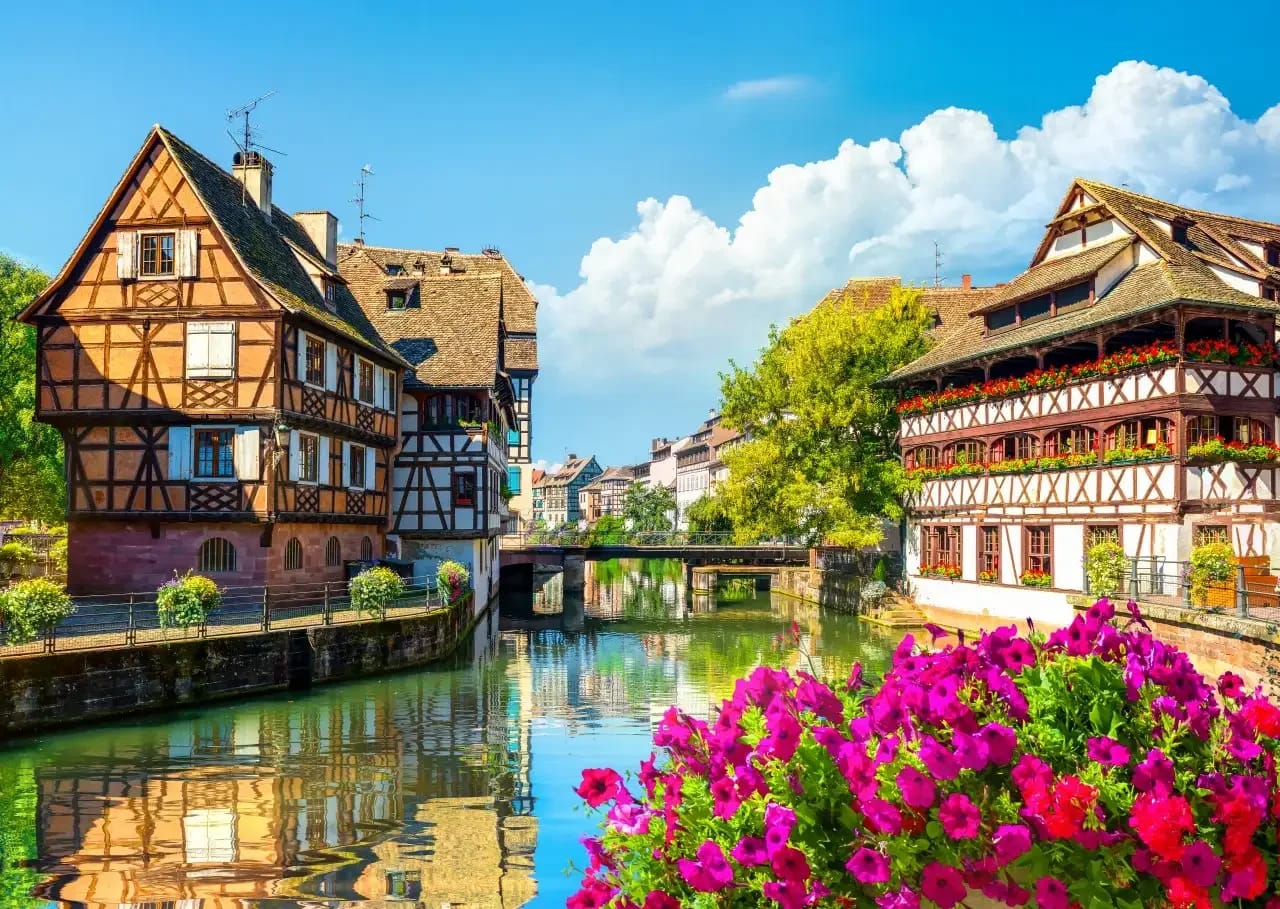
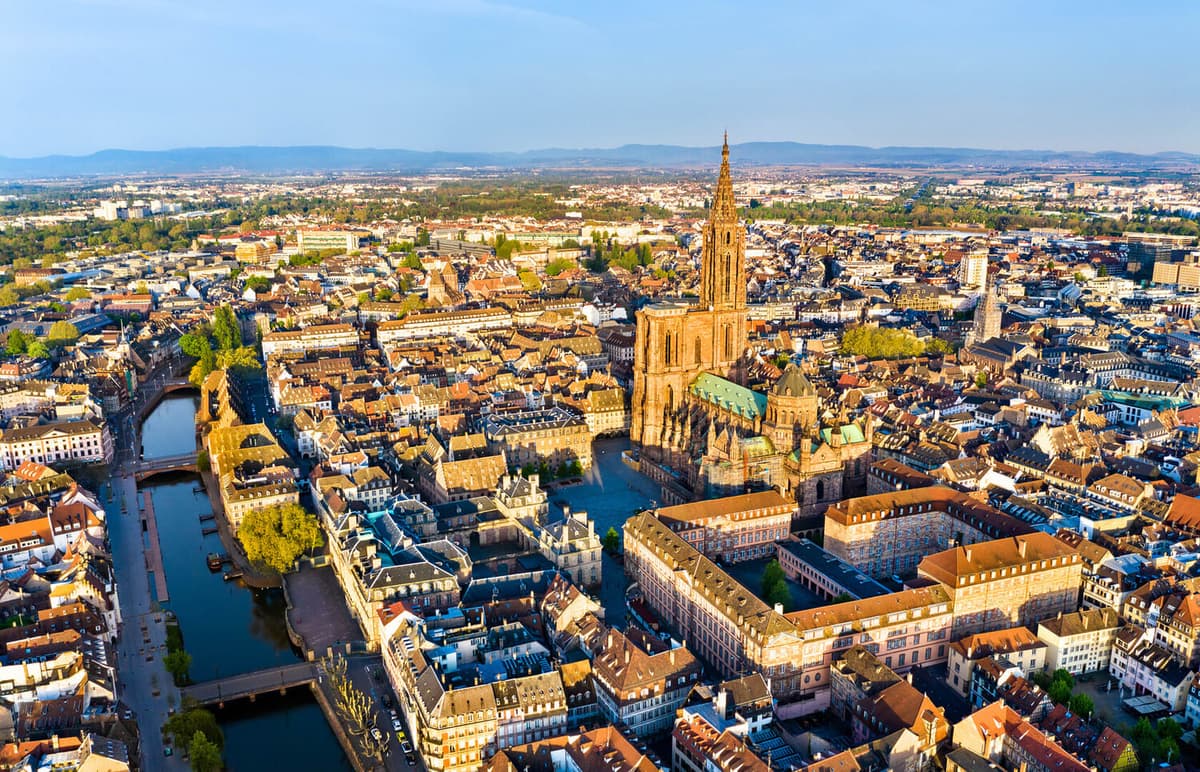
A European capital set on the Ill, Strasbourg needs two full days: the pink-sandstone cathedral and its astronomical clock (figures move at 12:30), the Petite France quarter, the Palais Rohan and the European district served by tram E. The city is 1h50 by high-speed train from Paris. In December the Christmas market, one of Europe's oldest, drives hotel prices up and clogs the centre by midday: book months ahead or stay in Colmar.
Colmar and Little Venice

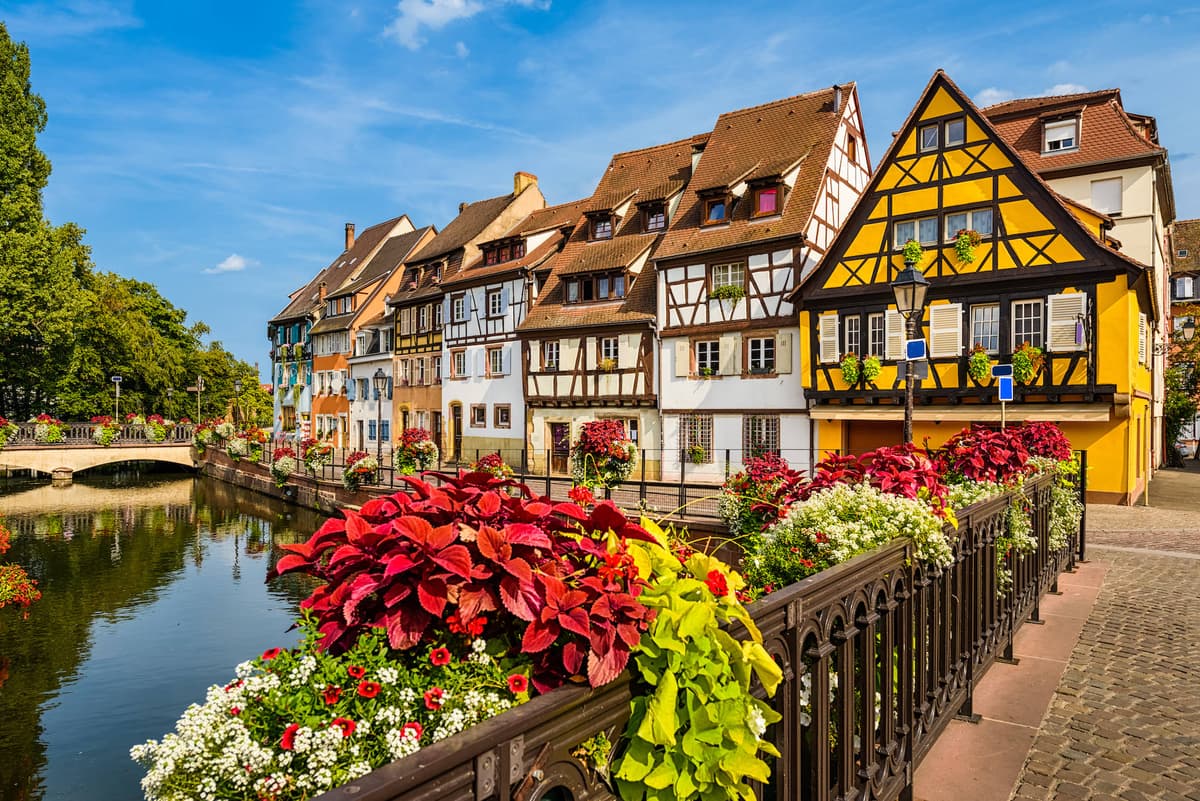
Thirty minutes south by train, Colmar works as a base for the vineyard. The Unterlinden museum holds the Isenheim Altarpiece (closed Tuesdays), and the Little Venice quarter is best photographed early, before the tour groups arrive around 10am. Allow a half-day for the old town and another for a loop through nearby villages. The wine fair in early August and the late-November Christmas market are the two highlights of the year.

The wine road and its villages

From Marlenheim to Thann, the wine road links some sixty communes over 170 kilometres. The busiest, Riquewihr, Eguisheim, Kaysersberg and Hunawihr, each take a day, ideally before 10am or after 5pm to dodge the crowds. Without a car, the vineyard cycle route offers about a hundred waymarked kilometres, and seasonal shuttles serve the villages from Colmar. September and October, during the harvest, give the finest light on the slopes.

Castles and the Vosges foothills

The foothills bristle with medieval ruins: Haut-Koenigsbourg castle, rebuilt in the early 20th century, commands the plain at 757 metres and is best visited right at the 9:15am opening, as the car park fills fast in season. Further south, the three castles of Ribeauville and the Kaysersberg keep are a one- to two-hour climb on foot. Mont Sainte-Odile, a major pilgrimage site, is ringed by a puzzling 10-kilometre Pagan Wall.

The Vosges, the ridge road and the lakes

To the west, the Vosges peak at the Grand Ballon, 1,424 metres. The Route des Cretes, built during the First World War, strings together passes and farm-inns over about fifty kilometres: it closes under snow from November to April. The Munster valley, the White and Black lakes and the Sentier des Roches offer half-day hikes. In winter, the resorts of La Bresse and Markstein run downhill and cross-country skiing.

Food, winstubs and the vineyard

Alsatian cooking is discovered in a winstub: garnished sauerkraut, baeckeoffe stewed for three hours, tarte flambee baked over wood, and kougelhopf for breakfast. On the wine side, seven grape varieties including riesling, gewurztraminer and pinot gris, with many estates open for visits by appointment out of season. Reckon 30 to 40 euros for a full meal at the comfort level, half that for a tarte flambee and a glass of wine.

Cities to visit in Alsace

Featured destinations appear first.
Coming soon.

Alsace in pictures

Alsace highlights

Monuments, villages and museums not to miss, from the north to the south of the region.

Strasbourg Cathedral

A Gothic masterpiece in pink sandstone; its spire was long the tallest in Europe, and 330 steps lead to the viewing platform.

Petite France

The former tanners' and millers' quarter of Strasbourg, threaded with canals and half-timbered houses from the 16th and 17th centuries.

Unterlinden Museum

Housed in a Colmar convent, it keeps the Isenheim Altarpiece, a major work of German painting; closed on Tuesdays.

Haut-Koenigsbourg

A hilltop castle rebuilt under Wilhelm II at 757 metres, with a view reaching the Black Forest on a clear day.

Eguisheim

A village with a unique concentric plan, cradle of the Alsace vineyard, regularly ranked among the loveliest villages in France.

Riquewihr

A wine town enclosed by its 16th-century ramparts, almost unchanged since the Renaissance; very busy in the afternoon.

Strasbourg Christmas Market

The Christkindelsmarik dates from 1570; over 300 chalets around the cathedral, from the last weekend of November to 24 December.

Ecomusee d'Alsace

France's largest open-air museum, at Ungersheim: 70 rural buildings re-erected and a living village with craftspeople.

Mont Sainte-Odile

A monastery perched above Obernai, encircled by the Pagan Wall, a dry-stone rampart 10 kilometres long and of uncertain age.

Cite de l'Automobile

In Mulhouse, the Schlumpf collection gathers over 400 cars including around a hundred Bugattis; the largest car museum in the world.

Similar regions

Other regions you might like as much as Alsace.

Similar destinations

Other countries you might like as much as Alsace.

Frequently asked questions about Alsace

How many days for Strasbourg and Colmar?
Allow two full days for Strasbourg and a day and a half for Colmar and its immediate surroundings. A long weekend of three to four days lets you see both cities by train, without a deep vineyard tour.
Can you do the Alsace wine road without a car?
Partly: the vineyard cycle route links the villages over about a hundred kilometres, and seasonal shuttles run from Colmar to Eguisheim, Turckheim or Kaysersberg. Out of season the service thins out and a car becomes much more practical.
When do the Alsace Christmas markets open?
The Strasbourg market opens on the last Friday of November and closes on 24 December. Colmar, Mulhouse and Kaysersberg often run to 29 or 31 December. The chalets go up from mid-November, before the official opening.
Riquewihr, Eguisheim or Kaysersberg: which village?
Riquewihr for its intact ramparts and shops, Eguisheim for its circular plan and relative calm, Kaysersberg for Albert Schweitzer's house and its fortified bridge. If you visit only one, Eguisheim stays the least crowded during the day.
Is Haut-Koenigsbourg castle worth it?
Yes for the reconstruction of a fortified castle and the view over the plain, no if you want an authentic monument: the building was almost entirely rebuilt around 1900. Arrive at opening, as the site draws over 500,000 visitors a year.
Is the Route des Cretes open in winter?
The upper part, above 1,000 metres, is closed to traffic by snow, generally from mid-November to early April. The Bonhomme and Schlucht passes stay open and give access to the Vosges ski resorts.
Alsace or the Black Forest for a weekend?
Alsace for the wine villages, the food and the cities of art; the Black Forest, right opposite, for the big forest landscapes, lakes and trails. The two combine easily: the EuroAirport and Strasbourg are under an hour from Freiburg.
What to bring back from Alsace?
A bottle of riesling or gewurztraminer from an estate you visited, a kougelhopf or Christmas bredele, a terracotta mould from Soufflenheim or Betschdorf, and gingerbread from Gertwiller, the village that made it its speciality.

Plan your trip to Alsace

Day-by-day itinerary, budget, bookings and packing in a single app.
Aperçu de l'application PlanTripNow