Douro Valley travel: wine estates, a cruise and the vine road

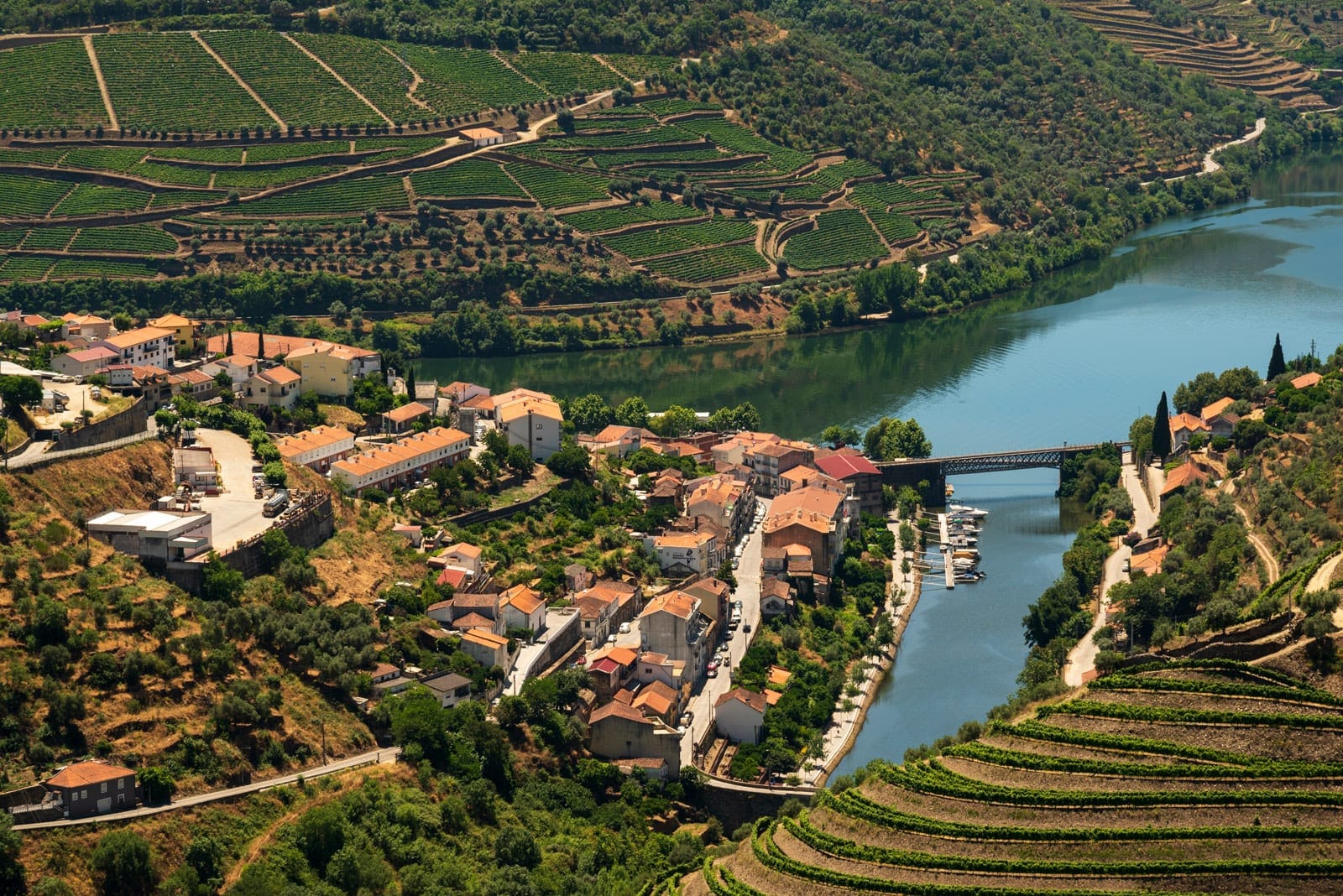
In northern Portugal, the Douro cuts a valley whose slopes have been built into terraces for three centuries. You come to taste port and still wines at source, sleep in a quinta above the river, take the boat or the train that hugs the water, and watch the light turn across the slopes.

Why visit the Douro Valley?

The Douro is the wine region of northern Portugal where port wine is born, about 1h30 east of the city of Porto. Its terraced landscape, UNESCO-listed, is seen by car on the N222 road, by boat from Regua or Pinhao, or on the rail line that follows the river. Spring and autumn, around the harvest, are the best times.

What to discover in the Douro?

Peso da Regua and the lower valley

Regua is the gateway and the historic capital of the port trade. The Museu do Douro explains the wine region's listing and the quinta system. Around it, south-bank estates such as Vallado or Pacheca are visited in half a day, and Lamego, 15 minutes away, adds the baroque staircase of Nossa Senhora dos Remedios and a sparkling wine aged in tunnels. Allow one to two nights.
Pinhao and the heart of port country

Twenty-five kilometres upriver, Pinhao sits at the centre of the best terroir. Its small station is lined with 1937 azulejos showing the harvest. The best-known estates, Bomfim, do Seixo, Nova, offer a tour, a tasting and often a table. An hour on a rabelo boat and sunset at the Sao Leonardo de Galafura viewpoint round off the day. It is the best base for two nights.

The upper Douro and the Coa valley

Beyond Pinhao the valley narrows and empties. Sao Joao da Pesqueira lines up the highest vineyards, around 600 metres, and the Sao Salvador do Mundo viewpoint overlooks a tight bend. Further on, Vila Nova de Foz Coa protects a park of open-air rock engravings up to 25,000 years old, UNESCO-listed, visited by 4x4 with a booking. Two nights for this part.

Getting around the Douro

Three means combine. The rail line from Porto to Pocinho follows the river along its second half, spectacular between Regua and Tua; check its status, as works interrupted it in late 2025. Cruises link Regua and Pinhao through locks. A car is still needed for the estates and the upper Douro: the winding N222 road between Regua and Pinhao is rated one of the finest in Europe.

Cities to visit in Douro

Featured destinations appear first.
Coming soon.

Douro in pictures

The Douro's must-sees

Six places that sum up the valley, from a baroque sanctuary to prehistoric art.

Pinhao station

A small 1937 station whose platforms are covered with azulejo panels depicting the harvest, the river and the Douro villages.

Sao Leonardo de Galafura

A viewpoint above Regua opening onto a wide panorama of bends and terraces, described by the poet Miguel Torga.

Museu do Douro

A museum in Regua in a former wine company, on the history of the vineyard, the rabelo boat and the UNESCO listing.

Lamego sanctuary

A baroque staircase of over 600 steps decorated with blue azulejos climbing to the church of Nossa Senhora dos Remedios, above Lamego.

Casa de Mateus

A baroque palace and gardens near Vila Real, shown on the Mateus rose label, with a tunnel of clipped cedars.

Coa archaeological park

A site of open-air rock engravings along the Coa, 25,000 years old, visited by off-road vehicle with a guide.

Similar regions

Other regions you might like as much as Douro.

Similar destinations

Other countries you might like as much as Douro.

Douro: frequently asked questions

Can you visit the Douro on a day trip from Porto?
Yes, on an organised tour with a boat and lunch, or by train to Regua. But one day only allows a single quinta and a short cruise. Staying overnight, in Pinhao or Regua, changes the experience and lets you catch the evening light.
Pinhao or Peso da Regua: where to stay in the Douro?
Pinhao to be at the heart of the best estates and the most photogenic scenery. Regua for a wider choice of lodging, the best-served station and quicker access from Porto. The two are linked by road, rail and boat.
Can you visit the Douro without a car?
Partly. The train serves Regua, Pinhao and Pocinho, and boats link the two main towns. But most estates and the upper Douro around Foz Coa stay out of reach without a car or a private tour.
When is the harvest in the Douro?
From mid-September to mid-October depending on altitude and vintage. It is the liveliest and priciest period: some quintas open the foot treading to visitors, but you must book several months ahead.
What is the difference between port and Douro wine?
Both come from the same vineyard. Port is a fortified wine, its fermentation stopped by adding spirit, so it is sweet and stronger. Douro wine is a standard still wine, dry, red or white, from the same grape varieties.

Plan your trip to Douro

Day-by-day itinerary, budget, bookings and packing in a single app.
Aperçu de l'application PlanTripNow