The Azores

Lost in the middle of the Atlantic, this Portuguese volcanic archipelago charms visitors with green landscapes, crater lakes and wild coastlines. The Azores are an ideal playground for hiking, whale watching and exploring unspoiled, ever-green nature.

Why visit the Azores?

The Azores are a Portuguese volcanic archipelago located in the middle of the Atlantic Ocean, known for green landscapes, crater lakes and waters rich in marine life. It is a recognized destination for hiking and whale watching.

What to discover in the Azores?

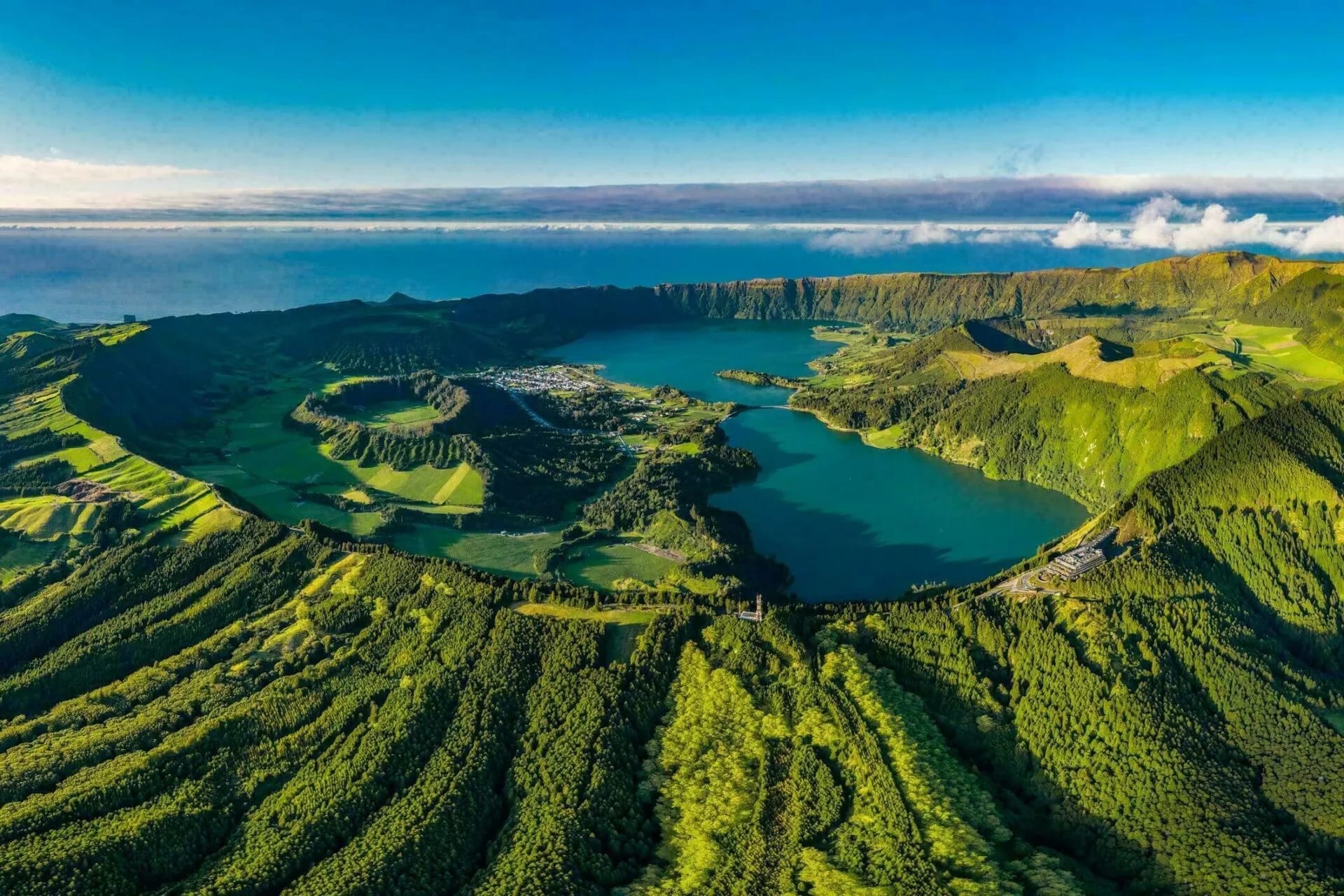
The Azores form an archipelago of nine volcanic islands located in the middle of the Atlantic Ocean, roughly halfway between Europe and North America. São Miguel, the largest island, is home to the famous twin lakes of Sete Cidades, nestled in a volcanic crater, as well as natural hot springs at Furnas. Each island in the archipelago has its own character, from steep cliffs to green pastures and traditional villages built around small, colorful harbors.
The archipelago is also known for whale and dolphin watching, thanks to the richness of its Atlantic waters. Hikers will find a network of trails crossing craters, forests and wild coastlines, while the island of Pico offers the ascent of Portugal's highest peak. On that same island, vineyards grown on black volcanic soil reflect centuries-old know-how recognized by UNESCO. The mild oceanic climate and ever-green landscapes make it a year-round nature destination, especially popular among hikers and ecotourism travelers.

Cities to visit in Azores

Featured destinations appear first.
Coming soon.

Azores in pictures

Must-see highlights

A few essentials to make the most of the Azores.

Sete Cidades lakes

Two twin lakes nestled in a volcanic crater on the island of São Miguel, offering spectacular panoramic views.

Furnas hot springs

Natural thermal springs and traditional food slow-cooked in the volcanic soil of the Furnas valley.

Whale watching

Boat trips to observe whales and dolphins in the rich waters of the Atlantic Ocean.

Pico, Portugal's peak

The volcano on Pico island, Portugal's highest point, popular with hikers seeking unique panoramic views.

Pico vineyards

Vines grown on volcanic soil, protected by black stone walls, listed as UNESCO World Heritage.

Wild coasts and cliffs

Preserved coastal landscapes, ideal for hiking and observing the volcanic natural environment.

Practical information

Capital
Ponta Delgada
Area
About 2,333 km²
Population
About 236,000 inhabitants
Language
Portuguese
Currency
Euro (EUR)
Time zone
UTC-1 (Azores Time)
Climate
Temperate oceanic, humid and changeable
Best season
May to September

Frequently asked questions

When to visit the Azores?
The period from May to September offers the best weather conditions, with mild temperatures and less rainfall, ideal for hiking and boat trips.
Are the Azores part of Portugal?
Yes, the Azores form an autonomous region of Portugal, located in the middle of the Atlantic Ocean, about 1,500 kilometers from mainland Europe.
How many islands make up the archipelago?
The Azores archipelago consists of nine main islands, each with its own landscapes, from São Miguel to Flores, including Pico and Terceira.
Do I need a visa for the Azores?
European Union citizens do not need a visa. Other nationalities should check the entry requirements applicable to Portugal before traveling.
Can you watch whales year-round?
Whale watching is possible almost year-round, with a greater diversity of species typically seen between spring and autumn.
How do you travel between the islands?
Connections are mainly by plane or seasonal ferry, with each island offering its own pace of life and local specialties.

Plan your trip to Azores

Day-by-day itinerary, budget, bookings and packing in a single app.
Aperçu de l'application PlanTripNow