The Alentejo

A vast rural region in southern Portugal, the Alentejo unfolds golden plains dotted with cork oaks, fortified villages and wine estates. Between the Roman heritage of Évora, still-wild coastline and generous food, the Alentejo invites a slow, authentic journey.

Why visit the Alentejo?

The Alentejo stands out for its vast rural expanses, historic fortified villages and rich wine heritage, with wines ranking among Portugal's most acclaimed. The region combines Roman and Moorish heritage in UNESCO-listed Évora, cork oak plains and an unspoiled Atlantic coastline, for authentic rural tourism.

What to discover in the Alentejo?

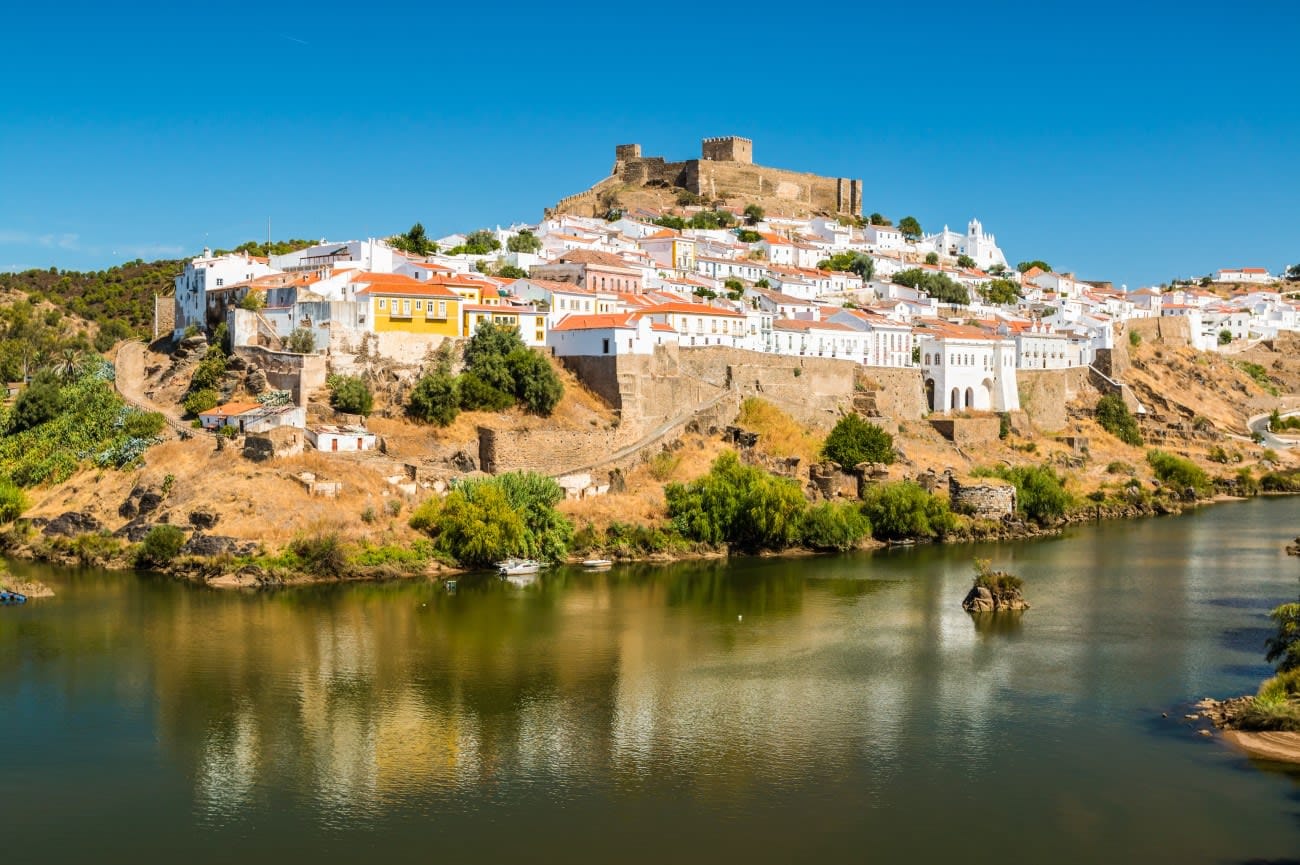
Évora, the region's historic capital and a UNESCO World Heritage site, concentrates a Roman temple, a medieval cathedral and the striking Chapel of Bones adorned with human remains. Around the city, fortified villages such as Monsaraz, Marvão or Estremoz perched on hilltops recall the region's history as a border zone with Spain, with well-preserved castles and ramparts. The surrounding plains, covered with cork oaks and olive trees, are also home to some of the country's most acclaimed wine estates.
On the coast, the Costa Vicentina offers wild cliffs and beaches still spared from mass tourism, popular with surfers and coastal hikers. Alentejo cuisine, built around bread, olive oil, black pork and sheep's cheese, is best enjoyed in family-run taverns at an unhurried pace. The Alentejo is also known for its especially clear skies, making it one of Europe's best regions for stargazing.

Cities to visit in Alentejo

Featured destinations appear first.
Coming soon.

Alentejo in pictures

The must-sees

Roman heritage, fortified villages and food: the essentials of the Alentejo.

Évora's UNESCO heritage

A Roman temple, medieval cathedral and the Chapel of Bones form the historic heart of this World Heritage-listed city.

Fortified villages

Monsaraz, Marvão or Estremoz perch their ramparts and castles on hilltops, bearing witness to the region's border history.

Wine estates

The plains of the Alentejo are home to some of Portugal's most acclaimed vineyards, open for visits and tastings.

Costa Vicentina

This wild Atlantic coastline alternates dramatic cliffs and unspoiled beaches, popular with surfers and hikers.

Alentejo cuisine

Bread, olive oil, black pork and sheep's cheese make up a rustic, generous cuisine served in family-run taverns.

Stargazing

The Alentejo's clear, low-pollution skies make it one of Europe's best regions for astrotourism.

Practical information

Main town
Évora
Area
About 31,600 km²
Population
About 700,000
Language
Portuguese
Currency
Euro (€)
Time zone
UTC+0 (Lisbon time)
Climate
Continental Mediterranean, hot dry summers
Best season
Spring and autumn

Frequently asked questions

When to visit the Alentejo?
Spring and autumn offer pleasant temperatures, ideal for visiting villages and hiking. Summer can be very hot and dry inland.
How many days should I plan for the Alentejo?
Four to five days allow you to explore Évora, several fortified villages and a wine estate, with an optional extension to the coast.
Do you need to rent a car in the Alentejo?
Yes, a car is nearly essential for exploring villages, wine estates and the coast, as public transport is limited in this rural area.
Is Évora worth a day trip?
A day covers the main historic center, but staying overnight gives more time for the Chapel of Bones and the surrounding area.
Is the Alentejo coast good for swimming?
The Costa Vicentina's beaches are stunning but often windy with strong surf, more popular with surfers than casual swimmers.
Is the Alentejo suitable for a family trip?
Yes, with villages to explore, plains to cycle through and coastal beaches, the Alentejo suits a relaxed family pace.

Plan your trip to Alentejo

Day-by-day itinerary, budget, bookings and packing in a single app.
Aperçu de l'application PlanTripNow