The Dordogne

Between limestone cliffs and honey-stone villages, the Dordogne unfolds its clifftop castles, painted caves and medieval bastides. A rural landscape shaped by its river, best explored on foot, by canoe or by bike, season after season.

Why visit the Dordogne?

The Dordogne holds one of the highest concentrations of prehistoric sites and castles in Europe, centred on the UNESCO-listed Vézère valley. Its medieval villages and river landscapes make it a top destination for nature and heritage travel.

What to discover in the Dordogne?

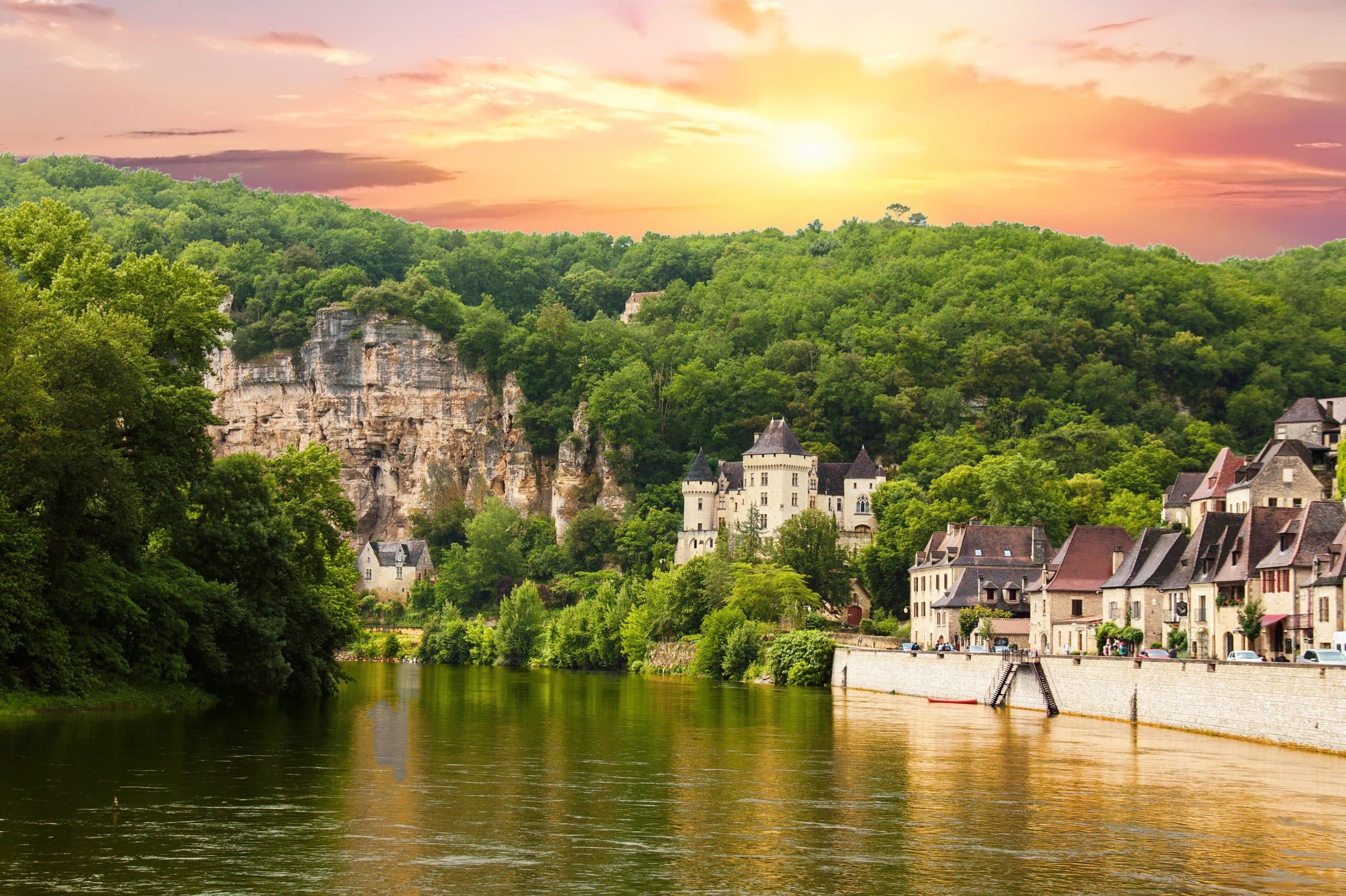
The Dordogne is shaped by the river of the same name, winding between cliffs and oak forests. The Vézère valley, a UNESCO World Heritage site, holds an exceptional number of painted caves and prehistoric shelters, including the faithful replica of the Lascaux cave. Along the riverbanks, stone villages such as Beynac and La Roque-Gageac cling to the cliffside, overlooked by their medieval castles.
Beyond the river, the area counts numerous bastides and villages ranked among the most beautiful in France, testifying to the medieval architecture of southwestern France. The Dordogne is also explored through outdoor activities: canoeing downstream, hiking the limestone plateau trails, or cycling among the Bergerac vineyards. Local markets and farms round out a visit centred on heritage and nature.

Cities to visit in Dordogne

Featured destinations appear first.
Coming soon.

Dordogne in pictures

Highlights of the Dordogne

A landscape shaped by its river, where castles, caves and stone villages follow one another along the water.

Vézère Valley

A UNESCO-listed prehistoric site with painted caves and the famous Lascaux replica.

Clifftop castles

Beynac, Castelnaud and Fénelon overlook the river from their rocky outcrops.

Stone villages

La Roque-Gageac and Domme, perched on the cliffside, rank among France's most beautiful villages.

Canoeing the river

A gentle paddle between cliffs and castles, enjoyable across the milder seasons.

Medieval bastides

Fortified towns from the 13th century, a legacy of the region's Anglo-French history.

Local markets

Producer markets where visitors find walnuts, strawberries and Périgord specialities.

Practical information

Administrative region
Nouvelle-Aquitaine
Area
About 9,000 km²
Population
About 410,000 residents
Language
French
Currency
Euro (€)
Time zone
UTC+1 (UTC+2 in summer)
Climate
Temperate oceanic
Best season
Spring to autumn

Frequently asked questions

What is the best time to visit the Dordogne?
Spring and summer are ideal for canoeing and visiting castles, while autumn offers a quieter way to enjoy the landscapes.
Can you visit the Dordogne without a car?
A car is recommended to reach the villages and castles, which are often far from train stations, though some cycling routes link the main sites.
How much time should I plan for the area?
A week allows time to combine castle visits, prehistoric caves and canoeing without rushing.
Can you visit the original Lascaux cave?
The original cave is closed to the public for preservation; visitors instead see Lascaux IV, a faithful replica reproducing the prehistoric paintings.
Which villages should not be missed?
La Roque-Gageac, Domme, Beynac and Sarlat are among the most visited villages for their preserved stone architecture.
Is the Dordogne suitable for families?
Yes, canoeing, caves and castles offer activities suited to all ages in a well-preserved natural setting.

Plan your trip to Dordogne

Day-by-day itinerary, budget, bookings and packing in a single app.
Aperçu de l'application PlanTripNow