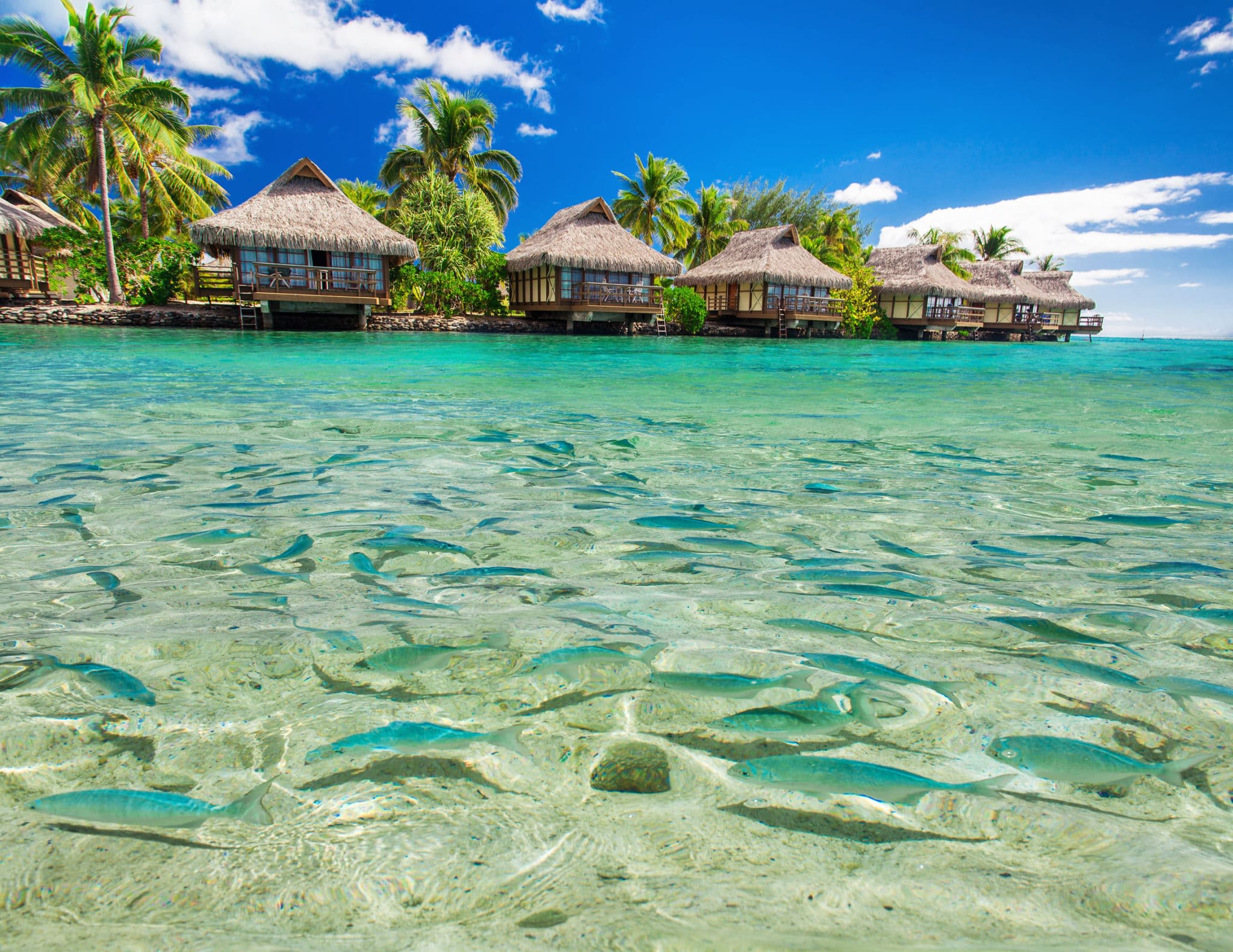
Visit French Polynesia: when to go and which islands to choose

French Polynesia is 118 islands across five archipelagos and 2,500 square kilometres of land lost in the Pacific. Society lagoons, Tuamotu atolls, Marquesan mountains: each archipelago is a trip of its own. People go mostly during the dry season, from May to October.

Why visit French Polynesia?

French Polynesia is an overseas collectivity with broad autonomy, with its own language, flag and assembly. Part of France but 15,000 kilometres from Paris, it brings together the world's most photographed lagoons, a living Polynesian culture, dance, tattoo, canoe, and an exceptional marine biodiversity spread across archipelagos with very different landscapes.

What is there to discover in French Polynesia?

The Windward Islands: Tahiti and Moorea

This is the gateway: all international flights land in Tahiti. Papeete has its market, its food trucks and its museum, the island has waterfalls, a 114-kilometre ring road and world-class surf spots such as Teahupo'o. Moorea, 30 minutes by ferry, already offers the jagged bays, the lagoon and the rays: many spend their first nights there before reaching the other archipelagos.
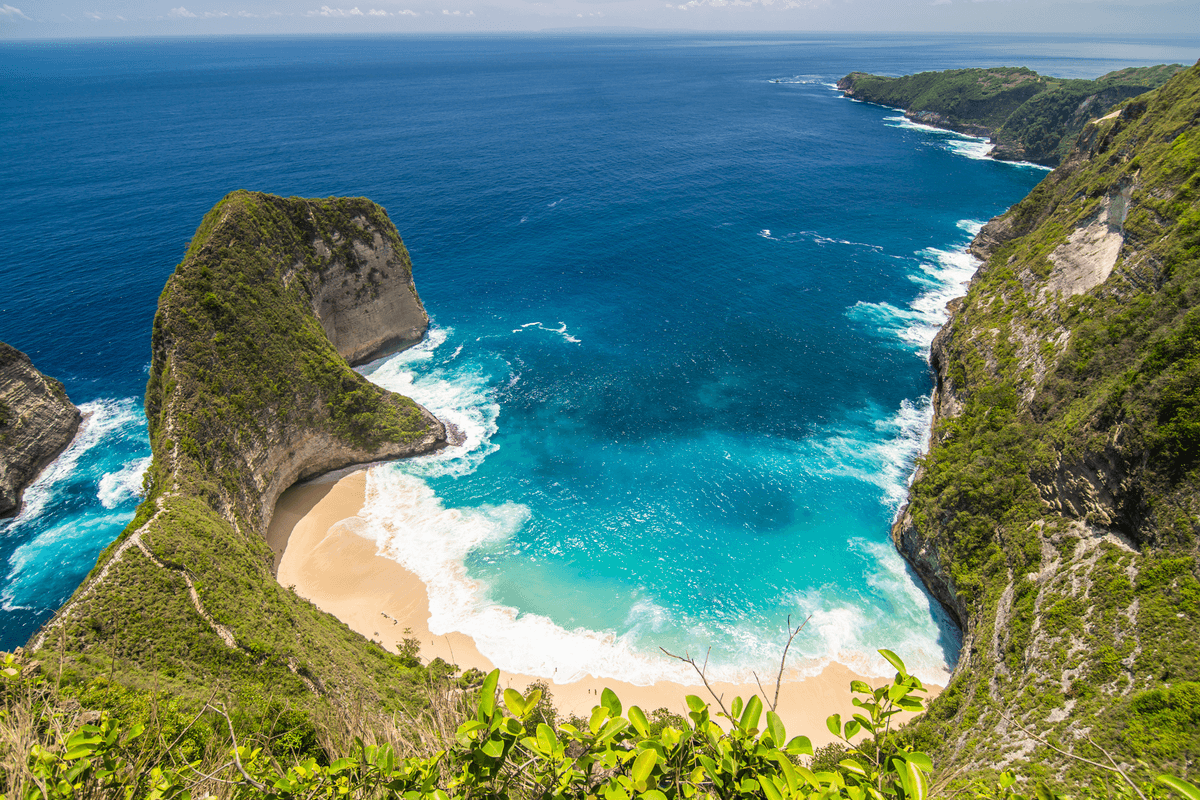
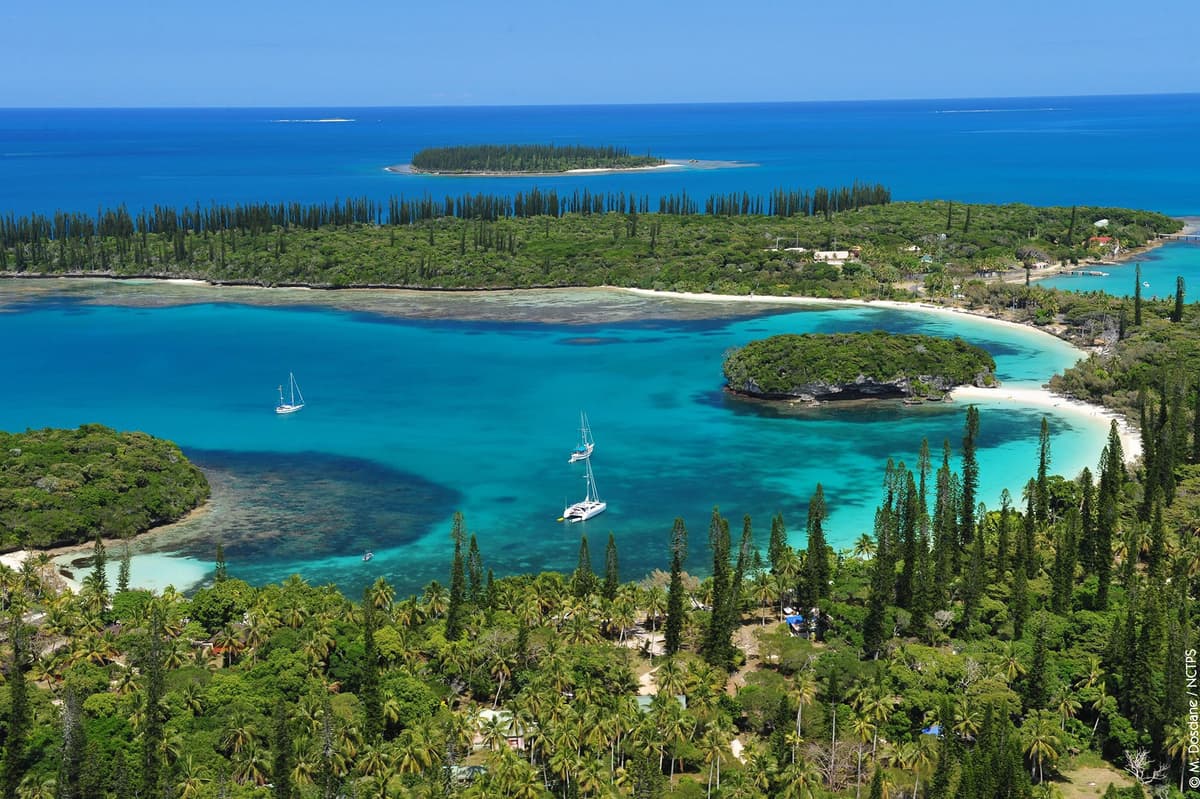
The Leeward Islands: Bora Bora, Raiatea, Taha'a, Huahine

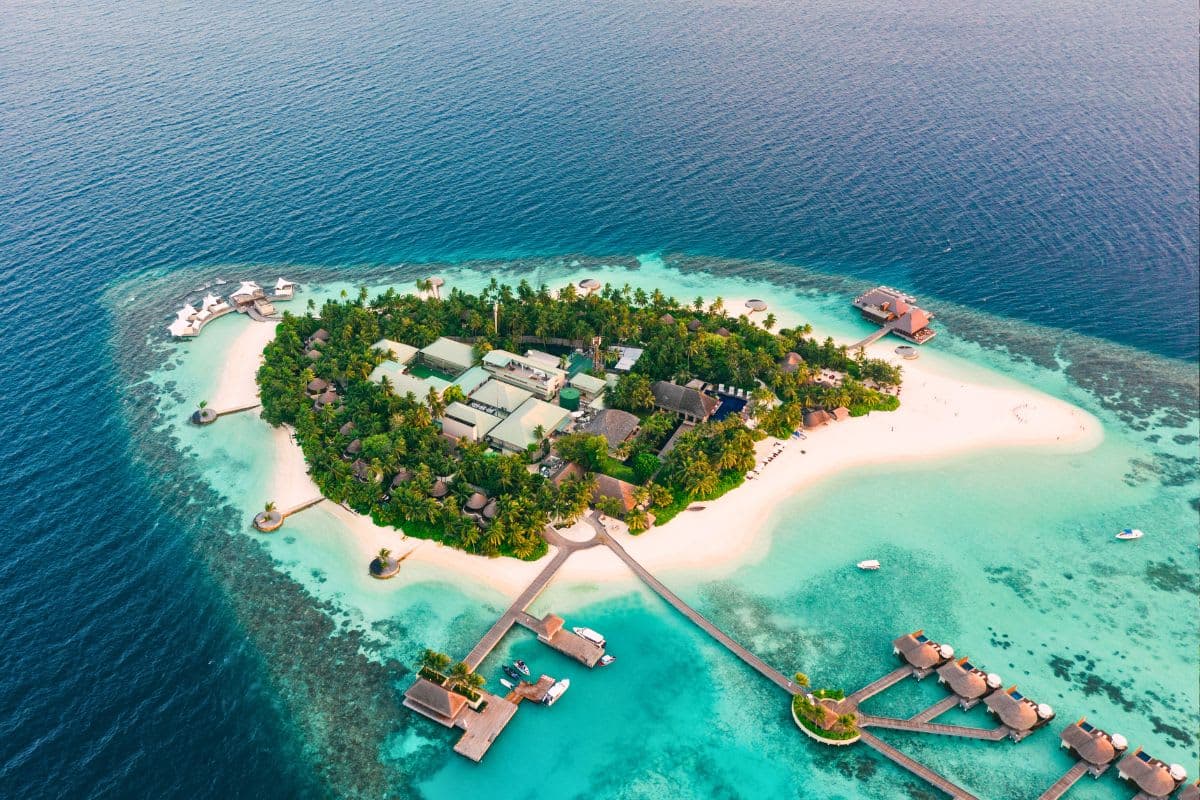
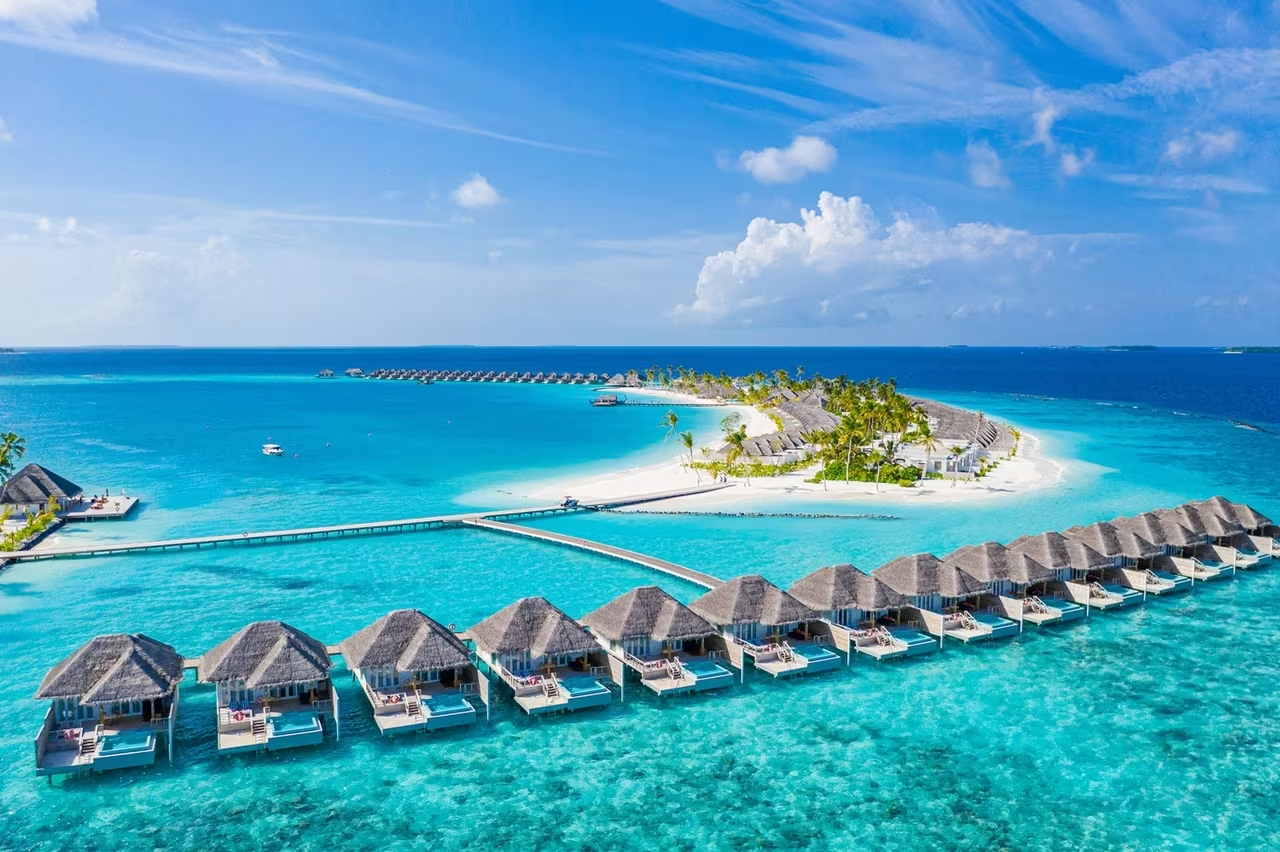
An hour's flight from Tahiti, these high islands ringed by lagoons are postcard Polynesia. Bora Bora and its Mount Otemanu, Taha'a the vanilla island and its pearl farms, Raiatea the sacred island with the UNESCO-listed marae of Taputapuatea, Huahine more rural and low-key with its eel-filled sacred river. This is where the overwater bungalows are concentrated, but also many far more affordable family guesthouses run by locals.

The Tuamotu: atolls and diving

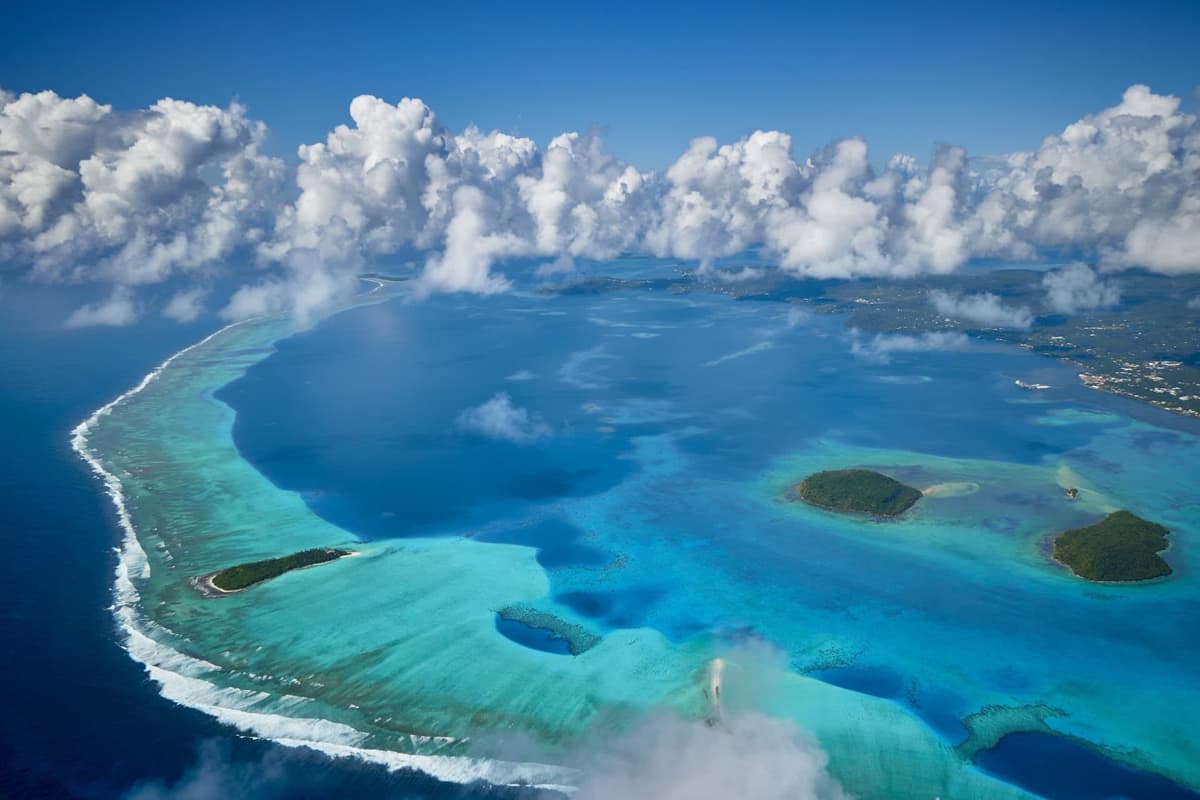
Seventy-seven atolls, rings of barely-emerged coral around a lagoon, spread over a huge stretch of ocean. Rangiroa, the largest, and Fakarava, a biosphere reserve, are the two diving hotspots: the passes concentrate grey reef sharks in the hundreds, manta rays and a dense underwater life. You sleep in a guesthouse at water level, get around by outrigger, and the rhythm is that of the tide and the boat.

The Marquesas: Nuku Hiva and Hiva Oa

Three and a half hours' flight from Tahiti, the Marquesas have no lagoon: black cliffs, deep valleys and archaeological sites overgrown by banyans. Nuku Hiva and its Taiohae bay, Hiva Oa where Gauguin and Jacques Brel rest, the giant tikis of Puamau and the arts festival held there every four years. A trip apart, often on the mixed cargo ship Aranui or by plane.

The Australs and the Gambier

The southernmost and least visited archipelagos. Rurutu, in the Australs, is the best place in Polynesia to watch and sometimes swim with humpback whales, from July to October. The Gambier, at the far south-east, keep the Rikitea cathedral, built by a 19th-century missionary, and produce a large share of the black pearls. These islands are earned: few flights, few places to stay.

Lagoons, diving and wildlife encounters

The water is warm year-round, 26 to 29 degrees. Diving is done everywhere, at varying levels: drift dives in the Tuamotu passes, coral gardens of Moorea and Taha'a, shark walls at Fakarava. Away from diving, you swim with rays and blacktip reef sharks in the lagoons, watch humpback whales from July to October around Moorea, Rurutu and Tahiti, and dolphins at Rangiroa.

Cities to visit in French Polynesia

Featured destinations appear first.
Coming soon.

French Polynesia in pictures

French Polynesia highlights

Twelve sites and experiences that show the gap between the archipelagos.

Bora Bora lagoon

The world's most famous lagoon, ringed by motu, with a classic boat tour to meet manta rays and lemon sharks.

Mount Otemanu

A 727-metre volcanic plug at the centre of Bora Bora, impossible to climb to the top, Polynesia's emblematic silhouette.

Cook's Bay, Moorea

A deep bay framed by sharp peaks, with the Rotui lookout that also overlooks the neighbouring Opunohu bay.

Fakarava south pass

A world-class dive site: a wall of several hundred grey reef sharks holding in the current.

Taputapuatea marae

A great ceremonial centre of eastern Polynesia on Raiatea, a stone platform on the World Heritage list.

Rangiroa Blue Lagoon

A lagoon within the lagoon formed by a ring of small motu, with pale green water, reached after an hour by outrigger.

Papeete market

A two-level hall in the heart of the capital, busiest on Sunday from 5am, between fish, tiare crowns and crafts.

Heiva i Tahiti

A festival of dance, song and traditional sports held all through July in Papeete, the largest in the Pacific.

Hiva Oa tikis

Monumental stone statues at the Iipona site in Puamau, including the largest tiki in Polynesia, 2.6 metres tall.

Bay of Virgins, Fatu Hiva

The Hanavave bay with its spectacular rock spires, often cited as the most beautiful in the Marquesas.

Rurutu whales

In the Australs, one of the few places in the world where you can swim, supervised, with humpback whales, from July to October.

Tahitian black pearl

Produced in the pearl farms of the Tuamotu and the Gambier, it ranges from grey to peacock green; visits and purchases at the source.

Similar regions

Other regions you might like as much as French Polynesia.

Similar destinations

Other countries you might like as much as French Polynesia.

Frequently asked questions about French Polynesia

Do you need a passport and an ESTA for French Polynesia?
For Polynesia itself, an identity card is enough. But almost all flights transit through the United States: you then need an individual passport and an ESTA authorisation, to be requested at least 72 hours before departure, even without leaving the airport. Stopovers via Vancouver or Tokyo avoid US soil.
What is the best time to visit Polynesia?
From May to October, the dry and slightly cooler season, with clear skies and a clear sea. July and August coincide with the Heiva and the holidays: book early. From November to April it is hotter, wetter, and the cyclone risk exists on the Society Islands.
How much does a trip to French Polynesia cost?
The flight from Paris starts around 1,100 euros per person outside high season. On site, in family guesthouses and eating local, you can aim for 100 to 150 euros per day per person excluding inter-island flights; in an overwater bungalow, the budget has no ceiling.
Do you have to sleep in an overwater bungalow?
No. It is the image of Polynesia but it is a minority of the offer, concentrated on Bora Bora, Taha'a and Moorea. Family guesthouses, often run by Polynesians, exist on every island and cost five to ten times less, with shared meals.
Which Polynesian islands should you choose for a first trip?
For two weeks, a classic combines Tahiti on arrival, Moorea for the bays and the lagoon, a Leeward island such as Taha'a or Huahine, and a Tuamotu atoll, Rangiroa or Fakarava, for diving. Bora Bora is added depending on budget.
How many days to visit French Polynesia?
Given the flight time, a stay of under ten days leaves little time on site. Two weeks allow you to see three islands without rushing, three weeks to add the Marquesas or the Australs, which need longer flights.
Can you swim with whales in Polynesia?
Yes, from July to October, when humpback whales come to calve in Polynesian waters. Supervised trips are run mostly at Rurutu, in the Australs, and around Moorea and Tahiti, with strict approach rules and a limited number of swimmers.
Bora Bora, Moorea or Rangiroa: which to choose?
Bora Bora for the spectacular lagoon and the luxury, Moorea for easy access from Tahiti and a good balance of mountain and lagoon, Rangiroa for pass diving and the atoll feel. Many combine two, keeping the third for a second trip.

Plan your trip to French Polynesia

Day-by-day itinerary, budget, bookings and packing in a single app.
Aperçu de l'application PlanTripNow