Visit Bilbao
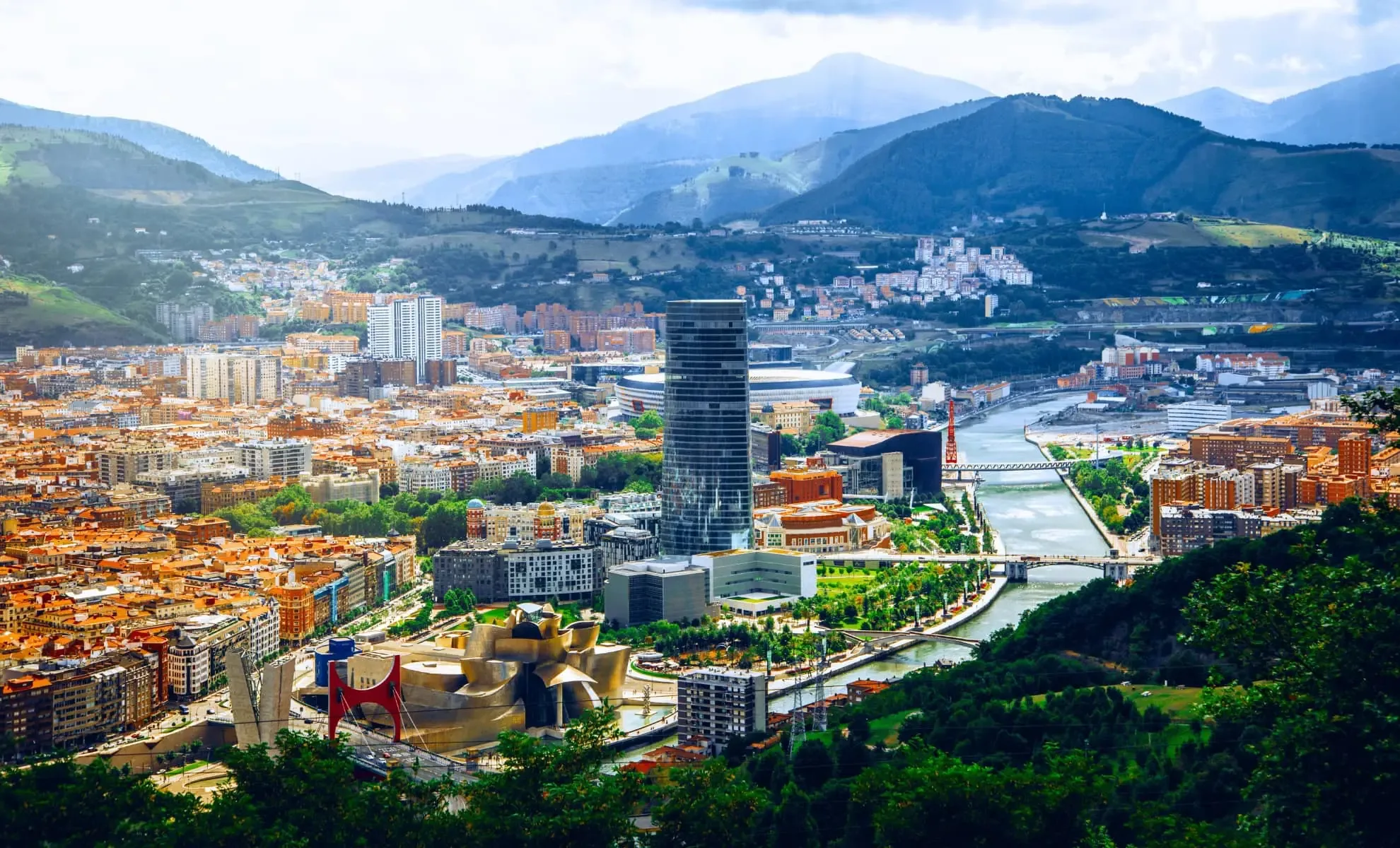
Set along the winding banks of the Nervión, Bilbao has turned its industrial past into a playground for contemporary art and architecture. Between the lively lanes of the Casco Viejo, the flavors of pintxos, and the titanium curves of the Guggenheim, this Basque city charms with its creative energy and rediscovered identity.
Why visit Bilbao?
Bilbao is the most dynamic city in Spain's Basque Country, known for turning an industrial past into a world reference for contemporary architecture, symbolized by the Guggenheim Museum. Its pintxos food scene, well-preserved old town and setting between mountains and ocean make it a leading destination for culture and food lovers alike.
Bilbao's Must-Sees
Six experiences that capture the spirit of the city, between architecture, culture and food.
Guggenheim Museum
A symbol of Bilbao's renaissance, this contemporary art museum with titanium curves designed by Frank Gehry draws visitors and architecture lovers from around the world.
Casco Viejo
Bilbao's historic heart, built around its seven streets, brings together markets, old churches and pintxos bars in a lively atmosphere.
Pintxos and Food Scene
Bilbao and the Basque Country rank among Spain's best food destinations: pintxos are enjoyed standing at the bar, paired with a glass of txakoli.
Hanging Bridge of Biscay
This UNESCO World Heritage transporter bridge links the banks of the estuary and offers an unusual view over the bay from its suspended gondola.
Mount Artxanda
Reached by funicular, this hill offers a sweeping panorama over Bilbao, its estuary and the green hills surrounding the metropolitan area.
Contemporary Architecture
A Calatrava-designed metro, the Iberdrola Tower, the Salve Bridge: Bilbao keeps adding bold architectural landmarks that complement the Guggenheim effect.

What to discover in Bilbao?
Long known for its industrial and steelmaking past, Bilbao reinvented itself starting in the 1990s to become one of Spain's most dynamic cities. The Guggenheim Museum, with its titanium curves designed by Frank Gehry, symbolizes this renaissance and draws visitors from around the world every year. All around it, the metro designed by Santiago Calatrava, the Salve Bridge and the Iberdrola Tower showcase bold contemporary architecture, while the Casco Viejo, the historic heart with its seven streets, keeps the Basque soul of the city alive through its markets, churches and pintxos bars.
Bilbao is also discovered through its food scene, considered among the best in Spain: pintxos are enjoyed standing at the bar, paired with a glass of txakoli, the local white wine. The city also benefits from a privileged setting between mountains and ocean: Mount Artxanda offers a panoramic view over the metropolitan area, while the nearby coastline, with the beaches of Getxo and the famous Hanging Bridge of Biscay, invites further exploration. Bilbao is also an excellent base for exploring the Basque Country, between San Sebastián and the surrounding coastal villages.
Practical Information
Province
Biscay (Bizkaia)
Autonomous community
Basque Country
Population
About 350,000 in the city, close to one million in the metro area
Languages
Spanish and Basque (Euskera)
Currency
Euro (€)
Time zone
UTC+1 (Central European Time)
Climate
Temperate oceanic, frequent rain
Best season
Spring and early autumn (May-June, September)
Bilbao in pictures
Frequently Asked Questions about Bilbao
When is the best time to visit Bilbao?
Spring (May-June) and early autumn (September) bring mild weather with less rain than the rest of the year. Summer is pleasant but busier, while winter stays humid and cool without being extreme.
How much time should I plan for Bilbao?
Two to three days are enough to explore the Guggenheim, the Casco Viejo and the city's main sights at a relaxed pace, while leaving time to enjoy the local food scene and a day trip nearby.
Is Bilbao worth visiting without the Guggenheim Museum?
Yes: the Casco Viejo, the pintxos food scene, contemporary architecture and the panoramic views from Mount Artxanda are enough to fill a stay, with the museum being just one facet of the city.
What language is spoken in Bilbao?
Spanish is the most widely spoken language day to day, while Basque (Euskera), the region's official language, appears on street signs and menus and is actively spoken by part of the local population.
How do you get around Bilbao?
The metro, tram and bus network covers the city efficiently, and the center is easy to explore on foot. A funicular reaches Mount Artxanda without any effort, rewarding visitors with a great view.
Is Bilbao an expensive city?
Bilbao ranks among the more expensive Spanish cities to live in, but it generally remains more affordable than destinations like Paris or London, especially when it comes to dining out and grabbing pintxos at a bar.
Plan your trip to Bilbao
Build your day-by-day itinerary and manage budget, bookings and packing in PlanTripNow.