Denmark

Between colorful canals, royal castles and windswept North Sea beaches, Denmark charms visitors with clean design, green islands and an unhurried way of life, perfect for authentic getaways and easy cycling trips between cities and coastlines.

Why visit Denmark?

Denmark blends royal heritage, modern architecture and coastal nature reachable by train or bike. Copenhagen, its capital, is known for cycling-friendly streets and a strong food scene, while the islands of Jutland and the Baltic offer wilder landscapes.

What to discover in Denmark?

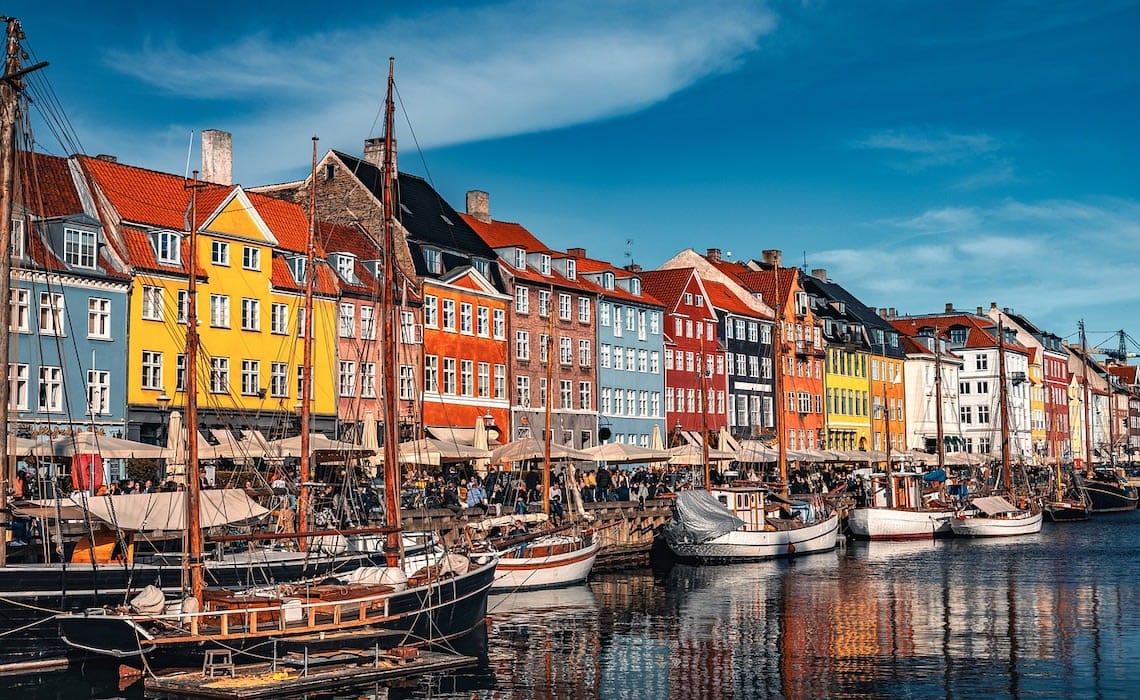
Denmark is best discovered through its capital, Copenhagen, where colorful canals, royal palaces and design districts are easy to explore by bike. The historic Nyhavn harbor, the Tivoli Gardens and numerous contemporary art museums set the tone for a country that balances tradition with modernity, blending royal heritage with quiet urban innovation.
Beyond the capital, the country offers quieter and wilder scenery: the white cliffs of Møn island, the long beaches of the Jutland peninsula, and the charming streets of Aarhus, the country's second city and a lively cultural hub. Denmark is also a convenient gateway to the other Nordic countries, notably Finland via regular and frequent flight connections. Its dense rail network, short distances and cycling infrastructure make it easy to explore independently, whether for a short city break centered on Copenhagen or a wider tour of its coasts, islands and smaller towns. Travelers arriving by ferry from Sweden or Norway will also find Denmark a natural hub for planning a broader Scandinavian itinerary across several weeks.

Cities to visit in Denmark

Featured destinations appear first.
Coming soon.

Denmark in pictures

Highlights

A few emblematic experiences that capture the spirit of Denmark.

Nyhavn in Copenhagen

The famous canal lined with colorful facades, restaurants and historic wooden ships, a visual icon of the Danish capital.

Kronborg Castle

A royal fortress overlooking the strait, listed as a World Heritage site and linked to the legend of Hamlet.

Tivoli Gardens

A historic amusement park in central Copenhagen, mixing vintage rides, gardens and evening entertainment.

Cliffs of Møn

White chalk cliffs rising above the Baltic Sea, surrounded by forests and coastal hiking trails.

Aarhus and ARoS museum

The country's second city, known for its contemporary art museum topped with a panoramic rainbow walkway.

Cycling and local life

A dense cycling network that lets visitors experience Denmark the way locals do, from bike paths to neighborhood cafes.

Practical information

Capital
Copenhagen
Area
About 43,000 km²
Population
About 5.9 million
Language
Danish
Currency
Danish krone (DKK)
Time zone
UTC+1 (Central European Time)
Climate
Temperate oceanic, mild summers and cool winters
Best season
May to September

Frequently asked questions

What is the best time to visit Denmark?
May to September offers long days and milder temperatures, ideal for exploring Copenhagen and the coastline by bike or on foot.
Do I need a visa to visit Denmark?
Denmark is part of the Schengen area; travelers from many countries can visit visa-free for short tourist stays, subject to current agreements.
What language is spoken in Denmark?
Danish is the official language, but English is widely spoken and understood, making it easy for international visitors to get around.
Is Denmark easy to visit without a car?
Yes, the country has an efficient rail network and highly developed cycling infrastructure, making it easy to travel without a personal vehicle.
What currency is used in Denmark?
The Danish krone (DKK) is the official currency; card payments are widely accepted, even for small purchases.
Can Denmark be combined with other Nordic countries?
Yes, Denmark is a great starting point for reaching Sweden or Finland thanks to regular flight and rail connections.

Plan your trip to Denmark

Day-by-day itinerary, budget, bookings and packing in a single app.
Aperçu de l'application PlanTripNow