Costa Rica

Between the Pacific and the Caribbean, Costa Rica packs active volcanoes, lush rainforests and wild beaches into a compact territory. A pioneer of nature conservation in Central America, the country embraces a 'pura vida' way of life and some of the richest biodiversity on Earth.

Why visit Costa Rica?

Costa Rica draws travelers with its exceptional biodiversity, protected across a vast network of national parks covering a significant share of the country. It is also a pioneer of ecotourism, with active volcanoes, rainforests and two strikingly different coastlines, Pacific and Caribbean.

What to discover in Costa Rica?

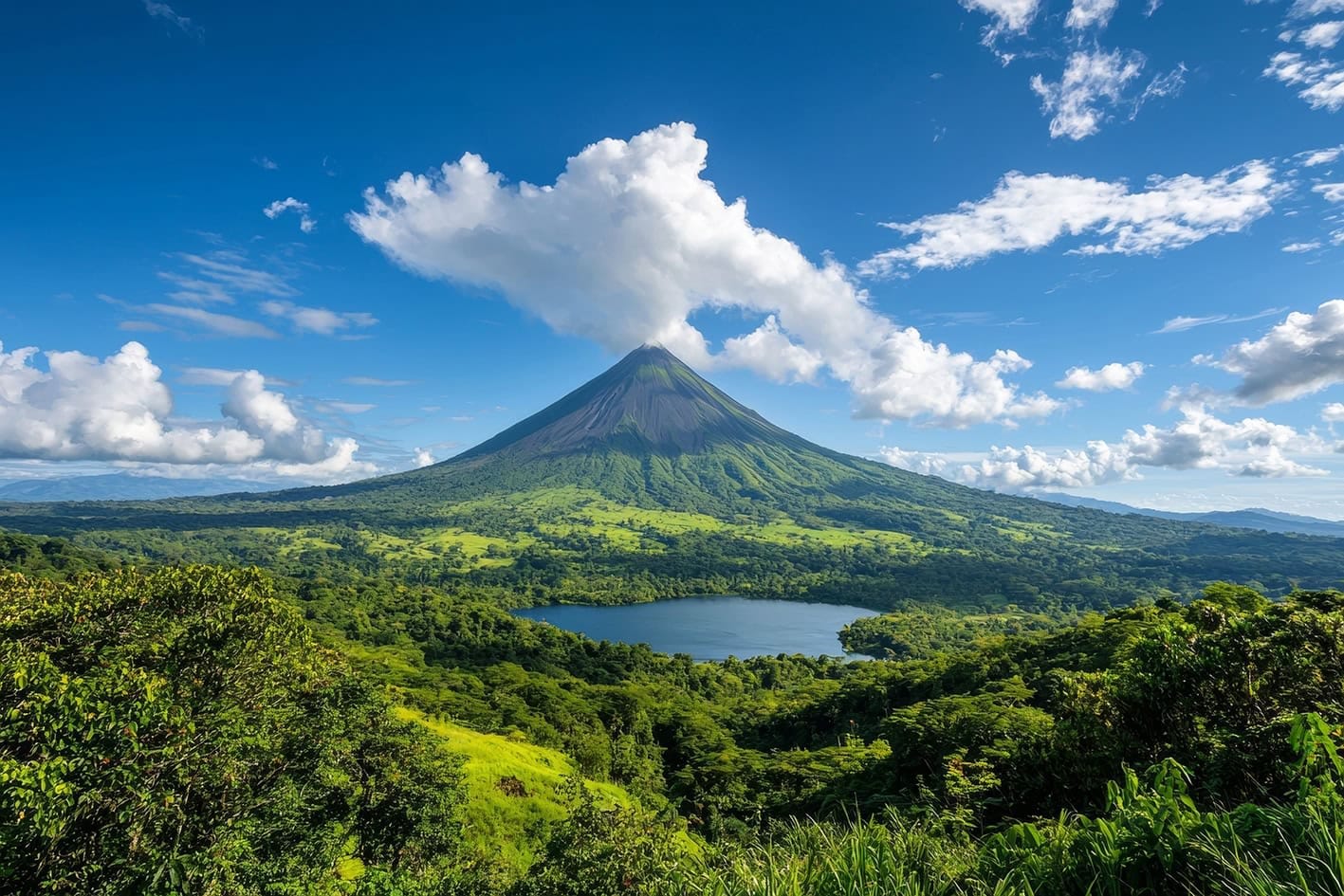
Arenal Volcano, long active, dominates the northern part of the country and remains a top destination for hiking, natural hot springs and wildlife watching nearby. Further northwest, the Nicoya Peninsula and the Guanacaste region offer Pacific beaches renowned for surfing and sunsets, while the Monteverde cloud forest reveals vegetation and wildlife adapted to altitude, explored via hanging bridges and canopy trails. This varied terrain, packed into a fairly compact country, explains much of the ecological diversity travelers can experience in just a matter of days, often moving between coast and cloud forest in the same week.
On the wetter, less developed Caribbean coast, parks such as Tortuguero protect sea turtle nesting beaches and a network of navigable canals deep in tropical rainforest. Across the country, Costa Rica emphasizes conservation, with more than a quarter of its territory under protected status, home to monkeys, sloths, toucans and a wide range of amphibian and reptile species.

Cities to visit in Costa Rica

Featured destinations appear first.
Coming soon.

Costa Rica in pictures

Don't miss

Between volcanoes, forests and coastlines, Costa Rica brings together a handful of unmissable experiences.

Arenal Volcano

Hike around the base of this iconic volcano, relax in natural hot springs and spot the varied tropical wildlife found throughout the surrounding rainforest.

Monteverde cloud forest

Cross the cloud forest on a network of hanging bridges, discovering a unique biodiversity adapted to high altitude and constant humidity.

Guanacaste beaches

Enjoy the Pacific beaches of Guanacaste, renowned for surfing, golden sunsets and a relaxed atmosphere that lasts throughout the year.

Tortuguero National Park

Navigate the quiet canals of a dense tropical rainforest by boat and discover protected nesting beaches used by sea turtles.

Exceptional biodiversity

Spot monkeys, sloths, toucans and brightly colored frogs across a wide network of national parks covering much of the country.

Pura vida spirit

Experience the Costa Rican way of life, the famous pura vida spirit centered on nature, simplicity and a lifestyle geared toward wellbeing.

Practical information

Capital
San José
Land area
About 51,100 km²
Population
About 5.2 million
Language
Spanish
Currency
Costa Rican colón (CRC)
Time zone
UTC-6
Climate
Tropical, with distinct dry and wet seasons
Best season
December to April, dry season

Frequently asked questions

When is the best time to visit Costa Rica?
The dry season, from December to April, is generally the most favorable for most outdoor activities, though the wet season brings greener landscapes and often more attractive, lower accommodation prices.
Do I need a visa to visit Costa Rica?
Many nationalities, including European travelers, can enter Costa Rica visa-free for short tourist stays, provided they have a valid passport and a return or onward ticket, though exact requirements vary by nationality.
How much time should I plan for Costa Rica?
Ten to fifteen days allow time to combine Arenal Volcano, the Monteverde cloud forest and at least one coastline, Pacific or Caribbean, while accounting for travel time between the country's various regions.
Is Costa Rica suitable for families with children?
Yes, the country is generally well equipped for families, with developed tourist infrastructure, relatively good safety and plenty of nature-based activities suited to younger children and adults of various ages.
How do you get around in Costa Rica?
Renting a car offers the most freedom to explore different regions, though some mountain roads require a suitable four-wheel-drive vehicle. Tourist shuttles also connect the main destinations across the country.
What wildlife can you see in Costa Rica?
The country is home to particularly rich wildlife, including monkeys, sloths, toucans, brightly colored frogs and sea turtles, visible especially in the national parks and protected reserves across the territory.

Plan your trip to Costa Rica

Day-by-day itinerary, budget, bookings and packing in a single app.
Aperçu de l'application PlanTripNow