

Visit Tunisia: Medinas, the Sahara and the Mediterranean
- 2 cities
At a glance
- Currency
- Tunisian Dinar
- Time difference
- UTC+1
- Visa
- None
- Tourist stay of up to 90 days
- 7-day budget
- €504
- Per person, comfort profile, excluding international flights.
Why visit Tunisia?
Tunisia brings together UNESCO-listed Punic and Roman sites, living medinas, Saharan oases and dunes, and more than 1,000 km of Mediterranean coastline in a single itinerary. Close to Europe, French-speaking and affordable, it works equally well for a one-week break or a two-week grand tour.
When to visit Tunisia
| Month | Temperatures | Rain | Crowds | Verdict |
|---|---|---|---|---|
| January | 8 to 16 °C | 8 d | Very quiet | The wettest month in Tunis, yet ideal for crowd-free Carthage and the medina, and for the sunny Saharan south. |
| February | 8 to 17 °C | 8 d | Very quiet | Sea at 14 °C and cool nights: come for the Roman sites and the desert, not the beach. |
| March | 10 to 19 °C | 6 d | Quiet | Spring settles in, the northern hills turn green and the Tozeur oases reach 25 °C by day. |
| April | 12 to 22 °C | 6 d | Moderate | An excellent month for a full loop, from Dougga to Chott el-Jerid, before the heat; busier over Easter holidays. |
| May | 15 to 27 °C | 4 d | Moderate | Dry, bright weather and a first swim for the brave; the desert starts to feel stifling in the afternoon. |
| June | 19 to 31 °C | 2 d | Busy | Beach season begins in Hammamet and Djerba, with hotels still cheaper than in July. |
| July | 22 to 34 °C | 0 d | Packed | Peak summer: 34 °C in Tunis, over 40 °C in the south, and coasts packed with holidaymakers and the diaspora. |
| August | 23 to 35 °C | 2 d | Packed | The warmest sea of the year but prices at their peak; forget midday sightseeing at the ruins. |
| September | 21 to 31 °C | 5 d | Moderate | The best compromise: sea still at 25 °C and thinning crowds, though the first storms can be violent late in the month. |
| October | 17 to 27 °C | 6 d | Moderate | A mild late season that reopens the south: Matmata, Ksar Ghilane and the dunes become doable again. |
| November | 13 to 22 °C | 7 d | Quiet | Date harvest in the oases and camel-trek season; on the coast, swimming becomes hit and miss. |
| December | 9 to 18 °C | 8 d | Quiet | A rainy north, but the International Festival of the Sahara in Douz and year-end holidays liven up Tozeur. |
What to discover in Tunisia?
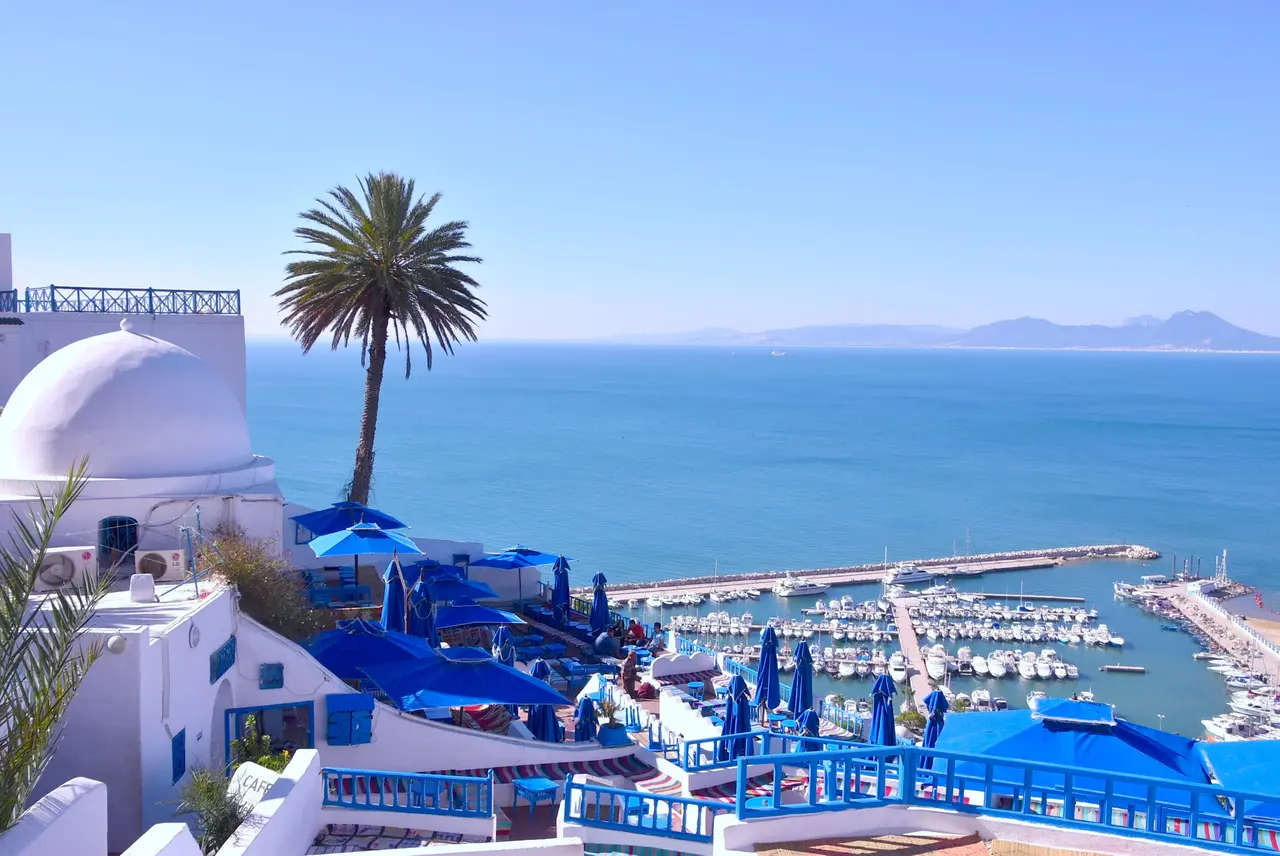
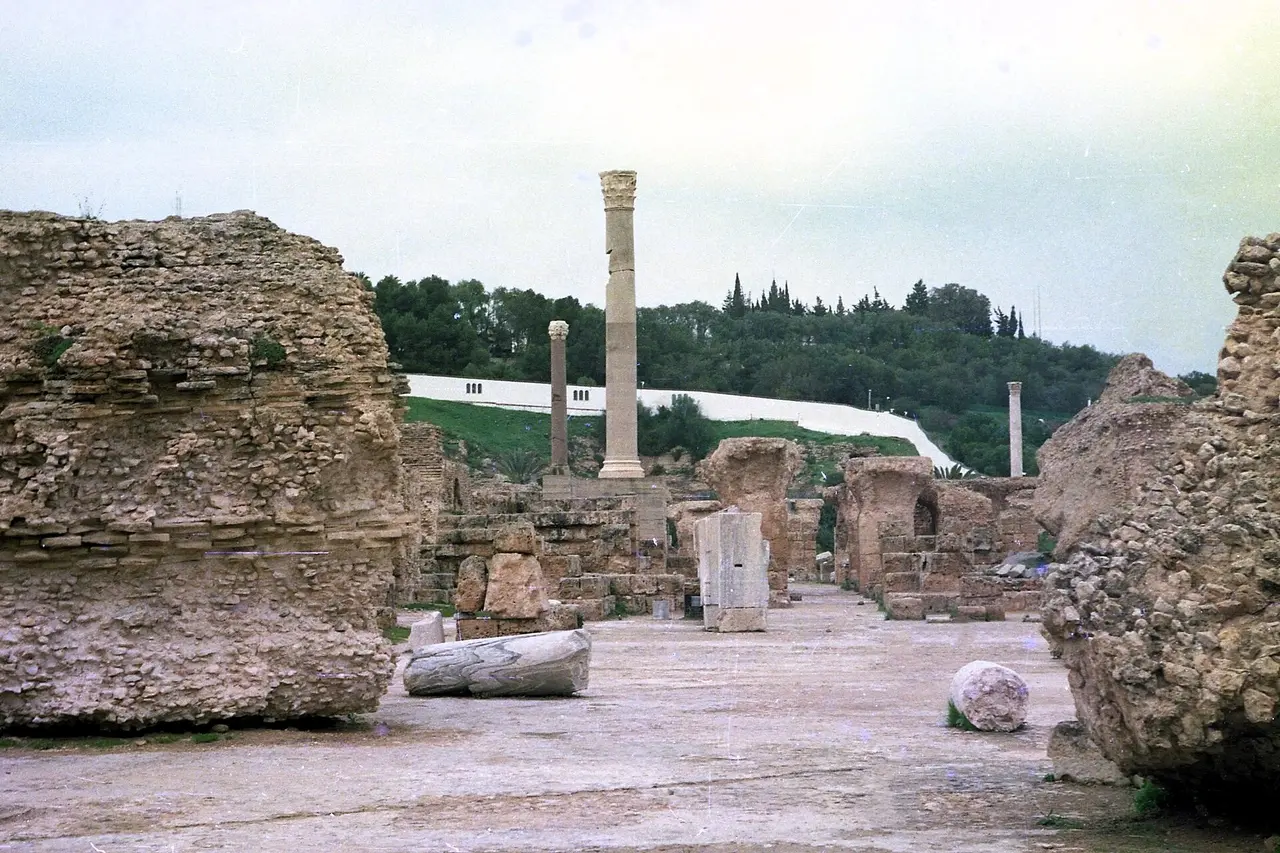
Carthage and Sidi Bou Said
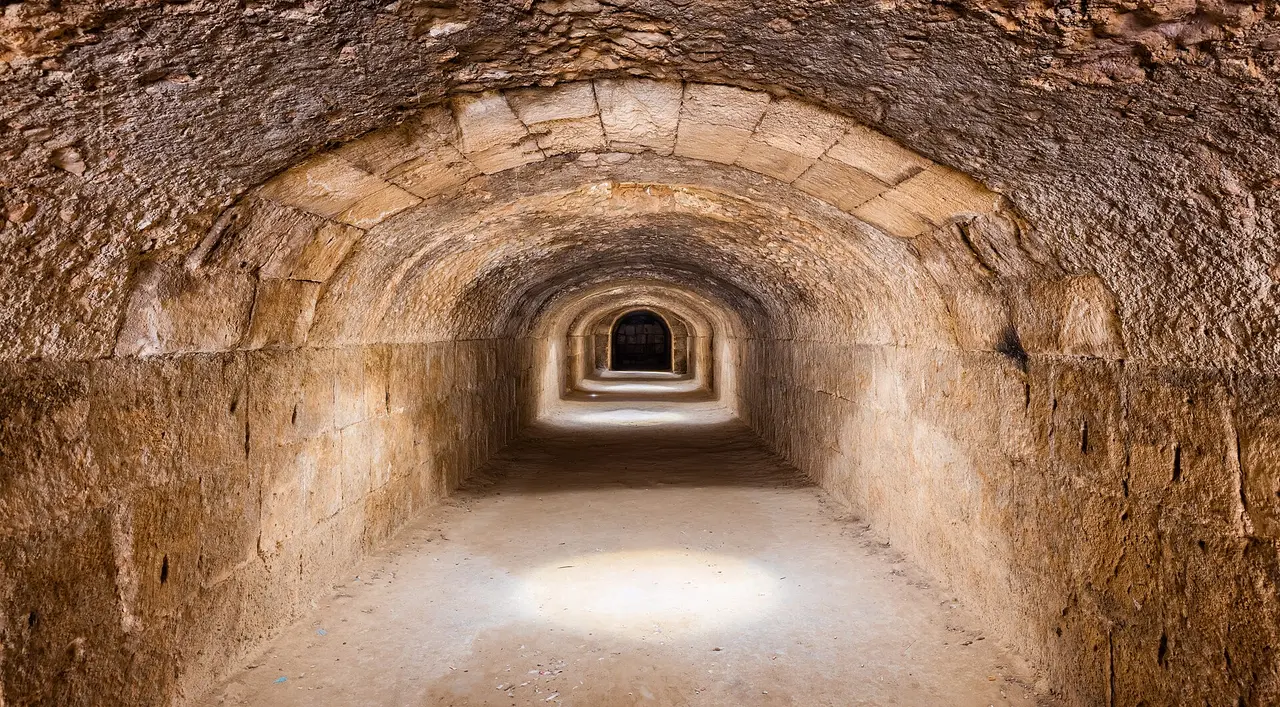
Kairouan and El Jem, the great stops of the centre
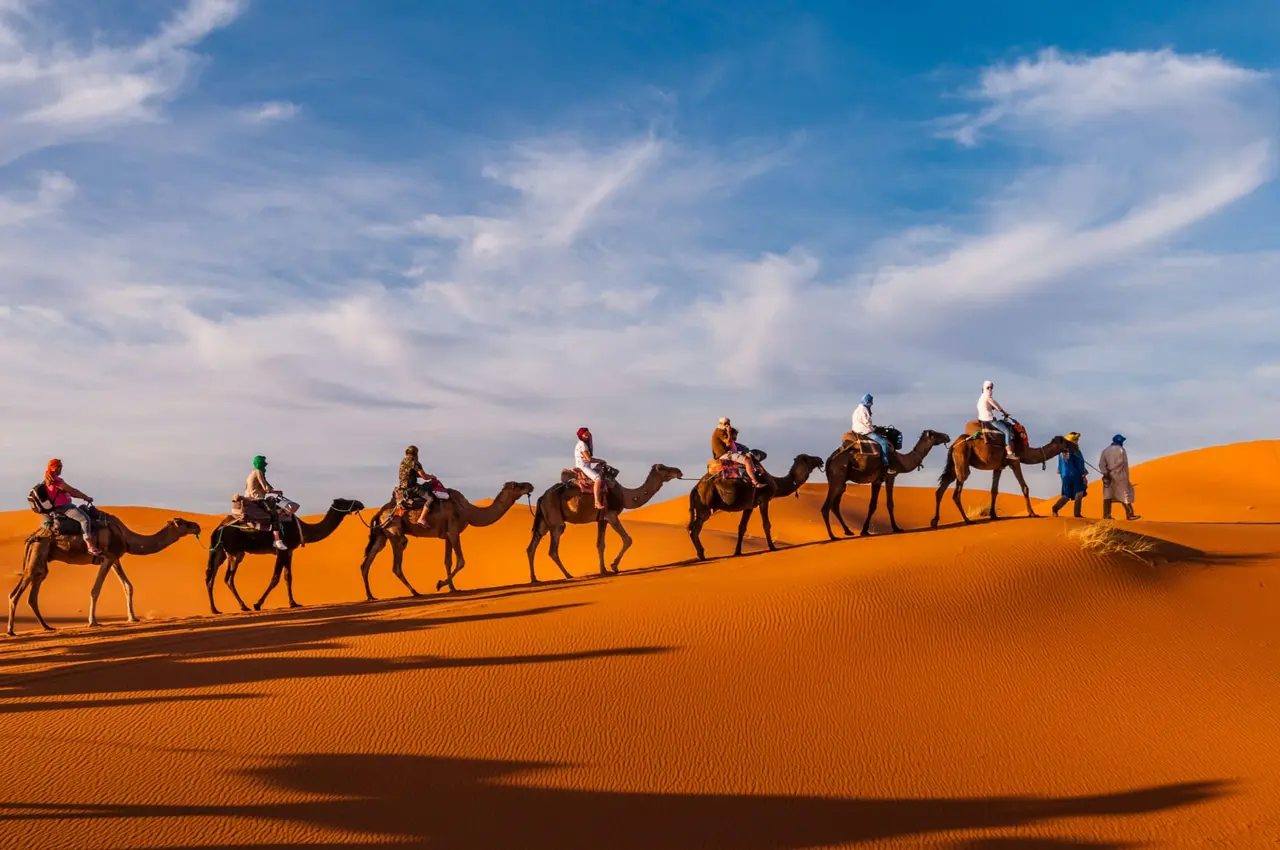
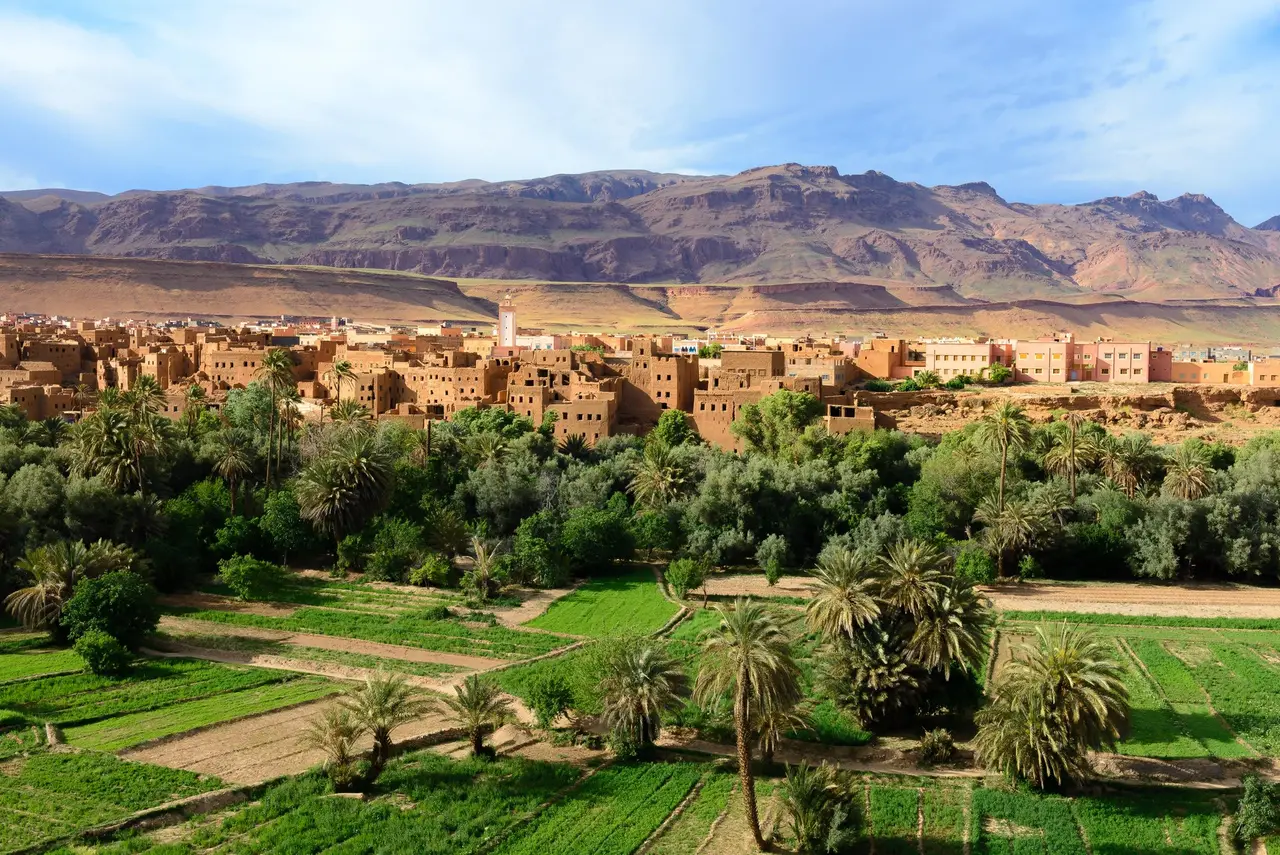
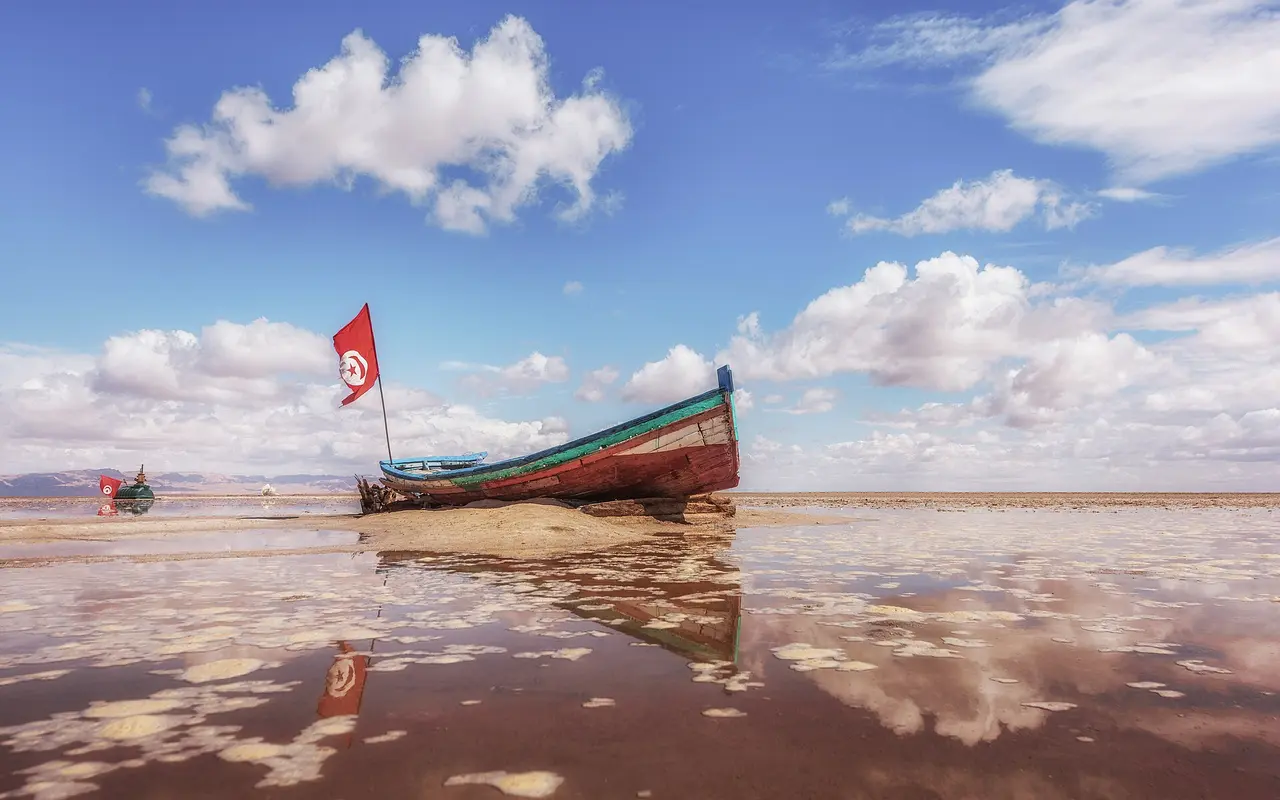
The Saharan south: Tozeur, Douz and Matmata
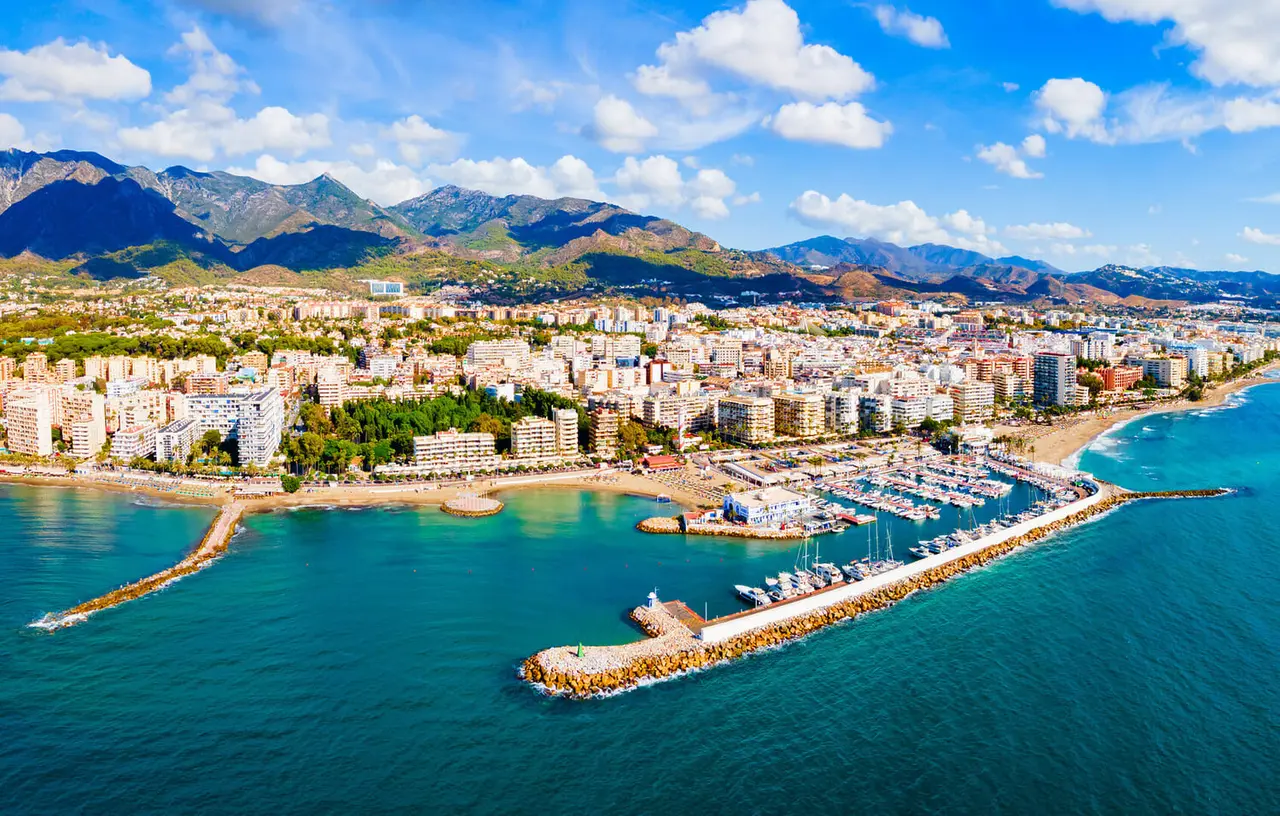
Djerba and the Mediterranean coast
The green north, from Dougga to Tabarka
Cities to visit in Tunisia
How much it costs
- Accommodation
- 14 €
- Food
- 9 €
- Local transport
- 5 €
- Sights and activities
- 6 €
- Accommodation
- 30 €
- Food
- 18 €
- Local transport
- 12 €
- Sights and activities
- 12 €
- Accommodation
- 85 €
- Food
- 40 €
- Local transport
- 30 €
- Sights and activities
- 35 €
Getting there
- DJEDjerba Zarzis International AirportMellitaMain
- TUNTunis Carthage International AirportTunisMain
- EBMEl Borma AirportEl BormaSecondary
- GAEGabès Matmata International AirportGabèsSecondary
- GAFGafsa Ksar International AirportGafsaSecondary
- MIRMonastir Habib Bourguiba International AirportMonastirSecondary
Entry, health and safety
For FR travellersEntry requirements
No visa for a tourist stay
Pas de visa pour un séjour touristique de moins de trois mois. Depuis le 1er janvier 2025, tous les visiteurs doivent présenter un passeport valable au moins trois mois à la date d'entrée : ne partez pas avec la seule carte d'identité. Au-delà de trois mois, visa et carte de séjour sont à demander au ministère tunisien de l'Intérieur ; un dépassement non autorisé donne lieu à une taxe de sortie proportionnelle à la durée.
Stay allowed for up to 90 days.
Passport valid for 3 months beyond your return date.
Health
Advised: Vaccinations du calendrier français à jour (diphtérie, tétanos, poliomyélite, coqueluche, rougeole), hépatites A et B selon la durée du séjour, fièvre typhoïde selon les conditions de voyage, rage notamment pour les jeunes enfants en zone rurale.
Cas de rougeole en hausse (alerte de mars 2026). Circulation du virus du Nil occidental : se protéger des moustiques. Chiens errants nombreux autour des grandes villes, consulter immédiatement après toute morsure. Assurance couvrant frais médicaux et rapatriement indispensable. Zones formellement déconseillées : extrême Sud saharien (zone militaire aux frontières libyenne et algérienne) et monts de l'Ouest (Chambi, Semmama, Mghila, Selloum, Orbata). SAMU 190, protection civile 198.
Safety
Increased caution
Emergency
197
Tunisia in pictures
Not to be missed in Tunisia
Tunis medina
Bardo Museum
Sidi Bou Said
El Jem amphitheatre
Dougga
Great Mosque of Kairouan
Chebika and Tamerza oases
Douz dunes
Practical information
- Currency
- Tunisian dinar (TND), not convertible: exchange locally and keep your receipts
- Time zone
- UTC+1 with no daylight saving time
- Languages
- Tunisian Arabic, with French widely spoken
- Power sockets
- Types C and E, 230V
- Getting around
- Louages (shared taxis) between towns, trains on the Tunis-Sousse-Sfax line
- Ramadan
- Restaurants closed by day outside tourist areas, lively atmosphere in the evening
- Weekend
- Saturday and Sunday
Similar destinations
Similar regions
Frequently asked questions
Can you enter Tunisia with a national ID card?
What daily budget should you plan for Tunisia?
When is the best time to go?
Is the Tunisian Sahara open to travellers?
Do you need a rental car to visit Tunisia?
Can you combine Tunisia with another country?
Plan your trip to Tunisia