Two thirds of the population live in Greater Noumea. The city is arranged around the Place des Cocotiers and the Port Moselle market, held every morning, and stretches out to the beaches of the Baie des Citrons and Anse Vata, facing the lagoon. The Tjibaou cultural centre, designed by Renzo Piano with its tall wooden cases, presents Kanak culture and serves as a landmark. The Aquarium des Lagons and the zoological and forest park round out a first day, before heading for the rest of the Grande Terre or the islands, the city being only a gateway.
South of Noumea, the landscape turns red: the laterite soil, rich in nickel, carries an endemic mining scrub, bristling with plants found nowhere else. The Riviere Bleue provincial park protects a rainforest, a dam lake with a drowned forest and the Grand Kaori, a thousand-year-old 40-metre tree. Prony bay, a former penal site, is explored by kayak, with its underwater hot springs and its limestone chimney. From July to September, humpback whales come into the southern lagoon to calve.
The leeward coast is dry, rolling and given over to cattle: this is the country of the stockmen and the large estates, with niaouli savannah landscapes that sometimes recall Australia. Bourail is its centre: the Roche Percee and the Bonhomme, a sandstone arch and needle at the ocean's edge, the Baie des Tortues where loggerhead turtles nest from November to March, and a museum on the history of the penal colony and colonisation. Further north, Kone and the Northern Province, long off the map, are slowly opening to tourism.
Past the Col des Roussettes, the windward coast changes worlds: greener, wetter, more rural, it is mostly Kanak and lives to the rhythm of the tribes. You sleep in a tribal guesthouse, share a meal, respect custom. Hienghene holds the strong images: the Brooding Hen and the Lindericlique towers, black rocks carved by erosion, and a lagoon reachable from the beach. Poindimie is a base for reef diving, and the road winds between coconut groves, cases and waterfalls such as Tao.
Twenty-five minutes by plane from Noumea, the Isle of Pines, which the Kanak call Kunie, is often cited as one of the loveliest islands in the Pacific. The Oro natural pool, a turquoise basin linked to the ocean by a shallow channel, is reached on foot through the forest; the Kuto and Kanumera bays, separated by an isthmus, line up dazzling white sand and columnar pines rising to 20 metres. The traditional sailing outriggers of Saint-Joseph bay, the Queen Hortense cave and the penal colony ruins round out the island tour.
Lifou, Mare and Ouvea form an archipelago of raised coral plateaus, with no mountains and water of extreme clarity. Lifou, the largest, stands out for the Jokin cliffs and Jinek bay, tiny and perfect for snorkelling, and for its vanilla. Ouvea unrolls a 25-kilometre white-sand beach, the Mouli bridge over a channel where rays swim, and the Hanawa blue hole. Mare, quieter, keeps caves, cliffs and the Bone hole. Each island has its chiefdoms and its customary welcome.
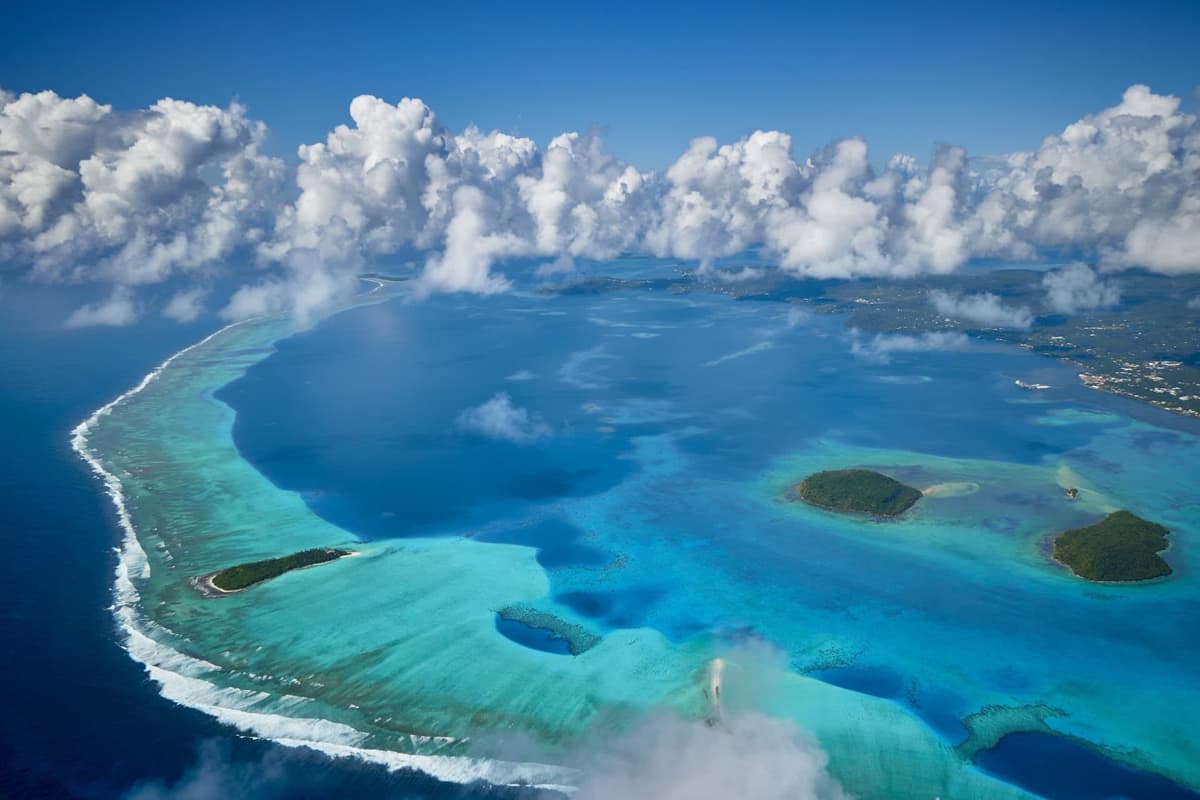
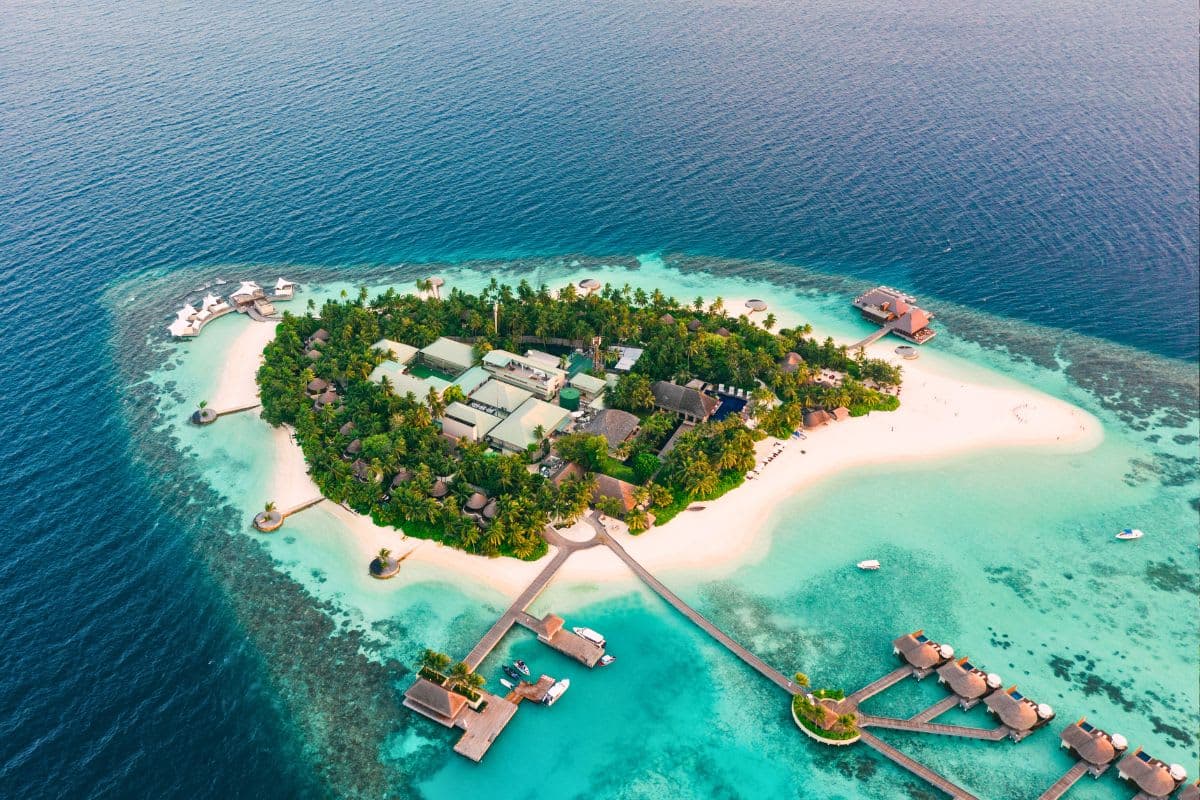
The New Caledonia lagoon, a World Heritage site, covers 24,000 square kilometres, ringed by the second longest barrier reef in the world after Australia's. You discover it by boat toward Amedee islet and its lighthouse, by diving on the passes and drop-offs, or by kitesurfing on the Noumea bays. The wildlife is dense: green turtles, rays, reef sharks, and a saltwater sirenian, the dugong, still present. Outside the lagoon, take care: currents, bull sharks near river mouths and sea snakes, not aggressive but very venomous.