Visiting Peru: when to go, what to do and itineraries

From coastal desert to Andean peaks and Amazon rainforest, Peru packs three worlds into one trip. The Inca city of Machu Picchu, Lake Titicaca, the Colca Canyon and one of the continent's most celebrated cuisines: here is when to go, what to budget and which route to choose for your days.

Why visit Peru?

Peru is home to Machu Picchu, the most famous Inca city, and a large share of the wildlife-rich Amazon. The country runs from the desert Pacific coast to Andes above 6,000 m, so a single trip can combine high-altitude trekking, sailing on Lake Titicaca and time deep in the rainforest. Its cuisine, led by Lima, is recognised worldwide.

What to see in Peru

Lima and the central coast

Almost an unavoidable entry point, Lima is worth two nights for the Larco Museum, the listed historic centre and the clifftop districts of Miraflores and Barranco. It is the country's culinary capital, with restaurants ranked among the world's best and, at the other end, neighbourhood markets and cevicherias. The city sits under the garua, a grey mist, from June to September. It is also the main air gateway to South America on this side of the continent. To the south, the coast runs to Paracas in three hours by bus.

Cusco, the Sacred Valley and the Inca sanctuary

The former imperial capital, Cusco is best explored on foot: Qorikancha, the San Blas quarter and the Sacsayhuaman ruins above town. The Sacred Valley, 500 m lower, helps acclimatisation and lines up Pisac, Maras, Moray and Ollantaytambo, where the train to Aguas Calientes departs. Allow at least four days in the area, more to walk the Inca Trail, whose permits are booked six months ahead and which closes for all of February for maintenance.

Lake Titicaca and the altiplano

At 3,800 m, Puno gives access to the highest navigable lake in the world. A day on the water covers the Uros floating islands, built from totora reed, and Taquile, where lunch is served with a local family. A night on Amantani island extends the trip. The Sillustani funerary towers, 45 minutes away by road, round out the visit. The Puno-Cusco tourist bus takes about seven hours with stops at Inca and colonial sites such as Raqchi and Andahuaylillas.

Arequipa and the Colca Canyon

The country's second city, Arequipa stands out for its sillar architecture, a white volcanic stone, and the Santa Catalina Monastery, a walled town that takes about two hours to visit. At 2,300 m it works as a step before the heights. The Colca Canyon, one of the deepest in the world, is four hours away by road over a 4,910 m pass; Cruz del Condor offers the flight of Andean condors in the early morning. Plan a night in Yanque or Chivay.

The south coast: Paracas, Nazca and Huacachina

Reached by bus from Lima, the south coast strings together the Paracas reserve and its cliffs, the Ballestas Islands with their sea lion colony, then the Huacachina oasis ringed by dunes where you can sandboard. Further south, the Nazca geoglyphs are seen from a light aircraft on a flight of about thirty minutes. Two to three days cover the lot, often on the way to Arequipa. The Pan-American Highway then continues towards Chile.

The Peruvian Amazon

More than half the territory is forest. Two entry points: Puerto Maldonado in the south, a 45-minute flight from Cusco, for the Tambopata reserve and Lake Sandoval; Iquitos in the north, a road-less city reachable only by plane or boat, for the Pacaya-Samiria reserve. Allow at least three days at a lodge to have a chance of seeing caimans, macaws and monkeys. The basin runs east all the way to Brazil.

The north: Huaraz, Chachapoyas and Trujillo

Less visited, the north holds the Cordillera Blanca around Huaraz, with the Lake 69 day hike at 4,600 m and the four-day Santa Cruz trek. Further northeast, Chachapoyas gives access to the pre-Inca fortress of Kuelap, served by a cable car. On the coast, Trujillo and Chiclayo concentrate the Moche and Chimu sites, including the earthen city of Chan Chan. The border with Colombia is reached along the northern coast.

Peruvian cuisine

Food is a reason to travel here in itself. On the coast, ceviche of raw fish cured in lime is eaten at midday, when the fish is fresh. In the Andes you try trucha, cuy and hundreds of potato varieties. Lima fields restaurants at the top of global rankings, to be booked weeks ahead, yet a full menu del dia costs a few euros in any neighbourhood.

Cities to visit in Peru

Featured destinations appear first.
Coming soon.

Peru in pictures

Must-see sights

From Inca cities to natural wonders, the places that shape most itineraries.

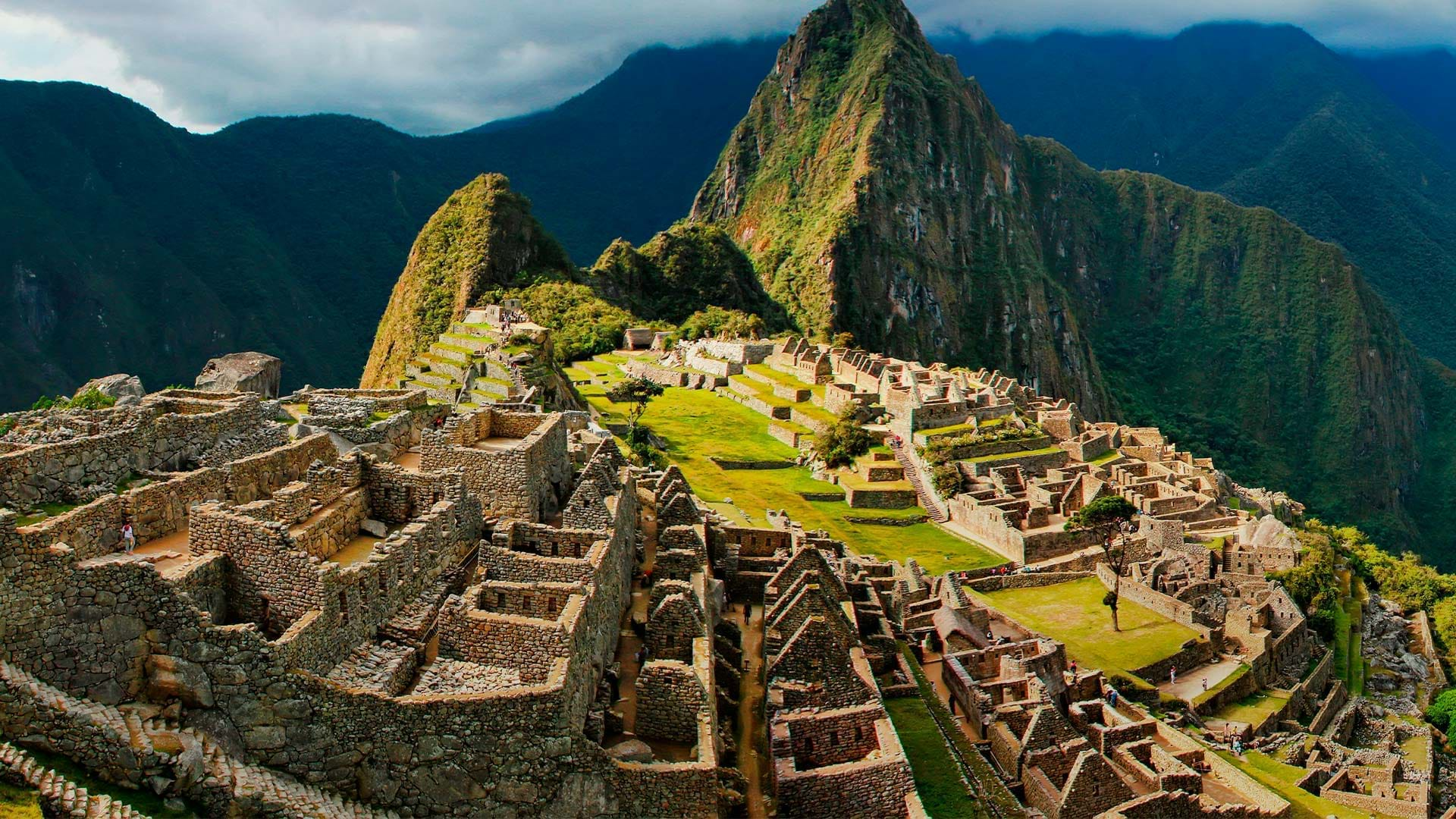
Machu Picchu

Inca city perched at 2,430 m, brought to world attention in 1911, reached by train then shuttle from Aguas Calientes; daily-quota ticket to be booked online.

Huayna Picchu

The peak that towers over the site, climbed by a steep, exposed trail; 400 tickets a day in two time slots, separate from the main entrance.

Rainbow Mountain

Vinicunca, an oxide-striped ridge at 5,200 m, three hours by road from Cusco; a short but hard climb at that altitude.

Lake Titicaca

The highest navigable lake in the world at 3,812 m; the Uros reed islands and Taquile island, known for its UNESCO-listed weaving.

Santa Catalina Monastery

A 16th-century walled compound in the heart of Arequipa, alleys painted blue and ochre; you wander freely for about two hours.

Cruz del Condor

A Colca Canyon viewpoint where Andean condors ride the thermals in the late morning, roughly between 8 and 10am.

Nazca Lines

Geoglyphs traced more than 1,500 years ago in the desert, legible only from the air; a flight of about thirty minutes from Nazca or Pisco.

Ballestas Islands

Rocky islets off Paracas, colonies of sea lions, Humboldt penguins and seabirds; a two-hour boat trip with no landing.

Sacsayhuaman

A cyclopean fortress of multi-tonne blocks overlooking Cusco; the setting for the Inti Raymi festival every 24 June.

Ollantaytambo

A still-inhabited village on an Inca street plan, below terraces and an unfinished temple; the main station for the Machu Picchu train.

Similar destinations

Other countries you might like as much as Peru.

Similar regions

Other regions you might like as much as Peru.

Frequently asked questions about Peru

When should I book an Inca Trail permit?
The 500 daily places, guides and porters included, often sell out six months ahead for the May to September high season. The trail closes for all of February for maintenance; the Salkantay and Lares alternative treks need no permit.
How many days to acclimatise before Machu Picchu?
Allow at least two nights in Cusco or, better, in the Sacred Valley, which sits 500 m lower. Drink plenty, avoid alcohol and exertion on the first day. Coca tea and medication bought at a local pharmacy help most travellers.
Can I visit Machu Picchu independently?
Yes: entrance ticket on the official site, the Ollantaytambo-Aguas Calientes train booked separately, then shuttle or a 90-minute walk. A guide is officially required at the entrance but can be hired on the spot. The internal circuits are numbered and one-way.
Should I fly or take the bus between Lima and Cusco?
The flight takes about 1h20 against 20 to 22 hours by bus. Flying is the norm; the night bus is only worth it to save money or see the road via Abancay. No train links Lima and Cusco.
Can Rainbow Mountain be visited year-round?
Yes, but from November to March the track turns muddy and the summit is often under snow or cloud, which hides the colours. The dry season from May to September gives the best conditions, at the cost of crowds.
What is the difference between the Expedition and Vistadome trains to Aguas Calientes?
Same route and same time, about 1h40 from Ollantaytambo. The Vistadome adds panoramic roof windows, a snack and onboard service for a markedly higher fare. The Expedition is more than enough for the scenery.
Is coca tea legal and safe in Peru?
Coca leaves and their infusions are sold freely and are common in the Andes against altitude sickness. Taking them out of the country is forbidden, and a drug test can come back positive for several days after use.
How much does Machu Picchu entry cost?
Around 45 to 60 euros depending on the circuit chosen and whether you add Huayna Picchu or Machu Picchu mountain. The train and shuttle are paid separately and often cost more than the site ticket itself.

Plan your trip to Peru

Day-by-day itinerary, budget, bookings and packing in a single app.
Aperçu de l'application PlanTripNow